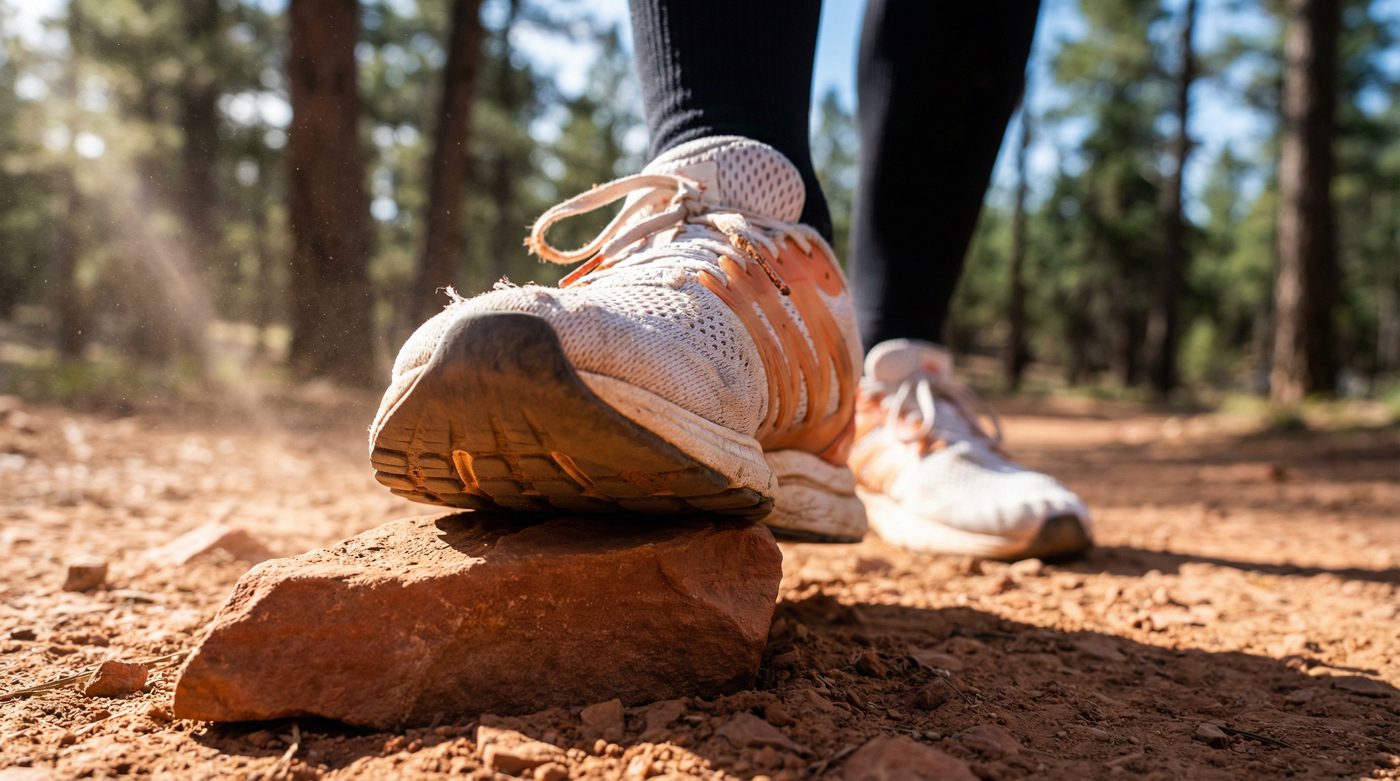
Can You Hike in Running Shoes? Benefits, Risks, and Trail Limits
TRAIL FOOTWEAR GUIDE

CAN YOU
HIKE IN
RUNNING SHOES? BENEFITS,

⚡ Direct Trail Answer

Choose trail runners for lightweight speed on maintained trails; choose hiking boots for ankle rollover support on rocky talus with packs >30 lbs. Always allow a thumb-width toe clearance.

Published by Fama Blog
STEP 01 • PRIMARY PRINCIPLE
ENERGY COST
FOOT WEIGHT MULTIPLIER

One pound on your feet costs roughly five times more cardiovascular energy than one pound carried on your back.

🏛️ Verified Standard: Classic U.S. Army human engineering research by Dr. Ralph Goldman established the 5:1 foot-to-back energy ratio.
Published by Fama Blog
STEP 02 • CORE MECHANICS
ANKLE COLLAR SUPPORT
LATERAL STABILITY

High-cut hiking boots provide torsional resistance against lateral ankle inversion on loose backcountry talus.

🏛️ Verified Standard: Journal of Foot & Ankle Research trials demonstrate high boot cuffs significantly slow rapid ankle inversion slips.
Published by Fama Blog
STEP 03 • SAFETY & RULES
TOE BOX CLEARANCE
DOWNHILL PROTECTION

Ensure a full thumb-width (0.5 inch) space between your longest toe and the boot bumper to prevent black toenails.

🏛️ Verified Standard: American Podiatric Medical Association clinical standards require 12mm of forward toe clearance in hiking footwear.
Published by Fama Blog
STEP 04 • DISTANCE & PACING
TRACTION COMPOUND
VIBRAM LUG PATTERNS

Choose multi-directional 4–5mm rubber lugs with deep siping for dependable grip on muddy trails and wet granite.

🏛️ Verified Standard: Independent outdoor gear lab tests show specialized sticky rubber compounds increase wet-surface grip by over 35%.
Published by Fama Blog
STEP 05 • FINAL FIELD CHECK
EXECUTION

Check offline navigation, hydration, and weather forecast before leaving the trailhead.

⚡ PRO RULE: Try on new trail footwear in late afternoon wearing your hiking socks; feet swell 4–8% throughout the day.
Published by Fama Blog