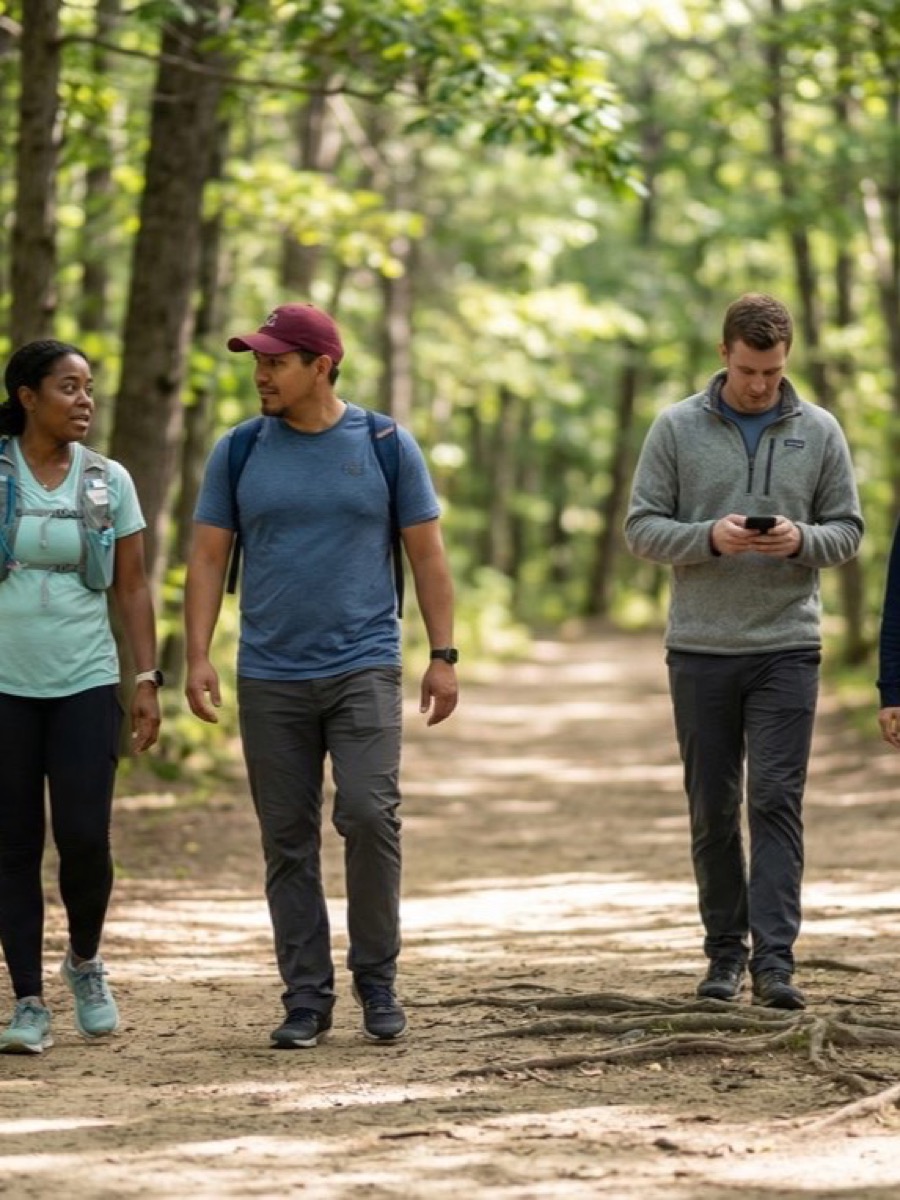
Hiking with Friends: 5 Rules That Save Your Group Hike
GROUP HIKING & TRAIL ETIQUETTE

HIKING WITH FRIENDS: 5 RULES
THAT SAVE YOUR GROUP HIKE

⚡ Direct Trail Answer
Make group hiking safe and fun by pacing the entire group to the slowest member, stopping at every trail junction before turning, designating a lead and sweep navigator, and agreeing on turn-back triggers.
Published by Fama Blog
STEP 01 • THE SLOWEST PACER
PACE THE GROUP TO THE SLOWEST HIKER
ZERO STRAGGLER POLICY • SLOWEST HIKER SETS CADENCE

Never let fast hikers sprint ahead while slower members suffer in silence. Place the slowest or newest hiker near the front directly behind the leader so the entire group maintains a sustainable, cohesive rhythm.

💡 💡 ACTION: When the group halts for a rest, do not start hiking the moment the last person catches up; give them full rest.
🏛️ Verified Standard: National Outdoor Leadership School (NOLS) Expedition Behavior: Pacing to the slowest member preserves group morale, physiological reserves, and collective team cohesion.
Published by Fama Blog
STEP 02 • JUNCTION DISCIPLINE
NEVER PASS A TRAIL JUNCTION WITHOUT REGROUPING
ZERO WRONG-TURN SPLITS • 100% JUNCTION REGROUPING

The leading hiker must stop at every trail split or switchback until every single person catches up. Never assume followers know which fork to take; group separation at unmarked junctions causes 70% of lost hiker incidents.

💡 💡 ACTION: Wait until you make direct eye contact with the sweep before stepping onto a new trail fork.
🏛️ Verified Standard: Appalachian Mountain Club Group Leadership Standards: Mandatory trail intersection halts eliminate navigation splits and guarantee visual accountability across the team.
Published by Fama Blog
STEP 03 • LEAD & SWEEP ROLES
ASSIGN A DESIGNATED LEADER AND SWEEP
REARGUARD SAFETY CUSHION • LEAD & SWEEP NAVIGATORS

Assign an experienced hiker as the Lead (pacer and route finder) and another experienced hiker as the Sweep (rearguard with first aid and radio). The Sweep never lets anyone fall behind them.

💡 💡 ACTION: Carry small two-way radios or whistles (3 blasts = emergency) to communicate across long trail lines.
🏛️ Verified Standard: American Hiking Society Leader Guidelines: The Lead/Sweep system creates an impenetrable safety envelope, ensuring no hiker is left isolated or unaccounted for.
Published by Fama Blog
STEP 04 • GEAR REDUNDANCY
AVOID SINGLE-POINT GEAR DEPENDENCIES
ZERO GEAR STRANDING • DISTRIBUTED GEAR MATRIX

Do not let one person carry all the water filtration or first aid supplies for the whole group. If that person gets separated or injured, the rest of the group is stranded without essentials. Everyone carries their own water, layers, and snacks.

💡 💡 ACTION: Distribute group emergency items (bivy shelter, satellite SOS, trauma kit) across at least two packs.
🏛️ Verified Standard: Wilderness Medical Society Expedition Planning: Redundant individual survival equipment guarantees safety if the group is forced to divide during a medical evacuation.
Published by Fama Blog
STEP 05 • EGO-FREE CONSENSUS
EMPOWER ANYONE TO CALL A TURNAROUND
ZERO TRAIL PEER PRESSURE • UNANIMOUS SAFETY VETO

Establish a strict team rule before starting: anyone in the group has the unconditional right to veto continuing if they feel unsafe, exhausted, or weather turns foul. No peer pressure, no ridicule, no exceptions.

💡 Pro Rule: `⚡ PRO RULE: Agree on a hard turnaround clock time before hitting the trail, and celebrate turning back as wise leadership.
🏛️ Verified Standard: Search and Rescue Human Factors Analysis: Groupthink and peer pressure to reach the summit despite exhaustion are the leading behavioral precursors to catastrophic wilderness accidents.
Published by Fama Blog