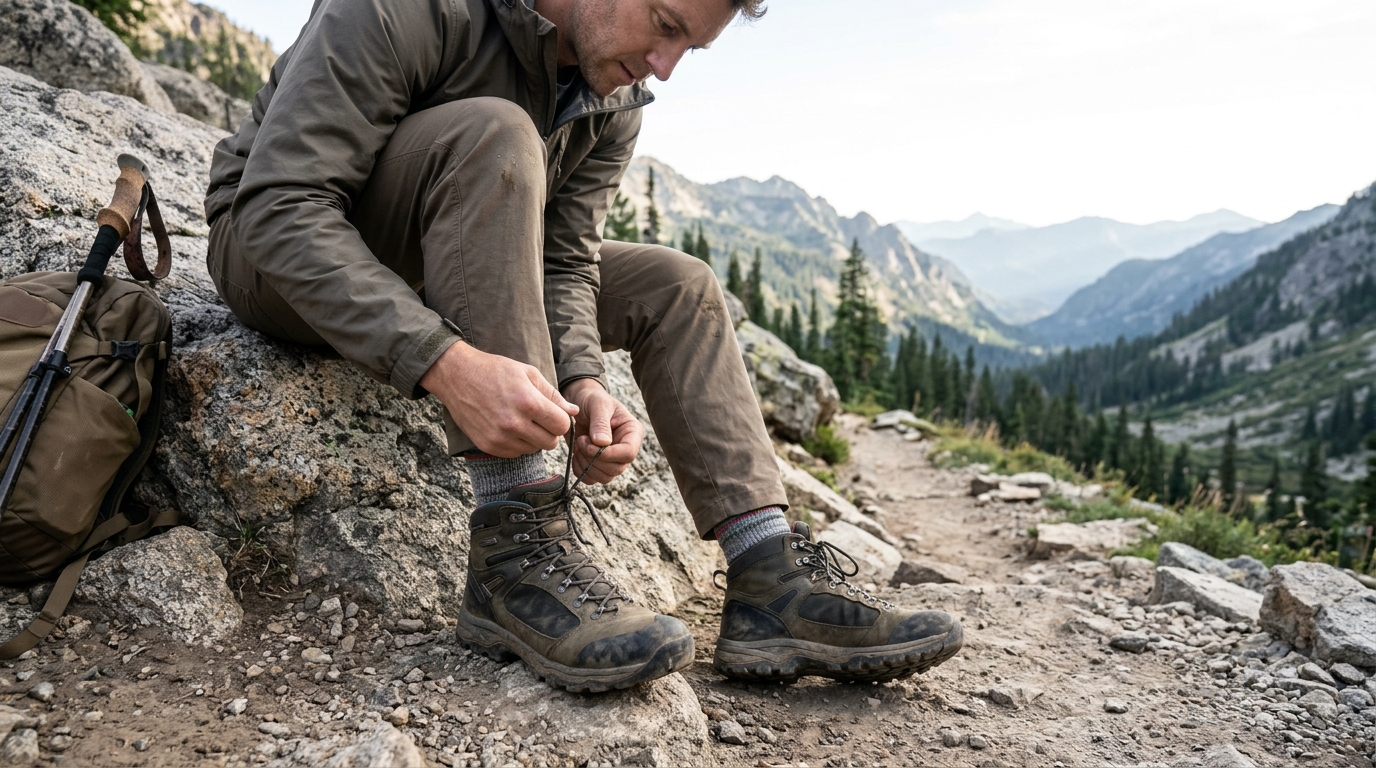
How to Fit Hiking Boots
⚡ BOOT FIT CLINIC

How to
Fit Hiking Boots

Essential Trail Blueprint

⚡ Direct Trail Answer

Ensure a thumb-width (0.5 inch) space between your longest toe and boot front; shop in the afternoon when feet swell, wearing your target merino hiking socks.

Published by Fama Blog
🥾 RULE 1: THUMB RULE

Keep Finger
Width at Toes

0.5 KEY BENCHMARK

Ensure a thumb-width (0.5 inch) space between your longest toe and boot front to stop downhill bruising.

🏛️ Verified Standard: American Podiatric Medical Association guidelines show adequate toe clearance stops black toenails from steep downhill impact.
Published by Fama Blog
🎒 RULE 2: EVENING FIT

Try Boots
On After
4 PM

RULE FIELD PROTOCOL

Feet swell up to a half-size during a day of activity. Never try on new trail boots first thing in morning.

🏛️ Verified Standard: Sports physiology research confirms plantar foot volume expands 4–8% by late afternoon due to gravity and blood pooling.
Published by Fama Blog
🦵 RULE 3: TRAIL SOCKS

Wear Actual
Hiking Socks

RULE FIELD PROTOCOL

Lace up with the exact merino wool socks and insoles you plan to hike in to test accurate internal volume.

🏛️ Verified Standard: Outdoor gear fit standards require testing boots with actual trail socks to prevent midfoot pinching and heel slippage.
Published by Fama Blog
🧦 RULE 4: RAMP TEST

Test on
an Incline Ramp

0.25 KEY BENCHMARK

Kick down an incline board in the shop. If toes touch front or heels lift > 0.25 inch, re-lace or size up.

🏛️ Verified Standard: Wilderness Medical Society blister prevention protocols identify heel slippage over 0.25 inch as the primary cause of calcaneal hot spots.
Published by Fama Blog
💧 FIT CALCULATOR

Calculate Your
Boot Size

RULE FIELD PROTOCOL

Check width ratings (D standard vs EE wide) and lock in your custom fit using our interactive boot sizing tool on FamaBlog.

⚡ PRO RULE: Tap your heel firmly back into the heel pocket before tightening the instep laces to ensure locked-in heel alignment.
Published by Fama Blog