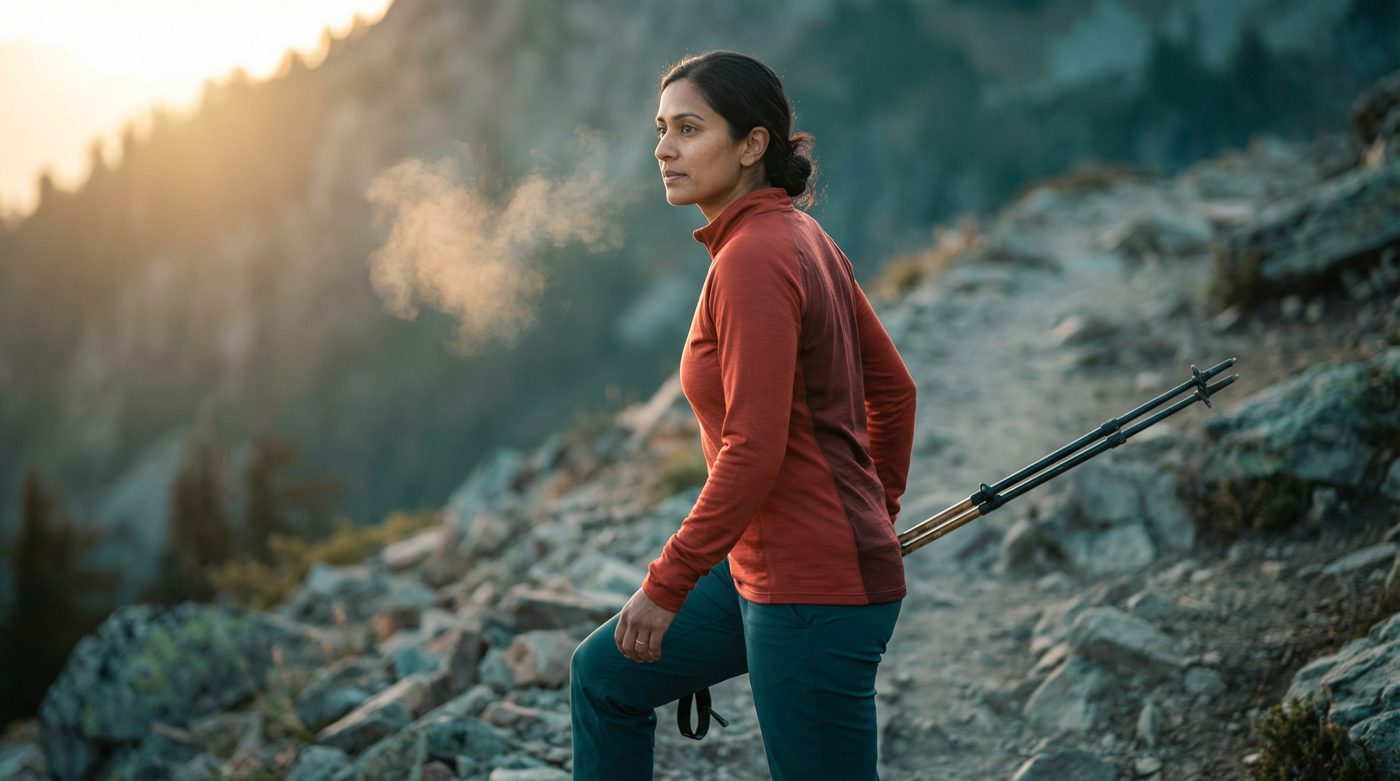
How to Pace Yourself Hiking: 7 Effortless Pacing Secrets
FITNESS & BIOMECHANICS

HOW TO PACE YOURSELF
HIKING: 7 EFFORTLESS PACING SECRETS

⚡ Direct Trail Answer
Pace yourself on trails by maintaining a conversational heart rate (Zone 2), syncing breathing to foot cadence (2 steps inhale, 2 steps exhale), locking the rear knee uphill with the rest-step, and taking 5-minute hourly breaks.
Published by Fama Blog
STEP 01 • THE TALK TEST
MAINTAIN AEROBIC ZONE 2 'TALK TEST'
LACTATE ACCUMULATION THRESHOLD • CONVERSATIONAL PACE

You should be able to speak full sentences without gasping. If you can only utter 2–3 words before needing air, your heart rate has crossed into anaerobic territory where fatigue accelerates rapidly.

💡 💡 ACTION: Slow your walking pace by 20% on uphills to keep respiration calm and conversational.
🏛️ Verified Standard: American Heart Association Zone 2 Exercise Guidelines: Sustained fat oxidation occurs in aerobic Zone 2 (60–70% max HR), preserving limited glycogen reserves for long trail hours.
Published by Fama Blog
STEP 02 • RHYTHMIC BREATHING
SYNC NASAL BREATHING TO STRIDE CADENCE
DIAPHRAGMATIC RHYTHM • 2:2 CADENCE PATTERN

Synchronize your strides to breathing: take two paces while inhaling, and two paces while exhaling. Nasal inhaling humidifies dry mountain air and engages nitric oxide absorption in your lungs.

💡 💡 ACTION: On steep ascents, downshift to a 1:1 cadence (one breath per step) rather than hyperventilating.
🏛️ Verified Standard: National Outdoor Leadership School (NOLS) Expedition Standard: Rhythmic pacing creates sustainable mechanical efficiency, averting premature diaphragmatic stitch and panic breathing.
Published by Fama Blog
STEP 03 • SKELETAL REST-STEP
ENGAGE THE MOUNTAINEER REST-STEP
QUAD RECOVERY BUFFER • MOMENTARY BONE CARRY

On uphill strides, straighten your rear knee and pause for 0.25 to 0.5 seconds before moving the front leg. This transfers your body weight to the skeleton, giving quads micro-rests every stride.

💡 💡 ACTION: Listen to the trail; footsteps should land softly and deliberately rather than stomping heavily.
🏛️ Verified Standard: Wilderness Medical Society Mountaineering Protocol: The rest-step technique reduces cumulative quadriceps fatigue and lowers peak heart rate spikes on sustained ascents.
Published by Fama Blog
STEP 04 • DISCIPLINED BREAKS
TAKE 5-MINUTE BREAKS EVERY 60 MINUTES
METABOLIC RESET • MICRO-BREAK PROTOCOL

Stop for 5 minutes every hour to drink 8–12 oz of water, eat a 100-kcal snack, and check socks for friction hot spots. Prolonged breaks over 15 minutes cause muscles to cool down and stiffen.

💡 💡 ACTION: Keep your pack on or lean against a boulder during short 5-minute stops to avoid slow restarts.
🏛️ Verified Standard: U.S. Army Field Manual Pacing Standards: 50 minutes of movement followed by a 10-minute micro-halt maximizes total miles covered over a full march.
Published by Fama Blog
STEP 05 • EGO MANAGEMENT
HIKE YOUR OWN HIKE (ZERO TRAIL EGO)
DAYLIGHT BUFFER • SUSTAINABLE PACE

Never accelerate just because faster hikers pass you. Pacing is about sustained endurance, safe footing, and enjoying the wilderness without blowing out your knees or lungs.

💡 ⚡ PRO RULE: When feeling fatigued on climbs, shorten your stride length by half instead of slowing your cadence.
🏛️ Verified Standard: Appalachian Trail Conservancy Trail Etiquette: Consistent, moderate pacing is the single most reliable factor in successfully completing long-distance mountain treks.
Published by Fama Blog