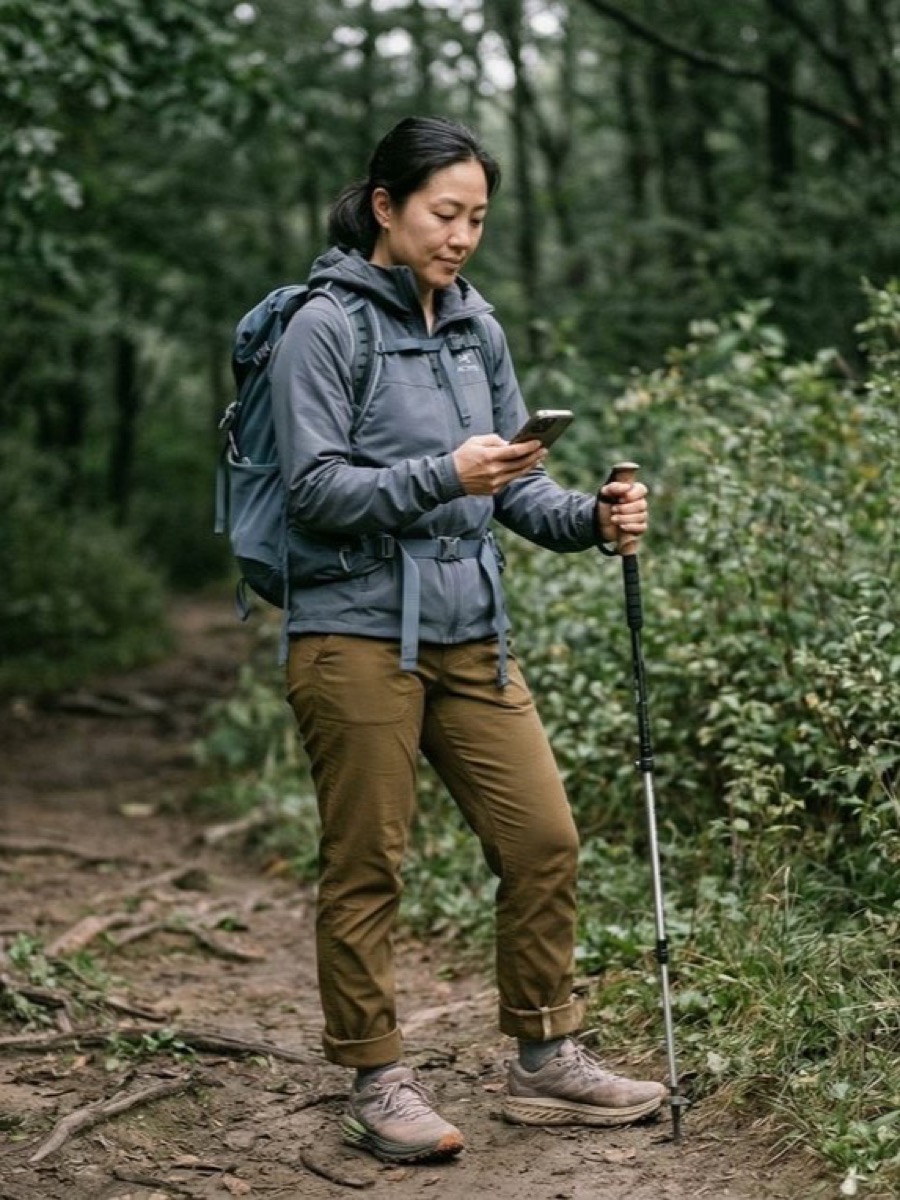
What Is a Primitive Trail? Conditions, Hazards & Safety
BACKCOUNTRY & WILDERNESS SAFETY

WHAT IS A PRIMITIVE
TRAIL? CONDITIONS, HAZARDS & SAFETY

⚡ Direct Trail Answer
A primitive trail (USFS Class 1 or 2) is a minimally developed wilderness path featuring rough unmaintained tread, no bridges or handrails, sparse or absent blazes, and natural obstacles like deadfalls and boulder fields.
Published by Fama Blog
STEP 01 • USFS CLASSIFICATION
UNDERSTAND USFS CLASS 1 & 2 STANDARDS
NATURAL RESOURCE PROTECTION • CLASS 1–2 MINIMAL TREAD

The US Forest Service classifies trails from Class 1 (Primitive) to Class 5 (Fully Paved). Primitive trails receive minimal maintenance, existing solely to protect watersheds rather than provide hiker convenience.

💡 💡 ACTION: Expect tread width under 12–18 inches with overgrown brush and loose footing.
🏛️ Verified Standard: USFS Trail Fundamentals & Classification Matrix: Class 1 trails are wild, intermittent, and natural; structures are constructed strictly from native on-site stone or timber.
Published by Fama Blog
STEP 02 • SPARSE MARKERS
PREPARE FOR SPARSE OR ZERO TRAIL BLAZES
SELF-RELIANT NAVIGATION • ZERO CAIRNS / BLAZES

Do not expect bright paint blazes or wooden junction signs. Trail routes often disappear across granite slabs, marshes, or riverbeds. Navigation requires continuous map, compass, and GPS cross-referencing.

💡 💡 ACTION: Look for faint tread wear, scuffed moss, and cut logs to confirm you are still on the historic route.
🏛️ Verified Standard: Leave No Trace & National Park Service Wilderness Protocols: Building unauthorized rock cairns is prohibited; hikers must navigate without artificial trail markers.
Published by Fama Blog
STEP 03 • NATURAL OBSTACLES
NAVIGATE BLOWDOWNS & UNBRIDGED RIVERS
TERRAIN OBSTACLE PROTOCOL • DEADFALLS & WET CROSSINGS

Downed timber (blowdowns), seasonal river torrents without bridges, loose scree fields, and knee-deep mud bogs are standard features. Crossing requires careful route scouting and physical scrambling agility.

💡 💡 ACTION: Unbuckle your backpack hip belt before crossing deep rivers so you can escape the pack if you slip.
🏛️ Verified Standard: Wilderness Medical Society River Crossing Guidelines: Unbuckling pack harness during backcountry water fords prevents drowning entrapment if swept off balance.
Published by Fama Blog
STEP 04 • SLOW PACING
REDUCE PACING ESTIMATES BY 50%
TERRAIN TIME BUFFER • 1.0–1.5 MPH TRAIL PACE

Do not expect your usual 2–3 mph walking speed. Scrambling over logs, finding faint tread, and navigating talus slows average speed to 1.0–1.5 mph. A 6-mile primitive hike often takes a grueling 5 to 6 hours.

💡 💡 ACTION: Establish an uncompromising turnaround time (e.g., 1:00 PM) to avoid being trapped on faint tread in the dark.
🏛️ Verified Standard: National Search and Rescue (SAR) Association Data: Underestimating travel time on primitive Class 1 trails is the primary cause of disoriented overnight wilderness rescues.
Published by Fama Blog
STEP 05 • MANDATORY GEAR
PACK SATELLITE MESSAGING & EMERGENCY BIVY
AUTONOMOUS SURVIVAL • GARMIN INREACH & MYLAR BIVY

Primitive trails lie outside cellular coverage. Carry a two-way satellite communicator (inReach), an ultralight emergency bivy bag, water purification filter, extra food, and a primary LED headlamp.

💡 ⚡ PRO RULE: File a detailed trip plan with a trusted emergency contact stating your exact trail entry, exit, and emergency trigger time.
🏛️ Verified Standard: National Park Service Search and Rescue Standard: Autonomous backcountry survival equipment provides the critical 24-hour buffer needed for remote rescue deployment.
Published by Fama Blog