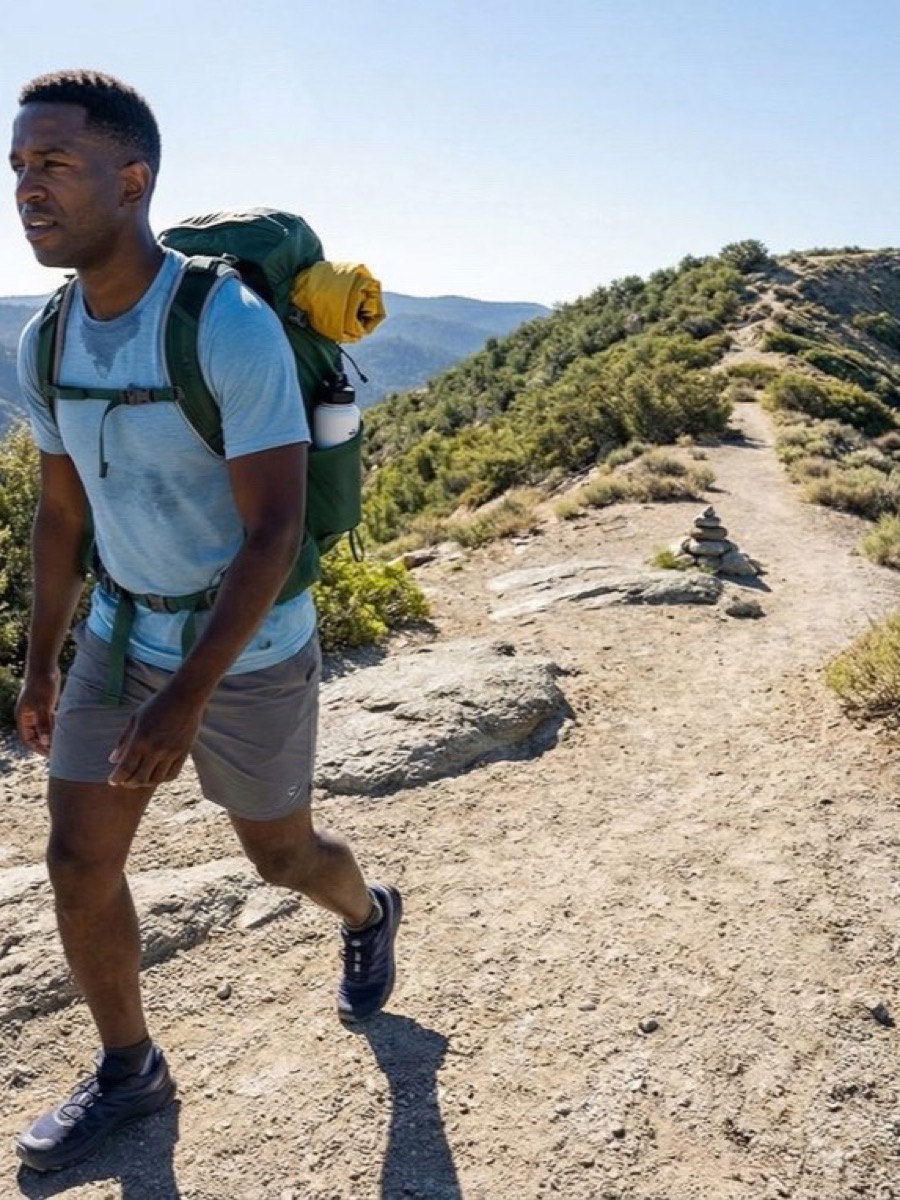
HIKING RIDGELINE TRAILS: 4
HARSH REALITIES & SAFETY RULES
Mountain ridges are the #1 strike zone for cloud-to-ground lightning. Summer solar convection builds afternoon thunderstorms with terrifying speed. You must summit early and descend below treeline before 12:00 PM.
Winds compress and accelerate as they crest mountain ridges (the Venturi effect). A mild 65°F valley morning becomes a 35°F hypothermic gale on an exposed ridge. Wind shears sap body heat 10x faster than calm air.
Ridgelines often drop thousands of feet on both sides along narrow knife-edge arêtes. Panic vertigo induces freezing. Keep your visual focus anchored on the immediate trail tread 6 feet ahead rather than the drop.
Ridges are the highest topography; water drains away instantly downhill. You will not find natural springs or creeks on an exposed ridge. Carry 3 to 4 liters of water and pre-hydrate heavily before ascending.
Before setting foot on a ridgeline, study your topographic map to identify side gullies or pass trails that allow rapid descent into protected timberline valleys if sudden severe storms roll in.