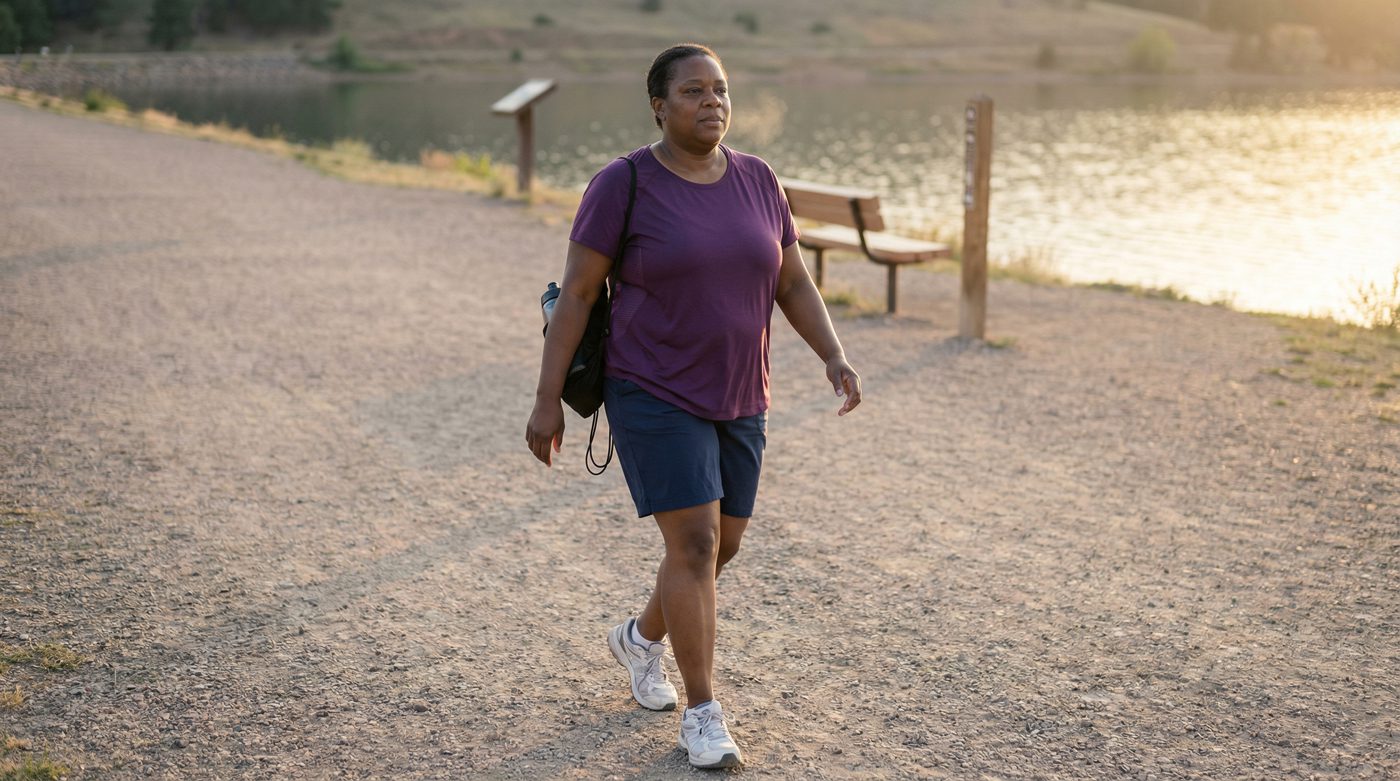
How to Start Hiking Out of Shape: 6 Steps to Trail Success
FITNESS & BEGINNER TRAILS

HOW TO START HIKING OUT OF
SHAPE: 6 STEPS TO TRAIL SUCCESS

⚡ Direct Trail Answer
Start hiking out of shape by selecting flat, well-graded 1–2 mile nature trails with under 200 ft elevation, walking at a conversational pace, using dual trekking poles to relieve knee joints, and taking 5-minute seated breaks.
Published by Fama Blog
STEP 01 • TRAIL SELECTION
START WITH 1–2 MILE NATURE LOOPS
CLASS 1 PACKED TREAD • UNDER 200 FT GAIN

Avoid mountain switchbacks on your first outing. Choose well-maintained, packed gravel park paths or rail trails under 2 miles with less than 200 feet of climb. Success on short trails builds mental momentum.

💡 💡 ACTION: Pick loop trails rather than out-and-backs so every step brings fresh scenery and predictable completion.
🏛️ Verified Standard: American Hiking Society Novice Trail Guidelines: Starting with low-impact class 1 trails prevents acute musculoskeletal strain and reinforces positive exercise habits.
Published by Fama Blog
STEP 02 • PACING DISCIPLINE
HIKE AT A CONVERSATIONAL 'TALK TEST' PACE
ZERO GASPING TOLERANCE • ZONE 2 HEART RATE

Speed is irrelevant. If you cannot speak a full sentence out loud without gasping for breath, slow down immediately. Hiking in your aerobic zone burns fat, keeps cortisol low, and prevents painful lactic acid buildup.

💡 💡 ACTION: When you feel your heart racing, stop in place, take 3 deep belly breaths, and sip cool water.
🏛️ Verified Standard: American College of Sports Medicine (ACSM) Cardiopulmonary Standards: Moderate-intensity continuous aerobic exercise builds mitochondrial enzyme density without cardiac overstrain.
Published by Fama Blog
STEP 03 • POLE STABILITY
DEPLOY DUAL TREKKING POLES
QUADRUPED BALANCE • 25% JOINT IMPACT REDUCTION

Trekking poles turn you into a four-legged walker. They distribute 20–25% of your body weight off tired knees and hips onto your arms, shoulders, and chest, significantly easing joint soreness.

💡 💡 ACTION: Set pole height so your elbow forms a relaxed 90-degree angle on level ground.
🏛️ Verified Standard: Journal of Sports Sciences Biomechanics Trials: Trekking poles significantly diminish lower-extremity joint compressive forces and ground reaction impact during loaded walking.
Published by Fama Blog
STEP 04 • CUSHIONED FOOTWEAR
CHOOSE SUPPORTIVE WIDE TRAIL RUNNERS
BLISTER PREVENTION • FOAM CUSHION & GRIP

Leave heavy, stiff leather mountaineering boots at home. Modern wide-toe-box trail running shoes offer thick responsive foam cushioning, breathable mesh uppers, and aggressive rubber traction without calf fatigue.

💡 💡 ACTION: Pair shoes with seamless merino wool socks; wool wicks moisture to eliminate friction blisters.
🏛️ Verified Standard: American Podiatric Medical Association (APMA) Recommendations: Lightweight, flexible trail footwear reduces energy expenditure by 5:1 compared to rigid high-top heavy boots.
Published by Fama Blog
STEP 05 • TRAIL MINDSET
RELEASE TRAIL SHAME & EMBRACE PROGRESS
ZERO COMPARISON CULTURE • HIKE YOUR OWN HIKE

The trail belongs to everyone regardless of body size or pace. Step aside with a smile to let fast hikers pass, and remember that moving your body in nature is already a massive victory.

💡 ⚡ PRO RULE: Celebrate time on trail rather than miles covered; 60 minutes outdoors confers proven physical and psychological benefits.
🏛️ Verified Standard: Wilderness Therapy & Ecopsychology Research: Immersive natural environments significantly lower systemic blood pressure and serum cortisol independent of hiking velocity.
Published by Fama Blog