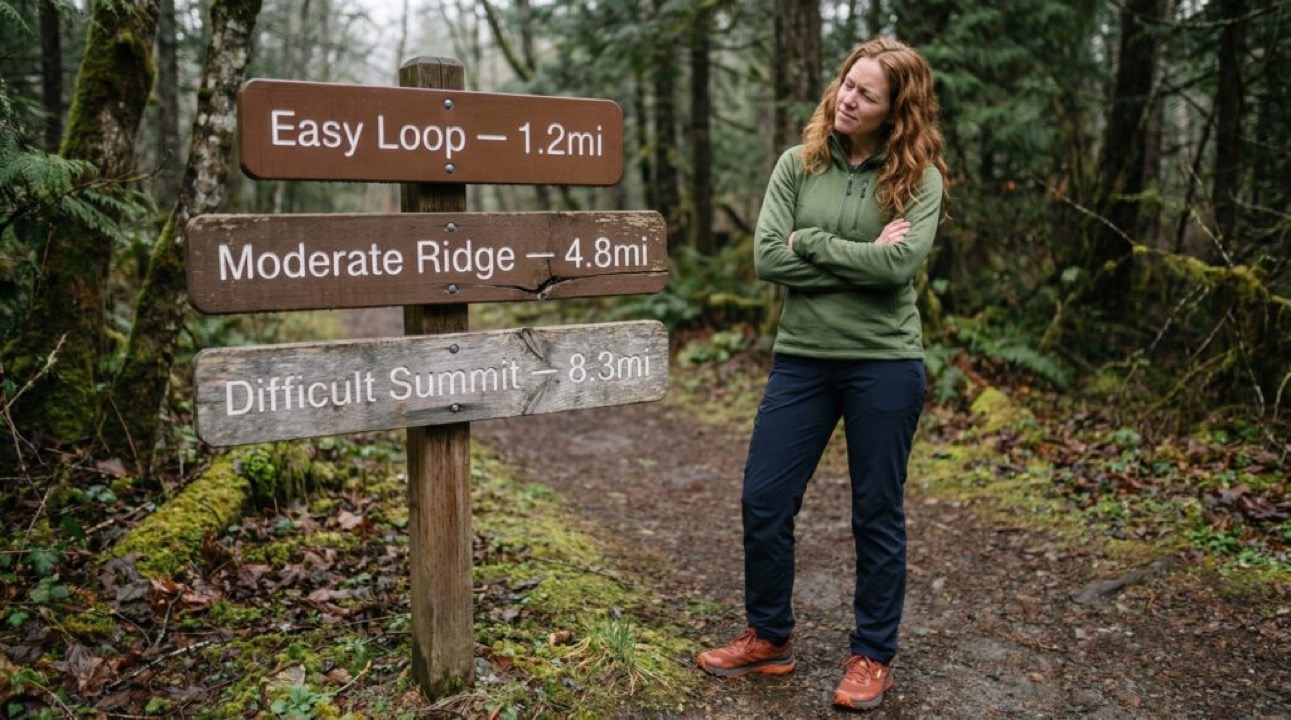
Trail Difficulty Ratings Explained
TRAIL SELECTION & GRADES

TRAIL DIFFICULTY
RATINGS EXPLAINED
ESSENTIALS

⚡ Direct Trail Answer

AllTrails difficulty ratings evaluate distance, elevation gain, and tread steepness. An 'Easy' hike is under 5 miles and flat; 'Moderate' reaches 8 miles with steady climbs; 'Hard' features technical scree and >1,500 ft gain.

Published by Fama Blog
STEP 01 • PRIMARY PRINCIPLE
EASY BENCHMARKS
ACCESSIBLE TRAILS

Easy ratings denote well-graded paths under 4 miles with less than 500 feet of total elevation gain.

🏛️ Verified Standard: USFS trail classification standards align Easy trails with Class 1 and Class 2 universally accessible surfaces.
Published by Fama Blog
STEP 02 • CORE MECHANICS
MODERATE THRESHOLDS
SUSTAINED ASCENTS

Moderate trails range from 4 to 8 miles with 500 to 1,500 feet of climbing, requiring moderate cardiovascular stamina.

🏛️ Verified Standard: American Hiking Society pacing models estimate Moderate routes require 3 to 5 hours of trail time.
Published by Fama Blog
STEP 03 • SAFETY & RULES
HARD RATINGS
TECHNICAL BACKCOUNTRY

Hard trails feature steep grades exceeding 15%, exposed drop-offs, loose talus scree, or continuous climbs over 2,000 feet.

🏛️ Verified Standard: Wilderness Medical Society warnings advise novices against Hard trails without prior elevation acclimation.
Published by Fama Blog
STEP 04 • DISTANCE & PACING
RECENT REVIEWS
CURRENT CONDITIONS

Always read user reviews from the past 7 days to check for downed trees, washed-out switchbacks, or active wildlife.

🏛️ Verified Standard: Leave No Trace safety planning principles urge checking localized trail conditions before leaving cellular service.
Published by Fama Blog
STEP 05 • FINAL FIELD CHECK
EXECUTION

Check offline navigation, hydration, and weather forecast before leaving the trailhead.

⚡ PRO RULE: Download the offline trail map before leaving home; GPS tracking functions fully even with zero cellular signal.
Published by Fama Blog