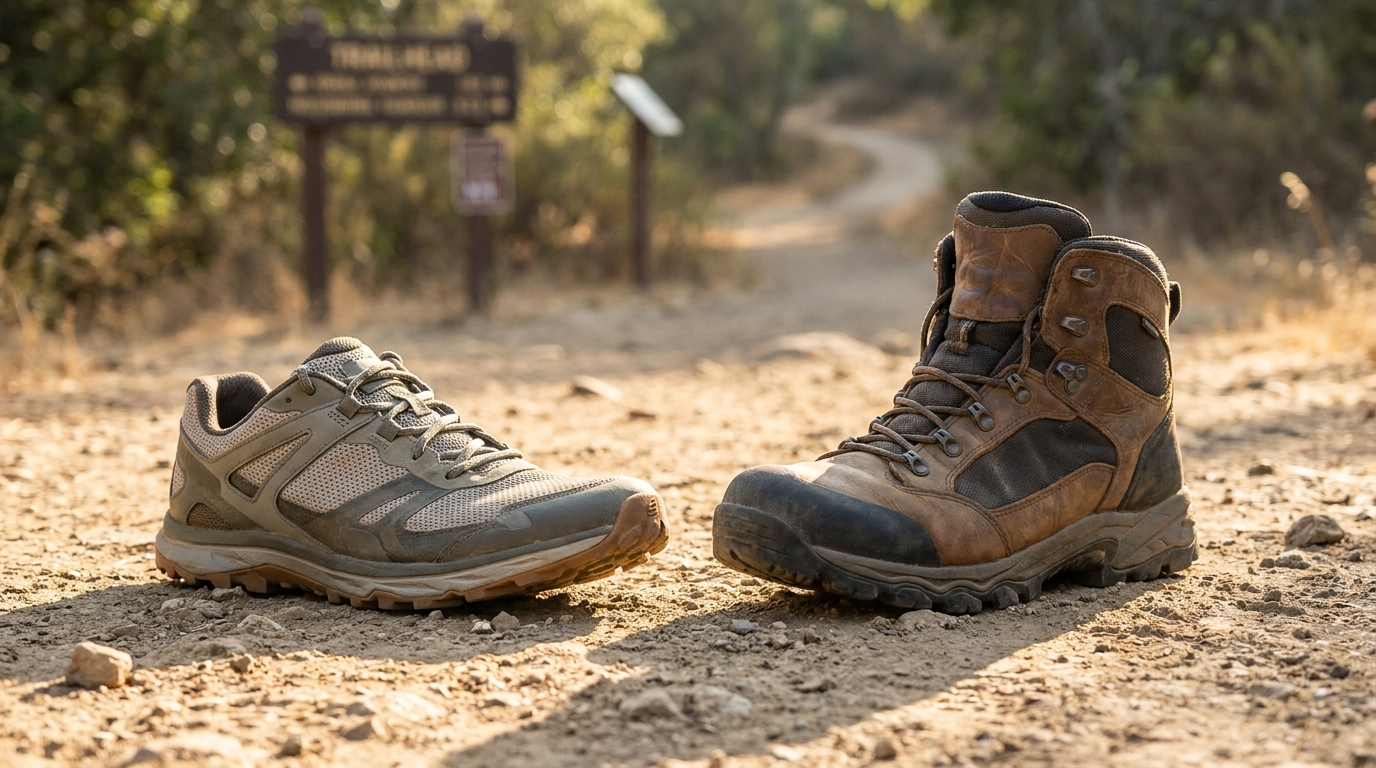
🥾 FOOTWEAR SHOWDOWN
TRAIL RUNNERS
VS HIKING
BOOTS
The Brutal Beginner Truth
85% of thru-hikers on the PCT and AT choose trail runners, but beginners face unique stability tradeoffs on rocky terrain.
RULE 01 • ENERGY PENALTY
1 LB ON YOUR FEET
= 5 LBS ON BACK
5XENERGY COST
MULTIPLIER
MULTIPLIER
Biomechanical studies prove that weight on your feet consumes 5 times more metabolic energy than equivalent load inside your backpack.
👉 Fact: A 2-lb pair of trail runners saves thousands of foot-pounds of lifting effort every single mile.
RULE 02 • ANKLE MYTH
ANKLE COLLAR
DOESN'T CURE ROLLS
WIDE BASEREAL STABILITY
FACTOR
FACTOR
Flexible fabric collars provide abrasion protection, but true stability comes from a wide outsole footprint, torsional rigidity, and strong stabilizer muscles.
👉 Rule: Boots excel when carrying 35+ lb multi-day loads or kicking steps in steep alpine snow.
RULE 03 • DRYING SPEED
WET FEET?
DRY IN 45 MINS
45 MINMESH DRAINAGE
SPEED
SPEED
Waterproof boots keep shallow dew out, but once water tops the collar, they stay wet for days. Breathable mesh trail runners pump water out with every step.
👉 Verdict: Choose trail runners for well-maintained trails; choose boots for scree, mud, and heavy packs.
ACTION STEP • FULL GUIDE
WHICH SHOE
FITS YOUR HIKE?
FIELD TESTUNBIASED GEAR
ANALYSIS
ANALYSIS
Check our side-by-side durability, traction lug, and comfort field test to make the best gear investment.
Tap below to read the comprehensive footwear comparison.