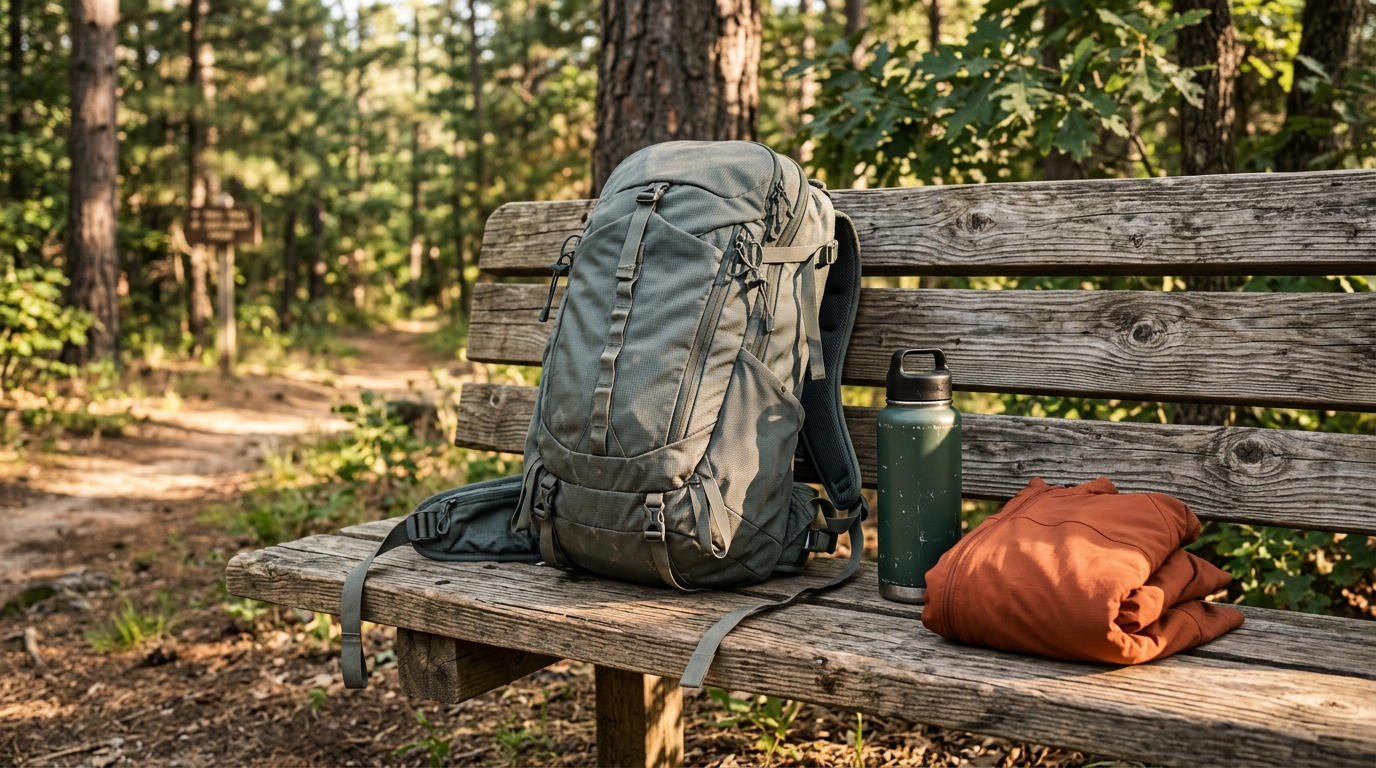
What Size Daypack to Choose?
⚡ DAYPACK GUIDE

What Size
Daypack to Choose?

Essential Trail Blueprint

⚡ Direct Trail Answer

Choose 15–20 liters for warm summer hikes under 5 miles, and 20–30 liters for full-day mountain hikes requiring extra layers, navigation, first aid, and 3L of water.

Published by Fama Blog
🥾 THE SWEET SPOT

The 20L
to 30L Standard

25 KEY BENCHMARK

A 25-liter pack is the universal sweet spot, holding 2L water, extra layers, first aid, and food easily.

🏛️ Verified Standard: American Hiking Society gear standards confirm a 20–30L pack carries the Ten Essentials without overloading your spinal column.
Published by Fama Blog
🎒 SHORT TREKS

Under 5
Miles: 10L
to 15L

5 MILES KEY BENCHMARK

Warm summer morning hikes under 5 miles need only water, phone, snacks, and keys. Keep it ultralight.

🏛️ Verified Standard: Leave No Trace outdoor recreation guidelines emphasize carrying sufficient water and basic navigation even on short neighborhood loops.
Published by Fama Blog
🦵 ALL-DAY HIKES

10+ Miles:
25L to 35L

3L KEY BENCHMARK

Full-day mountain treks demand space for rain gear, thermal mid-layers, headlamp, and 3L hydration reservoir.

🏛️ Verified Standard: National Park Service backcountry rangers recommend 30L capacity in alpine terrain where mountain weather changes without warning.
Published by Fama Blog
🧦 WEIGHT RULE

Keep Pack
Under 10% Bodyweight

10% KEY BENCHMARK

Loaded daypacks should not exceed 10% of your body weight to protect shoulders and prevent lumbar pain.

🏛️ Verified Standard: American Chiropractic Association and spine biomechanics studies prescribe keeping day packs under 10% of total body mass.
Published by Fama Blog
💧 COMPLETE REVIEW

Find Your
Ideal Daypack

RULE FIELD PROTOCOL

Prioritize packs with supportive padded hip belts and sternum straps to transfer 70% of load weight directly onto your pelvic girdle.

⚡ PRO RULE: Measure your torso length from C7 vertebra to iliac crest; daypack comfort is determined by torso fit, not body height.
Published by Fama Blog