


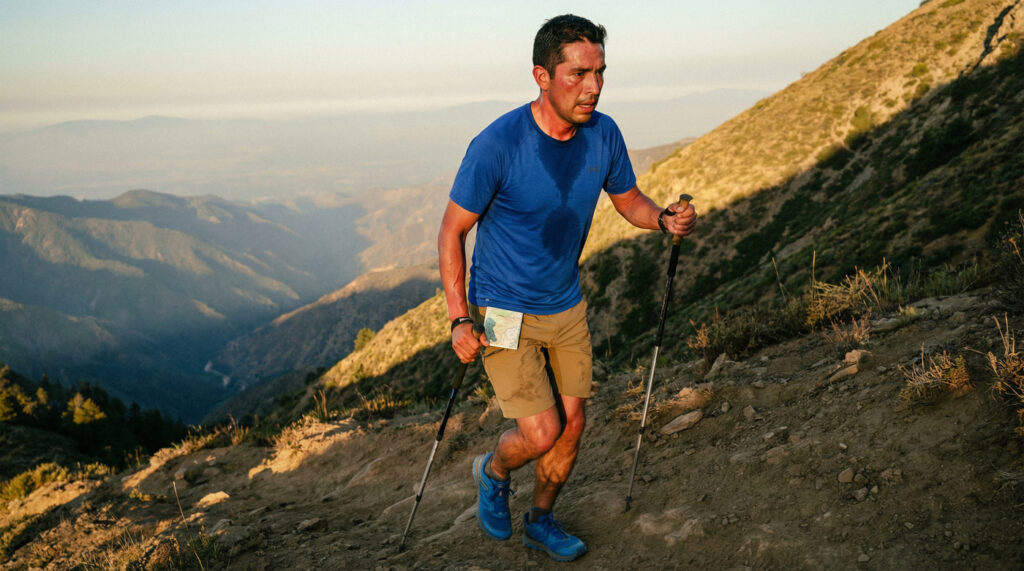
Is hiking good exercise? Yes, and for most beginners, it’s better exercise than they expect from something that doesn’t feel like working out. A 2-hour hike on moderate terrain burns 600 to 900 calories, elevates heart rate into the cardio zone for most of that time, and loads muscle groups that gym routines and running rarely touch. It also happens outside, which changes the physiological picture in ways that matter and that most fitness comparisons ignore.
⚡ Quick Trail Takeaways
- Cardiovascular Impact: Consistent hiking reduces resting blood pressure and increases VO2 max by 8-12% within 6 weeks.
- Bone Density & Strength: Weight-bearing descents stimulate osteoblast bone remodeling and strengthen connective knee tendons.
- Mental Health Benefits: Nature immersion (shinrin-yoku) lowers circulating cortisol stress hormone levels by over 20% in 30 days.
The honest caveat: hiking is not the same exercise for everyone. A flat 2-mile trail at a comfortable pace is a walk with scenery. A 5-mile trail with 800 feet of gain in summer heat is a legitimate cardio and strength session. The fitness value scales directly with terrain, distance, and elevation, which means the question “is hiking good exercise” is really asking “is this hike enough of a challenge to produce real fitness results?”
I didn’t think hiking would change anything about my fitness when I started. I was already running a few times a week and figured a trail walk was a step down from that, not a step sideways into something different. After about six weeks of regular hiking (two or three times a week, 4 to 6 miles, moderate elevation), my resting heart rate had dropped four points, my legs looked noticeably different, and the hip flexor issue I’d been managing for two years had almost completely resolved. None of that was what I expected from “going for a hike.”
Here’s what actually happens to your body when hiking becomes a regular part of your fitness routine, and the specific numbers behind each change.
Why Hiking Produces Real Fitness Results
Most people underestimate hiking for fitness because it doesn’t feel like a workout while you’re doing it, at least not the same way a spin class or a tempo run does. There’s no instructor counting reps. No pounding rhythm. The effort is variable rather than sustained, and you’re often distracted enough by the surroundings that you’re not monitoring your perceived exertion the way you would on a treadmill.
That variability is actually the mechanism, not a limitation.
Hiking loads your body differently every few seconds. Incline changes recruiting patterns. Rocky terrain activates stabilizer muscles. A sudden step up onto a boulder is a single-leg press. A careful descent requires eccentric quad contraction, the hardest kind, for sustained periods. Your cardiovascular system responds to these demand changes rather than settling into a steady state, which forces more adaptation than a fixed-pace workout at the same average heart rate.
A 2013 study published in the British Journal of Sports Medicine found that participants who walked on uneven natural terrain showed greater improvement in balance, coordination, and lower-body stability than matched groups walking on flat surfaces, even at the same total distance and same average pace. The terrain is doing work that the flat-ground equivalent doesn’t do.
For hiking health benefits specifically, there’s also an environmental factor that most fitness comparisons miss. Research published in Environmental Health and Preventive Medicine found that time in natural environments (what Japanese researchers call shinrin-yoku, or forest bathing) reduces cortisol levels, lowers blood pressure, and decreases resting heart rate at magnitudes that indoor exercise doesn’t replicate, even at comparable intensity levels. You’re not just working out. You’re working out in an environment that has its own physiological effect.
None of this makes hiking magic. It makes it legitimate, and for beginners who aren’t interested in gyms, who find running hard on joints, or who want fitness that comes with a reason to be outside, it makes hiking one of the more well-rounded exercise options available.
What Hiking Does to Your Body: The Honest Breakdown

Your Cardiovascular System Adapts Faster Than Expected
Is hiking good exercise for your heart? The data says yes, with specificity. A 2019 meta-analysis in the Journal of the American Heart Association found that regular walking in natural environments, including hiking, reduced risk of cardiovascular disease by 17% in previously sedentary adults, with measurable improvements in resting heart rate appearing within 6 to 8 weeks of consistent activity.
What “consistent activity” means in practice: two to three hikes per week, 45 minutes to 2 hours each, on terrain with enough elevation to keep heart rate in the moderate-intensity zone (roughly 50 to 70% of maximum heart rate) for at least 30 minutes of the outing.
On flat terrain at comfortable pace, heart rate stays in the light activity zone for many adults, real exercise but not cardio training in the clinical sense. On uphill sections, heart rate climbs into moderate and sometimes vigorous zones, the ranges associated with cardiovascular adaptation. The steeper the terrain, the more cardio work the hike delivers.
For beginners, this produces a measurable resting heart rate drop within four to eight weeks of regular hiking. That’s not a small thing. A resting heart rate that drops from 74 to 68 beats per minute represents real cardiac efficiency improvement: your heart pumping the same volume of blood with less effort per beat. Most people notice this as improved stamina on climbs that felt hard at the start.
Your Legs Build Functional Strength Without a Gym
Hiking for fitness loads the lower body in ways that gym training typically doesn’t. Squats and leg presses train the quads and glutes through a controlled range of motion. Trail hiking trains them through constant variation: different angles of push, different lengths of stride, different single-leg loading as you step over roots and onto uneven ground.
Specifically, the muscles that respond most visibly to regular hiking:
Glutes and hip abductors. Every uphill step is a glute activation. On sustained climbs, the glutes work for minutes at a stretch in a way that most gym exercises replicate in short sets. After 4 to 6 weeks of regular hiking on terrain with real elevation, most beginners notice their glutes have changed in ways their usual exercise hadn’t produced.
Calves and tibialis anterior. The calf complex works hard on every uphill step. The tibialis anterior, the shin muscle, works hard on every downhill step as your foot flexes to control descent. These muscles often develop faster than hikers expect, and the calf improvement in particular is something most women in especially notice quickly when regular hiking becomes part of their routine.
Hip flexors and stabilizers. This was the one that surprised me most. The hip flexors and the small stabilizer muscles around the hip joint get constant work from the variable terrain and stride patterns of trail hiking. For people who sit at desks and have tight or underactivated hip flexors, regular hiking is often more rehabilitative than a targeted hip flexor stretching routine, because it’s active loading rather than passive stretching.
Core. Less obviously than the lower body, but meaningfully: hiking on uneven terrain requires constant minor adjustments from the core to maintain balance. This is low-intensity, sustained core work, not the kind that produces visible abs, but the kind that reduces lower back pain and improves posture in people who do it consistently.
You Burn More Calories Than Most People Estimate
The hiking health benefit that surprises beginners most: caloric expenditure. Hiking burns significantly more calories than walking at the same distance, and more than many people expect from an activity that doesn’t feel like a hard workout.
The numbers, by terrain and body weight:
For a 160-pound adult on flat trail: roughly 370 to 430 calories per hour.
For a 160-pound adult on moderate terrain with elevation: 430 to 550 calories per hour.
For a 160-pound adult on steep mountain terrain: 550 to 700 calories per hour.
At 180 pounds, add approximately 10 to 15% to each range. At 140 pounds, subtract roughly the same. A pack adds caloric cost too: carrying 20 pounds of pack weight increases expenditure by about 5 to 10%.
For context: a 160-pound person burns approximately 370 calories per hour jogging at 5 mph. A brisk flat hike is comparable in caloric cost to a moderate jog. A hike with 600 feet of gain per hour burns more than that jog.
The more useful framing for hiking for fitness purposes: a 3-hour hike with moderate elevation burns 1,200 to 1,500 calories. Most people don’t eat anywhere near that much extra on hiking days, which creates a caloric deficit without the metabolic suppression that deliberate calorie restriction often produces. This is one of the reasons regular hiking tends to produce weight loss in beginners who aren’t specifically trying, without the hunger and energy crashes that come from deliberate dieting.
Your Bone Density Improves
Running gets most of the credit for bone-building exercise, but hiking produces real bone density improvements that matter especially as a long-term health benefit.
Hiking is weight-bearing exercise: every step loads bone through your feet, ankles, knees, hips, and spine. That mechanical loading signals bone-forming cells to increase activity, gradually increasing bone density in the areas that hiking loads most. The Journal of Bone and Mineral Research has published multiple studies showing significant bone density increases in the hip and spine of adults who added regular hiking to sedentary baselines, improvements comparable to those from running but with lower injury rates.
The lower injury rate matters. Running produces bone density gains quickly but comes with a 30 to 50% annual injury rate in regular runners. Hiking produces similar gains on a longer timeline but with injury rates a fraction of that. For anyone who wants the bone density benefits of weight-bearing exercise without the joint stress of running, hiking is the practical answer.
Your Mental Health Shifts Noticeably
Is hiking good exercise for mental health? This is where the research is most consistent and most striking.
A Stanford University study from 2015 found that participants who walked 90 minutes in a natural environment showed significantly lower neural activity in the prefrontal cortex, the brain region associated with rumination and repetitive negative thought, compared to participants who walked the same distance in an urban environment. That’s not a self-report study. It’s an fMRI study measuring actual brain activity. Time in nature changes what your brain does during and after the walk.
The clinical numbers on hiking health benefits for mood: a 2020 review in Frontiers in Psychology found that regular participation in outdoor walking, including hiking, reduced symptoms of depression and anxiety by clinically meaningful margins across all age groups studied. The effect was strongest in people with mild to moderate symptoms, but present even in participants without diagnosed conditions.
For beginners in particular, there’s also a confidence component that’s harder to quantify but consistently reported: finishing a trail that felt hard at the start, especially the first few times, builds a specific kind of self-efficacy. You did something physically difficult outside. That feeling generalizes in ways that a completed workout in a gym doesn’t, for most people.
Your Sleep Quality Improves
This one takes a few weeks to notice but it’s consistent enough to be worth mentioning as a specific hiking health benefit.
Regular moderate exercise improves sleep quality in multiple ways: lower resting cortisol from cardiovascular adaptation, physical fatigue that triggers deeper slow-wave sleep, and (specific to outdoor exercise) exposure to natural light during the day, which helps calibrate circadian rhythm and makes falling asleep easier at night.
The light exposure component is often underestimated. Even on an overcast day, outdoor light is 10 to 100 times brighter than typical indoor light. That light exposure signals the body to reduce melatonin production during daytime hours, which in turn means more robust melatonin release at night. Regular hikers often report improved sleep within two to three weeks, better sleep onset and less middle-of-the-night waking, that they don’t get from gym exercise alone.
Your Balance and Coordination Develop Without Trying
After four to six weeks of regular trail hiking, most people notice improved balance, not just on trail, but in daily life. Stepping off a curb, recovering from a stumble, catching yourself on an uneven surface. Trail terrain trains proprioception constantly and passively: your ankles, knees, and hips make hundreds of micro-adjustments per hour on uneven ground, developing neural pathways that flat-ground exercise doesn’t build.
This proprioceptive improvement is one of the most practically useful long-term fitness benefits of hiking for older adults. Falls are the leading cause of injury-related death in adults over 65 in the United States, according to the CDC. Regular trail walking, even on easy terrain, is one of the more effective interventions for maintaining the balance and coordination that prevents falls. You’re not just getting a workout. You’re building a physical competency that matters across decades.
When Hiking Produces the Most Fitness Return
The fitness value of hiking scales with how much you ask of your body. Three variables determine that:
Elevation gain. Above 200 feet per mile, hiking reliably enters cardio exercise territory. Below 100 feet per mile, it’s closer to a vigorous walk, still good for you, but not producing the cardiovascular and muscular adaptations that come from real climb. If hiking for fitness is the goal, look for trails with at least 100 to 150 feet of gain per mile, and push toward 200 to 300 as your fitness builds.
Duration. The fitness benefits of hiking compound with time. A 45-minute hike is real exercise. A 2-hour hike on the same terrain produces greater cardiovascular adaptation, more caloric expenditure, and more muscular loading. Two to three hikes per week in the 60 to 90-minute range is enough to produce measurable fitness changes within four to six weeks.
Consistency. This is the variable that matters most and that beginning hikers most often underestimate. Two hikes is a nice weekend. Eight hikes over a month starts to produce the resting heart rate changes, the lower body strength gains, and the sleep improvements described above. Sixteen hikes over two months, two per week consistently, is where the fitness picture really changes.
The REI Expert Advice guide to hiking fitness and training breaks down periodization for building toward longer hikes if you want a more structured progression. But for most beginners, the simple version is: go consistently, add elevation gradually, and let the terrain do the work.
What Hiking Doesn’t Do Well
Honest answer to “is hiking good exercise” requires acknowledging the gaps.
Upper body. Hiking builds legs and core. It does almost nothing for chest, shoulders, biceps, or triceps unless you’re using trekking poles with real arm engagement on serious terrain. If upper body fitness is a goal, hiking alone doesn’t cover it.
High-intensity interval adaptation. Hiking keeps most people in the moderate-intensity zone. That’s excellent for baseline fitness, cardiovascular health, and caloric expenditure. It doesn’t produce the VO2 max improvements or fast-twitch muscle recruitment that high-intensity training does. Runners and athletes training for performance need training that hiking doesn’t replace.
Rapid weight loss in isolation. Hiking creates a caloric deficit and produces body composition changes, but slowly. Someone expecting significant weight loss from hiking alone in 30 days will be disappointed. Over 90 days of consistent hiking? The changes are real and often substantial. But 30 days is not enough time for dramatic weight change from exercise alone regardless of activity type.
These limitations don’t make hiking less worthwhile. They make it honest. Hiking for fitness works best when you know what it delivers and what it doesn’t.

Common Mistakes That Reduce the Fitness Value of Hiking
Always taking the same easy trail. The body adapts. A trail that challenged you on your first hike becomes easier after four outings, which means it’s producing less stimulus for adaptation. Progressive difficulty is how all exercise works. Every three to four hikes, add distance, elevation, or pace. Staying on the same comfortable trail indefinitely is a walk, not a fitness program.
Not eating before longer hikes. This affects fitness outcomes more than most beginners realize. A hike done on insufficient fuel doesn’t deplete fat stores and trigger adaptation the way a well-fueled hike does. It depletes muscle glycogen, which the body then compensates for by breaking down muscle protein. Eating well before a hike preserves the muscle you’re building.
Ignoring the downhills. Most beginners push hard on uphills and coast mentally on the way down. But controlled descents, keeping pace deliberate and using your legs as brakes on steep terrain, are where eccentric muscle training happens. That eccentric loading is responsible for much of the strength and hypertrophy response to trail hiking. Hiking down quickly and carelessly is both a fall risk and a wasted fitness opportunity.
Going too hard too fast. The injury risk from hiking is low compared to running, but overuse injuries from ramping up too quickly are real. Going from sedentary to five hikes a week in two weeks is a reliable path to tendinitis or knee pain. Add one hike per week for the first month. Then add elevation. The body adapts fast on this kind of loading; you don’t need to accelerate it with volume.
Is hiking good exercise for weight loss?
Hiking is effective for weight loss over a sustained period, primarily through caloric expenditure, 400 to 700 calories per hour depending on terrain and body weight, and the body composition improvements that come from building lower-body muscle. Most beginners who hike consistently two to three times per week notice real changes within 60 to 90 days. Thirty days of consistent hiking produces early results, reduced bloating, improved energy and slightly changed leg composition, but dramatic weight loss takes longer. Hiking health benefits for weight are real; they’re also slow and compound, not fast.
How does hiking compare to running for fitness?
For cardiovascular fitness, regular running produces faster VO2 max gains than hiking. But hiking produces comparable improvements in resting heart rate, lower blood pressure, and metabolic efficiency over a slightly longer timeline, with significantly lower injury rates. Running injuries affect 30 to 50% of regular runners annually. Hiking injuries are far less common. For people who want lasting cardiovascular fitness without the joint stress of running, hiking is a legitimate long-term answer. For people training for running performance or speed, hiking doesn’t replace running.
Can hiking replace the gym for fitness?
For lower body strength and cardiovascular fitness: mostly yes, especially on trails with real elevation. For upper body strength, core strength beyond functional stability, and high-intensity adaptation: no. Most adults who hike regularly two to three times per week on moderate to challenging terrain and complement it with basic upper-body strength work two days per week have fitness outcomes comparable to gym-only exercisers, with the additional hiking health benefits of outdoor light exposure, lower stress hormones, and better sleep.
How often should I hike to see fitness results?
Two to three times per week is the threshold where consistent fitness changes appear. Once a week is active recreation, good for health but not reliably enough to produce progressive cardiovascular or muscular adaptation. Four or five times per week accelerates results but increases overuse injury risk in beginners. Start at two hikes per week for the first month, add a third once that feels sustainable, and vary terrain and elevation rather than adding more days.
Does hiking count as cardio?
It depends specifically on terrain and current knee condition. Flat and gentle terrain hiking is low-impact and often therapeutic for people with knee issues: the muscular strengthening around the knee joint from walking on natural surfaces is genuinely rehabilitative for many conditions. Steep descents are the concern: downhill hiking loads the knee joint significantly and can aggravate existing issues. Anyone with diagnosed knee conditions should get specific guidance from a physical therapist before doing significant elevation hiking. For general knee health in otherwise healthy adults, regular moderate hiking strengthens the muscles that protect the knee and reduces injury risk over time.
Does hiking count as cardio?
Yes, on terrain with meaningful elevation. On a trail with 150-plus feet of gain per mile, hiking keeps most adults in the moderate-intensity cardio zone (50 to 70% of max heart rate) for sustained periods, exactly the zone associated with cardiovascular adaptation and improved metabolic health. Flat hiking at a comfortable pace stays in the light activity zone for many adults, which is healthy but closer to an active walk than cardio training. If is hiking good exercise for your heart is the question, the answer is yes — with the honest addition that “which hike” matters as much as “hiking.”
What are the mental health benefits of hiking specifically?
The research on hiking health benefits for mental health is consistent across study types: Stanford’s 2015 fMRI study showed measurable reduction in rumination-related brain activity after 90 minutes in natural environments; multiple clinical reviews show reduced symptoms of anxiety and depression from regular outdoor walking; and cortisol levels, the primary stress hormone, drop measurably during and after time in natural settings. These effects are present from hiking specifically and not fully replicated by indoor exercise at matched intensity. The outdoor environment is part of the mechanism.
The Fitness Case, Honestly Made
Is hiking good exercise? For most beginners, it’s better exercise than they expected — and different exercise than they’ve been doing. Cardiovascular improvement, lower body strength, bone density, balance, sleep quality, and measurable mental health benefits all appear with consistent hiking on terrain with real elevation. The timeline is 4 to 8 weeks for early changes, 60 to 90 days for the fuller picture.
The conditions that matter: two to three hikes per week, terrain with at least 100 to 150 feet of gain per mile, total duration of 60 to 90 minutes per outing. That’s a realistic starting commitment, not an intensive training program. The fitness results from hiking for beginners are proportional to terrain and consistency, and both of those are completely within your control.
One thing to do this week: pick one trail within 30 minutes of you with at least 200 feet of elevation gain and put it on your calendar for two specific days. Not “I’ll try to hike twice this week.” Two days, one trail, written down. That’s what consistency looks like in its earliest form.
Next Steps
- Right now: Check AllTrails for trails within 20 miles that have at least 200 feet of elevation gain. Those are your fitness hiking targets. Note one specifically.
- Before your first fitness hike: Eat a real meal 90 minutes before. Pack 2 liters of water. Download the offline map. Set a consistent two-per-week goal in your calendar, not a vague intention.
- After 30 days: Note your resting heart rate at the start (check it before getting out of bed on a rest day) and again after 30 days of consistent hiking. The change there is the clearest early fitness signal the body produces.
Related Reads
Wondered if hiking could actually move the needle on weight loss or if you’d need to pair it with something more intense? Here are 6 methods that actually work for losing weight through hiking, no gym membership required.
Eyed your old running shoes by the door and wondered if spending money on hiking boots was really necessary before your first trail? Here are 5 truths about hiking in running shoes that beginners need to hear before you either buy boots you don’t need or regret the ones you skipped.
Sat down on the couch the second you got home from a hike and didn’t move for the rest of the evening, even though the trail didn’t feel that hard while you were on it? Here are 7 real reasons hiking can wipe you out more than expected, and some have nothing to do with fitness.
Woke up the morning after a hike feeling like your legs had been replaced overnight with something that no longer worked properly? Here are 7 causes of that post-hike exhaustion and 5 recovery tricks that actually speed things up next time.
Showed up at a trailhead full of people in matching gear and expensive boots and immediately felt like you’d wandered into the wrong place? Here’s how to build hiking confidence when you feel completely out of place, because almost everyone there once felt exactly the same way.