
Author: Oliver Fall

A wilderness area is not a harder version of regular trail hiking. It is a legally distinct land classification under the 1964 Wilderness Act, and it removes nearly every system that makes standard trails navigable for unprepared hikers: marked trails, maintained tread, trail signs, rangers on patrol, and in most sections, cell service. Wilderness area hiking for beginners requires specific preparation that regular trail experience does not automatically provide. The three things that matter most: offline navigation skills, emergency communication equipment, and an honest assessment of your group’s ability to self-rescue if something goes wrong 4 miles from the trailhead…
Read More

A ridgeline trail for beginners is easy to underestimate. The trail description reads something like “moderate, 5.2 miles, 900 feet elevation gain, great views.” None of that tells you the climb is front-loaded into the first 1.8 miles, that the wind at the ridge crest is 30 mph when it’s calm in the parking lot, or why three separate groups turned around on the section I hiked last August before 11 AM. I picked that trail because the AllTrails rating said moderate and the photos showed open sky and wide path. Both were accurate. I still hit 94°F on the…

Read More

Primitive trail meaning in hiking is simple on paper: a trail that receives little to no official maintenance, has few or no marked signs, and puts navigation, route-finding, and self-rescue responsibility entirely on you. In practice, that single definition changes almost every assumption a beginner brings to trail planning. The first time I encountered a primitive trail listing on AllTrails, I treated it like any other green-dot easy rating. The trail was listed as 3.2 miles with modest elevation gain. What the listing did not say: the blazes stopped at mile 0.8, the path narrowed to a faint line through…

Read More

How to make a hiking habit is not a motivation problem. It feels like one. The first few hikes go well, the next few weekends go well, and then a work deadline eats one Saturday, a minor cold eats the next, and by the time the gap shows up clearly it has been six weeks since you were last on a trail. I did exactly this. I hiked every weekend for ten weeks when I first started, including one rainy November Saturday on a trail I had done twice already, just because it was close and I had committed to…

Read More

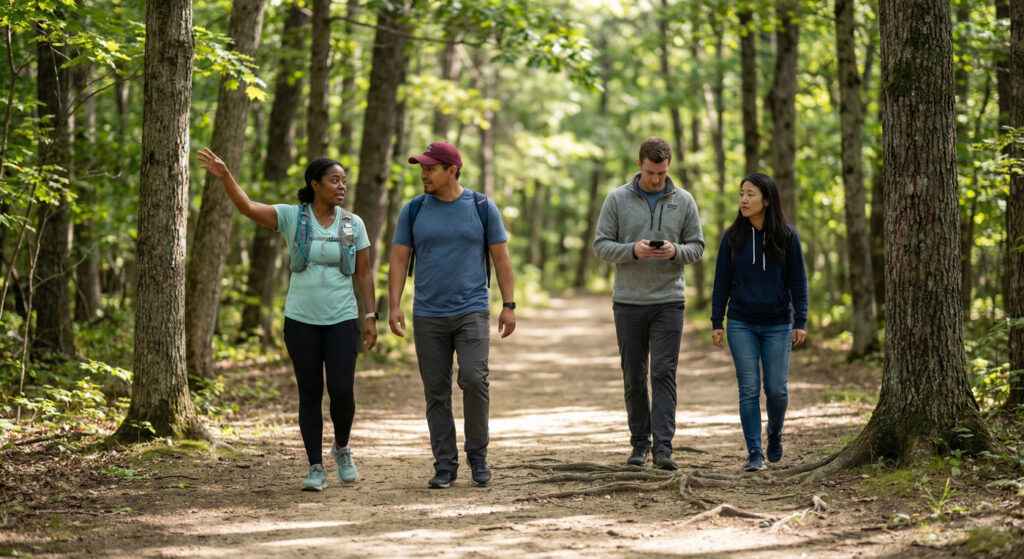
Hiking with friends for beginners is harder to plan than hiking alone, and the reason has almost nothing to do with the trail. It is the people. Specifically: different fitness levels, different expectations, and the particular pressure of not wanting to be the one who slows everyone down or calls for the turnaround. The question most people have before a first group hike is not “which trail should we do.” It is “how do I not make this awkward.” That concern is real, and it is almost entirely solvable before anyone leaves the parking lot. I organized a group hike…

Read More

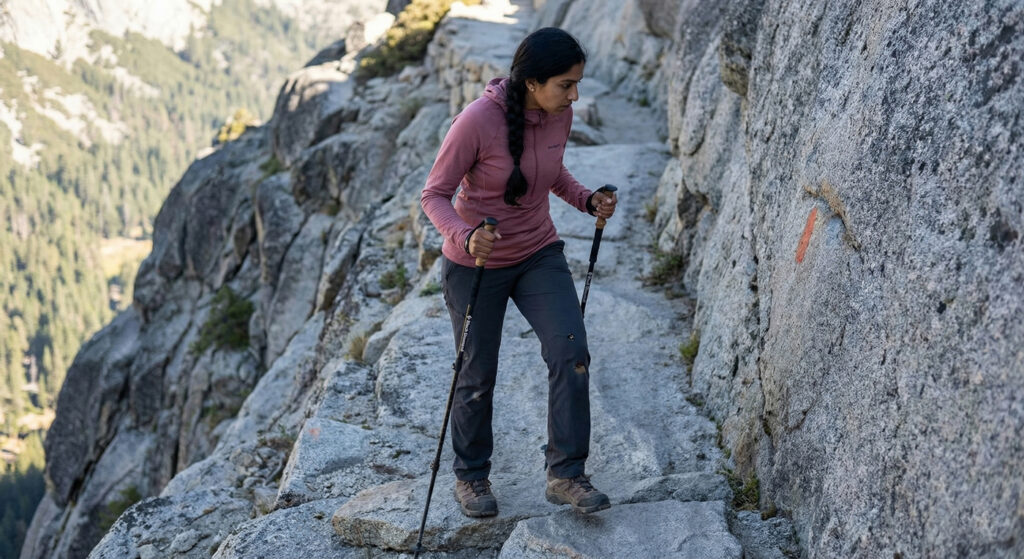
Hiking with fear of heights is more common on trail than most hiking content acknowledges. Studies in anxiety research consistently place clinical acrophobia among the more prevalent specific phobias in the general population, and a far larger group experiences significant height-related caution that stops short of clinical diagnosis. On exposed trails, the numbers feel even higher than that. The first time I understood what that actually felt like mid-trail, I was standing at the start of a ridge traverse in the San Gabriel Mountains. The drop on the right side was maybe 150 feet. The path was solid granite, two…

Read More

How to pace yourself hiking is something most beginners figure out the hard way: you start at what feels like a comfortable speed, you’re breathing hard by mile one, and you’re completely depleted by the turnaround. The distance wasn’t wrong. The pace was. Pacing is not about going slow. It’s about going at a speed your body can sustain for the full trail, including the return trip and the elevation changes you haven’t hit yet. Most beginners burn their first third of energy in the first quarter of the trail, which is exactly backwards. My first real test of this…

Read More

How to start hiking out of shape is a question most beginner guides dodge by pretending the reader already has a baseline fitness level. This one doesn’t. If you’re sedentary, overweight, or haven’t done anything physically demanding in years, this article is written specifically for where you actually are. The honest answer: you start shorter than you think you need to, flatter than feels ambitious, and more patiently than hiking content usually suggests. That’s not a consolation prize. It’s the approach that actually builds the habit and the fitness at the same time, rather than producing one brutal outing and…

Read More

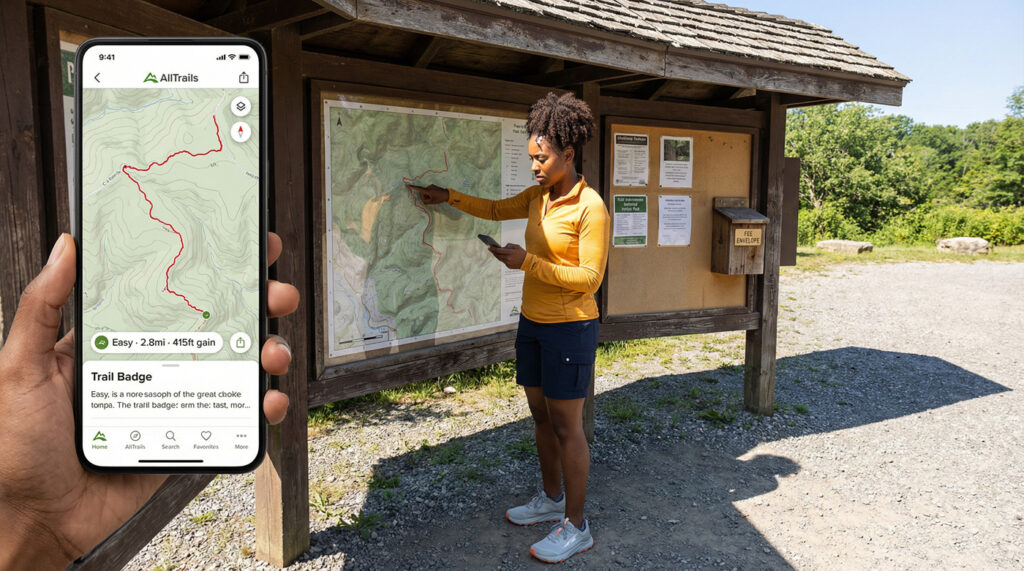
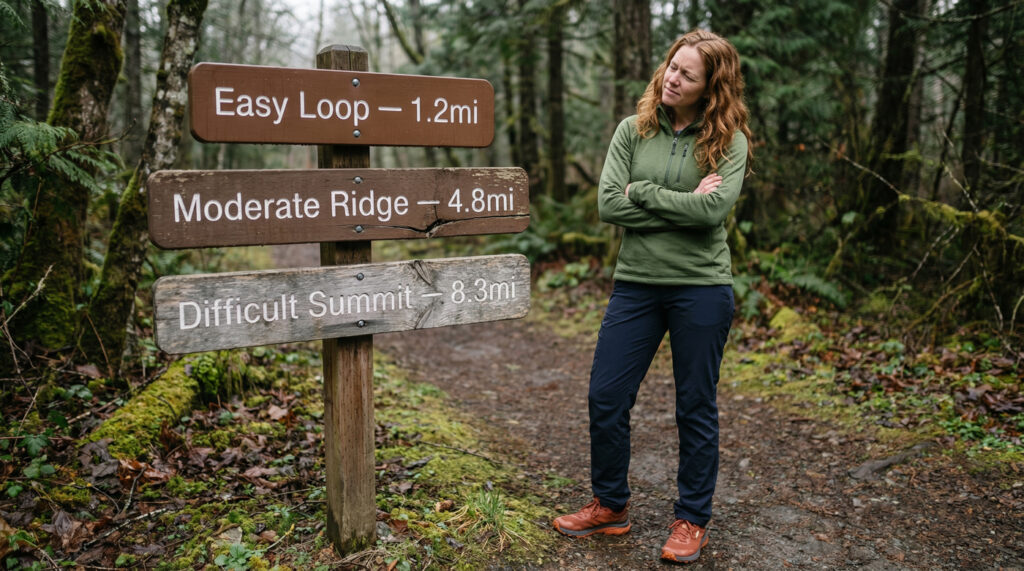
AllTrails difficulty ratings explained in one sentence: they’re relative, inconsistent across trail types, and calibrated to the average of all hikers who reviewed the trail, not the first-timer standing at the trailhead trying to figure out if they’ve made a terrible decision. “Moderate” on AllTrails can mean a breezy 3-mile loop with 200 feet of gain. It can also mean a 6-mile ridge climb with 1,400 feet of elevation that humbles experienced hikers on the steep sections. Both get the same label. Neither comes with a footnote explaining which version you’re looking at. I found this out the hard way.…

Read More

How to get in shape for hiking comes down to three things: lower-body strength, cardiovascular endurance built for sustained moderate effort, and balance on uneven terrain. Build all three in the right order over eight weeks, and your first real trail feels like a challenge you were ready for — not one that blindsided you. Most beginners prepare by doing more of what they already do: more walking, more treadmill time. That builds something. It doesn’t build the specific things hiking asks for, which is why fit people regularly get surprised by terrain their gym-conditioned body wasn’t ready for. I…

Read More

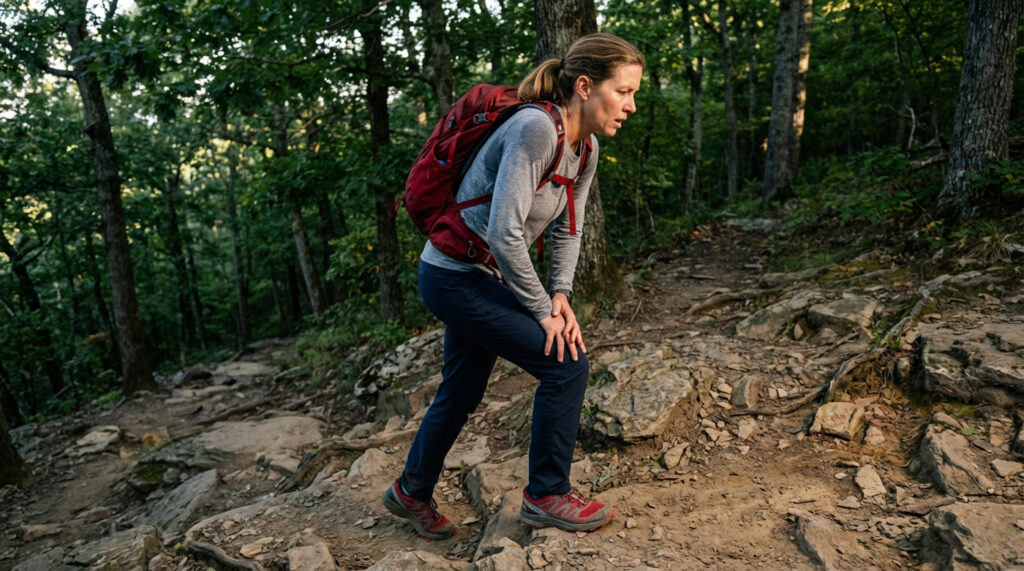
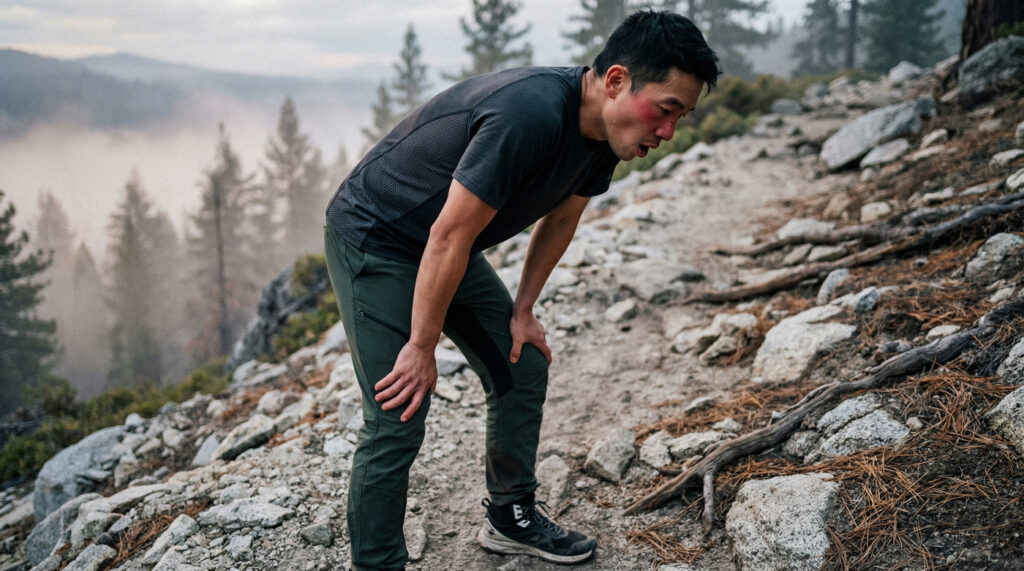
Why am I so tired after hiking: that question hits every beginner from the couch, legs aching, surprised by how completely wrecked they feel after what the app called an “easy” 3-mile loop. The short answer: hiking uses your body in ways almost no other exercise does. Not just your legs. Your stabilizer muscles, your cardiovascular system, your thermoregulation, and your brain are all working simultaneously. Do all of that for two hours on uneven terrain in the sun, and the tiredness afterward is not a sign something went wrong. It’s a sign the trail did exactly what it was…

Read More

How often should you hike as a beginner? Twice a week is the honest answer for most adults starting out. Not once — that’s not enough repetition to build trail fitness or make hiking feel natural. Not every day, either. That’s more load than most beginners’ legs, joints, and connective tissue are ready for in the first few months. That answer will frustrate some people. Too simple. Surely it depends on fitness level, trail difficulty, age, goals. And yes, all of those matter in the fine print. But most beginners aren’t asking a nuanced fitness science question. They’re asking what…

Read More

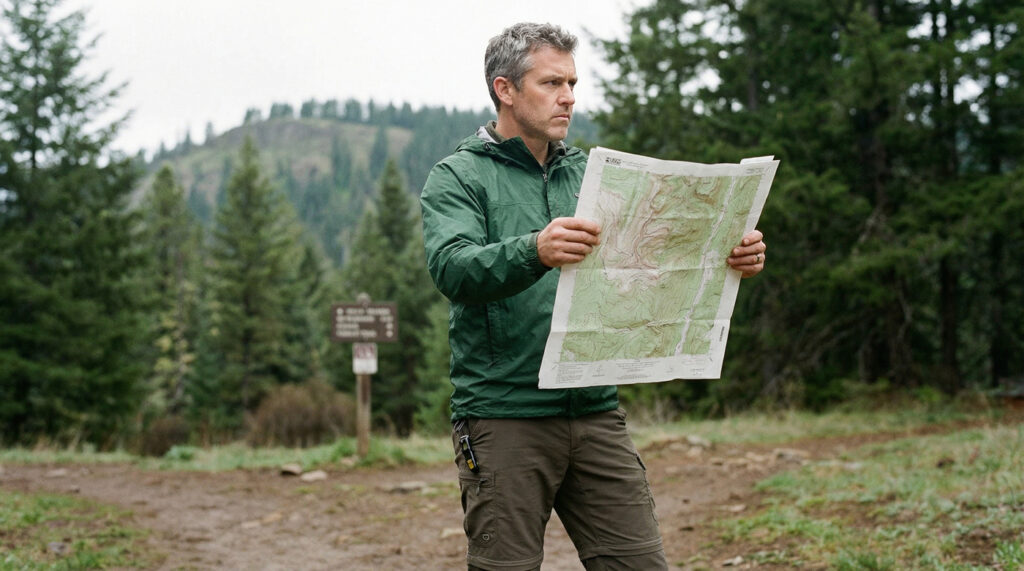
How to read a trail map for beginners comes down to six specific things: the legend, your starting position, the scale, contour lines, key landmarks, and your offline backup. Get those six right before you start hiking and you know what the trail is asking for before it asks. Skip them and you’re carrying a map you can’t use. I was in the second camp for my first year of hiking. My system was simple: AllTrails app open, blue dot on the trail, follow the dot. It worked until a hike near a dead zone where the app stopped updating…

Read More

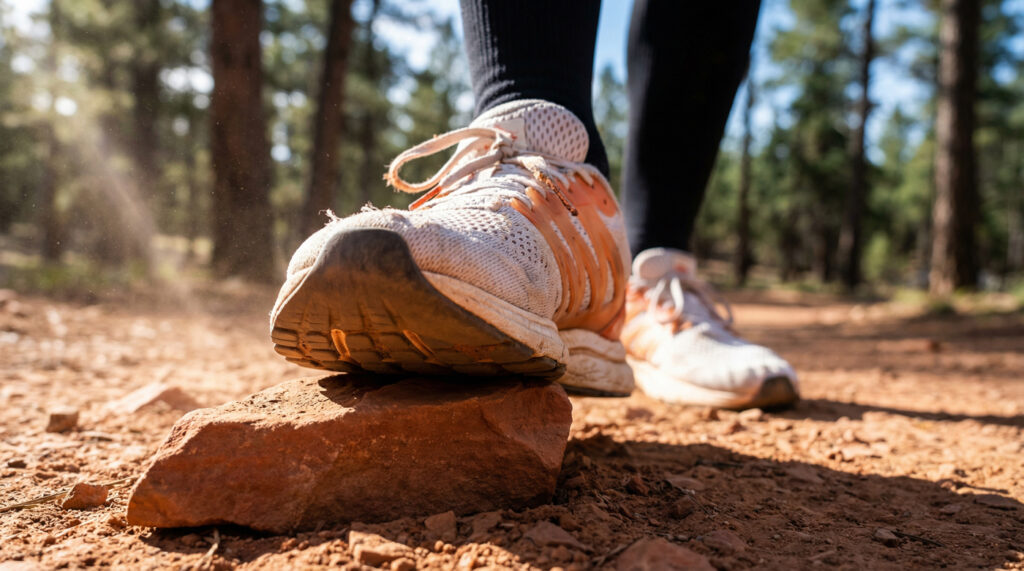
Can you hike in running shoes? Yes, and for most beginner day hikes on maintained trails, your running shoes are probably fine. That’s the short answer — and it’s the one the gear industry doesn’t want you to hear before you spend $180 on hiking boots you don’t yet need. The longer answer: it depends on which running shoes, which trail, and what conditions. There are hikes where running shoes are genuinely the smarter choice. There are conditions where they’re a liability. Knowing the difference is more useful than any blanket rule. I spent my first two hiking seasons in…

Read More

What is elevation gain in hiking? It’s the total number of vertical feet you climb over the course of a trail — every uphill section added together, not just the difference between where you started and where you finished. It’s also the single number that beginners most consistently ignore, and the one that most often explains why a trail felt completely different from what the app suggested. Distance gets all the attention. Elevation gain does most of the work. I picked my second hike based entirely on mileage. Three-point-eight miles, which felt close to my usual neighborhood walk. What I…

Read More

Hiking trail right of way has one rule that covers most situations you’ll actually encounter: uphill hikers have the right of way over hikers coming down. Everything else builds from that. Most beginners don’t know this. I didn’t for my first dozen hikes. I’d been stepping aside for every descending hiker on narrow sections, figuring that was the polite move, not realizing I was giving up right of way I actually had. A woman coming up behind me on a steep switchback said, very kindly, “You know you don’t have to step aside, right? We’ve got the right of way…

Read More

How to choose a hiking trail for beginners comes down to five specific checks: distance, elevation gain, trail surface, recent reviews, and trailhead logistics. Get those five right and the day goes well. Miss one and you spend the drive home figuring out what went sideways. I found this out the wrong way. My first solo trail was one I picked because the photos looked good on AllTrails. Rock formations. Decent overall rating. I’d been walking 4-mile neighborhood loops regularly and figured a 3-mile trail would feel similar. I did not look at the elevation gain. That trail had 1,100…

Read More

The hiking vs walking difference is simpler than most beginner guides make it: hiking happens on natural, unpaved terrain. Walking happens on pavement or a sealed surface. That one distinction — what’s under your feet — is what drives every practical difference between the two. Most articles bury this and jump straight to gear lists. I want it in the first paragraph, because once you understand it, every other question answers itself. My first mistake was assuming the two were interchangeable. I’d done a few paved loops through local parks and figured I was comfortable enough to join a friend…

Read More

First hike what to expect: you’ll be slower than you think, your legs will find muscles they’ve been ignoring for years, and you’ll probably finish wondering why you waited this long. That last part surprises almost everyone. Most beginner hiking content focuses on gear checklists and trail ratings. Those things matter, but they don’t answer the questions that actually run through your head the night before your first trail. Will I be able to keep up? What if I’m embarrassingly out of breath? What does first time hiking actually feel like? The physical stuff is covered elsewhere. See our guide…

Read More

Is hiking good exercise? Yes, and for most beginners, it’s better exercise than they expect from something that doesn’t feel like working out. A 2-hour hike on moderate terrain burns 600 to 900 calories, elevates heart rate into the cardio zone for most of that time, and loads muscle groups that gym routines and running rarely touch. It also happens outside, which changes the physiological picture in ways that matter and that most fitness comparisons ignore. The honest caveat: hiking is not the same exercise for everyone. A flat 2-mile trail at a comfortable pace is a walk with scenery.…

Read More

How long to hike 5 miles? On flat, maintained trail, most beginners finish in 2.5 to 3.5 hours. Add 700 feet of elevation gain and that same 5 miles stretches to 3.5 to 4.5 hours. Get into real mountain terrain, 1,200 feet of gain, rocky descent, exposed ridge, and you’re looking at 5 to 6 hours for someone who hasn’t done this before. Five miles is where trail planning starts to matter in ways it didn’t at 3 miles. The gap between an optimistic estimate and a realistic one is no longer 20 minutes. It can be two hours. That’s…

Read More

How long does it take to hike 3 miles? On a flat, maintained trail, most beginners finish in 1.5 to 2 hours. Add real elevation, say 500 feet of gain, and that same 3 miles becomes 2.5 to 3 hours. Add summer heat, a group, or terrain that makes you watch your footing, and you’re closer to 3.5. The number matters more than most people realize before their first hike. Parks have closing times. Parking lots charge by the hour. If you’re meeting someone at the trailhead, “I’ll be back in an hour” needs to be a real estimate, not…

Read More

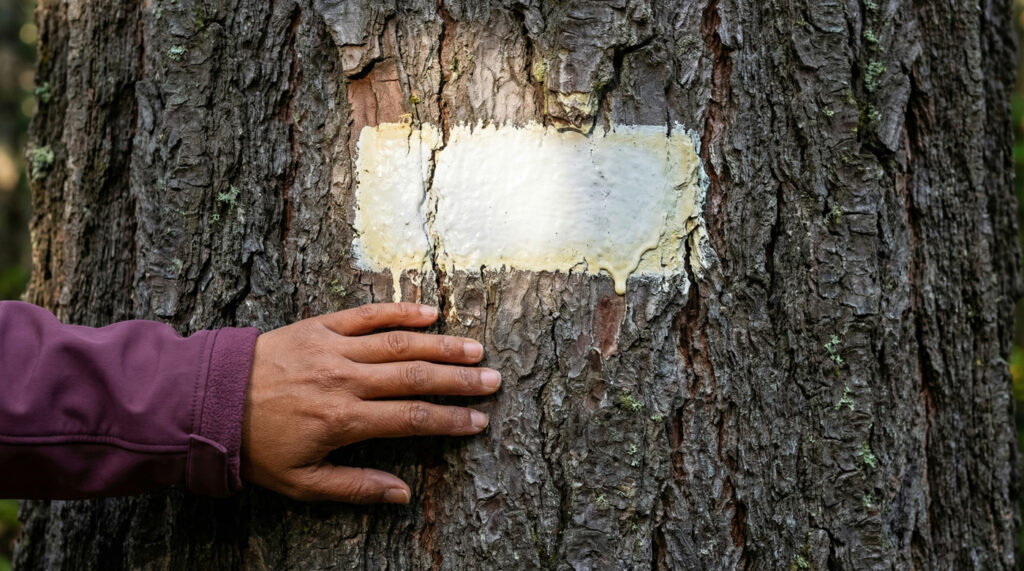
What trail markers mean, in one sentence: they tell you where the trail goes, when it’s about to turn, and whether you’re still on the right path between signs. The longer answer is that trail markers are a whole language — painted blazes, stacked rocks, colored rectangles, double stripes, wooden posts — and once you learn to read them, you won’t look at a trail the same way again. Most beginners don’t think about how to read trail markers until they suddenly can’t find one. You’ve been following a clear dirt path, you hit a rocky section or a wide…

Read More

Trail difficulty ratings explained in one sentence: they’re relative, inconsistent across platforms, and almost always measured against the average of all hikers — not the first-timer standing at the trailhead wondering if they made a poor life decision. “Moderate” on AllTrails can mean a breezy 3-mile loop with 200 feet of gain. It can also mean a 6-mile ridge climb with 1,400 feet of elevation that’ll have experienced hikers stopping to catch their breath on the exposed sections. Both get the same label. Neither comes with a footnote explaining which one you’re looking at. I found this out the hard…

Read More

What to expect on your first hike: you’ll be slower than you think, your legs will find muscles they’ve been ignoring for years, and you’ll probably finish wondering why you waited this long. That last part surprises almost everyone. Most beginner hiking guides focus on gear checklists and trail ratings. Those things matter, but they don’t answer the questions that actually run through your head the night before your first trail: Will I keep up? What if I’m embarrassingly out of breath? What does it actually feel like to do this for the first time? The physical side is covered…

Read More

How far should a beginner hike? The honest answer is 2 to 4 miles, with 3 miles being the sweet spot for most first-timers. That’s enough trail to feel like you actually went hiking. Not so much that you limp back to the car and swear you’ll never do this again. But that range is only half the answer, and stopping there is exactly why so many beginners pick the wrong trail. Distance without elevation context is almost useless. A 2-mile climb with 700 feet of gain will wreck you faster than a 5-mile flat loop. Most first hike distance…

Read More