


How to get in shape for hiking comes down to three things: lower-body strength, cardiovascular endurance built for sustained moderate effort, and balance on uneven terrain. Build all three in the right order over eight weeks, and your first real trail feels like a challenge you were ready for — not one that blindsided you.
Most beginners prepare by doing more of what they already do: more walking, more treadmill time. That builds something. It doesn’t build the specific things hiking asks for, which is why fit people regularly get surprised by terrain their gym-conditioned body wasn’t ready for.
I trained six weeks on a flat treadmill before a mountain hike I’d been planning all year. My lungs were fine. The first real incline at mile 0.8 told me something else: my hip flexors and ankle stabilizers had never been asked to do this. I made it. The last two miles I was managing, not hiking. The preparation hadn’t been wrong. It just hadn’t been specific.
This 8-week hiking workout plan fixes that. It’s built for beginners starting from a sedentary or lightly active baseline. Our beginner hiking guide covers the full picture. This is the fitness piece.
Table of Contents
Why Hiking Fitness Is Different From General Fitness
Why walking isn’t enough to prepare for trail
Walking is the foundation of getting in shape for hiking — but not the complete picture. Trail terrain loads your body in three planes of movement instead of one. Every step on uneven ground fires ankle stabilizers, hip abductors, and small foot muscles that flat surfaces never engage. Descent loads your quads eccentrically, in a way that uphill doesn’t counterbalance. A loaded pack shifts your center of gravity with every step.
General fitness improves the inputs. Trail-specific hiking fitness for beginners prepares the whole system.
What hiking specifically requires
Three specific demands define what training for hiking actually needs to accomplish:
Lower-body strength: quad strength for descent, glute and hip strength for climbing, calf and ankle strength for uneven footing. These aren’t gym-generic — they’re the exact patterns trail movement repeats for hours.
Cardiovascular endurance at 60 to 75% of maximum heart rate, sustained for extended periods. High-intensity cardio doesn’t transfer here. Training for hiking means targeting that sustained moderate zone, not intervals.
Balance and proprioception: your body’s ability to self-correct on irregular ground. Absent from most gym workouts. Builds only through exposure to the actual demand.
The American Hiking Society recommends beginners focus on these three areas in the eight to twelve weeks before a target hike. The specificity is what transfers — general fitness doesn’t substitute for trail-specific preparation.
How to Get in Shape for Hiking: What Your Body Needs
The baseline this hiking workout plan is built for
This plan assumes a sedentary to lightly active starting point. If you’re already running or doing consistent strength work, start at Week 3.
If you have significant joint issues, injury history, or cardiovascular conditions, talk to your doctor before starting. The plan builds progressively from low load, but your specific starting point matters more than the plan structure.
How long it takes to get in shape for hiking
Eight weeks is the minimum from a sedentary baseline. That’s enough time to build real lower-body strength, meaningful cardiovascular adaptation, and enough balance work to make your first 4 to 6 mile trail feel managed rather than survived.
Three months is better. Six months is ideal for any hike with significant elevation. But eight weeks of focused hiking fitness for beginners consistently produces people who describe their first real trail as “harder than expected but completely manageable” — which is exactly the right outcome. The National Park Service notes that most day-hike emergencies involve hikers who underestimated the physical demand, not the terrain. Preparation is the variable you control.
How to Get in Shape for Hiking: The 8-Week Plan
This four-phase progression is the structure that works for anyone starting from scratch. Each phase builds on the previous one. Don’t compress phases or skip ahead — the early weeks build structural tolerance that makes the later weeks safe.
Equipment you need: walking shoes or trail runners, a light daypack (10 to 15 lbs loaded for Weeks 5 through 8), and access to stairs or any incline. A gym is useful but not required.
Weeks 1 and 2: Building the walking base
The first two weeks establish the habit and start loading stabilizer muscles regularly enough that they begin to adapt. Most people underestimate this phase. The soreness in week one is the system waking up.
Week 1: structure and targets
Three walking sessions, 30 to 40 minutes each. Varied terrain where possible: grass, gravel, any surface that isn’t uniform. Flat pavement works, but add deliberate curb steps and direction changes to engage ankle and hip stabilizers.
Pace: conversational. If you can’t hold a sentence while walking, slow down. That pace ceiling will frustrate you. It’s also exactly right.
One strength session: 2 sets of 10 squats, 2 sets of 10 reverse lunges each leg, 2 sets of 10 calf raises. Focus on control through the full range. The lowering phase is where the hiking-specific adaptation happens.
Week 2: what changes
Add a fourth walking session. Extend two sessions to 45 to 50 minutes. Begin adding elevation where possible: a hill, parking garage ramp, or stadium stairs. Even 5 to 10 minutes of incline at the end of a session starts loading the system specific to trail climbing.
Increase the strength session to 3 sets. Add a lateral lunge (2 sets of 8 each side) for hip and outer-thigh strength.
Weeks 3 and 4: Training for hiking with real elevation
By Week 3, the foundation is set. These two weeks extend duration and introduce sustained incline training — the most trail-specific work in this entire plan.
Week 3: sustained incline sessions begin
Four walking sessions. Two at 50 to 60 minutes on flat terrain. Two at 30 to 40 minutes with meaningful elevation: hill walking, stair climbing, or treadmill at 8 to 12% incline. Slow your pace significantly on incline sessions; uphill pace is always slower than flat.
Strength sessions twice this week. Add step-ups onto a sturdy box or step (2 sets of 12 each leg): the closest gym movement to actual trail climbing.
Week 4: first real endurance session
One longer session: 75 to 90 minutes continuous walking, flat or gently rolling. Bring water and a snack. Eat at the 45-minute mark whether you’re hungry or not. You’re practicing trail nutrition habits alongside building fitness.
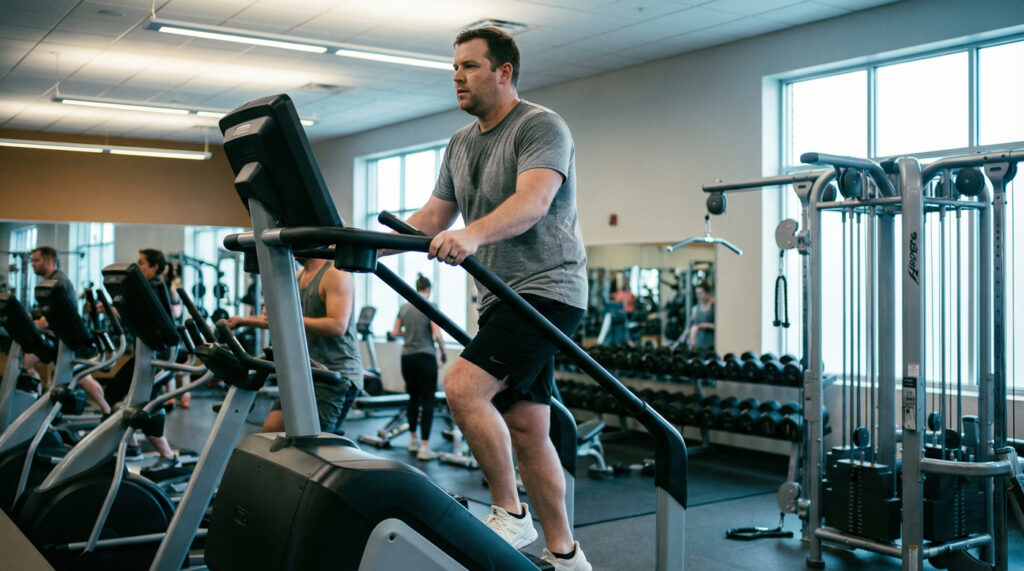
If stairs are accessible, replace one flat session with 20 minutes of continuous stair climbing. Stair climbing is the most efficient off-trail method for building hiking endurance that exists — it loads the quad and glute patterns trail climbing uses while driving heart rate precisely into the zone you’ll hold on a real ascent.
Weeks 5 and 6: Pack weight and descent strength
These two weeks add pack weight and target the muscles that break down on descents. Descents are consistently the most underestimated demand for first-time hikers — quads that felt fine on the way up give out on the way down when they haven’t been trained eccentrically.
Week 5: adding pack weight to your hiking workout plan
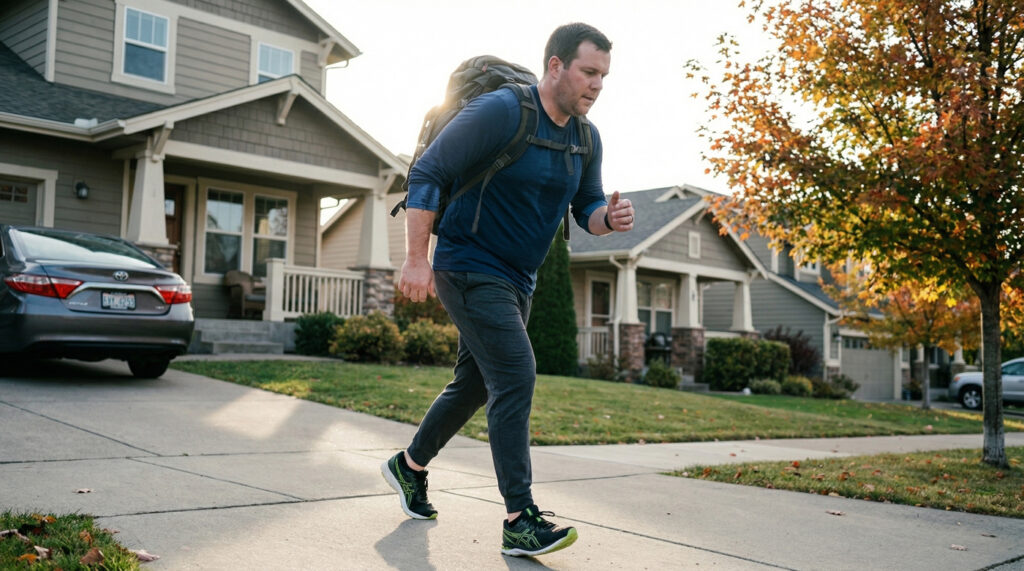
Add 10 to 15 pounds in a daypack to two of your four sessions. Carry it exactly as you would on trail: hip belt snug, shoulder straps adjusted. The load shifts your center of gravity and activates stabilizers that unloaded walking doesn’t reach.
Strength session: add Romanian deadlifts with light dumbbells (3 sets of 10). This trains eccentric quad and hamstring strength, which controls your body on descents. Most beginners feel it in their quads the next morning in a way that tells them exactly what descent training had been missing.
Week 6: two-hour session with full load
Increase your longest session to 2 hours, pack on the whole time. If you have trail access, use it. Two hours on maintained trail with a loaded pack is a better training stimulus than anything else on this list — nothing in a gym replicates the terrain variability.
Without trail access: combine 40 minutes of stair climbing with 80 minutes of varied outdoor walking. That combination hits cardiovascular endurance, leg strength, and loaded balance simultaneously.
Weeks 7 and 8: Real terrain confirmation
The final two weeks are a dress rehearsal. Your cardiovascular base is solid. Your stabilizers have been loading for six weeks. These hikes are data collection as much as training.
Week 7: first training hike
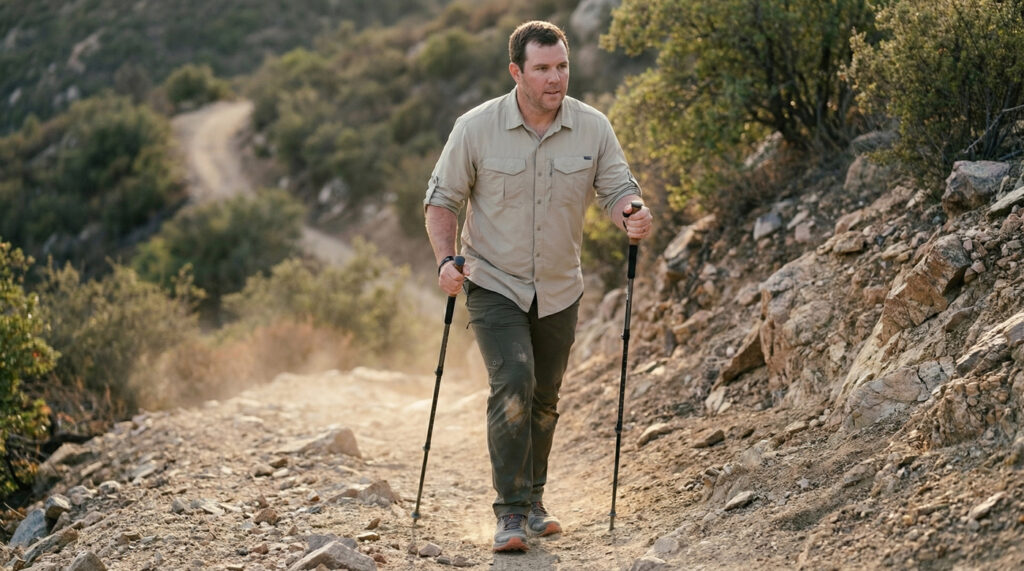
Complete your first real hike. Target: 4 to 6 miles, 300 to 500 feet of elevation gain, well-maintained trail. Treat it as data: how do your legs feel on the descent? Where does fatigue hit first?
Our trail difficulty guide helps you pick the right target. An AllTrails “Easy” or low-end “Moderate” with the elevation numbers confirmed is the right calibration. Continue two strength sessions and two shorter walking sessions this week.
Week 8: confidence hike
Complete your second trail hike, stepping up slightly: 5 to 7 miles, 400 to 700 feet of elevation gain. After seven weeks of specific preparation, this hike should feel effortful on the climbs, controlled on the descents, and recoverable within 48 hours.
If it does, you are ready for a real target hike. Our guides to how far beginners should hike and how often to hike both apply from this point forward.
Exercises to Prepare for Hiking: The Core Moves
Five movements address what trail specifically demands. Done consistently across eight weeks, they cover everything getting in shape for hiking actually requires. These aren’t the flashiest exercises in the gym. They’re the ones that show up in your legs on mile four.
Lower-body strength: the four non-negotiables
Squats. Three sets of 12, bodyweight or light load. Sit back and down, knees tracking over toes. Every trail climb is a series of single-leg movement patterns; the bilateral version builds the base.
Reverse lunges. More hiking-specific than forward lunges because the eccentric loading pattern matches descending steep trail. Three sets of 10 each leg. Control the lowering phase — that’s the phase that protects your knees on the way down.
Step-ups. The closest gym exercise to actual hiking. Box or step at knee height, three sets of 12 each leg. Drive through the heel to emphasize glute activation.
Romanian deadlifts. Trains hamstrings and glutes eccentrically, which controls your body on descent. Two to three sets of 10 with light dumbbells. Hip hinge, not a squat.
How to build hiking endurance from zero
The cardiovascular side of training for hiking doesn’t require intensity. It requires duration and terrain specificity.
Zone 2 walking: Conversational pace, roughly 60 to 70% of maximum heart rate, for 45 to 90 minutes per session. Most beginners train too hard and too short. Zone 2 is slower than it feels productive. That’s exactly where the endurance adaptation happens — and it’s the zone you’ll hold on a long, steady trail climb.
Stair climbing: Twenty minutes of continuous stair climbing does more for building hiking endurance than 45 minutes of flat walking. Add it from Week 3 onward. If you have access to a stairwell at work or a local stadium, use it twice a week.
Incline walking: Treadmill at 8 to 12% grade or any accessible hill. Loads the quad and glute patterns that hiking climbs require while driving heart rate into the zone trail climbing occupies. This single addition to a hiking workout plan separates people who feel ready from people who feel blindsided.
Balance and stability: what most training plans for hiking miss
Single-leg balance work produces the most noticeable improvement in trail confidence, specifically on rocky or rooted terrain. It’s also the most skipped category, because it doesn’t feel like “real exercise.” It is.
Single-leg stands: Stand on one foot, knee slightly bent, for 30 to 60 seconds. Progress by standing on a folded mat or any uneven surface. Frequency matters more than duration; do it daily.
Lateral band walks: Resistance band around the ankles, stepping sideways in a half-squat. Two sets of 15 steps each direction. Targets the hip abductors most responsible for how your knees feel at the end of a long descent.
💡 Trail Tip: The single-leg balance work is the one category where daily beats weekly. Three minutes of single-leg stands every morning — brushing your teeth, waiting for coffee — builds more proprioceptive stability after four weeks than one dedicated weekly session.
Common Mistakes When Getting in Shape for Hiking
Only doing cardio and skipping strength work
The most common error: defaulting to cardio only. Cardiovascular fitness is necessary, but hikers who finish a long trail feeling good have strong quads, strong glutes, and conditioned stabilizers — built through consistent strength work. Cardio alone doesn’t produce those. Skip the strength sessions and you’ve prepared half your body for a whole-body demand.
Increasing distance and difficulty simultaneously
Add one variable per week, not two. Extending sessions this week means keeping terrain the same. Adding elevation means shortening duration. Adding both increases load more than connective tissue may handle, and makes it impossible to identify what caused any soreness. Our hiking frequency guide covers progression logic in more detail.
Skipping recovery days
Every session creates micro-stress. The adaptation happens during recovery, not during the session itself. Training every day sounds dedicated. It produces accumulated fatigue without the adaptation you’re trying to build. Recovery days are written into this hiking workout plan deliberately. Use them.
Training only on flat terrain
Preparing entirely on flat surfaces means your first hike is also your first experience of uneven-terrain stabilizer loading. Gravel paths, grass, beach sand — any irregular surface counts as specific preparation for hiking fitness for beginners. Work some into your walking sessions from Week 1 onward.
When to Adjust Your Training Plan for Hiking
Signs the plan is working
You’re recovering from sessions within 48 hours. Incline work that was hard in Week 2 feels manageable by Week 5. Your pace on flat terrain has improved noticeably. You’re finishing sessions tired but not wrecked.
Signs to slow down
Joint pain (not muscle soreness) after sessions. Soreness still significant three or more days after a workout. Fatigue not clearing between sessions week over week. When any of these appear: drop back one week in the progression, reduce intensity, and let recovery catch up. Pushing through joint pain doesn’t build toughness. It builds injury.
💡 Trail Tip: Keep one-line session notes — what you did, how your legs felt the next morning. After four weeks you’ll have a clear picture of your adaptation curve. That record tells you when you’re ready to progress more accurately than how you feel during a session.
Frequently Asked Questions: Get in Shape for Hiking
How to get in shape for hiking if I’ve never exercised before?
Start at Week 1 exactly as written. The first two weeks are deliberately low-load: three to four 30-to-40-minute walks and one basic strength session per week. That’s appropriate for a completely sedentary starting point while still creating the adaptation your body needs. Consistency matters more than intensity here — two sessions a week done reliably beats five sessions abandoned after ten days. REI’s beginner hiking fitness resources are a solid companion to this plan if you want additional context.
How long does getting in shape for hiking take from zero?
Eight weeks at the minimum from sedentary — enough to build meaningful lower-body strength, real cardiovascular adaptation, and balance work that makes a 4 to 6 mile trail manageable. Three months builds a more complete base. If your target hike involves 8 or more miles with 1,500 or more feet of gain, give yourself four to six months rather than compressing the preparation.
What are the best exercises to prepare for hiking?
The five that matter most: squats, reverse lunges, step-ups, Romanian deadlifts, and single-leg balance work. Together they cover lower-body strength for climbing, eccentric quad control for descent, hip stability for uneven terrain, and the proprioceptive system that makes rocky footing navigable. Pair those strength movements with Zone 2 walking, stair climbing, and incline walking for building hiking endurance, and you’ve covered what trail actually demands.
What should a good hiking workout plan for beginners include?
A solid hiking workout plan needs four components: progressive walking sessions that extend in duration and add incline over time, two strength sessions per week targeting lower-body and stabilizers, at least one weekly session on varied or inclined terrain, and built-in recovery days. The 8-week structure sequences those components in the right order for safe, complete hiking fitness for beginners — nothing is added before the system is ready to absorb it.
How do I start building hiking endurance if I get winded quickly?
Slow down more than you think you need to. Zone 2 training — conversational pace, 60 to 70% of max heart rate — is where aerobic endurance for trail actually builds. If you get winded during a session, you’re going too hard. The pace that feels almost too easy is the one that works. Most people training for hiking go too fast and too short, then wonder why their trail fitness isn’t improving. Slow is the answer, not more.
Do I need a gym to follow this training plan for hiking?
No. The full plan runs on bodyweight exercises, outdoor walking, stairs, and a loaded daypack. A gym helps if you want resistance equipment for the strength work, but the most valuable preparation happens outside: walking on varied terrain, climbing stairs, carrying a loaded pack. Gym equipment supplements those. It doesn’t replace them.
How do I know when I’m ready for my target hike?
Two signals: your Week 7 training hike (4 to 6 miles, 300 to 500 feet of gain) left no significant joint pain and soreness cleared within 48 hours, and you’ve completed strength sessions consistently for at least five to six weeks. If both are true, you’ve done what it takes to get in shape for hiking at that level. If the training hike overtaxed you, repeat Week 6 before moving forward.
The Preparation Is Specific. The Eight Weeks Are Enough.
Getting in shape for hiking doesn’t require a running background, a gym membership, or a fitness base you don’t have yet. It requires eight weeks of specific work — lower-body strength, sustained cardiovascular endurance, and balance adaptation that makes uneven ground navigable rather than precarious.
The preparation I skipped before that mountain hike wasn’t complicated. It was specific. That specificity, built in the right order, is the difference between managing the last two miles and enjoying them.
For the full first-hike picture, our first time hiking tips guide covers what to bring, what to expect, and how to make the first outing genuinely good.
Next Steps
- Right now: Pick a start date for Week 1. Put three sessions in your calendar before you close this tab.
- Before Week 3: Find a hill, a set of stairs, or a treadmill with incline. You’ll need it for the sustained incline sessions.
- Before Week 7: Choose your training hike — 4 to 6 miles, under 500 feet of gain, well-marked trail. Use our trail selection guide to confirm the difficulty is right.