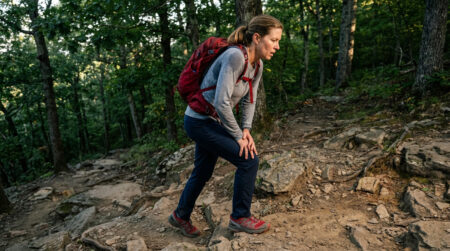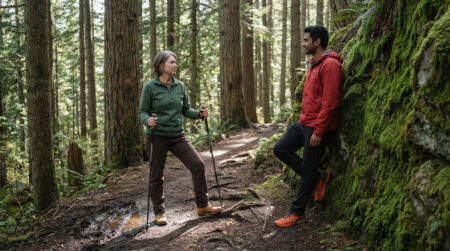


Can you hike in running shoes? Yes, and for most beginner day hikes on maintained trails, your running shoes are probably fine. That’s the short answer — and it’s the one the gear industry doesn’t want you to hear before you spend $180 on hiking boots you don’t yet need.
The longer answer: it depends on which running shoes, which trail, and what conditions. There are hikes where running shoes are genuinely the smarter choice. There are conditions where they’re a liability. Knowing the difference is more useful than any blanket rule.
I spent my first two hiking seasons in road running shoes. Mostly because I didn’t know I was supposed to care about this, and partly because I wasn’t going to spend $150 on gear for a hobby I might quit after three weekends. Those running shoes took me through a lot of trails. They also failed me on one wet rocky descent in a way that taught me what grip actually means when the stakes are real.
This guide covers exactly what running shoes can and can’t do on trail, where the line is between manageable and risky, and what a better-suited option looks like when you outgrow what you’ve got. Our beginner hiking guide covers the broader gear picture. This article is specifically about your feet.
Table of Contents
Why the Running Shoes vs Hiking Boots Debate Misses the Point
Most beginner gear advice on footwear presents a binary: buy hiking boots or you’re not a real hiker. That framing is both wrong and expensive.
Hiking without hiking boots is not some compromise move. It’s what a lot of experienced hikers do by choice. Trail runners (which look and feel much closer to running shoes than to traditional boots) dominate footwear on the trail community because they’re lighter, they dry faster, and they don’t require the break-in period that can wreck your first few hikes if you get it wrong.
The actual question isn’t “can you hike in running shoes?” It’s “what does this specific trail require, and what does my shoe actually provide?”
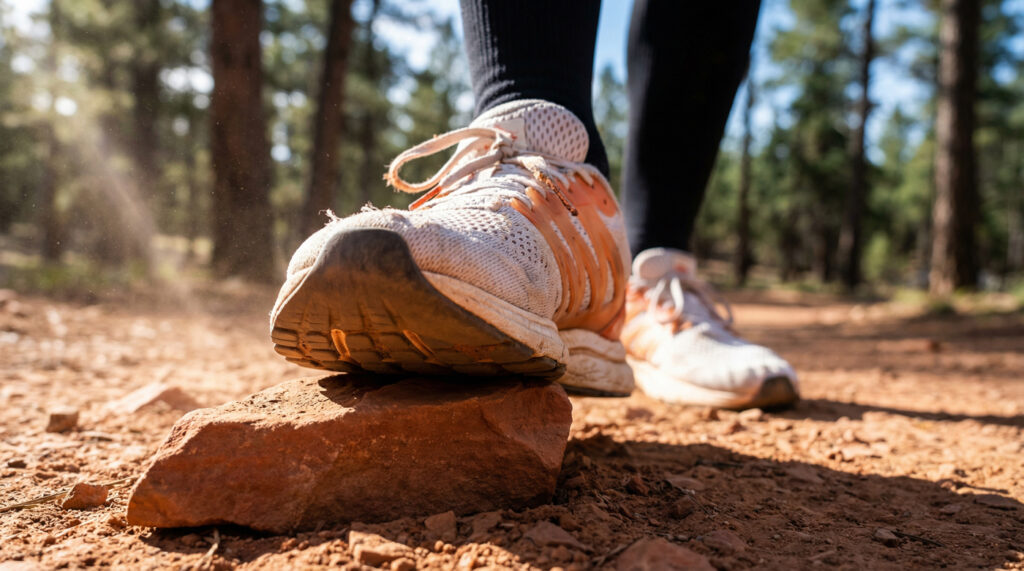
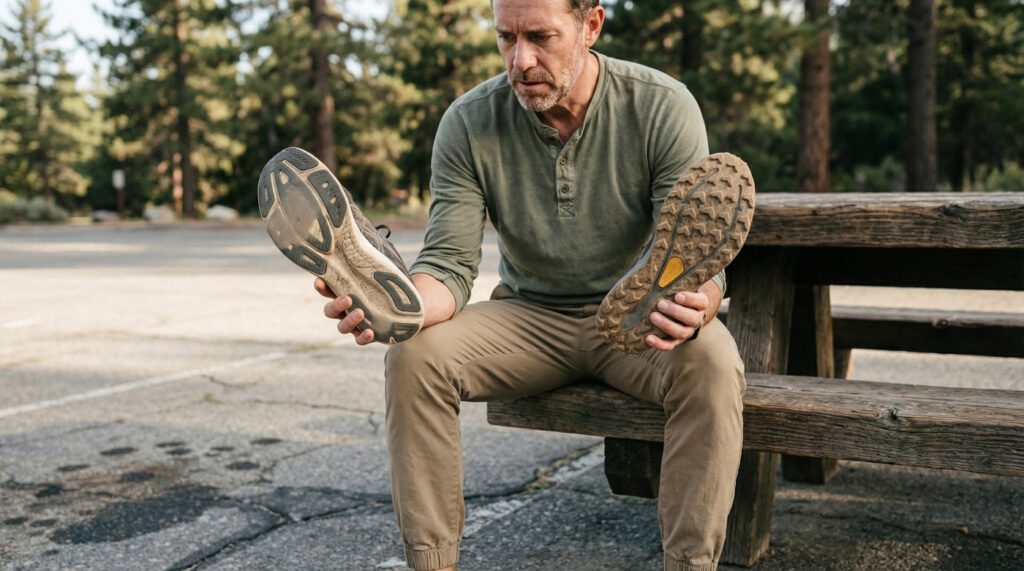
Road running shoes and trail running shoes are different products, and that distinction matters more than most beginners realize. A road running shoe is designed for pavement: cushioned, smooth-soled, built for predictable surfaces. A trail running shoe has an aggressive rubber outsole, firmer midsole, and sometimes a rock plate between the sole layers to protect your foot from sharp objects underfoot. They look similar. They perform very differently on dirt and rock.
Hiking in regular shoes: road runners, cross-trainers, or casual sneakers, works on easy trails with good surfaces. It works less well when the trail gets wet, loose, or technical. Knowing what your specific shoes are built for is the starting point of this whole question.
What Running Shoes Actually Lack on Trail
Before deciding whether you can hike in running shoes for your specific trail, you need to know where they’re likely to fall short. Three areas matter.
Grip on Loose or Wet Surfaces
Road running shoes have smooth or lightly patterned outsoles designed for pavement. That traction pattern works fine on dry, compact dirt. On wet rock, loose gravel, muddy trail, or leaf-covered descents, it becomes a genuine problem.
Trail grip comes from lug depth and rubber compound. Trail-specific shoes use lugs of 3 to 5 millimeters with spacing designed to shed mud and bite into loose surfaces. Road running shoes have lugs of 1 to 2 millimeters at most, sometimes less. That difference is invisible when conditions are easy — it’s significant when conditions aren’t.
The wet rock situation is the most dangerous scenario for running shoes on trail. Smooth rubber on wet granite or sandstone has almost no friction. A section that hiking boots or trail runners would handle without much thought becomes a slow, careful, hand-on-the-wall process in road runners. For flat or gently graded trails in dry conditions, this rarely matters. For anything steeper or wetter, grip becomes the deciding factor.
Foot Protection from Impact
Trails have rocks. Not just rocks on the surface but rocks that stick up through the dirt unexpectedly, roots that cross the path, and uneven ground that loads your foot differently with each step. Road running shoes are built with cushioning optimized for heel-to-toe pavement impact, not for the lateral variability of trail terrain.
The practical effect: on a rocky trail, you’ll feel every sharp object through the midsole. It’s not injurious in most cases, but it’s tiring in a way that’s hard to explain until you’ve done it. Your foot is bracing against each unpredicted impact instead of moving through terrain naturally. After a few hours, that adds up.
Trail running shoes address this with a firmer midsole and sometimes a rock plate — a layer of rigid plastic or carbon fiber between the insole and outsole that distributes point pressure across the whole foot. You don’t feel individual rocks. Your foot moves more efficiently. It’s one of the more noticeable differences when you first try a real trail shoe after hiking in road runners.
Ankle Support on Uneven Ground
This one is more nuanced. Low-cut running shoes offer minimal lateral support. On flat, predictable terrain that’s fine, your ankles have been handling flat ground without help forever. On terrain with camber (trails that slope sideways), rocky surfaces, or loose footing, low-cut shoes mean your ankles are doing more stabilization work on their own.
For beginners with no history of ankle issues on trails rated Easy or Manageable, this rarely causes a problem. If you’ve ever rolled an ankle before, or if the trail has significant uneven terrain, the additional support of a mid-cut trail shoe is worth considering. Full high-cut hiking boots are generally overkill for maintained day trails unless you’re carrying a heavy pack.
When You Can Hike in Running Shoes
Hiking in running shoes is a legitimate choice in specific conditions — here’s where they hold up.
Easy to Moderate maintained trails in dry conditions. A well-packed dirt trail with under 500 feet of gain, no significant wet sections, and good signage is the exact scenario where you can hike in running shoes without compromise. Most popular day hike trails near cities fall into this category. The surfaces are predictable, the grades are manageable, and the traction demands are low.
Short distances under 5 miles. For most beginners, you can hike in running shoes comfortably at this range. The constant micro-adjustments your feet make on uneven ground are less supported in shoes built for pavement, but under 5 miles most people don’t notice. Over 6 to 8 miles, the cumulative effect of that unsupported terrain work starts to show up in your feet and knees.
Warm, dry weather. Running shoes are rarely waterproof. In wet conditions like morning dew on grass, a creek crossing, or a trail that gets muddy after rain, they’ll soak through and stay wet. Wet shoes on a long hike cause friction in ways dry shoes don’t, and cold wet feet on a cooler day are a comfort problem that turns into a safety consideration if temperatures drop. Sneakers for hiking are best deployed in dry conditions.
Fitness hikes rather than technical terrain. If your primary goal on trail is exercise and fresh air on a well-marked path, you can hike in running shoes without much compromise. If the trail involves loose rock, creek crossings, steep descents, or any scrambling, you’ve moved into terrain where shoe choice starts to have real consequences.
When Running Shoes Are the Wrong Choice
There are conditions where hiking without hiking boots, or at least without trail-specific footwear, is a genuine mistake.
Wet or slippery terrain of any kind. Wet rock, wet roots, mud, or loose gravel after rain. This is the scenario where road running shoes most consistently fail, and where the failure has consequences. A slip on a steep wet section can mean a fall. For any trail where conditions are likely to be wet, trail running shoes with aggressive lugs are the minimum you should be considering. Sneakers for hiking on wet terrain are not a good idea. The American Hiking Society’s trail safety and preparation resources specifically note wet and slippery terrain as a leading factor in trail incidents for unprepared hikers.
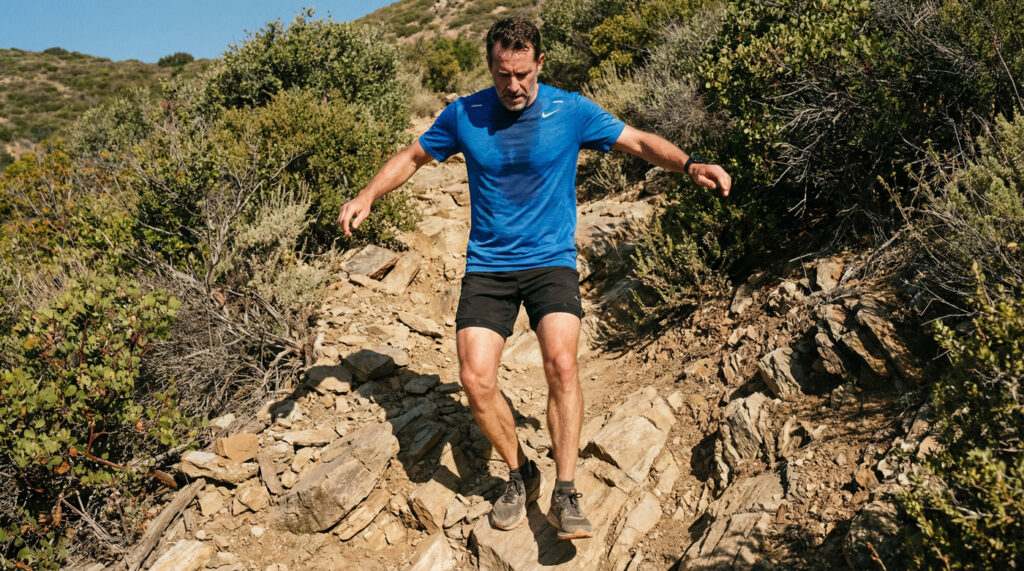
Rocky or technical trails. Any trail description that mentions “rocky,” “technical,” “loose footing,” or “scrambling” is telling you that your foot is going to encounter significant unpredictable surfaces. Road runners weren’t built for this. They’ll get you through, but you’ll feel every rock, your feet will tire faster, and your risk of a rolled ankle on uneven ground is higher than it needs to be.
Cold weather or shoulder season hiking. Trail temperature can drop faster than expected, especially once you stop moving. A running shoe that’s soaked through in 35°F weather is a legitimate hypothermia risk over time. In cold or unpredictable weather, waterproofing matters — and most running shoes don’t have it. If you’re asking whether you can hike in running shoes in early spring or late fall, the honest answer is: not comfortably, and not safely once temperatures drop.
Any hike over 8 miles. At this point the cumulative foot fatigue of unsupported terrain work in road runners becomes significant, and you’re in the mileage range where trail-specific footwear earns its keep.
Trail Running Shoes vs Hiking Shoes: What Actually Makes Sense for Beginners
If you’ve read the above and concluded you can hike in running shoes for now but want something better, here’s the honest breakdown of what to look at.
Trail running shoes are the option Fama recommends for most beginners on maintained trails. They’re lighter than hiking boots, require zero break-in time, dry faster when wet, and their aggressive outsoles handle the grip situations where road runners fail. Prices start around $80 for entry-level options and go to $160 for performance models. For most beginner day hikes, an $80 to $100 trail runner is exactly enough shoe.
Trail running shoes vs hiking shoes comes down to this: trail runners are the better choice for maintained trails, shorter distances, and anyone who values comfort and low weight — hiking shoes and boots earn their keep on technical terrain, heavy pack weight, or off-trail routes where ankle support and foot protection matter more.
Mid-cut hiking shoes are worth considering if you’ve ever had ankle issues, or if your trails consistently involve rocky or uneven terrain. They add some ankle support without the weight of a full boot. Prices range from $100 to $180 for decent options.
Full hiking boots are the right tool for specific conditions: backpacking with a heavy pack, off-trail hiking, stream crossings, and winter conditions. For beginner day hikes on maintained trails, they’re usually more shoe than the situation calls for, and the break-in period can ruin your first few hikes if you buy them the week before you go.
The one thing to avoid: buying any trail footwear online without trying it on first. Trail runners and hiking shoes should feel comfortable immediately in the store, with a thumb’s width of space at the toe and no heel slippage. If they feel stiff or need “breaking in,” put them back. A shoe that needs breaking in is a shoe that’s going to create blisters on the trail where you’ll be asking it to perform.
According to REI’s footwear guidance, the fit is the most important factor in any trail shoe, more important than brand, waterproofing, or lug pattern. A well-fitted $80 trail runner outperforms an ill-fitted $200 boot on every hike you actually do.
Can You Hike in Running Shoes: The Honest Verdict
Can you hike in running shoes? Yes, with the right conditions. On easy, dry, maintained trails under 5 miles, your road runners will get you through and you’ll have a fine day. That covers a substantial proportion of beginner hiking.
Running shoes for hiking fall short in three specific situations: wet or slippery terrain, rocky technical trail, and long distances over 8 miles. If your trail involves any of those, you’re better served by footwear built for the conditions.
The upgrade path that makes sense for most beginners: start with what you have if it’s a road runner in decent condition. Do two or three easy hikes and pay attention to where your feet struggle. If grip becomes the issue, look at trail running shoes. If ankle support becomes the issue, look at a mid-cut trail shoe. Buy based on what you actually experience — not based on what a gear shop recommends before you’ve set foot on a trail.
For choosing the right trail to match your current footwear, our guide to choosing a hiking trail for beginners walks through the five-check process including surface conditions. And when you’re ready to look at specific trail shoe options, our trail runners vs hiking boots guide covers the comparison in detail.
Frequently Asked Questions: Can You Hike in Running Shoes
Are running shoes okay for hiking?
For easy, dry, maintained trails under 5 miles, yes. Road running shoes work fine for hiking in those conditions. They fall short on wet or slippery terrain, rocky technical trails, and longer distances where foot fatigue from unsupported terrain work becomes significant. The more important question is whether your specific shoes match the specific trail you’re planning.
What’s the difference between trail running shoes and regular running shoes for hiking?
Trail running shoes have aggressive rubber outsoles with 3 to 5mm lugs for grip on dirt, rock, and mud. They often include a firmer midsole and sometimes a rock plate for protection against sharp objects underfoot. Road running shoes have smooth or lightly patterned soles built for pavement. On dry packed dirt, the difference is minor. On wet rock, loose gravel, or muddy trail, trail runners handle the terrain significantly better.
Can I hike in sneakers?
Casual sneakers work on easy flat trails in dry conditions. The concerns are the same as road running shoes: limited grip on wet or loose surfaces, minimal foot protection from rocks and roots, and no ankle support on uneven terrain. For a short, flat, dry trail as a first hike, sneakers are fine. For anything more demanding, trail-specific footwear is worth the investment.
Do I need waterproof hiking boots as a beginner?
Not necessarily. Waterproof membranes add weight, reduce breathability, and aren’t necessary for most dry-weather day hiking. They matter in wet climates, early season hiking with wet trails, or any route with creek crossings. For summer day hikes on maintained trails in dry conditions, non-waterproof trail runners are often a better choice because they breathe better and dry faster when they do get wet.
Can you hike in running shoes on rocky trails?
On smooth, packed surfaces in dry conditions, yes. On loose rock, wet rock, or trails with significant scrambling, road running shoes become a real problem. The smooth soles have almost no grip on wet granite or sandstone, and the midsole cushioning isn’t built to absorb the random point impacts that rocky terrain creates. Three signals that your footwear is the limiting factor: you’re slipping where others aren’t, your feet are sore through the sole after shorter distances than expected, or the trail description uses the words “rocky,” “technical,” or “loose footing.”
What should I look for when buying trail running shoes?
Fit first: comfortable immediately in the store, thumb’s width of space at the toe, no heel slippage. Grip second: lugs of at least 3mm with spacing that sheds mud. Budget: $80 to $100 is enough for most beginner day hiking. No need to spend $160 or more until you know what kind of hiking you’re doing regularly. And buy from a store where you can try them on, not based on reviews alone.
Is hiking in regular shoes bad for your knees?
On flat, even terrain, no. On uneven, rocky, or steep terrain, road running shoes offer less lateral support and cushioning for the unpredictable loads that trail terrain creates. This can contribute to knee fatigue on longer or more technical hikes. It’s not an injury guarantee, but it’s a reason that proper trail footwear becomes more important as trail difficulty increases.
Next Steps
- Right now: Look at the outsole of your current running shoes. If the tread is shallow and smooth, they’re road runners. If they have visible, deep lugs (ridges), they’re trail runners or cross-trainers that will handle easy hiking better. That check takes 10 seconds and tells you what you’re starting with.
- Before your first hike: Pick a trail rated Easy with a packed dirt surface and dry conditions for your first outing. That’s where running shoes for hiking perform best, and it’s the right environment for assessing what you actually need before spending anything.
- After your first hike: Note where your feet felt limited. Slipping? You need more grip. Sore through the sole on rocky sections? You need a firmer midsole. Ankle fatigue on uneven ground? You need more lateral support. Buy toward the specific problem, not a general upgrade.