

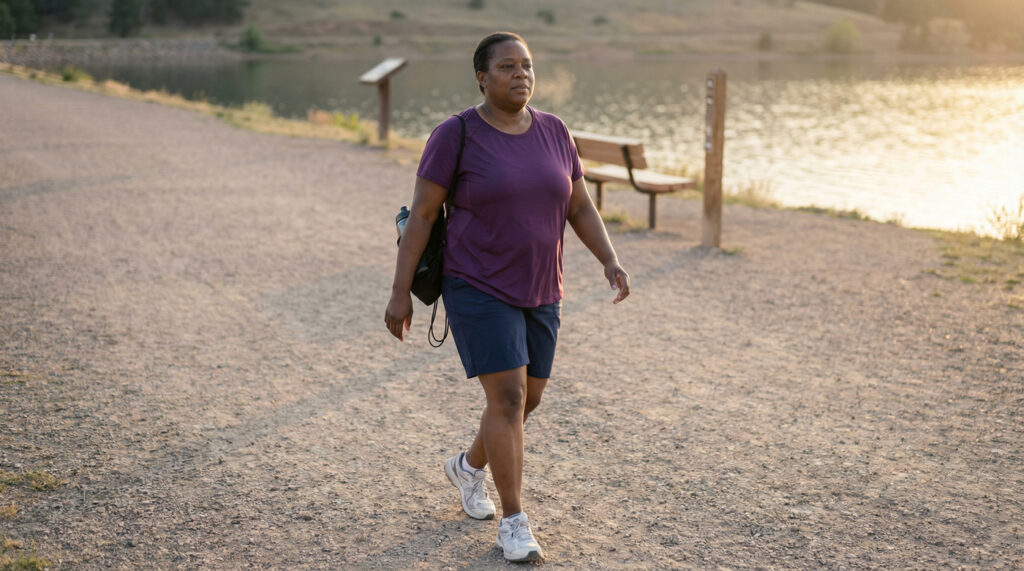

How to start hiking out of shape is a question most beginner guides dodge by pretending the reader already has a baseline fitness level. This one doesn’t. If you’re sedentary, overweight, or haven’t done anything physically demanding in years, this article is written specifically for where you actually are.
The honest answer: you start shorter than you think you need to, flatter than feels ambitious, and more patiently than hiking content usually suggests. That’s not a consolation prize. It’s the approach that actually builds the habit and the fitness at the same time, rather than producing one brutal outing and a two-week recovery.
I started hiking after a period of being genuinely sedentary. Not “I skipped the gym for a few months” sedentary. Two years of desk work, no exercise, thirty pounds over where I’d been before. My first trail was a 1.8-mile flat loop around a reservoir. It took 45 minutes. My heart rate was higher than I expected and my calves were sore the next day. I went back the following weekend and did it again. The third time I added half a mile. Four months later I was doing 5-mile trails with real elevation. The starting point wasn’t the obstacle. It was the foundation.
These six steps are how to start hiking out of shape in a way that’s specific, honest, and designed for where you’re starting, not where you’re supposed to be. Our beginner hiking guide covers the wider picture. This article is the specific progression for people starting from a low fitness baseline.
Table of Contents
Why Starting Hiking Out of Shape Makes More Sense Than Waiting
What the research actually shows about hiking and fitness
The most common piece of advice beginners get when they’re out of shape is some version of “get fit first, then start hiking.” This is backwards. Trail fitness is specific. The only way to build the cardiovascular endurance, the stabilizer muscle strength, and the joint adaptation that hiking requires is to hike. No amount of treadmill walking fully replicates what 2 miles of uneven dirt terrain does to your body.
The American Hiking Society has documented consistent improvements in cardiovascular fitness, body composition, and joint health across beginner hiker populations, including adults who started with minimal baseline fitness. The adaptation happens fast once you start and stay consistent. The first four weeks are the hardest. After that, the same trail that left you winded gets noticeably easier, not because the trail changed, but because your body adapted to it.
Why the trail environment works differently than the gym
Beginner hiking unfit is not the same experience as beginner gym training unfit. The gym is controlled, climate-regulated, and socially charged in ways that can make starting feel uncomfortable. The trail is self-paced, outdoors, and largely anonymous. Nobody on a trail is watching your pace or your heart rate monitor.
More practically: hiking is weight-bearing and variable-terrain exercise that strengthens bones, improves balance, and builds cardiovascular fitness simultaneously. A 2-mile flat trail at a comfortable pace burns more calories and recruits more muscle groups than 2 miles on a treadmill at the same pace, because the terrain variability demands constant small adjustments that gym equipment eliminates. For people starting hiking overweight, this means the calorie expenditure and the fitness adaptation are both higher per mile than equivalent indoor exercise.
The six steps below apply to anyone figuring out how to start hiking out of shape. Whether you’re carrying extra weight, returning from injury, or simply haven’t been physically active in years, the progression is the same.
How to Start Hiking Out of Shape: 6 Steps
Step 1: Start with flat trails under 2 miles
What flat and short actually means in numbers
The first mistake most beginners make is starting too far. The instinct to “challenge yourself” on the first outing produces soreness, discouragement, and a long recovery that breaks the routine before it starts. Beginner hiking unfit calls for a specific starting range: under 2 miles total, under 100 feet of elevation gain, on a well-maintained surface.
That’s a short trail. It’s supposed to be. The goal of the first two outings isn’t fitness. It’s learning what trail terrain feels like in your body, getting real data on your actual pace, and coming home wanting to go again. A 1.5-mile flat loop that you complete comfortably is more valuable than a 3-mile trail you push through and spend three days recovering from.
What “flat” means in trail terms: under 100 feet of total elevation gain across the full distance. That’s the number on AllTrails. Trails with gain under 100 feet per mile are genuinely flat in terms of cardiovascular demand. Anything above 150 feet per mile will feel like real climbing if you’re starting from a low fitness baseline, regardless of how short the trail is.
Finding trails that match this starting point
AllTrails lets you filter by distance and difficulty simultaneously. Set the difficulty filter to Easy and the max distance to 2 miles. That starting list is your options. Then open each trail and check the elevation gain number. Under 200 feet total for a 2-mile trail is genuinely flat. Under 150 feet is very flat. Start there.
Look also at the trail surface description. For how to start hiking out of shape at the lowest barrier entry point, packed gravel or wide packed-dirt trails reduce the footing complexity and let you focus on pace and breathing rather than watching every step.
Step 2: Build toward easy hikes for beginners over four weeks
The 4-week progression that actually works
The fastest way to go from sedentary to comfortably hiking 4 to 5 miles is a simple progressive overload: add distance gradually, only after you’ve comfortably handled the current distance twice.
A starting framework for easy hikes for beginners on a low fitness baseline:
Week 1 to 2: Two outings per week at 1.5 to 2 miles, flat, well-maintained surface. Focus on finishing without significant distress, not on pace.
Week 3: Increase to 2.5 to 3 miles on the same type of terrain, or the same 2-mile trail with a small elevation variation added. Two to three outings if recovery feels manageable.
Week 4: Try a 3 to 3.5-mile trail with up to 200 feet of total elevation gain. This is the first outing that will feel genuinely like hiking rather than a long flat walk. Keep the pace comfortable throughout.
The rule governing every step-up: only increase distance when the current distance feels comfortable from start to finish, not just manageable. “I could do it” is not the same as “I was fine.” The second means your body has adapted. The first means you’re still adapting. Stay at the current distance until the second description is accurate.
How to use AllTrails filters for easy hikes for beginners
AllTrails filter sequence for this progression: Easy difficulty, distance matching your current week target, elevation gain under 150 feet per mile. On each trail page, check the elevation profile graph, not just the total gain number. A flat graph means the trail is consistently flat. A graph that spikes early means the gain is front-loaded, which changes the experience significantly even if the total number looks manageable.
Read the five most recent reviews for real conditions before committing to any trail. Recent reviews catch muddy sections, closed junctions, and other factors the official rating doesn’t update for.
Step 3: Address the gear that actually matters for hiking for beginners overweight
The two pieces of gear most beginners underinvest in
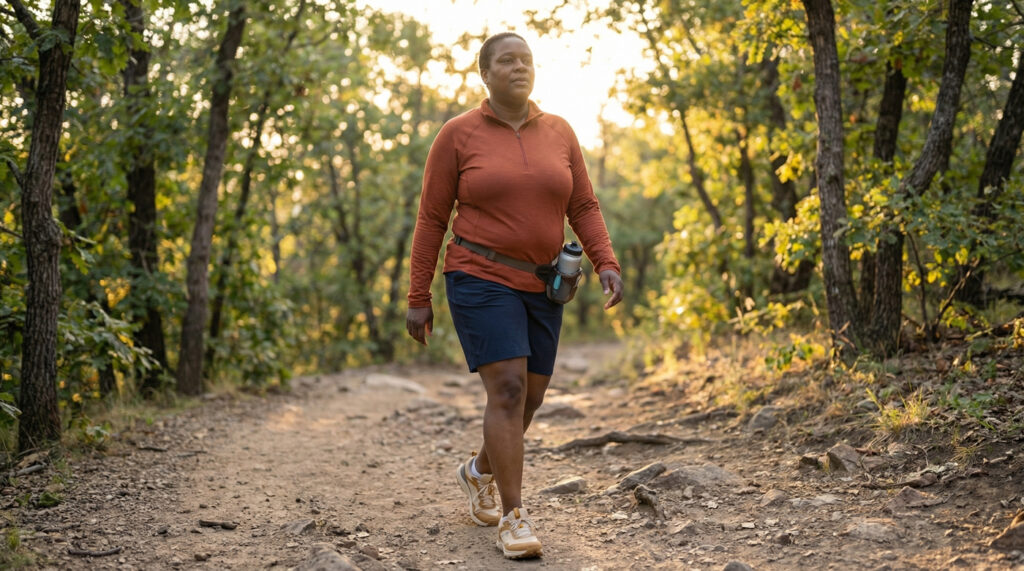
For hiking for beginners overweight, two gear decisions have a disproportionate impact on the experience: footwear and socks. Everything else is secondary.
Footwear: regular walking shoes or running shoes built for pavement work on flat, packed trails for the first few outings. On anything rougher or with real elevation, trail-specific footwear matters. Trail runners ($85 to $130) are the right starting point for most beginner hiking situations. They break in immediately, don’t require a painful adjustment period, and have enough sole grip and toe room to handle moderate trail terrain. For someone starting hiking overweight, the cushioning and lateral support in trail runners also reduce joint impact on descents compared to flat athletic shoes.
Socks: wool or synthetic hiking socks, not cotton. Cotton holds moisture and causes blisters on longer outings. Wool socks cost around $18 to $24 a pair and eliminate the most common physical complaint beginners have after their first several hikes. This is a $20 investment that changes the experience.
What gear to skip for now
Trekking poles, hydration packs, and technical layers are all useful eventually. For the first four to six hikes on flat beginner terrain, none of them are necessary. Starting hiking overweight doesn’t require more gear than starting hiking at any other weight. It requires the right gear, which is trail-specific footwear and proper socks, in the right size.
💡 Trail Tip: For proper trail runner fit, go to a store and try them on with the socks you’ll hike in. There should be a thumb’s width of space between your longest toe and the end of the shoe. This prevents toe bruising on descents, which is the most common footwear complaint on longer hikes and is entirely preventable with the right fit.
Step 4: Use the talk test to pace yourself on hiking for out of shape beginners
How the talk test works
The single most useful pacing tool for hiking for out of shape beginners doesn’t require any equipment. It’s the talk test: if you can speak in full sentences without gasping, your pace is in the right range. If you can’t finish a sentence without stopping for breath, slow down. The pace where you can hold a conversation is aerobic exercise. The pace where you can’t is anaerobic, and sustaining anaerobic effort early on trail leaves you depleted for the back half.
Most beginners who are starting from a low fitness baseline push harder than they need to in the first third of a hike because slowing down feels like giving up. It isn’t. Starting at a pace where you can talk comfortably, even if it feels slow, means you have energy for the full trail and arrive at the car feeling capable rather than wrecked.
The counterintuitive part: hiking slowly for the full distance builds trail fitness faster than pushing hard for half the distance and stopping. The duration of aerobic effort is what drives cardiovascular adaptation. Consistency of pace matters more than intensity at this stage.
How to manage uphill sections
For any trail with real elevation, slow down on climbs until the talk test passes again. Short rest steps, pausing for one beat with your weight on your back foot before taking the next uphill step, make sustained climbing significantly more manageable. This technique is used by experienced hikers on long mountain routes and works just as well on a 200-foot climb on a beginner trail. It’s not a sign of struggle. It’s efficient movement.
Aim to stay moving on climbs rather than stopping completely. Short slow steps maintain momentum and aerobic rhythm in a way that stopping and restarting doesn’t.
Step 5: Fuel before and during every hike
What happens when you don’t eat before you go
Leaving for a trail on an empty stomach is the single most reliable way to make a short hike feel miserable in the final third. Your muscles run on glycogen, stored glucose from carbohydrates, and most adults have enough stored for 60 to 90 minutes of moderate exercise. A hike that runs past that without refueling triggers a noticeable and sudden drop in energy that feels worse than it would if you’d simply eaten beforehand.
For how to start hiking out of shape specifically, this matters because fatigue on an early hike is easy to misattribute to being unfit rather than underfueled. Many beginners cut their early hikes short because they bonk at mile 2 and assume their body isn’t ready for this. Often the body is ready. The fuel just ran out.
Eat a real meal 90 minutes before you hike: something with carbohydrates, protein, and some fat. A bowl of oatmeal with nuts, eggs and toast, a sandwich. Bring a snack (a bar, some nuts and fruit, or a sandwich half) for any hike over 90 minutes and eat it at the halfway point. Bring at least 1 to 1.5 liters of water and drink before you feel thirsty.
Step 6: Track effort, not pace or distance
The metrics worth tracking early on
Trail apps and fitness trackers report pace in minutes per mile and compare it to averages. For beginners figuring out how to start hiking out of shape, comparing your pace to averages is not useful and regularly discouraging. Trail pace for someone new to hiking is slower than trail pace for experienced hikers, and slower than your own pace will be in six months. The comparison has no useful information in it at this stage.
What is worth tracking after each hike: how your legs felt at the end (heavy or okay), how your breathing settled (how quickly it came back to normal after climbs), how you felt the day after (mild soreness, significant soreness, or fine). Those three data points, tracked over six to eight hikes, show you real progression in a way that comparing your pace to AllTrails averages doesn’t.
Why the first four weeks feel harder than they need to
The first two to four hikes access muscle groups and cardiovascular demands that most people haven’t trained in years. The soreness and the higher heart rate are your body building the specific fitness that hiking requires. After four to six outings on similar terrain, the same trail is noticeably easier. Not because you’ve transformed your fitness. Because the specific adaptation has happened.
REI’s beginner hiking resources cover the fitness adaptation timeline in more detail if you want the physiological context behind what you’re experiencing in those first weeks.
💡 Trail Tip: Write down the trail name, distance, and one sentence about how your legs felt at the end after every hike. After six hikes, read back through those notes. The progression is usually more visible in those notes than in any app’s metrics, and it’s genuinely motivating in a way that pace comparisons aren’t.
What to Expect in the First Four Weeks
Weeks 1 to 2: Everything is new and harder than it looks
Your first two hikes will probably feel harder than you expected, even on short flat trails. This is normal and it’s not a sign you’ve overestimated what you can do. Trail terrain activates stabilizer muscles in your ankles, calves, and hips that pavement exercise doesn’t reach. Those muscles are underused and they communicate that clearly the morning after your first two outings.
Expect: calves and the outside of your hips to be sore for 24 to 48 hours after each of the first two or three hikes. Expect to be slower on trail than you expected based on your walking pace. Expect to feel satisfied at the end even if you’re also tired. All of those responses are normal. None of them mean you’re not capable of progressing.
What doesn’t get better immediately: the soreness in those first two weeks is delayed onset muscle soreness from new muscle recruitment. It fades by 72 hours and diminishes significantly by hike four or five. Light walking the morning after a hike speeds recovery better than rest.
Weeks 3 to 4: The adaptation starts showing
By weeks three and four, the same trails that felt hard in week one feel manageable. Your pace on flat terrain stabilizes. Climbs still feel like work but don’t leave you gasping at the top the way they did initially. The soreness after outings becomes mild rather than significant.
This is the stage where most beginners make the right call, which is to extend their range slightly, and where a few make the wrong call, which is to jump significantly further or harder than their progression supports. Add distance and elevation incrementally. The compounding effect of consistent modest progression is much faster than the cycle of overreach and recovery.
Common Mistakes That Set Beginners Back
Starting too long on the first hike
The most reliable way to delay progress is to make the first hike too hard. Finishing your first trail completely depleted, spending three days recovering, and approaching the next outing with dread rather than motivation is a setback that affects the habit as much as the fitness. Start short enough that you finish wanting to do it again. That feeling is more valuable than the mileage.
Skipping the warm-up walk
The first 10 minutes on any trail should be slower than your target pace. Your joints and muscles need time to warm up and increase circulation before they perform well. Starting at full pace from the first step is how you accumulate the micro-injuries and soreness that make the second half of a hike harder than it needs to be. Walk slowly for the first 10 minutes, let your body settle, then find your pace.
Wearing the wrong footwear
Regular athletic shoes work adequately on flat packed-dirt trails for the first few outings. On anything rougher, steeper, or longer, they don’t provide the grip, the toe room, or the sole protection that trail terrain requires. The most common complaint from beginners after their first real trail hike is foot pain from shoes that were fine for everything they’d done before. Trail runners before the first trail with any technical terrain.
Comparing pace or distance to other hikers
AllTrails shows average pace data. Other hikers on the same trail move at different speeds for different reasons. None of that information is relevant to where you are in your progression. Your pace is your pace. It will improve. The comparison isn’t useful yet, and at this stage it’s actively discouraging.
Not drinking enough water
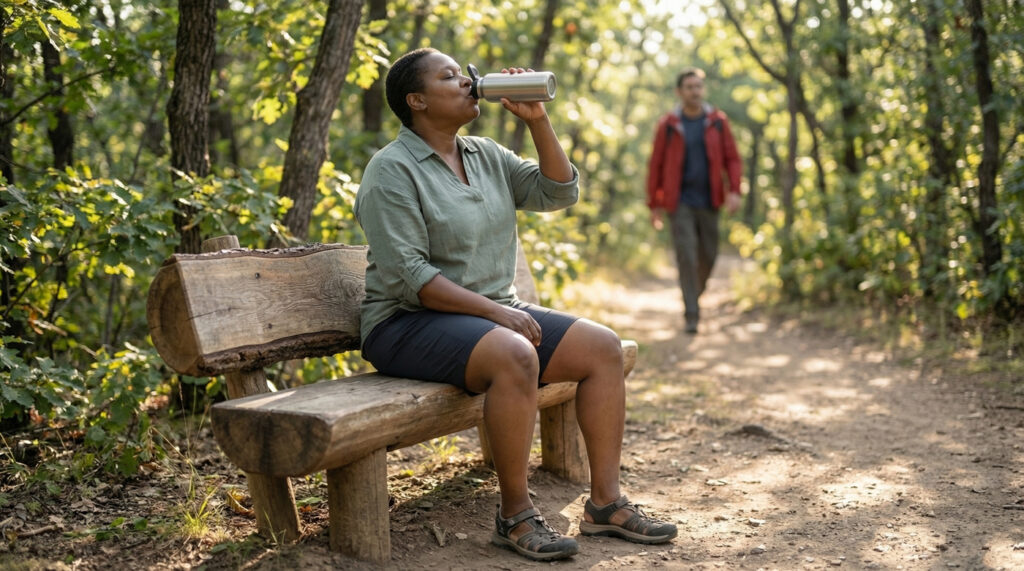
Trail terrain burns more energy than the equivalent distance on pavement, which means you sweat more, which means you need more water than the same walk would require. At minimum: 1.5 liters for a 2-hour hike in moderate temperatures. More in heat. More in elevation. Mild dehydration produces fatigue that looks indistinguishable from physical exhaustion, and many beginners misattribute it to being unfit rather than underfueled.
When to Adjust Your Plan
Signs you need to slow the progression down
Your body gives clear signals when the progression is moving faster than your current fitness supports. If you’re significantly sore for more than 72 hours after a hike, stay at the current distance for another week before stepping up. If your heart rate stays elevated well after a climb has ended, your cardiovascular system is still adapting and the current challenge level is appropriate. If joint pain rather than muscle soreness shows up, particularly in the knees or ankles, take a rest day and reduce intensity before the next outing.
None of these signals mean stop. They mean stay at the current level until they resolve.
Signs you’re ready to increase distance or difficulty
You’re ready to step up when the current distance feels comfortable from start to finish on two consecutive outings, your legs feel fine the day after, and you’re finishing with energy left over rather than finishing at your limit. That combination means your body has adapted to the current demand and is ready for the next level of stimulus.
For hiking for out of shape beginners, this progression typically takes one to two weeks per step-up in the first month. By month two, the adaptation comes faster.
Frequently Asked Questions
Can I start hiking if I’m out of shape or overweight?
Yes, and starting short and flat specifically addresses those practical concerns. Knowing how to start hiking out of shape comes down to matching the trail to your current fitness level, rather than trying to match your fitness to an ambitious trail. A 1.5 to 2-mile flat loop is a real hike with real health benefits. The trail fitness adaptation begins on that very first outing, regardless of your starting point.
Is hiking good exercise for beginners who are overweight?
Absolutely. When it comes to hiking for beginners overweight, it is a fantastic weight-bearing exercise that builds cardiovascular fitness, strengthens stabilizer muscles, and improves balance simultaneously. It’s also entirely self-paced and lower-impact on joints than running. The American Hiking Society has documented consistent fitness improvements in beginner hiker populations—including adults with high BMIs—who started with short, flat trails and progressed gradually. The key variable is consistency, not starting fitness.
What are the easiest trails for someone just starting out?
The best easy hikes for beginners starting from a low fitness baseline share three characteristics: a total distance under 2 miles, total elevation gain under 200 feet, and a well-maintained packed dirt or gravel surface. Using the AllTrails “Easy” filter, plus a max distance of 2 miles and an elevation gain check of under 150 feet per mile, generates this list reliably. Always read the five most recent reviews on any trail before committing to verify current conditions.
How long before hiking gets easier when starting out of shape?
For most people, the exact same trail is noticeably easier by the fourth to sixth outing. The first two to three hikes engage muscle groups that haven’t been trained specifically for uneven trail terrain, which is why those early outings feel harder than the distance suggests. The phase of beginner hiking unfit transitions to feeling “trail fit” within four to six consistent weeks on progressively longer, but still manageable, trails. The timeline is much faster than most beginners expect.
What gear do I need when hitting the trails for the first time?
Starting hiking overweight requires the exact same core gear as any other beginner: trail-specific footwear with solid grip and enough toe room (trail runners are the right starting point for most people), moisture-wicking wool or synthetic socks rather than cotton, and plenty of water. For additional joint support on longer outings or descents, trekking poles are highly worth considering once you’re past those first few flat, easy hikes. Expensive technical clothing is not needed or useful at this stage.
How do I pace myself on the trail?
When looking at hiking for out of shape beginners, the “talk test” is the most practical pacing tool available. If you can speak in full sentences without stopping for breath, your pace is in the right aerobic range. If you can’t, simply slow down until you can. On uphills, use the rest step technique: pause for one beat with your weight on your back foot before each step. It sounds tedious, but it works. Stay moving at a slow, steady pace rather than constantly stopping and restarting, which costs more energy and disrupts your aerobic rhythm.
The Starting Point Is the Point
How to start hiking out of shape is not a different process from how to start hiking at any fitness level. It’s the same process, done honestly, without pretending you’re starting somewhere you’re not.
A 1.5-mile flat loop is a real hike. The fitness it builds is real. The trail adaptation it starts is exactly the same adaptation that leads to 5-mile hikes with elevation two months later. Easy hikes for beginners aren’t a compromise. They’re the correct starting point for building the specific fitness that trail hiking requires, regardless of where your baseline sits today.
The six steps in this article cover the full progression from the first short flat outing to genuinely capable beginner hiking. They work because they’re specific, because they don’t skip the early stages, and because they treat the reader’s actual starting point as the right starting point rather than a problem to overcome. For what your first trail experience will actually feel like once you’ve chosen the right starting trail, our guide to what to expect on your first hike walks through the day from trailhead to finish.
Next Steps
- Right now: Open AllTrails and filter for Easy trails under 2 miles within 15 miles of you. Check the elevation gain on two or three options. Pick the flattest one with the most recent reviews. That’s your first trail.
- Before your first hike: Eat a real meal 90 minutes before you leave. Pack 1.5 liters of water and a snack. Wear shoes with grip and wool or synthetic socks. Tell someone where you’re going and when you expect to be back.
- After your first hike: Write down how your legs felt at the end and how long it took. That data determines your next trail, not any app’s estimate or average.