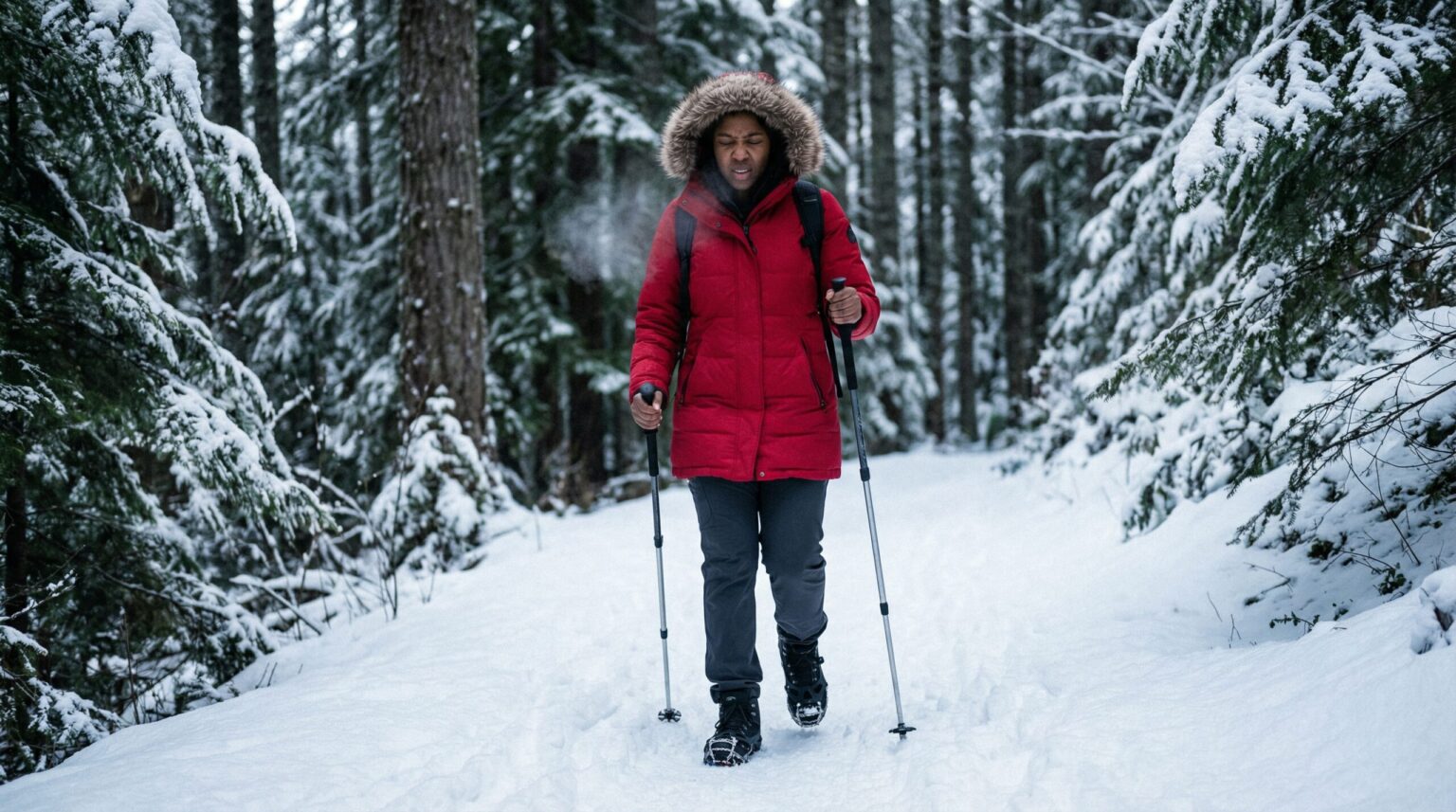
Beginner Winter Hiking Guide
⚡ WINTER TRAILS

Beginner Winter
Hiking Guide

Essential Trail Blueprint

⚡ Direct Trail Answer

Prepare for sudden weather shifts with 3 functional layers: a wicking base layer, insulating fleece mid-layer, and waterproof breathable shell. Strictly avoid cotton fabrics in cold or wet conditions.

Published by Fama Blog
🥾 MICROSPIKES

Microspikes
Are Non-Negotiable

RULE FIELD PROTOCOL

Hard packed snow turns to blue ice on slopes. Slip-on steel spikes give instant claw grip on icy terrain.

🏛️ Verified Standard: National Outdoor Leadership School (NOLS) wilderness curriculum teaches three-layer systems for all climate zones.
Published by Fama Blog
🎒 BE BOLD, START COLD

Start Cold
to Avoid Sweat

RULE FIELD PROTOCOL

Sweat freezes against skin during rest breaks. Strip outer shells before climbs to keep base layers dry.

🏛️ Verified Standard: Wilderness Medical Society hypothermia guidelines explicitly warn that 'cotton kills' in damp mountain environments.
Published by Fama Blog
🦵 HYDRATION

Insulate Your
Water Bottle

20 MIN KEY BENCHMARK

Bladder hoses freeze solid in 20 minutes. Carry wide-mouth insulated bottles stored upside down in packs.

🏛️ Verified Standard: National Weather Service lightning protocols advise that 'when thunder roars, head to lower ground immediately.'
Published by Fama Blog
🧦 BATTERY DRAIN

Keep Phones
in Warm
Chest Pocket

RULE FIELD PROTOCOL

Cold drains lithium phone batteries in under an hour. Keep phone and headlamp batteries near body heat.

🏛️ Verified Standard: CDC skin cancer prevention data shows UV radiation intensity increases by 4% for every 1,000 feet of elevation gain.
Published by Fama Blog
💧 WINTER GEAR

Complete Cold-Weather
Gear List

RULE FIELD PROTOCOL

Check gaiter reviews, hand-warmer packing lists, and hypothermia warning signs on FamaBlog.

⚡ PRO RULE: Pack an emergency ultralight space bivy; wrapping yourself in reflective mylar reflects 90% of radiated body heat.
Published by Fama Blog