⚡ BEGINNER TRAILS
7 Body
Changes on
Your First Hike
Essential Trail Blueprint
⚡ Direct Trail Answer
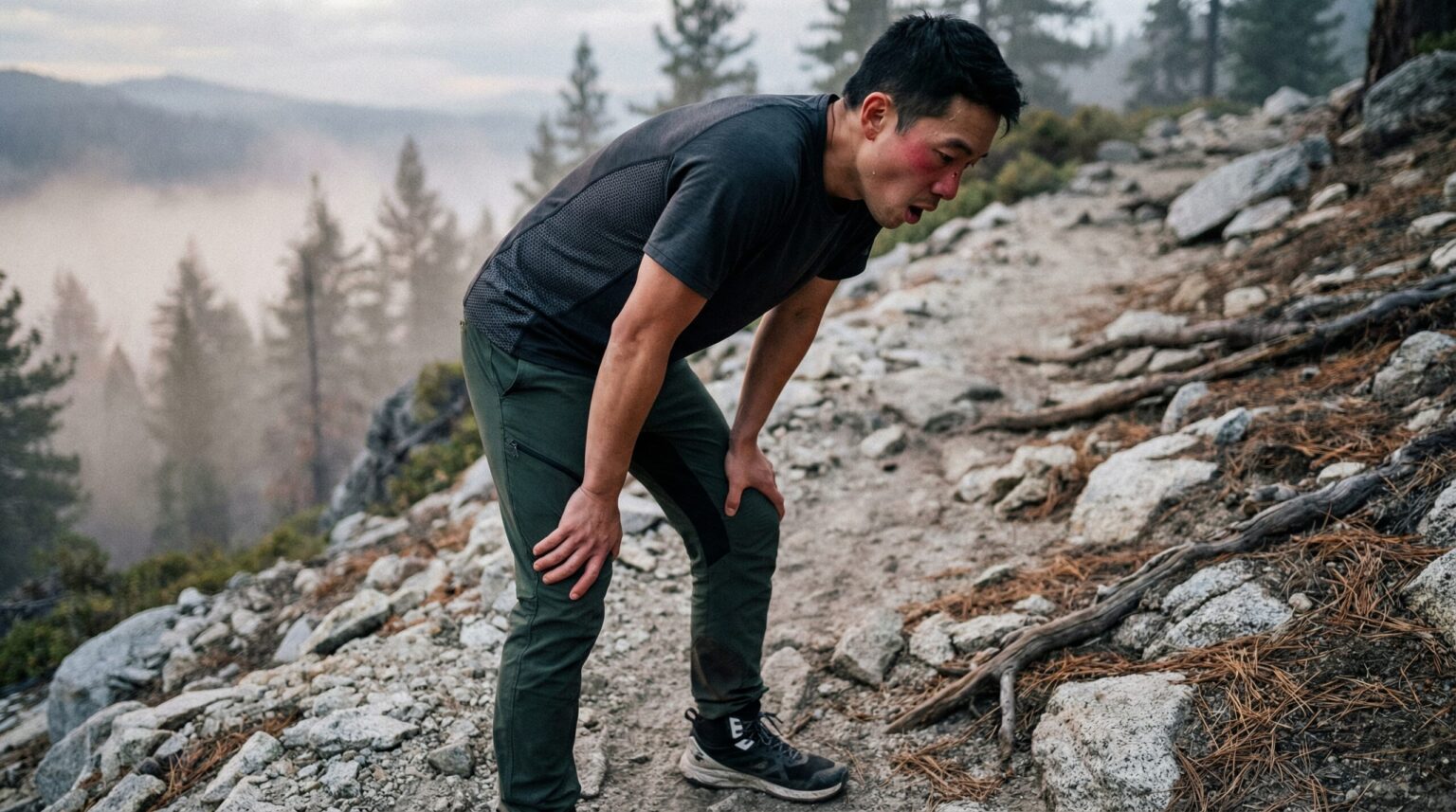
Hiking burns 400–600 calories per hour, engages stabilizer muscles, and builds bone density. Hike uphill with rhythmic nasal breathing and descend with soft, unlocked knees.
🥾 SWOLLEN FINGERS
Why Do
Fingers Swell Up?
RULE
FIELD PROTOCOL
Centrifugal arm swing pulls fluid into hands. Fix: grip backpack shoulder straps or use trekking poles.
🏛️ Verified Standard: American College of Sports Medicine (ACSM) metabolic tables benchmark mountain hiking at 6.0 to 9.0 METs.
🎒 CARDIO SPIKE
Heart Rate
Jumps on Inclines
4
KEY BENCHMARK
Lifting body weight against gravity recruits large glute muscles, elevating cardio into zone 4 rapidly.
🏛️ Verified Standard: Journal of Applied Physiology research confirms uneven terrain demands 28% more joint stabilization energy than pavement.
🦵 REST STEP
Master the
Mountain Rest Step
15
KEY BENCHMARK
Locking the downhill knee momentarily transfers weight to your skeleton, lowering pulse by 15 bpm.
🏛️ Verified Standard: Mountaineering biomechanics standards teach the rest-step to preserve aerobic stamina on extended high-altitude climbs.
🧦 APPETITE SHIFT
Extreme Hunger
Hours Later
2
KEY BENCHMARK
Post-hike appetite often delays 2 hours before metabolic demand kicks in. Prepare a dense protein meal.
🏛️ Verified Standard: Wilderness Medical Society joint health guidelines confirm soft-knee downhill strides reduce peak knee shear by over 20%.
💧 BEGINNER BLUEPRINT
Master Your
First Trail Day
RULE
FIELD PROTOCOL
Read our beginner preparation checklist, pacing rules, and hydration schedule on FamaBlog.
⚡ PRO RULE: Perform dynamic hip and calf swings before hiking; reserve static hamstring stretches for post-hike recovery.