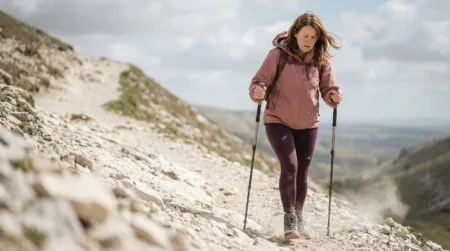


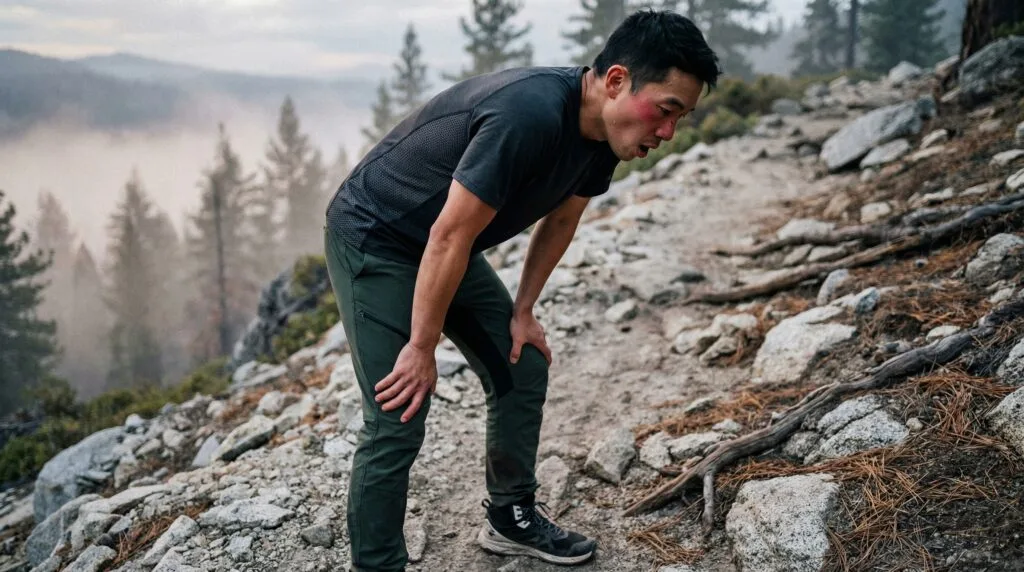
The most useful advice nobody shares before your first trail outing is simple: your body has never done this specific combination of work before. Even if you walk daily or run 5Ks on flat pavement, navigating uneven dirt, loose gravel, and shifting gradients for two straight hours activates stabilizer muscles, connective tissues, and joint angles that rarely get challenged in regular workouts.
⚡ Quick Trail Takeaways
- Foot Swelling: Feet expand up to half a shoe size during hikes due to increased peripheral blood flow.
- DOMS (Delayed Onset Muscle Soreness): Quads and calves peak in soreness 24-48 hours post-hike.
- Hydration Demands: Your body continues burning calories and repairing muscle tissue long after you finish.
They will notice.
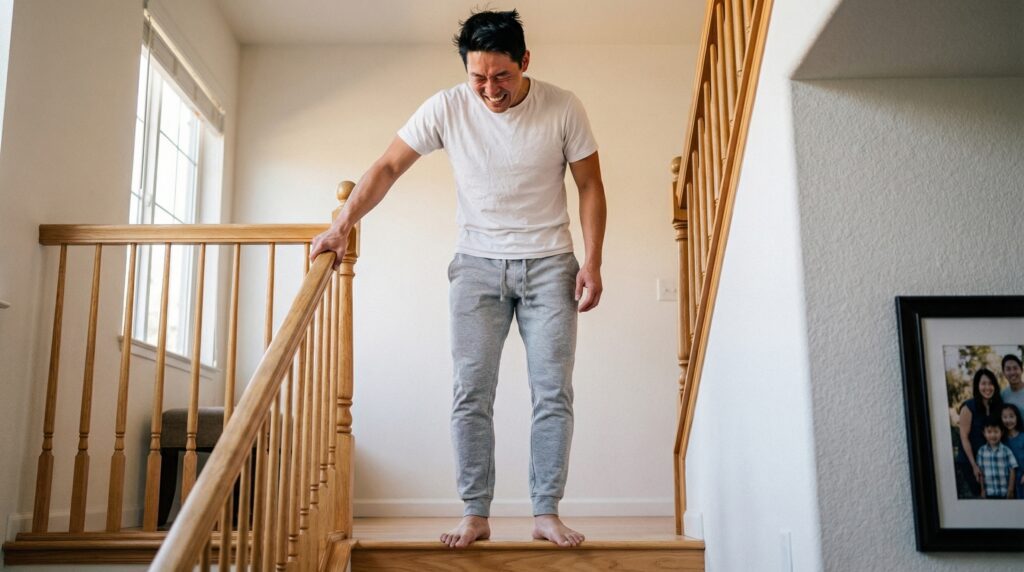
The morning after my first real hike, I couldn’t walk down my apartment stairs normally. I had to go one step at a time, hands on the wall, like someone twice my age. I’d done a 3-mile jog three days earlier, no problem. So the soreness genuinely confused me. It wasn’t the muscles I expected. It wasn’t the effort I’d predicted. Trail fitness turned out to be a different category of fitness, and nobody had mentioned that.
This guide is the thing I wish someone had sent me the night before that first hike. Not to scare you. These seven physical changes are all normal, all manageable, and all temporary. But walking onto that trail knowing what’s coming means you don’t spend the whole time wondering if something is wrong. Because nothing is wrong. Your body is just learning a new thing.
| Expected Body Change | Timeline | Proactive Trail Solution |
|---|---|---|
| Foot Swelling | During & Post-Hike | Buy footwear with 1/2 size thumb width toe box space |
| Quad & Calf DOMS | 24 to 48 Hours Later | Light walking, active recovery, magnesium hydration |
| Heightened Caloric Appetite | Same Evening | Protein-rich dinner + complex carbohydrates |
What Makes Trail Fitness Different from Regular Fitness
Most first time hiking tips assume that fitness transfers. That if you’re in decent shape from running, cycling, or going to the gym, your body will handle a trail without much protest. That assumption is partially right and mostly misleading.
Aerobic fitness does transfer. If you run regularly, your cardiovascular system is going to handle the climb better than someone who doesn’t move much. That’s real. But trail hiking uses muscle groups that most exercise routines almost completely ignore: the small stabilizer muscles in your ankles and knees, the glutes and hip flexors needed for variable incline, the foot muscles doing constant micro-adjustments on uneven ground. Your gym routine doesn’t train any of that. Trail running doesn’t even fully prepare you for hiking, and vice versa.
There’s also the issue of sustained effort. Most cardio workouts have a rhythm: you find a pace and hold it. Trails don’t work that way. You’re slowing on rocky sections, speeding up on flat ones, stopping to read a sign, powering up a steeper pitch. Your body never settles into a steady state. That constant variation burns more energy than a same-distance run and uses more muscle recruitment than a same-time gym session.
The American Hiking Society estimates that a moderately fit person burns 400 to 600 calories per hour on trail, higher than most people expect and higher than the same distance walked on flat ground. Understand that before you go, and the hunger and fatigue you feel later stop being alarming. They’re just math.
Here are the seven specific things that happen, what causes them, and what to do about each.
The 7 Physical Changes Beginners Experience on Trail
Change 1: Your Legs Feel Strong for the First 20 Minutes — Then Don’t
The first mile of most beginner hikes feels deceptively easy. You’re moving, you’re in the fresh air, your energy is high. Then somewhere around the 25-minute mark, sometimes sooner on a climb, sometimes later on flat terrain, your legs start to register the fact that they’ve been doing something unfamiliar.
What’s happening: your body is pulling glycogen from muscles that haven’t been asked to do this exact pattern of work before. Trail-specific muscles that don’t get trained by flat-ground activity start activating, and that recruitment process is tiring in a way that’s different from the clean tiredness of a run or a gym set.
The fix for your first time hiking is to start slow. Deliberately slow. Slower than feels necessary in the first five minutes. A pace where you can speak in full sentences without gasping. That pace is roughly 2 miles per hour on moderate terrain, which feels almost embarrassingly easy when you start. It won’t feel easy by mile 2.
Once your body adjusts to trail work after a few hikes, that early-mile fatigue becomes much more predictable. On your first outing, expect it and don’t panic when it shows up.
Change 2: You Breathe Harder Than Expected (Especially on Inclines)
Flat-ground cardio prepares you for steady-state breathing. Trails don’t offer steady state. Every incline changes your oxygen demand. A slope that looks gentle from below, a 5 to 10 percent grade, meaningfully increases the work your cardiovascular system is doing. A 15 to 20 percent grade on a steeper section will have most beginners breathing in a way that feels out of proportion to how short the section is.
This catches people off guard because the slope doesn’t look like much. The trail looks like a gentle hill. Your lungs disagree.
One of the better first time hiking tips for managing this: watch your breathing before you watch your pace. If you can’t finish a short sentence between breaths, slow down. On steep pitches, the rest step (stopping briefly with each step to let your breathing recover slightly) is something experienced hikers use constantly. It feels like cheating. It’s not. It’s just pacing on terrain where your pace needs to be measured in steps, not minutes per mile.
Your breathing will normalize as your body builds trail-specific cardiovascular efficiency. That happens faster than most beginners expect, often within three or four hikes.
Change 3: Your Feet Wake Up in New Ways
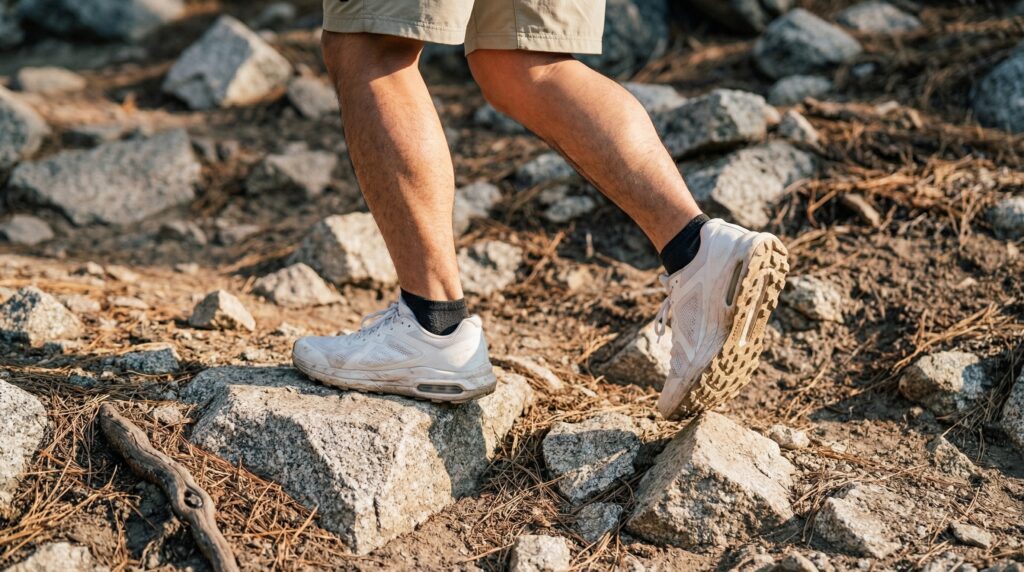
This one surprises more people than almost any other change. Hikers who’ve walked miles on city streets without a blister find that two miles of trail creates hot spots (spots of friction and pressure) in locations their feet have never complained about before.
The cause is mostly the terrain. Flat pavement loads your feet predictably. Trail surface changes constantly: rocks shift your weight to the outer edge of your foot, roots make you roll slightly inward, loose dirt on a downhill loads your heel differently. Your foot is making hundreds of tiny adjustments that flat ground never requires. The muscles along the arch, the small tendons around the ankle, the toes gripping for stability. All of it working in ways you haven’t asked of it recently.
Good wool or synthetic socks make a real difference here. Cotton socks hold moisture and fold in ways that create friction. Merino wool stays drier, keeps its shape, and genuinely reduces blister risk. A pair of dedicated hiking socks costs $18 to $25. It’s the cheapest actual improvement you can make to your first hike.
If your feet start developing a hot spot mid-trail (a burning, stinging patch), stop and address it before it becomes a blister. A piece of moleskin or athletic tape over the spot takes two minutes and can save the rest of your hike.
Change 4: You Sweat More Than You Expect
Most people calibrate their sweat level to their normal exercise. Trail hiking produces more sweat than that calibration suggests, for a specific reason: your body temperature spikes and drops more than it does during steady-state exercise. You’re working hard on the uphills, cooling off on flat sections, stopping at viewpoints, then working hard again. That variation drives more thermoregulation, specifically more sweating, than a consistent-pace effort.
In warm weather above 70°F, most hikers are losing close to half a liter of water per hour of active hiking. In heat above 80°F, that rate climbs. On your first time hiking, the dehydration risk catches people who aren’t thinking about it, because the exertion level feels moderate, not intense, and the sweat may not be as visible as it would be at a gym.
The practical version of this first time hiking tip: drink before you’re thirsty. By the time thirst hits, you’re already mildly behind. Take a drink every 20 to 30 minutes without waiting for your body to ask. For a 3-mile hike in moderate weather, 1.5 liters is a reasonable starting point. Bring more if you’re not sure.
Change 5: Your Knees Notice the Downhill
Here’s the one most beginner hiking guides miss entirely: the downhill is harder on your body than the uphill.
Going up is tiring. Going down is damaging: to your joints and to muscles that weren’t prepared for it. Descending a hill requires your quadriceps to work eccentrically, meaning they’re contracting while being lengthened, essentially acting as brakes to slow your descent. That type of contraction causes significantly more muscle fiber breakdown than concentric work (the kind of contraction you feel going up).
Your knees feel this in two ways: first, the lateral stress of navigating uneven footing on the way down; second, the cumulative impact of each step forward and down, which concentrates force at the knee joint. Beginners who feel fine going up often notice their knees giving mild complaints on the descent. Usually this is just new-to-this fatigue, not injury. But if you have any history of knee issues, going slow on descents (using shorter steps, keeping your knees slightly bent, placing your feet flat rather than heel-first) makes a real difference.
Trekking poles genuinely help with steep descents by offloading some of that knee stress onto your arms. I didn’t think I needed them for the first few hikes. I was wrong about that. One moderately steep downhill trail changed my opinion.
Change 6: You Get Hungry Earlier Than You Expected
Trail hunger hits fast. Most beginners are surprised by how soon they want food, often before the midpoint of a hike they assumed they could do without snacking. This is the 400-to-600-calorie-per-hour burn rate in action, combined with the caloric demands of muscles that are working harder than usual.
The standard first-timer mistake: not bringing food because the hike is “just a couple hours.” Two hours at that burn rate, on top of whatever you had for breakfast, is enough to put you in a blood-sugar dip that feels much worse on a trail than it does on the couch.
Bring food. Specifically: something with real carbohydrates, something with salt, and something with a bit of protein. Trail mix, a sandwich, energy bars. The category doesn’t matter. The timing does. Eat something at the halfway point regardless of whether you feel hungry yet. Eating before the hunger hits keeps your energy level stable; waiting until you’re depleted means 20 minutes of dragging before your body responds to the food.
A small piece of first time hiking advice that sounds trivial: eat a real meal 60 to 90 minutes before you leave the trailhead. Not just coffee. Not a protein bar in the car. An actual meal. It sets up the whole hike differently.
Change 7: The Next Morning, Your Glutes and Calves Are Wrecked
I was wrong about where the soreness would land. I expected my quads. On uphills, your quads work hard. That was my logic. What I didn’t anticipate was the complete attack on my glutes, calves, and the outside of my hips.
The technical explanation: delayed onset muscle soreness (DOMS) hits 24 to 48 hours after exercise that stressed unfamiliar muscle groups. Trail hiking specifically loads the glutes and hip abductors (the muscles along the outer hip) because of the constant micro-adjustments to uneven terrain. Your calves work hard on every step, especially any with elevation. The tibialis anterior (the muscle along your shin) takes the strain of all that foot-flexing on descents.
The result: the day after a first hike, many beginners find walking down stairs uncomfortable, standing up from a chair requires a brief moment of assessment, and the muscles they’re most sore in are ones they couldn’t have named beforehand.
This soreness is normal. It’s not injury. It typically peaks at 48 hours and fades by 72. Gentle movement helps more than rest: a short, flat walk the next day speeds recovery better than staying on the couch. Staying hydrated after the hike also matters; your muscles recover faster with adequate water than without.
What First-Timers Get Wrong About These Reactions
Most beginners respond to the physical discomfort of a first hike in one of two ways: they push through signs they shouldn’t ignore, or they treat normal responses as reasons to quit. Both are worth knowing about.
Pushing through real warning signs. Mild muscle fatigue is normal. A stitch in your side usually means you’re not breathing consistently enough. Slow down, breathe deliberately, and it passes. What to actually stop for: a pain in a joint (not muscle fatigue, but a sharp or deep joint pain), dizziness that doesn’t clear after a few minutes of rest and water, or a headache that appeared in the last 30 minutes without an obvious explanation. Those are worth sitting down, drinking something, and reassessing your plan.
Treating normal discomfort as a sign that hiking isn’t for you. The heavy legs, the huffing on the climb, the sore glutes the next morning. None of that means hiking was a mistake. It means your body is adapting to something new. Most people find that by their third or fourth hike, those first-hike sensations are dramatically reduced. Your body is building trail fitness fast. The worst version of a first hike is almost always the first hike.
One practical reframe that helps: the discomfort you feel is your body doing exactly what it’s supposed to do. It’s recruiting new muscles, building new pathways, figuring out a new kind of movement. That’s the good news hiding inside the sore glutes.
When Physical Reactions on Trail Need More Attention
Standard soreness and normal fatigue don’t require intervention. But a few physical reactions during a hike are worth slowing down for:
If you feel dizzy or lightheaded and it doesn’t clear within a few minutes of sitting, shade, and water. That’s dehydration or heat starting to set in. Drink slowly, rest, and make the call to head back.
If you develop significant swelling in an ankle or knee during the hike (not just soreness, but actual visible swelling), don’t push through it. That’s inflammation responding to more than normal fatigue.
And if you’re on a trail in summer heat and someone in your group stops sweating despite the exertion and temperature, that’s a heat emergency requiring immediate action. REI’s guide to recognizing and treating heat-related illness is worth a read before hiking in hot conditions.
For most first-timers on a beginner trail in reasonable weather, none of these will come up. But knowing what normal looks like makes the abnormal easier to spot.
What should I expect to feel on my first hike?
Expect heavier legs than usual, harder breathing on any incline, and some foot soreness around the 45-minute mark if the terrain is uneven. These are normal first time hiking responses, your body adapting to trail-specific demands. Most of it fades within the first few hikes as you build trail fitness. The next morning, expect glutes and calves to be notably sore, peaking around 48 hours after the hike.
Is it normal to be really tired after a short beginner hike?
Yes, and completely expected. Trail hiking burns 400 to 600 calories per hour in a moderately active person, higher than most people predict, and engages stabilizer muscles that regular exercise doesn’t train. A 2-hour beginner hike is a real workout, even if the distance looks modest on paper. Being tired afterward isn’t a fitness problem. It’s an accurate response to real effort.
How long until hiking gets easier physically?
Most beginners notice real improvement by their third or fourth hike. The specific muscle groups involved (glutes, hip stabilizers, calves, foot muscles) respond quickly to trail-specific stress, typically showing less DOMS after 3 to 4 outings. Cardiovascular adaptation to the incline-and-flat variation of trail hiking also improves faster than most people expect. The first hike is almost always the hardest one.
Why do my knees hurt going downhill but not uphill?
Descending requires your quadriceps to work eccentrically, contracting while lengthening and essentially acting as brakes. That kind of muscle contraction places more stress on both the muscle and the joint than the concentric work of going up. On steep descents, shortening your stride and keeping your knees slightly bent on each step reduces the impact load. Trekking poles also offload a portion of that stress onto your arms.
What are the most important first time hiking tips for avoiding soreness?
The biggest levers: eat a real meal before the hike, drink water consistently throughout (not just when thirsty), start at a slower pace than you think you need, and take the downhill sections seriously. After the hike, a short flat walk the next day helps muscles recover faster than full rest. Hydrating after the hike (not just during) also speeds the process.
Can I go hiking if I’m not very fit?
Yes. A short beginner hike, 1.5 to 3 miles on flat or gently rolling terrain, is accessible to most adults regardless of current fitness level. The physical changes described in this beginner hiking guide will be more pronounced for someone less active, but they’re still temporary and still normal. Starting with a shorter trail and building from there is the right approach, not waiting until you’re “fit enough.” You build trail fitness by hiking, not by preparing to hike.
Why do I feel more tired the day after a hike than on the day itself?
That’s DOMS (delayed onset muscle soreness) doing what it does. The inflammatory response that causes soreness peaks 24 to 48 hours after the exercise, not during or immediately after. This is normal physiology. It’s also the reason the stairs feel worse on Thursday morning than they did Wednesday evening when you got home from the trail.
Your Body Learns Fast
The seven physical changes in this beginner hiking guide all have one thing in common: they’re loudest on the first hike and progressively quieter on every one after it. Trail fitness builds quickly. By your fourth or fifth outing, the heavy legs at mile one will be gone, the breathing on climbs will be steadier, and the next-day soreness will be a fraction of what it was the first time.
First time hiking tips matter most when you don’t know what’s normal. Now you do. The muscles that are working so hard right now are building something, and whatever discomfort the first hike brings, it’s temporary.
Next Steps
- Right now: Note which of the 7 changes you didn’t know about. Those are the ones to prepare for specifically before your first hike.
- Before your first hike: Eat a real meal 90 minutes before you leave. Pack more water than you think you need. Download the offline trail map on wifi, not at the trailhead.
- After your first hike: If the soreness is heavy on day 2, take a short flat walk. It speeds recovery more than staying still. Make a note of your actual pace so you can calibrate distance for next time.
Frequently Asked Questions
Why do my hands swell when I hike?
Your hands swell because swinging your arms forces blood into your extremities, and your blood vessels expand to release body heat.
How do I stop my knees from hurting after a hike?
Using trekking poles to absorb the impact on downhills and taking smaller steps can drastically reduce preventing knee pain on downhill descents.
Related Reads
Crashed on the couch for the rest of the day after a hike that didn’t even feel that hard? Here are 7 reasons hiking wipes you out more than expected, some of which have nothing to do with your fitness.
Not sure what to actually pack, wear, or brace for before your boots even touch dirt? Here’s exactly what your first hike is really like, the parts nobody mentions beforehand included.
Eyed a trail that looked “doable” online and ended up dragging yourself back to the car? These 5 rules help you actually pick a distance that fits you, not just what looked fine on a screen.
Hit the trail once last month and now wondering if that’s enough to actually get better at it? Here’s a straight answer on how often beginners should hike without burning out or losing momentum.
Felt your legs torch out way earlier than expected, even though the map said it was a short trail? This explains what elevation gain does that distance alone won’t tell you about how hard a hike will actually feel.