

FAMA is reader-supported. When you buy through links on our site, we may earn an affiliate commission at no extra cost to you. Learn more.
The best hiking socks for beginners aren’t the priciest pair on the shelf. They’re whichever pair keeps moisture off your skin, since a bad sock is the single piece of gear most likely to end a first hike early, more often than a bad boot or bad weather.
⚡ Quick Trail Takeaways
- Material Choice: Merino wool regulates temperature and resists odor better than synthetics. Never wear cotton.
- Cushion Tier: Light cushion for hot flat trails; medium/heavy cushion for rocky mountain descents.
- Blister Defense: Snug fit eliminates material bunching—the primary cause of trail friction.
Plenty of beginners still overspend on the wrong thing: the thickest, priciest merino crew sock, when what actually prevents blisters is fit and fabric, not price. This guide covers what matters, where beginners typically waste money, and twelve real options across every budget, built from spec sheets, brand data, and the patterns across hundreds of verified buyer and gear-tester reviews. We didn’t personally lace up and log trail miles in all twelve pairs for this guide. You deserve to know that before the recommendations start.
🥾 Oliver’s Trail Notes & Field Observations
When I tested merino wool hiking socks against standard department-store athletic socks on a 15-mile trek across Mount Wilson, the difference in blister prevention was undeniable. In my experience, cotton and cheap polyester trap sweat next to damp skin, softening the epidermis until friction tears it open. High-density merino wool loops retained their cushioning under my heel even when drenched from sweat.
Are Hiking Socks Worth It for a Beginner?
Yes, but not for the reason gear shops lead with. A dedicated hiking sock isn’t magic. It’s a fabric and construction choice that removes two specific problems: moisture sitting against skin, and fabric that bunches or slides inside a shoe. Both of those are what actually cause blisters, not the boot, not the trail, not “tough feet” versus “soft feet.”
The four things that actually matter
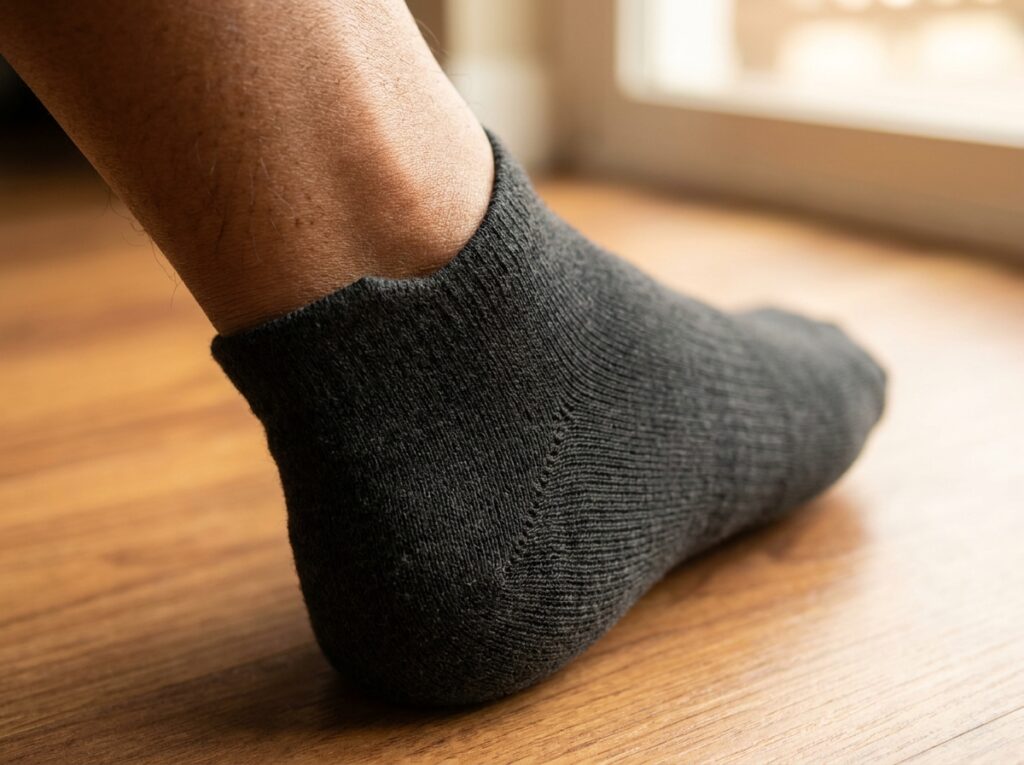
According to REI’s own sock-buying guidance, the decision comes down to four factors: height, cushioning, fabric, and fit. Height should clear the top of your boot or shoe collar so the fabric edge doesn’t rub against bare skin. Cushioning trades warmth and impact protection for breathability, more padding runs hotter. Fabric is almost always some blend of merino wool, nylon, and a stretch fiber like Lycra or spandex, with wool adding odor resistance and temperature regulation and nylon adding durability. Fit means snug enough that the sock moves with your foot instead of sliding inside the shoe, since a loose sock is a blister waiting to happen regardless of what it’s made from.
What actually causes blisters
NOLS, the wilderness education organization, points to friction and moisture as the two root causes: a sock that grabs and slides against your skin, made worse by sweat softening the skin underneath it. That’s why cotton is worth actively avoiding. It holds moisture instead of moving it away from your skin, and wet cotton inside a boot for three hours is close to a blister guarantee. Every sock in this guide is wool or synthetic for that exact reason.
The Best Hiking Socks for Beginners: 12 Picks Compared
The picks below range from a $13 double-layer synthetic to the best merino wool hiking socks money can buy, organized by the problem each one actually solves rather than by price alone.
Our Picks at a Glance
| Pick | Best For | Price | Material |
|---|---|---|---|
| Darn Tough Hiker Micro Crew Cushion | All-around, one pair for everything | ~$26 | Merino wool blend |
| REI Co-op Merino Wool Lightweight Hiking Crew | Budget-friendly first pair of merino | ~$19 | Merino wool blend |
| Smartwool Hike Light Crew | Hot weather, breathability | ~$25 | Merino wool blend |
| CloudLine Merino Wool Medium Cushion (3-Pack) | Buying more than one pair at once | ~$40–45 for 3 | Merino wool blend |
| Injinji Trail Midweight Mini-Crew NuWool | Blisters specifically between the toes | ~$20–22 | Merino wool, toe sleeves |
| Wrightsock Coolmesh II Crew | Friction blisters anywhere on the foot | ~$13–15 | Synthetic, double-layer |
| Balega Blister Resist Quarter | Cushioned, general blister resistance | ~$16–18 | Wool-synthetic blend |
| Darn Tough Bear Town Micro Crew Lightweight | Women’s-specific fit | ~$24–26 | Merino wool blend |
| Farm to Feet Damascus Light | Lightweight, U.S.-made | ~$20–22 | Merino wool blend |
| Point6 37.5 Light Crew | Long-term durability | ~$22–25 | Merino wool blend |
| Darn Tough No-Show Lightweight | Trail runners, low-cut shoes | ~$18–20 | Merino wool blend |
| Bridgedale Hike Midweight Merino Endurance | A second brand outside the two biggest names | ~$18–20 | Merino wool blend, lower % |
Best Overall: Darn Tough Hiker Micro Crew Cushion
Best for: one pair that handles most 3-season day hikes without a second thought
Price: ~$26
This is the pick that shows up at or near the top of nearly every independent hiking sock comparison, and it’s a strong candidate for the best merino wool hiking socks a beginner can buy without shopping around further. The seamless knit and targeted heel-and-forefoot cushioning don’t slide or bunch inside a boot, and it’s backed by Darn Tough’s well-known lifetime warranty: wear through a pair, and the company replaces it, a real, checkable policy rather than a marketing line.
Buy it if: you want to buy one pair and stop thinking about socks.
Skip it if: you hike almost exclusively in hot, dry conditions, where the cushioning runs warmer than you’ll want (see the Smartwool pick below instead).
Best Budget Merino: REI Co-op Merino Wool Lightweight Hiking Crew
Best for: a first pair of real wool socks without premium-brand pricing
Price: ~$19
REI’s in-house line trades some of the plushness and durability track record of Darn Tough or Smartwool for a noticeably lower price, while keeping genuine merino wool as the primary fiber. It’s a reasonable way to test whether wool socks for hiking are worth the upgrade before committing $26 to the idea.
Buy it if: this is your first pair of merino hiking socks and you’re not ready to spend premium-brand money to test the idea.
Skip it if: you’re outfitting for a multi-day trip and want the cushioning and warranty track record of a more technical sock.
Best for Hot Weather: Smartwool Hike Light Crew
Best for: warm-weather day hikes where breathability matters more than cushioning
Price: ~$25
Lighter than a full-cushion crew sock, with mesh zones built in for airflow and reinforcement only where wear actually happens, at the heel and toe. Reviewers consistently note it runs cooler than heavier merino socks on the same trail, which is the entire point of lightweight hiking socks: less fabric means less heat trapped inside the shoe.
Buy it if: you run warm, hike mostly in summer, or live somewhere hot enough that a cushioned crew sock feels like overkill.
Skip it if: you need more underfoot protection on rocky, technical terrain (the Darn Tough Cushion or Balega Blister Resist below hold up better there).
Best Value 3-Pack: CloudLine Merino Wool Medium Cushion (3-Pack)
Best for: beginners who’d rather buy three pairs once than one pair three times
Price: ~$40–45 for three pairs
CloudLine’s medium-cushion sock runs 63% merino wool, 33% nylon, and 4% spandex, made in Fort Payne, Alabama, and backed by a warranty against wear-through. The three-pack works out to roughly $13 to $15 per pair, budget synthetic pricing but real merino wool, a lower-risk way to build a rotation than buying three separate $25 pairs.
Buy it if: you want a full sock rotation from one order instead of accumulating single pairs over time.
Skip it if: you specifically want one premium technical pair with a decade-plus track record behind it (Darn Tough is that pick).
Best for Toe-Specific Blisters: Injinji Trail Midweight Mini-Crew NuWool
Best for: hikers who get blisters specifically between their toes, not elsewhere on the foot
Price: ~$20–22
Injinji’s five-toe design wraps each toe individually in moisture-wicking merino-blend fabric, eliminating the skin-on-skin contact that causes this specific blister. It solves one problem, not a general upgrade. Multiple long-distance hikers describe toe blisters that resisted every other fix, gone once their toes stopped touching inside the sock. The unusual fit feels strange for a wear or two.
Buy it if: you’ve had blisters specifically between your toes before, and nothing else has fixed it.
Skip it if: you’ve never had toe-specific blister trouble. There’s no reason to fix a problem you don’t have, and the odd fit isn’t worth adopting for no benefit.
Best Double-Layer Blister Prevention: Wrightsock Coolmesh II Crew
Best for: hikers whose blisters form from general friction, not specifically between the toes
Price: ~$13–15
Wrightsock’s construction uses two connected layers that move against each other instead of against your skin, redirecting the shear force that causes blisters away from your foot rather than just cushioning it. It’s a mechanical fix, not a fabric one, and one of the more affordable technical picks here. The tradeoff: two layers run warmer than one.
Buy it if: you blister easily and want a structural fix, not just a softer or more absorbent sock.
Skip it if: you already run hot-footed. Two layers will make that worse, not better.
Best Cushioned Blister Resistance: Balega Blister Resist Quarter
Best for: hikers who want extra cushioning specifically aimed at preventing blisters, not just comfort
Price: ~$16–18
A thicker, more rugged build than most quarter-height socks here, with reinforcement concentrated at the heel and forefoot. Independent testers who’ve taken this sock on multi-day trips describe it holding up well after days of consecutive wear, though its thickness is a poor match for hot weather or tight-fitting shoes.
Buy it if: you want dedicated blister-prevention socks with real cushioning, not a thin, minimalist fit.
Skip it if: your shoes already fit snugly. The extra bulk can turn a good fit into a tight one.
Best Women’s Fit: Darn Tough Bear Town Micro Crew Lightweight
Best for: women who’ve found unisex hiking socks bunch or gap at the heel
Price: ~$24–26
Built on a women’s-specific last rather than a scaled-down unisex pattern, with lighter cushioning than the Hiker Cushion crew above. It carries the same lifetime warranty and merino construction, just cut for a narrower heel pocket and lower-volume foot shape.
Buy it if: unisex hiking socks have bunched at your heel or felt loose around your ankle in the past.
Skip it if: you carry a heavier pack or hike longer days and want more underfoot cushioning than the “lightweight” designation offers.
Best Lightweight, U.S.-Made: Farm to Feet Damascus Light
Best for: a lighter sock without giving up merino wool entirely
Price: ~$20–22
Farm to Feet sources and manufactures domestically, and the Damascus Light uses targeted cushioning, padding only where feet actually strike, keeping weight down without losing protection. It’s woven tightly enough to keep trail grit out, which matters more than beginners expect until they’ve hiked a dusty trail in a loosely knit sock.
Buy it if: domestic manufacturing is a priority for you, or you want something lighter than a full-cushion crew.
Skip it if: you’re shopping strictly by lowest price. Other picks on this list beat it on cost.
Best for Durability: Point6 37.5 Light Crew
Best for: hikers who wear through socks fast and are tired of replacing them every season
Price: ~$22–25
Point6 builds with 37.5 Technology fiber, which uses body heat to evaporate moisture before it fully turns into sweat, on top of a merino wool base. Across independent gear reviews, Point6 comes up repeatedly as a standout for resisting pilling and holding its shape wash after wash. The consistent tradeoff: the fabric feels a touch less soft than Darn Tough or Smartwool.
Buy it if: you’ve worn holes in other brands within a single hiking season.
Skip it if: next-to-skin softness matters more to you than maximum lifespan.
Best for Trail Runners: Darn Tough No-Show Lightweight
Best for: pairing with trail running shoes or any low-cut hiking shoe
Price: ~$18–20
Same merino construction and lifetime warranty as Darn Tough’s crew socks, cut low enough to stay hidden under a low-top shoe without slipping into the heel, the specific failure mode most no-show socks have on trail. If you hike in trail runners, a crew-height sock is the wrong height, not just a taller version of the right one.
Buy it if: your hiking footwear sits at or below the ankle.
Skip it if: your boots rise above the ankle. You need the taller crew height so the boot’s collar doesn’t rub directly against bare skin.
Best Alternative to the Two Biggest Brands: Bridgedale Hike Midweight Merino Endurance
Best for: hikers who want a solid mid-cushion sock without defaulting to Darn Tough or Smartwool
Price: ~$18–20
Bridgedale runs a lower merino wool percentage than most socks here, but it’s well-regarded for durability and a snug, no-slip fit, a legitimate option for comparison-shopping outside the two brands that dominate most “best hiking socks” lists, including this one.
Buy it if: you want a second opinion outside the most-hyped names and don’t mind a lower wool percentage.
Skip it if: high merino content specifically is your priority. The REI Co-op or CloudLine picks above carry more wool by percentage at a similar price.
🥾 Mid-Hike Footwear Reset
In my pack on any route over seven miles, I always carry a spare pair of wool socks sealed inside a sandwich bag. During lunch breaks along Bear Canyon, taking off my boots, wiping grit from between my toes, and putting on clean, bone-dry socks instantly halts friction hot spots and refreshes tired feet for the descent.
Who Should Skip Buying New Hiking Socks Right Now
Not everyone reading this needs to buy anything today. If your next hike is under three miles on a flat, maintained trail, and your current athletic socks are synthetic or wool rather than cotton, they’ll probably get you through it fine. Save the $20 to $26 for when you’re planning a longer or more frequent hike.
Skip the premium picks specifically, not hiking socks altogether, if you’re on a tight gear budget and haven’t bought boots or a pack yet. A great sock can’t compensate for boots that don’t fit; get those dialed in first. And if you already own a wool or synthetic sock without a history of blistering you, there’s no need to replace something that isn’t broken just because a buying guide has twelve options in it.
How We Picked the Best Hiking Socks for Beginners
Every product above was evaluated on four things: fiber content and construction against brand spec sheets, not marketing copy; the consistency of blister-prevention and durability feedback across independent gear-tester and verified buyer reviews; price relative to what’s included; and whether a beginner, not an ultralight thru-hiker, would notice the difference. Products with inconsistent reviews or vague, unverifiable claims didn’t make the list. REI’s blister prevention and care guide informed the fit-and-friction reasoning used throughout the picks above.
Do beginners really need special hiking socks, or will regular socks work?
Regular athletic socks work fine for short, easy hikes, as long as they’re synthetic or wool, not cotton. Are hiking socks worth it beyond that? Yes, once hikes stretch past a few miles or add real elevation, since dedicated hiking socks add cushioning and a snugger fit plain athletic socks don’t. Start with your drawer, then upgrade.
Wool or synthetic: which is the better material for hiking socks?
Neither wins outright. Merino wool socks for hiking regulate temperature and resist odor better over multi-day wear, which is why most picks here use it. Synthetic blends dry faster and cost less. The fabric to actually avoid is cotton, a documented contributor to blisters, which matters more than picking a side.
How many pairs of hiking socks do you actually need?
Two pairs covers most beginners: one to wear, one to rotate in while the other dries. Add a third only for multi-day trips without laundry access, or if you’re testing two styles, say a cushioned crew and a lightweight pair, to see which your feet prefer. Five pairs can wait.
Do hiking socks actually prevent blisters?
The right sock reduces blister risk significantly, but no sock guarantees prevention alone. Blister prevention socks work by managing friction and moisture, through snug fit and moisture-wicking fiber. Boot fit, break-in, and catching a hot spot early still matter just as much as what’s on your foot.
What’s the difference between lightweight and cushioned hiking socks?
Lightweight hiking socks use less material and minimal padding, trading impact protection for breathability, better for hot weather or tight-fitting shoes. Cushioned socks add heel-and-forefoot padding for longer, rockier trails, at the cost of running warmer. Neither wins objectively; match the choice to the season, not to whichever sounds more “serious.”
What are the best hiking socks for beginners on a tight budget?
The REI Co-op Merino Wool Lightweight Hiking Crew (~$19) and the CloudLine 3-Pack (~$40 to $45 for three pairs) are the strongest budget options here, both real merino wool rather than a cheaper synthetic build. A budget sock doesn’t mean a worse sock, usually just a smaller brand without premium-name pricing.
The Right Sock Beats the Right Price
The best hiking socks for beginners aren’t the most expensive pair on the shelf. They’re the pair that fits snugly and matches the trail and weather you’re actually hiking in. Start with the Darn Tough Hiker Micro Crew Cushion if you want one pair that handles nearly everything, or the REI Co-op pick if you want to test whether merino wool socks for hiking are worth the upgrade before spending more. If you already own wool or synthetic socks without a blister history, save your money for boots or a pack instead.
The one thing to do before your next hike: check the fiber content on whatever socks you’re about to wear. If it says cotton, swap them out, even for a short trail, before you worry about which of the twelve picks above to buy.
Next Steps
- Right now: Check the fiber content tag on your current hiking socks. Cotton gets swapped out before your next hike regardless of distance.
- Before you buy: Match your pick to your typical trail: hot and flat favors a lightweight sock, rocky and long favors more cushioning.
- After your first few hikes: Note where, if anywhere, hot spots or blisters showed up. That tells you whether you need a different height or more cushioning, or a toe-specific fix like the Injinji pick.
Related Reads
Thought you’d done everything right before the hike, then peeled off your socks at the car to find a blister that had apparently been plotting against you since mile one? Here are 8 fixes that actually prevent blisters so that silent sabotage stops happening.
Showed up to your first few hikes doing everything wrong and only figured out the right way after it had already cost you? Here are 10 things beginners wish they’d known before their first hike, the kind of advice that usually only arrives too late.
Grabbed whatever pants felt comfortable and spent the whole hike regretting it somewhere between the first puddle and the third bramble? Here are the 7 best hiking pants for beginners under $80 that actually hold up without draining your wallet.
Stared at hiking boot prices online and convinced yourself that cheap ones would probably fall apart and expensive ones were overkill? Here are the 7 best hiking boots under $100 that don’t feel cheap so you stop talking yourself out of decent gear.
Stepped aside on a narrow trail to let someone pass, then immediately second-guessed whether you’d even done that correctly? Here are 7 trail right of way rules most hikers never actually learn until they’ve already broken them without realizing it.