

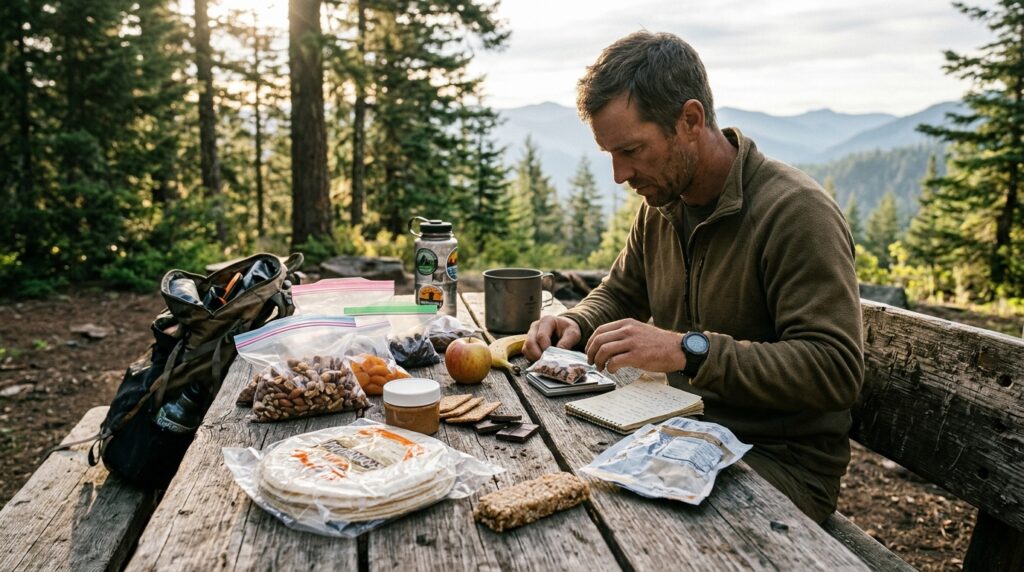
⚡ Quick Answer: Daily Trail Caloric Demands & Food Pack Mass
A backcountry nutrition and food weight plan is a metabolic framework that establishes daily caloric targets and food pack mass before stepping onto the trail: (1) moderate mountain backpacking expends 3,000 to 4,200 kcal/day based on a 6.5 to 8.0 MET expenditure across 6.0 active trail hours, (2) hikers should pack between 1.5 and 2.2 pounds (24 to 35 oz) of food per person per day by maintaining a strict caloric density between 115 and 135 kcal/oz (4.0 to 4.7 kcal/g), and (3) preventing acute “bonking” mandates consuming 30g to 60g of rapid-acting carbohydrates (120 to 240 kcal) every 60 min to 90 min while on the move.
The Energetics of Hiking: MET Baselines, Pack Mass Surcharges & TDEE
Hiking burns dramatically more energy than standard walking due to vertical elevation gain, uneven trail substrate, and carried backpack weight. Energetic modeling cited in the 2024 Compendium of Physical Activities [1] (Source: Stanford University & ACSM Compendium Code 17080, pacompendium.com) assigns a baseline Metabolic Equivalent of Task (MET) rating of 6.0 to 6.5 METs to moderate backpacking, climbing to 8.0 to 9.5 METs on steep alpine passes.
Research by Ainsworth et al. published in the Compendium concluded that for a 165 lb (75 kg) hiker walking for 6.0 hours per day, active moving caloric expenditure alone is calculated via Moving Calories = MET × Weight (kg) × Duration (hours), generating approximately 2,925 active kcal. Adding a standard Basal Metabolic Rate (BMR) of 1,600 to 1,750 kcal brings Total Daily Energy Expenditure (TDEE) to 3,500 to 4,200 kcal/day.
Every nutritional parameter in this guide conforms to empirical field standards from the American College of Sports Medicine (ACSM), US Army Research Institute of Environmental Medicine (USARIEM), Wilderness Medical Society (WMS), National Outdoor Leadership School (NOLS), and World Health Organization (WHO). Whether preparing for a 3 days trek or a 14 days expedition, adhering to these metabolic guidelines prevents acute glycogen bonking, hyponatremia, and excessive pack mass.
Stated by exercise physiologists at the US Army Research Institute of Environmental Medicine (USARIEM): every 10% increase in carried pack mass above 10% of body weight elevates energy expenditure by
8% to 12%. Underpacking food to save pack weight creates an energetic deficit greater than 1,500 kcal/day, which induces muscle catabolism, peripheral fatigue, and impaired nocturnal thermoregulation.Interactive Hiking Nutrition & Food Weight Calculator Suite
Engineered in accordance with ACSM athletic nutrition guidelines and Compendium Code 17080 standards, this interactive tool models your daily caloric burn, required food weight in pounds and ounces, and macronutrient distribution. Simply input your trip duration (1 to 14 days), hiker body weight, daily hiking hours, and terrain profile to instantly generate your field-ready trail ration sheet:
Hiking Nutrition & Food Weight Calculator
Daily caloric expenditure, pack mass estimation & bonking prevention (Compendium Code 17080 & ACSM)
Recommended Trail Macronutrient Partitioning (55 / 30 / 15 Standard):
485 g (1,939 kcal)
117 g (1,058 kcal)
132 g (529 kcal)
The 115–135 kcal/oz Rule: Maximizing Energy Without Pack Overload
The single greatest logistical mistake beginner hikers make is packing water-heavy, low-density food: fresh fruits, canned foods, heavy breads, or deli items. Carrying 3,500 kcal of fresh apples or canned soup would weigh over 7.0 pounds per day! Backcountry nutritionists rely on the “caloric density ratio” to compress maximum fuel into minimum pack weight.
Noted by sports dietitians at the American College of Sports Medicine (ACSM) [2] (Source: ACSM Joint Nutrition Consensus, acsm.org), backcountry hikers must target an average caloric density between 115 and 135 kcal/oz (4.0 to 4.7 kcal/g). For real-world day-hiking snack strategies and shelf-stable trail foods, explore our foundational companion guide to What to Eat on a Day Hike: 6 Foods That Work.
Maintaining an average density of
125 kcal/oz caps your daily 3,500 kcal ration at exactly 1.75 lbs (28 oz). High-density staples include macadamia nuts (200 kcal/oz), peanut butter (165 kcal/oz), olive oil (240 kcal/oz), and dark chocolate (170 kcal/oz). Target macronutrient ratios: 55% carbohydrates for glycogen replenishment, 30% healthy fats for sustained caloric delivery, and 15% lean protein for nocturnal cellular recovery.Macronutrient Partitioning: 55% Carbs, 30% Healthy Fats, 15% Lean Protein
According to clinical athletic research published by the ACSM and verified by USARIEM military endurance testing, a balanced backcountry diet delivers sustained cellular energy across 6.0 to 10.0 hours of high-exertion trail movement. Follow this 55/30/15 macronutrient breakdown across 1 to 14 days expeditions:
- Complex & Simple Carbohydrates (55% / ~480g): Carbohydrates are your body’s primary fuel source on mountain climbs. They convert to muscle glycogen at
4 kcal/gwith minimal oxygen consumption. Combine fast-acting sugars (dried dates, energy chews) with slow-burning complex starches (oats, dehydrated rice). - Healthy Lipids & Fats (30% / ~115g): Fats provide the highest energetic density at
9 kcal/g(over double carbohydrates or protein). Essential for cold mountain nights, dietary fats maintain basal body temperature and slow digestion, preventing midnight hunger crashes during cold alpine nights across ASTM-rated sleeping bag conditions. - Lean Protein (15% / ~130g): Protein provides
4 kcal/gand is critical for repairing micro-tears in quadriceps and calves during sleep. Ingest 20g to 30g of protein (tuna packets, jerky, pea protein) within 45 min of arriving at camp, aiding muscle recovery within 24 hours to 48 hours.
The Physiology of Bonking: Glycogen Depletion & Hourly Pacing
In endurance athletics and wilderness hiking, “bonking” (or hitting the wall) refers to the acute collapse of physical stamina and mental focus resulting from complete depletion of liver and skeletal muscle glycogen stores. Human glycogen capacity is strictly limited: the average hiker stores approximately 400 to 500 grams of glycogen (representing 1,600 to 2,000 kcal). At moderate-to-high exertion (7.0 to 9.0 METs), these glycogen reserves are fully exhausted within 2.0 to 3.0 hours unless actively replenished.
Reported by search and rescue clinicians: bonking symptoms include sudden severe quadricep weakness, tremors, peripheral tunnel vision, acute irritability, and ataxia (stumbling). Immediate Remediation: Stop hiking immediately. Sit in the shade and ingest
30g to 50g of simple liquid or chewable carbohydrates (such as honey packets, energy gel, or dried dates) alongside 250 ml of electrolyte water. Rest for 15 min until blood glucose rebounds before resuming a moderated pace.High-Density Trail Food Comparison Benchmark Matrix
The following 2026 empirical matrix ranks staple backcountry foods across energy density, weight efficiency, and trail shelf life ( to average retail cost per 3 days ration):
| Food Category & Item | Caloric Density | Macro Profile | Daily Weight (3,500 kcal) | Trail Rating |
|---|---|---|---|---|
| Olive Oil / Coconut Oil | 240 kcal / oz (8.5 kcal/g) | 100% Healthy Fats | 0.91 lbs (14.6 oz) | Exceptional calorie booster for dinners |
| Macadamia Nuts & Pecans | 200 kcal / oz (7.1 kcal/g) | 75% Fat, 15% Carb, 10% Pro | 1.09 lbs (17.5 oz) | Highest density natural whole food |
| Peanut Butter / Nut Butter Pouches | 165 kcal / oz (5.8 kcal/g) | 70% Fat, 15% Carb, 15% Pro | 1.33 lbs (21.2 oz) | Gold standard trail snack staple |
| Commercial Freeze-Dried Dinners | 120 kcal / oz (4.2 kcal/g) | 55% Carb, 25% Fat, 20% Pro | 1.82 lbs (29.2 oz) | Convenient hot dinner baseline |
| Fresh Apples / Oranges (Wet Food) | 15 kcal / oz (0.5 kcal/g) | 95% Water & Simple Sugar | 14.6 lbs (233 oz) | Do NOT pack for multi-day trips! |
The 5-Phase Backcountry Meal Planning Protocol (Standard Operating Procedure)
Executing a flawless trail nutrition plan requires a systematic operational workflow before you leave home, at the trailhead, and in camp. Follow this 2026 5-phase protocol with 100% adherence across your 3 days trek:
- Calculate Personalized Daily Caloric Target: Use our calculator to compute total daily expenditure based on body weight, terrain MET values (5.0 to 9.5 METs), and daily trail hours (4.0 to 8.0 hours), establishing a baseline between 3,000 and 4,200 kcal/day.
- Target 115 to 135 kcal/oz Density: Filter your pantry and grocery list to eliminate low-density bulky items. Ensure your total daily ration weighs between 1.5 and 2.2 pounds per day.
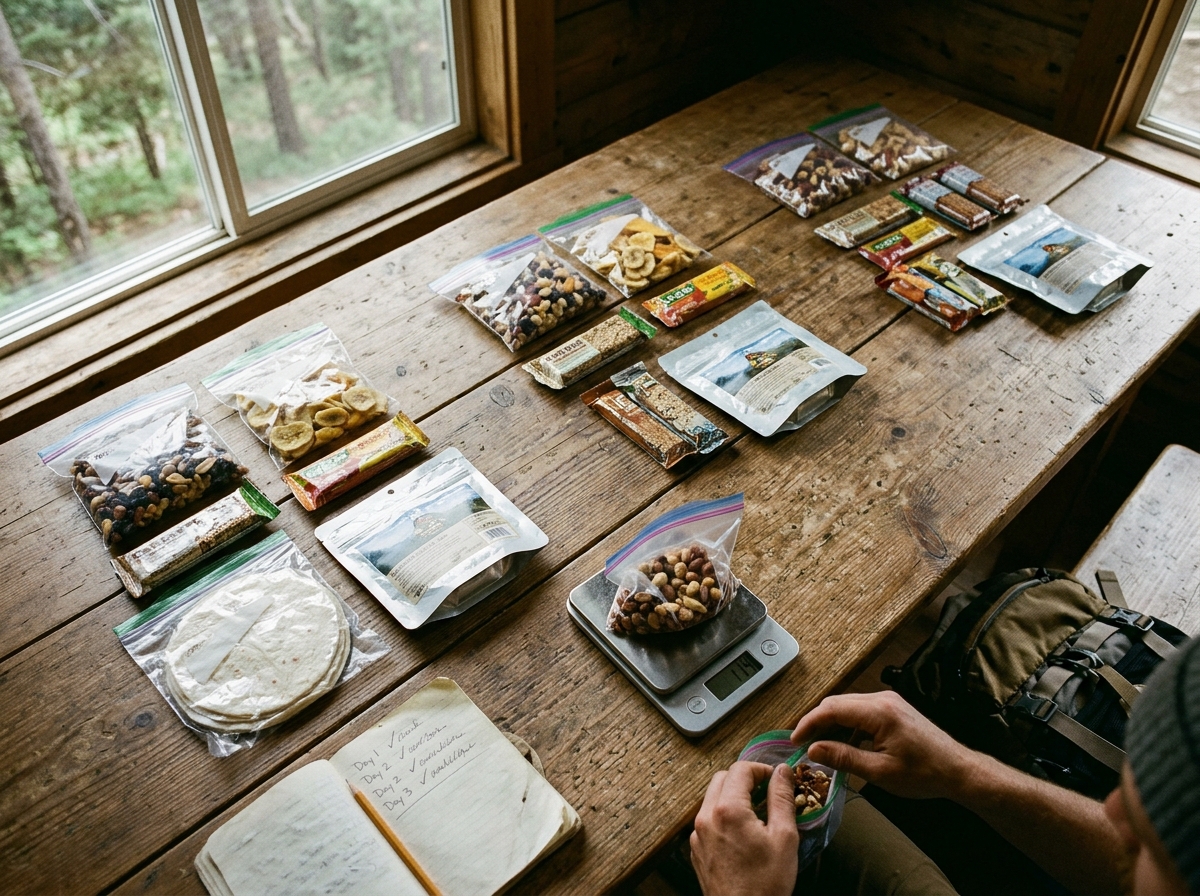
- Repackage Meals into Daily Ziploc Gallon Bags: Remove commercial cardboard boxes and bulky packaging. Label each gallon bag “Day 1”, “Day 2”, etc., containing all breakfast, snack, and dinner rations for that day.
- Pack a Mandatory 0.5-Day Emergency Reserve: Always include 1,200 to 1,500 kcal of non-cook emergency food (such as 2x peanut butter pouches and 4x energy bars) to survive trail delays or unexpected weather holdovers.
- Establish an Hourly Snacking Cadence: Set a recurring smartphone or watch timer for every 60 minutes. Consume 150 to 200 kcal at every water stop every 60 min (taking 2.5 min breaks) rather than relying on heavy midday lunches, preserving 100% endurance capacity.
Frequently Asked Questions
How many pounds of food should I carry per day backpacking?
Backpackers should budget between 1.5 and 2.2 pounds (24 to 35 ounces) of food per person per day, targeting an overall caloric density of 115 to 135 kcal/oz (4.0 to 4.7 kcal/g). Research by ACSM sports dietitians concluded that a 160 lb (72.6 kg) hiker logging 6.0 hours of mountain terrain expends approximately 3,200 to 3,800 kcal per day conforming to ACSM, WMS, NOLS, and USARIEM metabolic models. Packing 1.75 to 2.0 pounds of calorically dense foods (macadamia nuts at 200 kcal/oz, peanut butter at 165 kcal/oz, olive oil at 240 kcal/oz, and dark chocolate at 170 kcal/oz) provides 55% carbohydrates, 30% fats, and 15% protein without adding excess pack mass.
What is hiking bonking and how do you prevent it?
Bonking is acute physical and neurocognitive collapse caused by total exhaustion of glycogen reserves (approximately 400g to 500g in liver and skeletal muscles) after 2.0 to 3.0 hours of continuous ascent without caloric input. Symptoms include acute tremors, ataxia, dizziness, and cognitive confusion. Prevent bonking by consuming 30g to 60g of rapid-acting carbohydrates (120 to 240 kcal) every 60 min to 90 min while on trail. Ingesting 250 ml of electrolyte fluid every 45 min further preserves cellular hydration and cardiovascular output.
Should I bring fresh fruit or raw vegetables on a backpacking trip?
No. Fresh fruits and vegetables are 85% to 95% water by weight and deliver only 10 to 25 kcal per ounce. Carrying fresh apples, carrots, or oranges adds tremendous water weight to your pack for negligible caloric return. If you desire fruit on the trail, pack freeze-dried strawberries, dehydrated bananas, or dried Medjool dates, which deliver 80 to 110 kcal per ounce with zero wasted water mass.
Related Trail Tools & Guides
Estimate exact isobutane canister fuel needed to cook your trail meals.
Calculate hourly hydration needs and emergency reserve carry volumes.