

Definition: Day hike nutrition means fueling your body with the right balance of carbs, proteins, and fats to maintain energy on the trail. What to eat on a day hike is the kind of question that sounds obvious until mile four proves otherwise. I learned this on a 7.5-mile loop through the Delaware Water Gap in my second summer hiking. I had eaten a full breakfast during the drive, felt strong through the first three miles, and hit the turnaround point thinking I was managing fine. Then I went ninety minutes without eating anything. By mile six, my legs had gone heavy and the last stretch back to the trailhead felt twice as long as the map said it was. I had snacks in my pack. I had just been eating them wrong.
⚡ Quick Trail Takeaways
- Caloric Fueling Rate: Consume 150 to 250 calories per hour composed of complex carbs and healthy fats on active hikes.
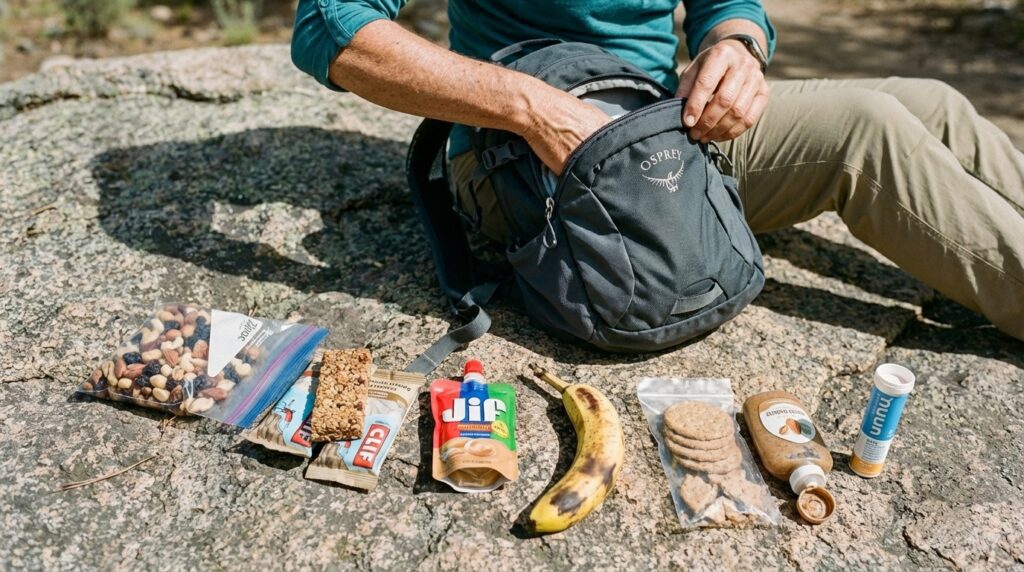
- Optimal Trail Snacks: Pack trail mix, electrolyte energy chews, jerky, nut butter packets, and firm apples that resist pack squishing.
- Sodium Replenishment: Include salty snacks (pretzels, salted almonds) to replace sodium lost through heavy exertion sweat.
Hiking food for beginners almost always fails on timing, not food choice. People pack something reasonable, eat it too infrequently, and then wonder why the return trip felt like a different hike than the first half.
This guide covers the 6 trail foods that actually work for a day hike, why each earns its place in a pack, and exactly when to eat them.
What to Eat on a Day Hike: The Nutrition Basics That Matter
How trail hiking actually burns energy
Hiking burns more calories than most beginners expect. A 150-pound person on a moderate trail with real elevation gain burns roughly 400 to 500 calories per hour. On a four-hour day hike, that is 1,600 to 2,000 calories of energy output. Most of that comes from stored carbohydrates (glycogen held in your muscles and liver), and your total glycogen reserve sits at roughly 1,800 to 2,000 calories total. You start a hike with a full tank, and the tank empties faster than most beginners account for.
When glycogen runs low and you have not replaced it with trail food, the effect is specific and unpleasant: legs go heavy, minor uphills feel significantly harder than they should, and motivation drops faster than speed. Distance runners call this hitting the wall. Day hikers call it “I do not know why the second half was so much harder.” The cause is the same in both cases.
Replacing glycogen as you hike, rather than waiting until you feel depleted, keeps your energy consistent across the full trail. According to the American Hiking Society, fueling consistently throughout a hike is one of the most commonly overlooked parts of trail preparation for new hikers. The practical difference between a good hike and a miserable last two miles is often just three or four snack stops you skipped.
What a basic plan for the trail looks like
A food plan that works for a four- to five-hour day hike has three distinct segments: a real meal 60 to 90 minutes before you start, consistent snacking every 45 to 60 minutes on trail, and food within an hour of finishing.
Most beginners leave out the middle segment entirely. They eat breakfast, bring a lunch, and assume willpower covers the three-hour stretch between them. That gap is exactly where energy crashes happen on day hikes. The best hiking food for beginners is not a specific brand or a complex formula. It is food you eat on a schedule, not food you save until you feel bad.
For a standard four-hour day hike, aim for 150 to 200 calories every 45 to 60 minutes on trail, on top of a 400- to 500-calorie meal beforehand. That is the full nutrition picture for most beginner hikes. Everything else below is execution.
6 Best Energy Foods for Hiking
1. Nut butter packets
Single-serve almond or peanut butter packets are the most consistent trail snack I know for what to eat on a day hike. Brands like Justin’s and RxBar both make them in 1.15-ounce packets. Each delivers 180 to 200 calories from a combination of fat, protein, and carbohydrates. That combination releases energy over 60 to 90 minutes rather than spiking and dropping after 30.
They are indestructible in a pack, require no refrigeration, and have no assembly beyond tearing the top. Pair one with salty crackers or a banana and you have a complete snack with multiple energy sources covering different release speeds.
When and how to use them
Nut butter packets work best as a structured snack stop every 45 to 60 minutes, not a continuous nibble. One packet equals one snack stop. For a four-hour hike, two packets plus crackers covers two of your three on-trail snack windows. Best for hikes of three to five hours where you want steady energy without bulk or refrigeration.
2. Bananas or Medjool dates
Bananas are useful on trail precisely because they are boring. A medium banana delivers 26 grams of carbohydrate for fast energy, and the potassium content helps prevent the calf cramping that sometimes hits on long descents. At roughly 100 calories, a banana alone is not a snack. It is a fast-carbohydrate pairing alongside something with fat and protein, like a nut butter packet.
Medjool dates hold better in a pack without bruising. Two dates equal about 130 calories of fast carbohydrate in a dense, sweet form that needs nothing else to make a functional snack. They also hold up well in summer heat, which bananas sometimes do not.
Best for quick energy between longer snack intervals, or 20 minutes before a significant climb when you want fast fuel available before the effort peaks.
3. Trail mix with the right ratio
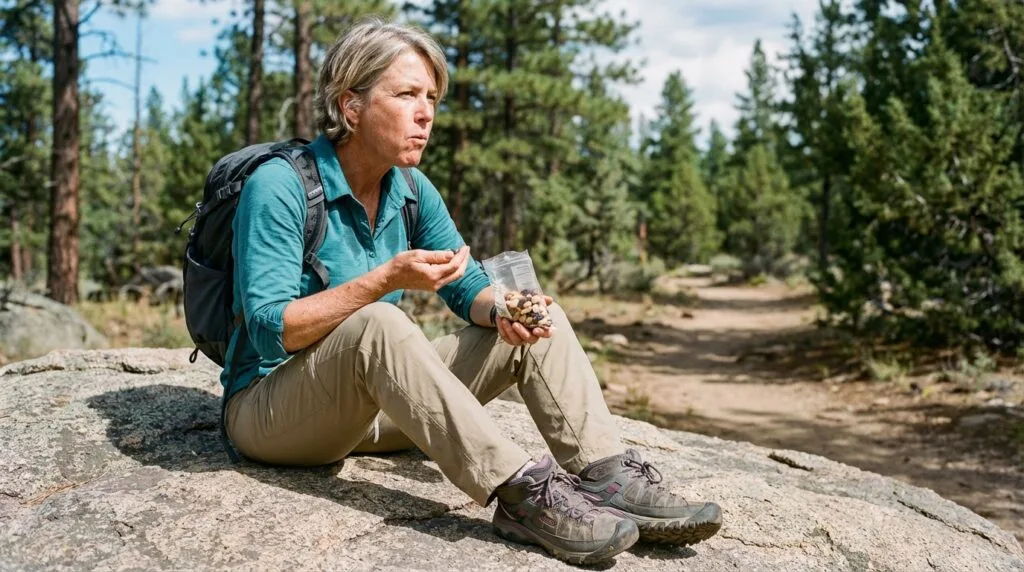
Trail mix is one of the trail snacks that work, but only if the composition is right. Most commercial trail mixes lean heavy on raisins and candy coating, which produces a fast sugar spike and an equally fast crash. A mix that actually functions as a best energy food for hiking runs roughly 40% nuts, 30% dried fruit, 15% seeds, and no more than 15% chocolate or candy.
Buy your own ingredients and mix them, or check the bag label and verify nuts appear in the first two ingredients. A well-composed mix provides 160 to 200 calories per quarter-cup serving with a strong fat and protein base that slows the carbohydrate release.
A quarter cup every 45 minutes is a sustainable approach. Eating continuously from a single large bag is not. That approach usually means your entire trail food supply is gone by mile three on a six-mile hike.
4. Jerky or hard cheese
For hikes over four hours, protein matters in a way it does not for a short morning loop. Muscle repair begins during extended hiking, not just after, and adequate protein intake keeps your muscles working efficiently. Beef or turkey jerky covers this well: shelf-stable, high-protein per ounce, and salty enough to replace some of the sodium lost through sweat.
Hard cheeses (including blocks of cheddar, aged Gouda, or Parmesan) hold at ambient temperatures for four to six hours without refrigeration. One ounce provides about 110 calories with 7 grams of protein and 9 grams of fat. Add salty crackers and you have a mid-hike snack that takes three minutes to assemble and covers protein, fat, carbohydrate, and sodium in one stop.
Best for hikes five miles or longer, or any hike with significant elevation gain where muscle fatigue becomes a real factor in the second half.
5. Energy bars with real ingredients
Most energy bars on the market are candy bars with trail branding. The test for whether a bar is worth carrying: the first three ingredients should be oats, dates, nuts, or seeds. If the label opens with corn syrup, soy protein isolate, or a word that sounds like it belongs in a chemistry class, leave it on the shelf.
Larabar, RxBar, Clif Builder’s Bar, and Kind Nut Bars are all reasonable options. Each provides 200 to 250 calories with real ingredients and at least 5 to 10 grams of protein. One bar per 90-minute stretch of hiking is a reasonable use. One bar as your entire food supply for a five-hour hike is not.
Best for a no-prep snack at a trail junction or exposed section where you want something fast and contained.
6. Salty crackers or pretzels
Sodium replacement is a real need on any day hike where you are sweating, and most beginners miss it entirely. The American College of Sports Medicine estimates sodium loss at 400 to 1,000 milligrams per hour during moderate exercise. When sodium drops, the result is headaches and muscle fatigue that resemble dehydration symptoms but do not respond to water alone, because the problem is not hydration, it is electrolytes.
Salty crackers and pretzels address this while also providing fast carbohydrate. They pack flat, do not melt in heat, and pair naturally with nut butter or hard cheese to form a complete snack. They are also already in most people’s kitchens, which makes them the most accessible trail snacks that work without any specialty purchase.
Best for any hike over three hours, especially in warm weather. Combine with an electrolyte tablet in your water bottle (Nuun Sport runs about $7 for ten tablets) for full sodium and electrolyte replacement.
💡 Trail Tip: Pre-portion your snacks into individual small zip-lock bags before leaving home, not into one large bag.
Digging through a pack for loose trail mix at mile three wastes time and usually ends with eating too much at once. Pre-portioning takes five minutes and makes on-trail eating automatic.
When to Eat on a Day Hike
Knowing what to eat on a day hike solves half the problem. The other half is timing. Most beginners get it wrong in the same direction: they eat before the hike, skip the middle two hours, and feel it at mile three.
Before the hike: eat 60 to 90 minutes beforehand
Eat a real meal 60 to 90 minutes before your planned start time. Not a granola bar. A meal with 400 to 600 calories that includes carbohydrate, fat, and protein. Oatmeal with nut butter and a banana, eggs on toast, a bagel with peanut butter: all are solid options that hold up well. The 60-to-90-minute window is the digestion window. Solid food takes that long to move past the stomach. Eat immediately before hiking and you will hike with a full, uncomfortable stomach rather than available fuel.
Eating in the parking lot five minutes before the trailhead is the single most common breakfast timing mistake for beginners. The food is there, but your body cannot use it yet.
On trail: start eating before you feel hungry
The rule for trail snacking is to eat before hunger signals arrive, not after. By the time you register hunger on trail, your energy stores are already declining and your pace has probably already slowed. Hunger on trail is a lag indicator, not a current reading.
Start eating 30 to 45 minutes into the hike. Continue every 45 to 60 minutes after that. For a four-hour hike, that is three snack stops. Setting a phone reminder for the first stop is not overthinking it. It is the difference between hiking on fuel and hiking on the memory of breakfast.
The return trip: the snack stop most hikers skip
Most beginners plan their food forward and forget the return trip entirely. The turnaround point feels like an ending. It is not. It is the halfway point with legs that are already tired.
Eat something at the turnaround. 150 to 200 calories, even if you feel fine. Especially if you feel fine, because that is the moment before the energy drop arrives, not after. The hiker who describes the second half of a day hike as far harder than expected almost always skipped the turnaround snack and could not identify why the last two miles felt so different from the first two.
💡 Trail Tip: Bring 25% more food than you think you need for any hike over four miles.
You will either eat it on trail if the hike runs longer than planned, or eat it in the parking lot after. Running short of food at mile four of a six-mile hike is the only alternative, and it is entirely avoidable.
Day Hike Lunch Ideas That Actually Pack Well
For hikes over five hours, a structured midday meal matters more than snacking alone. These day hike lunch ideas are built around three constraints that matter on real trails: no refrigeration required, no utensils, and satisfying enough that you actually want to eat at mile four rather than pushing through on willpower.
What makes a trail lunch work
A trail lunch has to survive ambient temperature, physical jostling in a pack, and three to five hours without a refrigerator. Sandwiches on sliced bread are borderline (the bread compresses and the filling migrates in heat). Tortilla wraps in a sealed zip-lock bag hold substantially better and pack flat without taking up meaningful space. Any container you choose needs a lid that seals reliably. A container that opens in your pack is not a lunch; it is a mess.
What to eat on a day hike for lunch: 5 options that work
Peanut butter and honey on a tortilla
One large flour tortilla, two tablespoons peanut butter, a drizzle of honey. About 350 calories, requires no refrigeration, packs completely flat. The tortilla holds shape better than bread in any temperature and the filling does not migrate.
Hard cheese, crackers, and salami
A classic for long-distance hikers that works equally well for a six-hour day hike. A small block of cheddar or aged Gouda, a handful of crackers, and four to five slices of salami. 300 to 400 calories depending on portions. The cheese holds at ambient temperatures for up to six hours; salami is shelf-stable and stays fine in a warm pack.
Bagel with cream cheese in a sealed container
A standard bagel with cream cheese is 350 to 400 calories and holds its shape far better than a sandwich. Pack the cream cheese in a small sealed container (a reused 4-ounce sour cream container works fine). The bagel goes in a zip-lock bag. Assembly takes 30 seconds at the lunch stop.
Hummus with pita or crackers
Individual hummus cups (Sabra makes 2-ounce single-serve packs) hold at trail temperatures for up to four hours. Add a pita or a small bag of crackers. About 200 to 250 calories per serving; pair with a handful of nuts to round out the fat content for a complete meal.
Cold pasta or grain bowl in a container
This is the most underused day hike lunch option for beginners. Cold pasta with olive oil, some protein, and a handful of vegetables travels well in a secure container. It costs significantly less than any packaged trail meal and is often more satisfying. Make it the night before. Pack it in a container with a reliable lid. Eat it at the turnaround.
What to eat on a day hike for lunch is more a packaging decision than a food decision. The same lunch you would eat at a desk travels well on trail in the right container.
Common Mistakes with Hiking Food for Beginners
Eating a heavy meal immediately before the trailhead
A full meal right before starting a hike splits blood flow between your digestive system and your leg muscles. Both functions suffer. Eat the big meal 90 minutes before, not 10 minutes before the trailhead. A small 100- to 150-calorie snack immediately before is fine if you are hungry. A full breakfast plate 15 minutes before the car door opens is not.
Building a snack bag from sugar alone
The trail snack approach that causes the most energy crashes is a bag built entirely from fast sugar: gummies, fruit strips, dried mango, candy bars. These deliver fast carbohydrate with no fat or protein alongside. Energy spikes for 30 minutes and drops just as fast. Build every snack around a fat or protein base (nut butter, nuts, cheese, jerky) with carbohydrate alongside it, not instead of it.
Underpacking food based on desk-day instincts
Hiking burns two to three times more calories per hour than sitting at a desk. Most beginners calculate their trail food needs from lunch-at-home instincts and come up short. A reliable rule: bring 25% more food than feels reasonable. The extra weight is negligible (200 calories of crackers adds roughly two ounces to your pack). Running out of food at mile four of a six-mile hike is not a willpower problem. It is a packing problem.
Forgetting sodium replacement
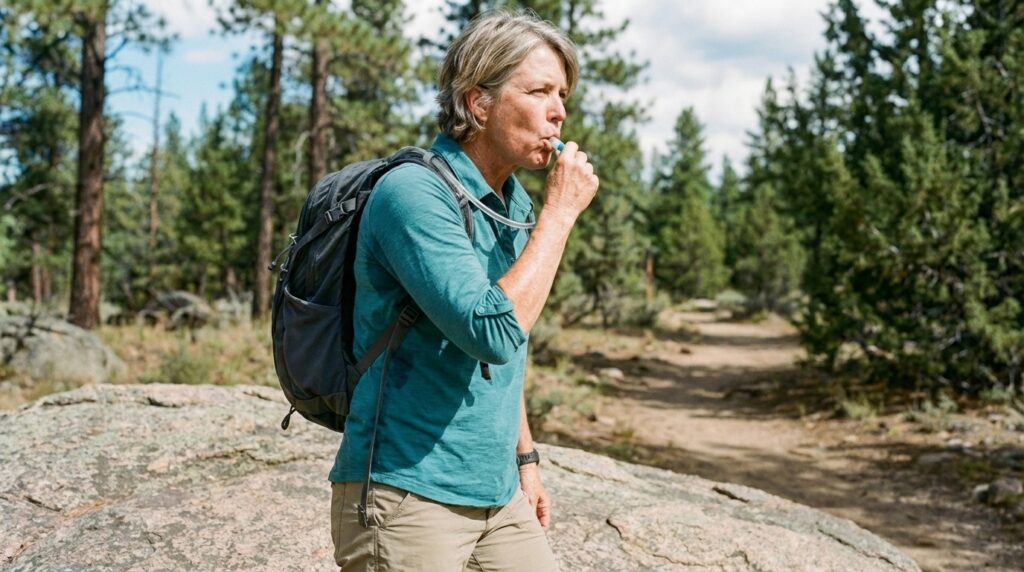
Water without sodium does not prevent dehydration-adjacent fatigue on hikes over three hours in warm weather. Your sweat removes sodium your body needs, and plain water replaces fluid but not electrolytes. Add one electrolyte tablet per liter of water (Nuun Sport and Liquid IV both work, and both run under $2 per serving), or lean into the salty snacks on this list. Crackers, jerky, and pretzels all help, but on a warm day covering five or more miles, electrolyte tablets close the gap that salty food alone cannot.
What to Eat on a Day Hike: FAQ
What should I eat on a day hike if I want to keep it simple?
The simplest answer to what to eat on a day hike: a real breakfast 90 minutes before you start, then nut butter packets, trail mix, and an energy bar every 45 to 60 minutes on trail. Three items, no cooking, no refrigeration, no planning beyond putting them in a bag. The best hiking food for beginners is the food you actually pack and eat, not the nutrition system you researched the night before and left at home.
How many calories should I bring on a day hike?
For a three- to four-hour hike, bring 600 to 800 trail calories beyond your pre-hike breakfast. For a five- to six-hour hike, plan for 900 to 1,200 trail calories. These are on-trail snack calories only. The general rule: 150 to 200 calories per hour of hiking, plus a 25% buffer for hikes that run longer than planned.
What are the trail snacks that work for hikes over four hours?
Trail snacks that work for longer hikes have fat and protein at the base: nut butter with crackers, trail mix with a strong nut ratio, jerky with dates, or a Clif Builder’s Bar alongside a banana. Snacks built primarily from sugar (fruit strips, gummies, dried fruit alone) deliver fast energy that fades within 30 minutes. The longer the hike, the more fat and protein your snack selection needs.
What are some practical day hike lunch ideas for beginners?
The day hike lunch ideas that hold up on real trails: peanut butter and honey on a tortilla, hard cheese and salami with crackers, a bagel with cream cheese in a sealed container, hummus with pita, or cold pasta in a container with a secure lid. The test for any trail lunch is whether it survives three to four hours in a warm pack without becoming unpleasant. If yes, it works.
Do I need a formal plan, or can I eat when I feel hungry on trail?
Eating only when hunger registers on trail consistently leads to late eating and an energy crash. By the time you feel hungry, your glycogen stores have already dropped. A simple approach works: eat before the hike, then every 45 to 60 minutes regardless of appetite. That prevents the mid-hike crash more reliably than intuition. Once you have done ten or fifteen hikes and know your personal hunger timing, adjust from there. For the first few hikes, eat on schedule.
What is the best energy food for hiking in hot weather?
The best energy food for hiking in hot weather leans toward salty and easily digestible. Salty crackers, pretzels, dates, and bananas are all solid choices in high heat. Heavy fat-rich foods digest slowly and can feel unpleasant when ambient temperature is high. Keep snack portions smaller in heat (100 to 150 calories every 45 minutes rather than 250 calories every 90 minutes). Pair your snacks with an electrolyte drink rather than plain water. Smaller, more frequent eating works better when your digestive system is already working harder.
The Food Plan That Makes the Second Half Manageable
Most beginners spend two or three hikes figuring out what to eat on a day hike through elimination: something goes wrong, they adjust, they try again. That works. The 6 foods in this guide and the timing framework above cut the trial and error from six iterations down to one or two.
Here is the clear opinion on this: bring more food than feels reasonable, eat on a schedule rather than on sensation, and build every snack around fat and protein rather than sugar alone. That is the whole picture for beginner trail nutrition. Nothing in it is complicated.
If the last mile of your hike feels manageable (not easy, but manageable), your food plan is doing its job. If the last mile feels like a different experience than the first mile, look at your snack timing before you blame your fitness.
What to eat on a day hike is a practical question with a practical answer. It is not about perfect macros or a complex protocol. REI’s hiking nutrition guidance at rei.com/learn goes deeper on calorie planning if you want to dial in further. It is about enough of the right things, eaten at the right intervals, to make the full trail feel like one continuous effort rather than a strong first half and a survival second half.
Next Steps
- Right now: Check what is already in your kitchen against the six food categories above. Nut butter, crackers, and trail mix ingredients are probably already there.
- Before your next hike: Pre-portion snacks into individual small bags the night before. Label them if it helps. Takes ten minutes and removes every on-trail food decision.
- On your next hike: Set a phone timer for 45 minutes after you start. Eat your first snack when it goes off, regardless of whether you feel hungry. Note how the second half of the hike compares to previous hikes.
Related Reads
Glanced at your fitness tracker after a hike and couldn’t tell if that calorie number was even close to real? Here’s what hiking actually burns in real numbers, not some generic guess your app pulled out of thin air.
Crashed hard on the couch the moment you got home from a hike that didn’t even feel that demanding while you were out there? Here are 7 reasons hiking can leave you way more wiped out than expected, and a few of them have nothing to do with how fit you actually are.
Eyed a trail length that an experienced friend casually called “nothing” and wondered if you were setting yourself up to fail? These 5 rules cut through that and help you settle on a distance that’s genuinely realistic for you, not someone else’s idea of nothing.
Went on one amazing hike, loved every minute, and then somehow let two months slip by before going again? Here’s a clear answer on how often beginners should actually be hiking to build momentum instead of starting from scratch each time.
Came home from your first hike feeling oddly different in ways you weren’t quite expecting, sore in unfamiliar spots or strangely more energized than drained? Here are 7 body changes first-timers tend to notice, some good, some surprising, all worth knowing ahead of time.