

National parks for beginners can feel like an overwhelming choice. There are 63 of them across the United States. They range from the flat, paved paths at Everglades to the 14,000-foot elevation of Rocky Mountain. Wrong season, wrong fitness level, wrong expectations. Any one of those turns a good idea into a frustrating day.
⚡ Quick Trail Takeaways
- Accessible Infrastructure: Start with parks offering extensive paved shuttles and short loop trails (e.g. Zion Canyon, Shenandoah).
- Permit & Reservation Rules: Check recreation.gov for timed-entry vehicle reservations and trail permits months in advance.
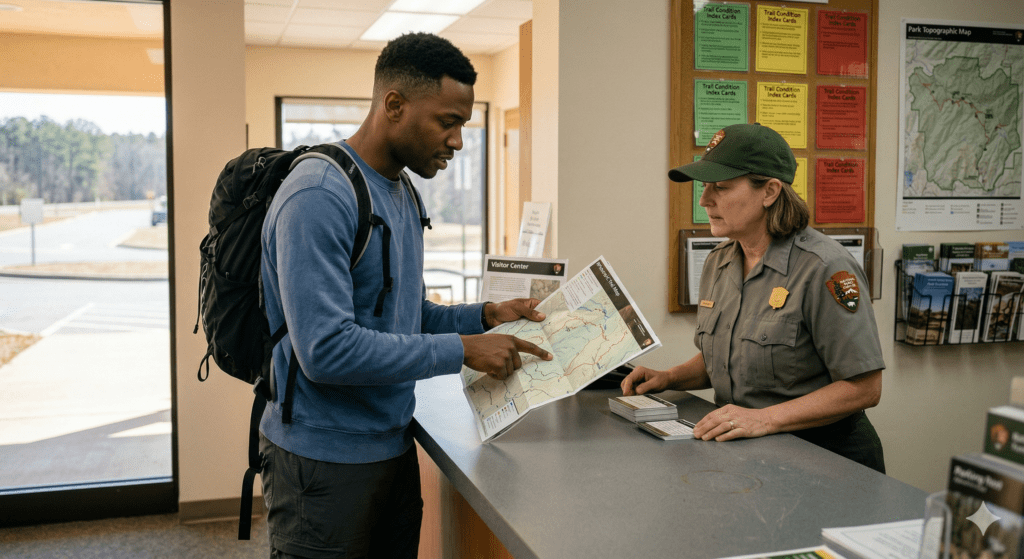
- Visitor Center Stop: Speak with park rangers at the visitor center for real-time trail closures and wildlife alerts before hiking.
I made that mistake on my first national park trip. A friend and I drove four hours to the Grand Canyon’s South Rim in late June, planning a “quick hike” into the canyon. The ranger at the trailhead told us the temperature on Bright Angel Trail below the rim was 108°F. We walked the rim instead for two hours, which was genuinely beautiful, but I’d spent two weeks imagining a canyon hike that never happened. The trip wasn’t ruined. The planning was wrong for what we’d actually wanted.
This guide covers the 5 steps that narrow the choice from 63 parks to the right one for your fitness, location, season, and first-hike expectations.
🥾 Oliver’s Trail Notes & Field Observations
When I helped friends plan their initial visits to parks like Joshua Tree and Yosemite, they quickly realized that national park scale is deceiving on a map. In my experience, first-timers have a far more rewarding trip picking parks with reliable valley shuttle loops and clearly marked interpretive loops (like Zion Canyon or Grand Canyon South Rim) rather than remote wilderness parks requiring primitive backcountry navigation.
What Makes a National Park Right for Beginners
The honest difference between accessible and beginner-friendly
Most “best national parks for beginners” articles use “accessible” and “beginner-friendly” as synonyms. They are not.
Accessible means you can drive there and walk around. Dozens of national parks are accessible to anyone with a car and basic mobility. Beginner-friendly means the park has enough trail infrastructure to actually plan a real hike: marked paths, clear distances, honest difficulty ratings, ranger stations, and available water. A first-timer can verify the plan before they leave home.
Great Smoky Mountains National Park is both accessible and beginner-friendly. Death Valley is accessible. Death Valley in July is not beginner-friendly for someone who has never hiked in a desert, regardless of what the trail sign says.
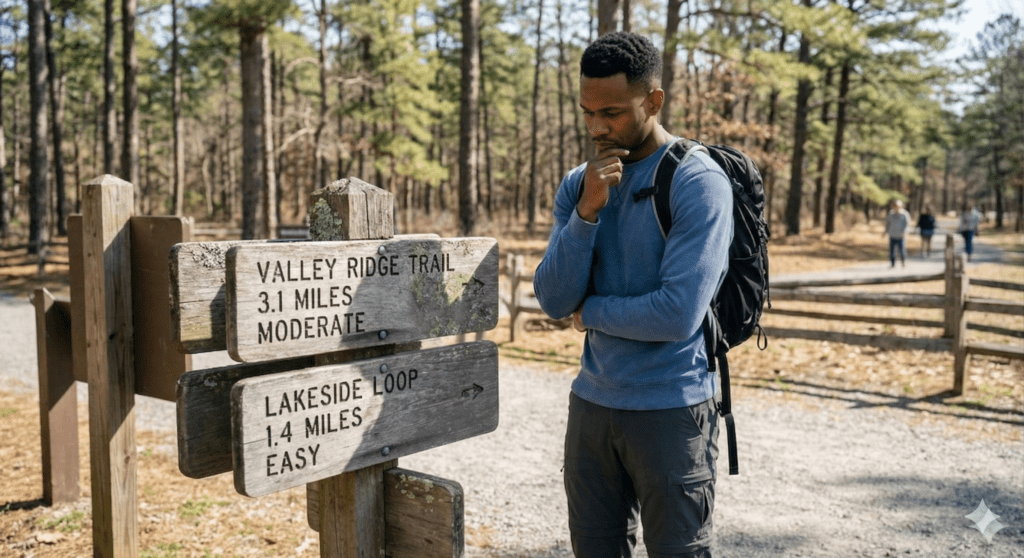
This distinction matters because national park trail ratings are relative to that specific park, not to your fitness level or hiking experience. An “easy” trail at Zion might involve 4 miles of sandy desert terrain with 400 feet of elevation gain. An “easy” trail at Acadia might be a 1.8-mile loop on a paved carriage road. Same label. Completely different experience.
What beginner friendly parks actually have
A genuinely beginner friendly national park has four things: maintained trails with clear markers at every junction, a staffed visitor center where rangers can answer specific questions about current conditions and difficulty, water or facilities at regular intervals on popular routes, and honest trail distances posted at trailheads rather than estimated.
Nearby rescue infrastructure matters too. The National Park Service reports that most search and rescue operations involve hikers on day trails within 5 miles of a trailhead. That means the majority of first-timer emergencies happen on exactly the kind of hike beginners take. A park where help can reach you within a reasonable timeframe is a real consideration when you are picking a first park.
5 Steps to Pick Your First National Park
Step 1: Know your actual trail fitness before you look at any park
How to test your fitness before the trip
The most common mistake on a first national park visit isn’t choosing the wrong park. It’s choosing the right park but the wrong trail because the hiker overestimated their fitness. Be honest here before you look at any trail listings.
If you don’t walk regularly, your starting point for a first national park hike is 2 to 3 miles of flat or gently rolling terrain. Not because you’re out of shape, but because trail terrain uses different muscles than pavement, and the last mile of any hike is uphill if you went out on a descent.
If you walk regularly, meaning at least 30 minutes at a comfortable pace most days, 3 to 5 miles with under 500 feet of elevation gain is a reasonable first national park hike. If you exercise regularly through running, cycling, or gym work, you can probably manage 5 to 7 miles with moderate elevation, though terrain still matters more than distance.
One practical test: walk 3 miles on a treadmill at a 4% incline without stopping. Hard? Stay under 3 miles on your first park hike. Easy? You have more room to work with.
💡 Trail Tip: Check the elevation profile on AllTrails before committing to any trail in a national park. Distance without elevation is the number that misleads first-timers most.
A 4-mile trail with 1,200 feet of gain is a hard hike. A 4-mile trail with 150 feet of gain is a long flat walk. Both appear as “4 miles” in the headline.
Step 2: Pick a park within a 4-hour drive
Why drive distance matters more than rankings
Every “best national parks for beginners” ranking leads with Yellowstone, Grand Canyon, and Yosemite. All three are genuinely spectacular. None of them are the right first national park for the majority of Americans, because most Americans live within 4 hours of a national park that’s just as good for a first visit and doesn’t require flights, expensive lodging, or a week off work.
The best first national park for a beginner is one they can actually get to without a significant trip. A first-timer who visits Great Smoky Mountains twice builds more real trail confidence than one who visits Yosemite once. Frequency builds experience more than prestige does.
Find every national park near you at nps.gov by filtering by state. Most people are surprised by what’s within 2 to 3 hours.
Step 3: Match the season before you pick the park
How season changes a beginner national park visit completely
This is the variable most beginners get backwards. They choose a park first, then figure out when to go. The smarter sequence: identify the 2 to 3 parks within reasonable driving distance, then find the season with the best conditions window for each, then commit to whichever park lines up with when you can actually travel.
Here’s how seasons break down for the most popular regions:
Summer (June–August): Best for Pacific Northwest parks like Olympic, North Cascades, and Crater Lake, and for high-elevation parks in Colorado and Utah. Avoid desert parks entirely in July and August. Grand Canyon, Joshua Tree, and Saguaro temperatures routinely exceed 105°F. The National Park Service advises against hiking below the South Rim between 10 AM and 4 PM during summer months.
Fall (September–November): The best season for a beginner national park visit across most of the country. Temperatures are moderate, crowds drop sharply after Labor Day, and foliage in the Northeast adds a visual reward that summer can’t match. Shenandoah in October draws less than half the visitors of Shenandoah in July. Same park, completely different experience.
Spring (March–May): Variable but often underrated. Wildflower season at Joshua Tree and Channel Islands peaks in March and April. Mountain parks may still have snow on upper trails through May, which is worth checking on AllTrails conditions before committing to elevation gain.
Winter (December–February): Fewer crowds, lower lodging costs, and shorter daylight windows. Great Smoky Mountains, Congaree, and Big Bend all offer winter hiking that most beginners overlook. Sunrise happens later, which removes the pressure of a very early start.
Step 4: Look for visitor center infrastructure
What experienced hikers take for granted in parks
The first time you visit a national park, you will have questions you didn’t know to ask before you arrived. What you need is someone who can answer them with current, specific information, not a year-old AllTrails review.
A park with a staffed visitor center within 30 minutes of the main trailheads is significantly more beginner-friendly than one without. National Park Service rangers are trained to give difficulty assessments calibrated to a visitor’s specific fitness level and conditions that day. Ask them directly: “I want to hike 3 to 4 miles. I exercise regularly but I haven’t done much trail hiking. What would you actually recommend today?”
The answer changes based on real-time conditions: recent rain, a washed-out section, an extreme heat advisory. No website captures that in real time.
Step 5: Start with a park that has a forgiving trail network
The easiest national parks to hike for a first visit
Not all trail networks are equal for first-timers. The easiest national parks to hike share a few consistent traits: multiple options covering a wide range of distances and difficulty levels, clear junctions that make it hard to get significantly off-route, and enough foot traffic on popular trails that you’re rarely truly alone if something goes wrong.
Here is my direct read on the best national parks for novice hikers, by region.
East: Great Smoky Mountains National Park has over 800 miles of trail, most visitor facilities are open year-round, and the park offers options from 1.5-mile waterfall walks to strenuous ridge hikes. Laurel Falls Trail (2.6 miles round trip, paved) is one of the best first national park hikes in the country. No timed entry reservation required. Shenandoah National Park in Virginia adds Skyline Drive access to trailheads with consistent beginner options between 2 and 5 miles.
Northeast: Acadia National Park in Maine has a carriage road system that gives beginners miles of flat, marked routes before attempting any rocky summit trails. It’s the most beginner-friendly park in the region. Bar Harbor, the gateway town, has lodging and food at every price point.
West: Olympic National Park in Washington gives first-timers access to three completely different environments within one park: rainforest, Pacific coastline, and mountain meadow. Hoh Rain Forest trails are flat and well-maintained, with under 200 feet of elevation gain over several miles. For the Southwest, Rocky Mountain National Park in Colorado is far more beginner-accessible than Zion or Bryce Canyon, with the Alpine Visitor Center at 11,796 feet providing high-altitude access without technical hiking.
South: Congaree National Park in South Carolina is the most underrated beginner national park in the country. The boardwalk trail covers 2.4 miles through old-growth bottomland forest with almost no elevation change. Hiking there for the first time on a Tuesday in November, I was the only person on the trail for 40 minutes. Quiet, flat, and genuinely impressive.
🥾 Altitude Adjustment Protocol
During my field trials traveling between sea level and high-elevation parks like Bryce Canyon or Tuolumne Meadows, altitude fatigue struck unacclimated hikers within two miles. In my experience, starting hikes above 7,500 feet cuts your normal walking speed by 25% and doubles your fluid requirements. Plan an easy scenic stroll on day one before tackling major summit trails.
What First-Timers Get Wrong at National Parks
Three mistakes that show up on every first national park visit
Picking a beginner friendly park is step one. What happens after you arrive matters just as much. Three specific mistakes repeat across first-time national park visits.
Not checking for timed entry reservations. Over a dozen national parks now require advance timed entry passes during peak season, including Yosemite, Acadia, Rocky Mountain, and Zion. These sell out weeks in advance. Check the specific park page on nps.gov before planning any trip. Great Smoky Mountains, Congaree, and Shenandoah on most days do not require timed entry, which makes them more forgiving for spontaneous first visits.
Underestimating canyon hiking. Going down is always the easier half of a canyon hike, which means the harder half is always on the return, when you are already tired. Bright Angel Trail at Grand Canyon descends 3,000 feet to the Colorado River. Many first-timers walk to the first water station at 1.5 miles, feel good, and keep going. The park receives around 250 heat-related rescues per year, and the NPS specifically advises against hiking to the river and back in a single day without significant prior experience at altitude and heat.
Not downloading offline maps. Cell service in most national parks is limited to visitor centers and main roads. Download your AllTrails or Gaia GPS trail map fully before leaving the trailhead parking lot. Not a screenshot. The complete offline download that allows GPS tracking without signal. Do this while you still have service, not halfway in.
💡 Trail Tip: Tell someone your exact plan before you leave. Trail name, trailhead location, expected return time, and what to do if you haven’t checked in an hour past that window.
This takes 90 seconds and is the single most practical safety habit for any first national park hike.
National Parks for Beginners: FAQ
What are the best national parks for beginners in the US?
The best national parks for beginners depend primarily on your location and the season you can visit. Great Smoky Mountains, Shenandoah, Acadia, Olympic, and Rocky Mountain are consistently strong options because they have extensive beginner trail networks, staffed visitor centers, and routes under 4 miles with clear difficulty gradations. For the desert Southwest in spring or fall, Saguaro (east district) and Joshua Tree are manageable for a first visit. Avoid Zion’s Angels Landing and the Grand Canyon’s rim-to-river hikes as a first national park hike. Both are rated strenuous, and that rating is accurate.
Which national park has the easiest trails for a first national park hike?
Great Smoky Mountains and Acadia are the most consistently recommended easiest national parks to hike for first-timers. Smoky Mountains has the widest range of flat-to-moderate options and doesn’t require timed entry reservations. Acadia’s carriage road system gives beginners miles of marked, flat routes before attempting rockier summit terrain. Congaree in South Carolina is the least-crowded easy option in the East, with a flat boardwalk trail through old-growth forest and almost no elevation change.
Do I need a reservation for a beginner national park visit?
More than a dozen national parks require timed entry reservations during peak season, including Yosemite, Acadia, Rocky Mountain, and Zion. Reservations for popular parks in summer sell out 2 to 6 weeks in advance. Check the specific park page on nps.gov before finalizing any visit. Several top options for a first national park visit, including Great Smoky Mountains and Congaree, do not require timed entry, which makes planning simpler.
How do I know if a trail in a national park matches my fitness level?
The AllTrails difficulty rating and the NPS trail description are useful starting points, but neither is as accurate as asking a ranger at the visitor center when you arrive. Give them your experience level and the distance you want to hike. For beginners who don’t exercise regularly, stay under 3 miles and under 300 feet of elevation on a first national park hike. Hikers who exercise regularly can usually handle 4 to 6 miles with moderate elevation once they’ve adjusted to uneven trail terrain.
What should I bring on a first national park hike?
Bring at minimum: enough water (at least 0.5 liters per hour of hiking), a downloaded offline trail map on AllTrails or Gaia GPS, sunscreen, a hat, and one extra layer even in warm weather. For a first national park hike, a basic first-aid kit fits in any daypack and covers the emergencies most likely to happen: blisters and minor cuts.
Are national parks a good starting point for first-time hikers who have never been on trail?
National parks are solid starting points for first-time hikers because most have maintained, clearly marked trails with known distances and accessible facilities. The gap between a national park trail and a local park trail is mainly infrastructure: rangers, visitor centers, better signage, and faster emergency response. For a true first hike, a local trail near home is still worth considering first. It keeps the stakes lower while you figure out your pace, your gear, and how your body actually handles trail terrain.
Your First National Park Is a Shorter List Than You Think
National parks for beginners are not a mystery once you apply four filters: what’s within a 4-hour drive, what season is actually right for it, whether the park has a staffed visitor center, and whether the trail network has options under 4 miles. Those four filters shrink 63 parks to 3 or 4 real candidates for most people.
My honest recommendation for most beginners in the eastern US: Great Smoky Mountains, Laurel Falls Trail, on a weekday in September or October. My recommendation for most beginners in the West: Olympic before Yosemite. Less crowded, equally impressive, and enough flat trail to build real hiking confidence before you take on anything exposed or strenuous.
The reservation issue is the one that catches most first-timers off guard. Check nps.gov for the specific park’s entry requirements before you plan anything. It takes five minutes and prevents the specific frustration of driving four hours to a gate that won’t open without a pass you didn’t know you needed.
Next Steps
- Right now: Go to nps.gov, filter by state, and find the national parks within 4 hours of home you didn’t know existed.
- Before you book: Check the specific park’s page for timed entry requirements and current trail conditions. Both change by season.
- Week before your visit: Download the trail map offline at home. Confirm the trail distance and elevation gain match your fitness honestly. Tell someone your plan.
Related Reads
Scrolled through one too many “top trails in America” lists that turned out to be way too advanced for someone just starting out? Here are 15 beginner hikes across the US actually worth trying, no false advertising included.
Showed up at a trailhead expecting free parking and got hit with a fee you weren’t budgeting for? Here’s why hiking trails actually cost money and where that fee is actually going.
Assumed every decent trail near you came with a price tag attached somewhere? Here’s how to track down solid hiking trails near you that won’t cost you a cent.
Talked yourself into a distance that sounded fine in your head but felt completely wrong once you were actually out there moving? These 5 rules help you land on a number that’s genuinely realistic for you, not just a guess.
Tried to plan your first hiking trip and ended up with fifteen browser tabs open and zero actual plan? Here are 9 steps that actually work for planning a hiking trip as a beginner, cutting through the tab chaos.