

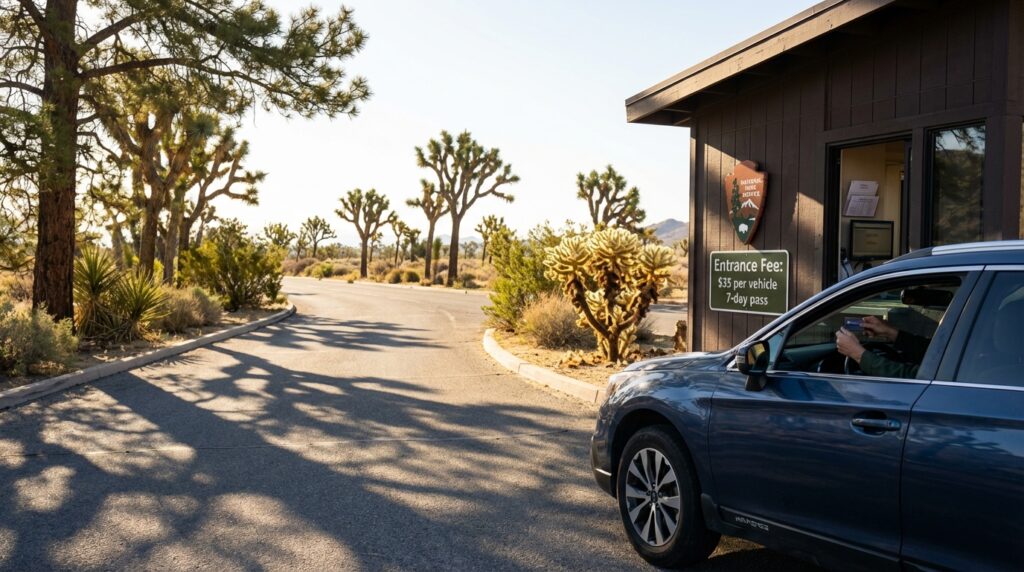
Why do hiking trails cost money when you can walk out your front door for free? It’s a fair question, and I’ve heard it at trailheads more than once. The short answer: maintaining a trail isn’t free, and the fee you pay at the entrance station is how land managers fund what keeps those trails open.
⚡ Quick Trail Takeaways
- Funding Trail Maintenance: Trail fees directly fund erosion mitigation, bridge rebuilding, tree clearing, and Search & Rescue (SAR) infrastructure.
- Pass Options: An $80 America the Beautiful Interagency Pass covers over 2,000 federal recreation sites nationwide.
- Free Alternatives: USFS non-developed trailheads, BLM public lands, and county open-space parks offer free trail access year-round.
I paid day-use fees at Joshua Tree National Park three separate times before anyone mentioned the America the Beautiful Pass existed. Those three visits cost $45 in entrance fees combined. The annual pass is $80. I was annoyed at myself for not knowing sooner. Three visits and nobody at the entrance window had said a word about it.
This guide covers why do hiking trails cost money at the federal, state, and local level, where those fees actually go, which passes make financial sense for different hiking habits, and where to hike without paying anything at all.
🥾 Oliver’s Trail Notes & Field Observations
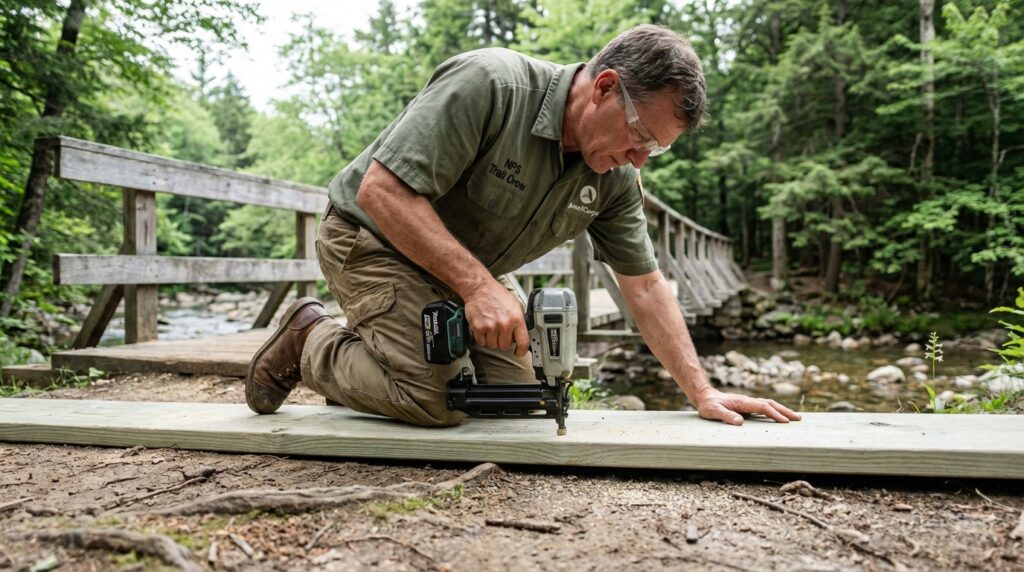
Parking at popular trailheads across the San Gabriel Mountains requires a $5 daily Adventure Pass or an America the Beautiful annual pass. When I first started hiking, I wondered why public land required a fee. After volunteering on trail maintenance crews in Angeles National Forest, I saw firsthand what those funds cover: clearing massive fallen Jeffrey pine logs after winter windstorms, rebuilding eroded switchbacks, and servicing backcountry vault toilets that would otherwise overflow.
Why Do Hiking Trails Cost Money: The
The law that created federal trail fees
The legal framework behind most federal trail fees in the United States is the Federal Lands Recreation Enhancement Act, passed by Congress in 2004. Before FLREA, there was no consistent legal authority for the National Park Service, the USDA Forest Service, the Bureau of Land Management, and other federal agencies to charge recreation fees and keep those funds locally.
FLREA changed that. It authorized federal land managers to charge amenity fees and required that at least 80% of the fees collected at each site stay at that specific site, rather than flowing into general federal revenues. Understanding why do hiking trails cost money at federal lands starts with that 80% figure. The fee stays local. Most of what you pay at a park entrance goes back to that exact place.
The National Park Service hosts over 300 million visitors per year across 400+ park units. That volume of human traffic generates maintenance demands that congressional appropriations alone don’t cover. Fees fill part of the gap.
National park trail fees vs. state and local fees
National park trail fees, state park parking fees, and local park fees are three separate systems with no coordination between them.
Federal lands (national parks, national forests, Bureau of Land Management areas, national wildlife refuges) are managed by federal agencies under FLREA. Most federal fee sites accept it.
State parks are managed by each state’s parks department under separate state law. That federal annual pass is generally not accepted at state parks. Each state has its own pass system.
County and city parks are managed by local governments. Fees range from nothing to significant day-use charges. No national pass covers these.
Why do hiking trails cost money at different rates across those categories? Because the systems don’t connect. A trailhead in a national forest might charge $5 for parking. The adjacent state park might charge $15. A county trail 3 miles away might charge nothing. Each land manager sets its own fee under its own authority.
Where Does Park Pass Money Go When You Pay
Trail maintenance funding: the actual numbers
The National Park Service’s maintenance backlog (the estimated cost to bring all infrastructure across all parks to serviceable condition) has been reported above $22 billion. That figure covers roads, buildings, utilities, and trails across the entire national park system.
Trail maintenance funding from fees covers recurring operational costs at specific sites, and answers part of why do hiking trails cost money at all: trail crew labor, erosion repair materials, bridge maintenance, signage replacement, restroom servicing. A single mile of maintained trail costs an estimated $2,000 to $10,000 per year to maintain, depending on terrain, visitor volume, and drainage demands.
Where does park pass money go for the National Park Service specifically? According to the NPS, fee revenue funds trail rehabilitation after weather damage, visitor center operations, ranger staffing at high-use trailheads, accessible facility improvements, and deferred maintenance that congressional appropriations don’t reach. The National Park Service publishes fee revenue breakdowns at nps.gov for anyone who wants to verify how their fees are applied at specific parks.
What fees honestly don’t cover
Fees cover a fraction of what’s needed, not the full cost of the trail experience.
Congressional appropriations fund the majority of park operations: staff salaries, administrative costs, law enforcement, resource management. Fees are a supplement to appropriations, not a replacement. When appropriations get cut, parks feel it regardless of how much fee revenue they’re generating.
The American Hiking Society estimates that over 200,000 miles of US trails are at risk of closure or significant degradation due to inadequate maintenance funding. That figure includes both fee and free trails. Free trails have the same maintenance costs as fee trails. Erosion happens on both. Bridges age on both. This is part of why do hiking trails cost money even at fee sites: maintenance is ongoing. Free trails are funded through local government budgets, volunteer labor, and grants, not entrance fees.
The funding gap that fees can’t close
State parks face the same dynamic. Most state park systems have documented maintenance backlogs that exceed their fee revenue by a significant margin. Fees keep parks operational. They don’t close the structural funding gap.
This doesn’t mean fees are pointless. Without them, closures and service reductions would be more severe. But knowing where does park pass money go means accepting that fees are one piece of an underfunded system, not the whole solution.
🥾 Pass Compliance & Ranger Checks
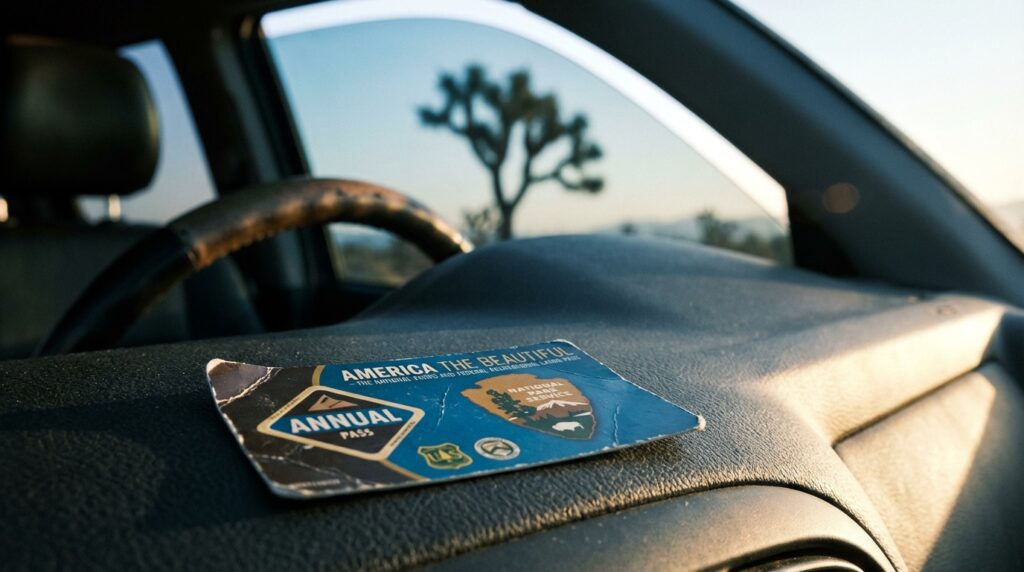
I always keep an annual interagency pass hanging from my rearview mirror or displayed face-up on the dashboard. Forest Service rangers actively patrol lots at Chantry Flat, Icehouse Canyon, and Red Box. In my experience, spending $30 to $80 a year for national recreation passes is the single highest-value investment an outdoor enthusiast can make to keep our public trails open, marked, and clean.
The Fee Systems Explained
How federal land fees work
Not all federal land charges fees. The USDA Forest Service manages approximately 193 million acres, and most of that land has no trail fees. Fee areas are typically high-use recreation sites, day-use areas with developed amenities, and campgrounds with services. A remote trail deep in a national forest may have no trailhead fee at all.
National park trail fees are the most standardized in the federal system. Most national parks charge per-vehicle entrance fees ranging from $15 to $35 for a 7-day pass. Some charge per-person instead of per-vehicle. A number of National Park Service units (national monuments, historical parks, some recreation areas) charge no entrance fee.
State park parking fees and regional variation
State park parking fees are the fee type that surprises most beginner hikers because the variation is wide. Some state parks charge nothing. Others charge $8 to $15 per vehicle for day use. A few charge per-person.
There is no national database of current state park fees because they update regularly and vary by season, day of week, and reservation status. The reliable source for current state park fees is the specific state park system’s official website. AllTrails lists some fee information, but it’s not always current. Check the official site the day before you go.
Most states offer annual passes that eliminate day-use fees across their state park system. California’s annual day-use pass runs approximately $125 and covers entry at around 200 state park units. Colorado’s annual parks pass runs about $80 and covers over 40 recreation areas. If you plan to visit state parks four or more times in a year, the annual pass usually pays for itself.
Where you won’t pay anything
Bureau of Land Management land (approximately 245 million acres) is mostly fee-free outside developed recreation sites. Most USDA Forest Service trails away from designated fee areas charge nothing.
Specific free-access programs worth knowing:
- National Park Service free entrance days: 5 to 6 per year, including Martin Luther King Jr. Day, National Public Lands Day, and Veterans Day weekend. Dates are posted annually at nps.gov.
- Every Kid Outdoors pass: free access to all federal lands for fourth-grade students and their families for one full school year.
- Access Pass: free lifetime access to federal lands for US residents with permanent disabilities.
- Military Annual Pass: free access for active duty military and their dependents.
- Senior Pass: $20 lifetime or $80 annual for US citizens and permanent residents aged 62 and older. The $20 lifetime senior pass is a notable value for anyone who qualifies.
The America the Beautiful Pass: When It Makes Sense
What the pass covers and what it doesn’t
The America the Beautiful Pass is the right answer to why do hiking trails cost money when you visit federal lands regularly. At $80 for one year, it covers the vehicle entrance fee at any federal recreation site that charges standard amenity fees. That includes the vast majority of national parks, national monuments, national forest fee areas, and BLM recreation sites.
It does not cover:
- Camping fees at any site
- Lottery permit fees (Half Dome cables permit, Havasupai, Coyote Buttes, and similar)
- Timed entry permit fees
- Tour fees
- State, county, or city park fees of any kind
The pass admits the pass holder and up to three additional adults in the same vehicle. Children 15 and under enter free at all National Park Service sites regardless of whether you have a pass or pay per-visit.
When the math works in your favor
A single vehicle entrance at Yosemite costs $35 for a 7-day pass. Two visits: $70. Three visits: $105. The annual pass costs $80.
If you plan to visit any fee-charging federal land three or more times in a year, the pass pays for itself. This is the calculation I failed to run during my first two years of hiking. I kept paying per-visit entrance fees at national parks without stopping to check whether the annual pass was cheaper. It was, by a lot.
The pass can be purchased at any national park entrance station, through the USGS store online, or at participating REI locations. You don’t need to know in advance which parks you’ll visit. Buy it when you know you’re going somewhere once, and it covers everything after that for the rest of the year.
Who the pass is not the right choice for
If your hiking is entirely on state parks, free Bureau of Land Management land, or city and county trails, the annual federal pass won’t save you money. It only applies to federal fee sites. Someone whose hiking is entirely in California state parks needs a California annual day-use pass, not a federal one.
Common Misconceptions About Trail Fees
“My taxes already pay for this”
This is the most common argument against trail fees, and it’s partially correct.
Congressional appropriations, funded by federal income taxes, do fund the majority of national park operations: staff salaries, law enforcement, administrative costs, resource management. Federal taxes fund those appropriations.
The fees are supplemental. FLREA specifically designed them to fund maintenance and projects that appropriations don’t reach, retained locally where they’re collected. The National Park Service’s documented $22+ billion maintenance backlog exists alongside congressional funding. Both funding sources are real and both fall short of what’s needed. The argument isn’t that hikers are paying twice for the same service. The gap between appropriations and actual maintenance needs is documented and fees partially close it.
“I’ve been hiking for years and never paid a fee, so this doesn’t apply to me”
Many hikers have built a full practice on Bureau of Land Management land, free national forest trails, and local parks without encountering a fee area. That’s genuinely possible given the scale of free public land in the United States.
The issue arises when those same hikers visit a national park or a fee-required national forest recreation area without knowing fees apply. Showing up to Rocky Mountain National Park expecting free access and finding a $35 entrance fee is the kind of surprise that makes people angry at the park rather than prepared for the system. Knowing why do hiking trails cost money at specific sites, and checking before you drive there, prevents that entirely.
Making the Best Use of What You Pay
How to check fees before you go
For national parks: nps.gov lists current entrance fees for every park unit. For national forests and BLM recreation areas: the specific site page at recreation.gov or the land manager’s official website. For state parks: the state park system’s official website for that state.
The reliable approach for anyone asking why do hiking trails cost money at a specific site: check the official source the day before you go. Fees update, seasonal adjustments happen, and free days get announced. Part of understanding why do hiking trails cost money is knowing those fees are not static. Third-party apps including AllTrails list some fee information, but the official website is always more current.
When to look for free alternatives nearby
If you’re visiting a fee area once and the annual pass math doesn’t work for your hiking frequency, free alternatives often exist nearby. BLM trailheads at the edges of national parks are common in the American West. A trailhead inside the park boundary charges $35 per vehicle. A BLM trailhead two miles down the same road that accesses similar terrain might charge nothing. A 10-minute search before the trip often surfaces that option.
Why do hiking trails cost money when public land belongs to everyone?
Why do hiking trails cost money on public land comes down to a distinction between ownership and maintenance. The federal government owns national parks and forests on behalf of all Americans. Maintaining those lands for recreational use requires labor, materials, and infrastructure investment that congressional appropriations don’t fully cover. The Federal Lands Recreation Enhancement Act of 2004 authorized federal agencies to charge and retain fees specifically to close part of that funding gap. Access to public land is your right. The fee covers part of the cost of making that access functional and safe.
Where does park pass money go after I pay at the entrance?
Where does park pass money go is defined by FLREA: at least 80% of fees collected at any federal site must stay at that specific site. The remaining 20% goes to a recreation fee account that funds sites without adequate fee revenue of their own. At the site level, fee revenue funds trail maintenance, visitor facilities, ranger staffing at high-use areas, and deferred maintenance that appropriations don’t reach. The National Park Service publishes annual fee revenue reporting for anyone who wants specifics on how individual parks spend their collections.
Is the America the Beautiful Pass worth buying for a first-time hiker?
The pass is worth buying if you plan to visit any fee-charging federal land three or more times in a year. At $80, it pays for itself after two visits to a national park with a $35 entrance fee, or three visits at $30, or four visits at $20. For someone building a regular hiking habit, it is almost always the better financial choice over per-visit fees. The exception: if all your hiking is on state parks, city parks, or free BLM land, it won’t apply.
What is the difference between national park trail fees and state park parking fees?
National park trail fees are federal charges under FLREA, managed by federal agencies, and covered by the federal annual pass. State park parking fees are charged by individual state park systems under state law, completely separate from the federal system, and not covered by it. The federal annual pass covers federal fee sites only. A California state annual day-use pass covers California state parks only. There is no single pass that covers both systems.
How do I find out the fee for a specific trail before I drive there?
For national parks: nps.gov lists current entrance fees for every park unit. For national forests and BLM recreation areas: recreation.gov or the specific agency’s website. For state parks: the official state park system website for that state. Check the day before you go rather than a week before, since fees update and free-day dates get announced. The official land manager website is always more current than third-party apps.
Does trail maintenance funding from fees cover the full cost of keeping trails open?
No. Trail maintenance funding from fees covers recurring maintenance costs at fee sites but the National Park Service’s maintenance backlog alone has been reported above $22 billion. Fees are one funding source among several: congressional appropriations, grants, volunteer labor, and private donations all contribute. The American Hiking Society estimates over 200,000 miles of US trails face closure risk due to underfunding. The trails stay open because of all those sources combined, not because fees alone cover what’s needed.
The Fee System Is Imperfect and Worth Understanding
Why do hiking trails cost money is a question with a practical answer and a frustrating one. The practical answer: fees fund maintenance and services at lands that appropriations don’t fully cover, retained locally where they’re collected. The frustrating answer: even with fees, the funding gaps are documented and large.
What to do with that: buy the America the Beautiful Pass if you visit federal lands three or more times a year, know which lands are free before you go, and take 5 minutes on nps.gov or the state park website before any paid hike to confirm current fees and free-day dates.
Next Steps
- Right now: Check nps.gov for this year’s free entrance days. If any fall near a hike you’re planning, you just saved $15 to $35.
- Before your first paid hike: Look up the current fee at nps.gov or the state park website. Don’t rely on AllTrails for current fee information.
- If you hike federal lands 3+ times per year: Buy the pass at any national park entrance station, through the USGS store online, or at a participating REI.
Frequently Asked Questions
Why do hiking trails cost money when public land belongs to everyone?
Why do hiking trails cost money on public land comes down to a distinction between ownership and maintenance. The federal government owns national parks and forests on behalf of all Americans. Maintaining those lands for recreational use requires labor, materials, and infrastructure investment that congressional appropriations don't fully cover. The Federal Lands Recreation Enhancement Act of 2004 authorized federal agencies to charge and retain fees specifically to close part of that funding gap. Access to public land is your right. The fee covers part of the cost of making that access functional and safe.
Where does park pass money go after I pay at the entrance?
Where does park pass money go is defined by FLREA: at least 80% of fees collected at any federal site must stay at that specific site. The remaining 20% goes to a recreation fee account that funds sites without adequate fee revenue of their own. At the site level, fee revenue funds trail maintenance, visitor facilities, ranger staffing at high-use areas, and deferred maintenance that appropriations don't reach. The National Park Service publishes annual fee revenue reporting for anyone who wants specifics on how individual parks spend their collections.
Is the America the Beautiful Pass worth buying for a first-time hiker?
The pass is worth buying if you plan to visit any fee-charging federal land three or more times in a year. At $80, it pays for itself after two visits to a national park with a $35 entrance fee, or three visits at $30, or four visits at $20. For someone building a regular hiking habit, it is almost always the better financial choice over per-visit fees. The exception: if all your hiking is on state parks, city parks, or free BLM land, it won't apply.
What is the difference between national park trail fees and state park parking fees?
National park trail fees are federal charges under FLREA, managed by federal agencies, and covered by the federal annual pass. State park parking fees are charged by individual state park systems under state law, completely separate from the federal system, and not covered by it. The federal annual pass covers federal fee sites only. A California state annual day-use pass covers California state parks only. There is no single pass that covers both systems.
How do I find out the fee for a specific trail before I drive there?
For national parks: nps.gov lists current entrance fees for every park unit. For national forests and BLM recreation areas: recreation.gov or the specific agency's website. For state parks: the official state park system website for that state. Check the day before you go rather than a week before, since fees update and free-day dates get announced. The official land manager website is always more current than third-party apps.
Does trail maintenance funding from fees cover the full cost of keeping trails open?
No. Trail maintenance funding from fees covers recurring maintenance costs at fee sites but the National Park Service's maintenance backlog alone has been reported above $22 billion. Fees are one funding source among several: congressional appropriations, grants, volunteer labor, and private donations all contribute. The American Hiking Society estimates over 200,000 miles of US trails face closure risk due to underfunding. The trails stay open because of all those sources combined, not because fees alone cover what's needed.
Related Reads
Kept putting off hiking because every trail you found online seemed to come with a parking fee or entrance pass? Here’s how to find solid trails near you that won’t cost you anything to access.
Figured strapping on a backpack and walking outside basically made it a hike? These 5 differences explain why your body reacts so much harder once real terrain gets involved.
Wondered if hiking is ever supposed to feel this brutal, or if you’re just doing it wrong somehow? Here’s an honest look at why hiking feels so hard at first, and when that actually changes.
Heard someone mention an “out-and-back” trail and just nodded along, having zero idea what that actually meant? Here’s a breakdown of the different types of hiking trails so the terminology stops being a mystery.
Glanced at a trailhead sign with a rating system that meant nothing to you and just went for it anyway? Here’s what those difficulty ratings genuinely mean for someone brand new, no confusing jargon involved.