



What is a thru-hike? Here is the honest answer in one sentence: a thru-hike is the act of completing an entire designated long-distance trail continuously, from one terminus to the other, in a single uninterrupted attempt. Not in sections spread across multiple trips. Not with a month at home in the middle. Start to finish, with the trail as your entire world for however many months that requires.
⚡ Quick Trail Takeaways
- Thru-Hike Reality: Thru-hiking spans continuous long-distance trails (2,000+ miles); only 20-25% of AT/PCT starters reach the finish.
- Daily Mileage Load: Hikers average 15 to 25 miles per day for 4 to 6 months carrying base pack weights of 15-20 pounds.
- Financial Budgeting: Realistic thru-hike budgets range from $6,000 to $10,000 for gear replacement, resupply boxes, and town lodging.
That is the definition. What a thru-hike actually involves is a longer conversation.
I first heard about thru-hiking at a trailhead parking lot in the Angeles National Forest, about five months after I started hiking regularly. The woman lacing up next to my car had just finished a 500-mile section of the Pacific Crest Trail in 33 days. Her gear had the worn-in quality that only comes from months of daily use: straps faded, pack seams slightly gray, trail runners with the toe box blown out on both sides. She talked about her last week on trail with the same casual specificity I use to describe a grocery run.
I drove home that afternoon and spent three hours on the Appalachian Trail Conservancy website, convinced I should hike the full AT the following spring. I had completed 11 day hikes at that point. My longest was 7.4 miles. I had no concept of what I was actually reading, which is exactly how this research usually goes.
This guide covers what a thru-hike actually is, five realities that most beginner research doesn’t surface, and the practical sequence that moves you from where you are now to a point where a long trail becomes genuinely realistic.
🥾 Oliver’s Trail Notes & Field Observations
While section hiking the Pacific Crest Trail through Section D in Southern California, I met dozens of aspiring thru-hikers who dropped out within their first three weeks. In my experience, physical leg strength gets you through the first fifty miles, but mental resilience and daily blister care determine whether you make it across a continent. Thru-hiking is less of an outdoor vacation and more of a relentless daily routine of pack management, foot hygiene, and calorie hunting.
What Is a Thru-Hike: The Real Definition
The thru hike definition: continuous vs. sectioned
A thru-hike means completing a designated long-distance trail from one end to the other in a single, continuous journey. That word “continuous” is doing the important work in the thru hike definition. A section hike completes the same trail over multiple separate trips across months or years. Both are legitimate approaches and both require significant commitment. What makes a thru-hike distinct is that you do not go home. You stay on the trail until the trail is finished.
Most searches for “what is a thru-hike” center on the three major US long-distance trails. The Appalachian Trail (AT) runs 2,190 miles from Springer Mountain in Georgia to Katahdin in Maine. The Pacific Crest Trail (PCT) runs 2,650 miles from the Southern California border at Campo to the Canadian border in Washington State. The Continental Divide Trail (CDT) covers roughly 3,100 miles along the Continental Divide, from the New Mexico border to the northern terminus in Glacier National Park, Montana.
Shorter long-distance trails exist and are worth knowing. The Long Trail in Vermont covers 272 miles and takes most hikers 3 to 4 weeks. The John Muir Trail in California runs 211 miles and is completable in 3 to 4 weeks for hikers with real backpacking fitness under them. These are often where hikers do their first genuine multi-week trips before committing to a major trail.
How long is a thru hike on the major trails
How long is a thru hike depends on the trail and the hiker’s daily pace. The AT takes most thru-hikers 5 to 7 months, covering an average of 12 to 18 miles per day once trail legs develop. The PCT averages 4 to 6 months. The CDT runs 3 to 6 months, but has more route variation than the AT or PCT, making estimates less reliable.
These timelines mean a thru-hike is not a vacation. It is a commitment that requires leaving your regular life entirely for the duration: subletting apartments, taking leaves from jobs, and budgeting for a months-long trip. The American Hiking Society estimates the total cost of an Appalachian Trail thru hike runs $6,000 to $10,000 for most hikers, not counting pre-trip gear investment. That number is not meant to discourage. It is meant to give you an accurate picture before you start planning.
Thru-Hiking Explained: Five Realities Beginners Miss
Thru-hiking explained honestly means going past the trail photography and the gear content. Here is what most beginner research doesn’t surface.
One: completion rates are lower than the content suggests. The Appalachian Trail Conservancy consistently reports that roughly 25% of registered thru-hike attempts result in a completed trail. Three out of four people who start do not finish. The reasons include injury, financial strain, family obligations, and what longtime thru-hikers call “trail fatigue,” the point at which the daily physical experience stops feeling like an adventure and starts feeling like a job you cannot quit. The people who don’t finish are not less capable. They are, most often, people who arrived without enough information about what the daily experience actually involves.
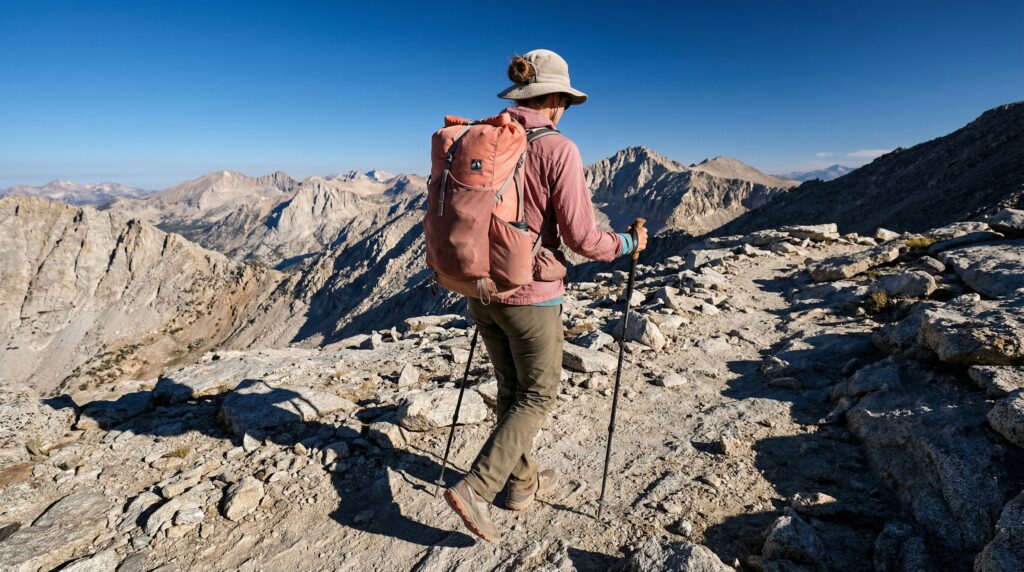
Two: the first two weeks are the hardest part, and they are not the rewarding part. Every person who has done a thru-hike will tell you this. Your pack is at maximum weight before you’ve eaten down the food. Trail legs, the cardiovascular and muscular efficiency that builds over weeks of continuous hiking, don’t arrive until week 3 or 4. The trail community, the shared humor, the rhythm that makes a thru-hike genuinely enjoyable, mostly comes after the initial grind. What you experience in week one is soreness, logistics, and recalibration.
Three: gear matters in ways day hiking doesn’t reveal. Any solid PCT beginner guide or AT resource will say the same thing. What you can tolerate on a 7-mile day hike becomes a real problem at mile 400. Footwear, pack fit, base weight, sleep system temperature rating: these choices compound over months of daily use in ways that weekend hiking does not expose.
Four: the mental component is harder than the physical one. Experienced thru-hikers say this consistently, and it surprises most people who are focused on fitness preparation. The body adapts faster than most people expect. Maintaining the daily decision to continue, across weeks of difficult terrain and conditions that are frequently miserable, is where the majority of attempts end.
Five: you need a real base before any of this makes sense. Not six months of enthusiasm. Actual trail miles, overnight experience, and self-knowledge that only comes from time on the ground.
💡 Trail Tip: Before committing to any long-distance trail, complete at least 3 overnight backpacking trips with your full intended pack weight.
Day-hike fitness and backpacking fitness are different enough that the gap surprises most people. The overnight trips are where you find out what your gear actually does, how your body responds on day two, and whether trail life is something you want more of.
🥾 Gear Shakeout Reality
During my long-distance tests, I learned that the gear list novice thru-hikers pack at the Mexican border rarely survives past Wrightwood. Over half the hikers I encountered ended up discarding heavy cookware, swapping ankle boots for trail runners, and mailing home surplus clothing. Always conduct at least two consecutive three-day backcountry weekend trips with your exact pack setup before attempting a long-distance trail.
How to Build Toward a Thru-Hike From Zero
The path from first-time hiker to thru-hike attempt is a specific sequence. No particular athletic background is required. What is required is time on trail, with progressively increasing demands, in a logical order.
Start with day hikes between 4 and 8 miles with 300 to 700 feet of elevation gain. That range generates real feedback on pace, joint response, hydration needs, and foot management without the recovery demands of longer days.
Starting with day hikes in the right range
Do this 15 to 20 times before considering a backpacking trip. The information you’re collecting is not just fitness data. It is self-knowledge: what your body does on uneven terrain, how your feet respond after 5 hours of walking, what trail conditions made you feel like stopping early versus what made you want more. That self-knowledge is not available until you have enough trail miles to read your own patterns.
Moving to overnight and multi-day backpacking
The Appalachian Trail thru hike is not the second thing you attempt after day hiking. The bridge between those two points is a series of progressively longer backpacking trips: one night, then two nights, then three or four consecutive days with no rest day. Each step teaches you what the previous step could not. Overnight trips introduce sleeping on the ground with a loaded pack and managing all your gear in a campsite at the end of a hiking day. Three-day trips show you what your body does on day two and day three. Week-long trips teach you what happens when novelty wears off and you still have 40 miles to go.
The American Hiking Society’s trail planning resources recommend this progressive approach specifically because the gap between day hiking and multi-day backpacking is larger than most people expect until they’ve crossed it. The Leave No Trace Center similarly recommends developing overnight camping skills before attempting any continuous long-distance route. That recommendation exists for practical reasons: the decisions you make about camp selection, water treatment, food storage, and low-impact practices become consequential on a trail where you’re doing all of it every day for months.
The Appalachian Trail thru hike as a long-term goal
The Appalachian Trail thru hike is one of the most well-documented long-distance trails in the world, which makes it both the easiest to research and the most romanticized. The AT passes through 14 states and a range of terrain from Georgia’s wooded ridges to the exposed granite of Maine. It is not technically difficult in a climbing or navigation sense, but its sustained demands are a different matter entirely.
Hikers planning an Appalachian Trail thru hike need a permit for the northern terminus at Baxter State Park in Maine, which requires advance reservation through the park’s system. The AT is heavily trafficked in the first 30 miles from Springer Mountain, which gives early sections a communal atmosphere that mid-trail sections don’t replicate. Knowing this ahead of time matters, because the community feeling that draws many people to the AT shows up most strongly in specific windows, not uniformly across the full trail.
Using the right resources for each trail
For the PCT, the PCTA (Pacific Crest Trail Association) website maintains the most reliable PCT beginner guide content available, covering permit requirements, water source logistics, Sierra timing, and northbound permit registration windows. For the AT, the Appalachian Trail Conservancy handles the equivalent. The National Park Service covers trail sections that pass through national parks, including permit requirements for PCT sections in Yosemite and Sequoia.
Both of these resources assume a level of backpacking experience. Read them now as orientation. Return when you’re a year into regular hiking and seriously planning.
💡 Trail Tip: When researching what is a thru-hike, pay attention to “base weight,” the weight of your pack excluding consumables like food and water.
For most thru-hikers, a base weight under 20 pounds is considered standard. Under 15 pounds is lightweight. Under 10 pounds is ultralight. Your base weight target on a thru-hike is a different calculation from what you’d bother tracking on a day hike, and understanding it early saves money on gear you’d otherwise buy twice.
What a realistic thru-hike timeline looks like
Most people who complete major thru-hikes started hiking 2 to 4 years before their attempt. That span is not arbitrary. It is the time required to build trail fitness through actual trail use, learn gear through actual gear use, develop overnight camping skills, and accumulate the self-knowledge to plan a 5-month trip with realistic expectations rather than projected ones.
A practical version of that timeline for someone starting hiking today: 12 to 18 months of regular day hiking, building to hikes of 10 to 15 miles with 1,000-plus feet of gain. Then 6 to 12 months of backpacking, starting with overnights and building toward week-long trips. Then, from that base, a genuine assessment of which trail, what year, and what level of commitment is realistic given your actual life.
That timeline is not slow. It is the timeline of people who finish.
Common Mistakes When You First Learn About Thru-Hiking
Setting it as an immediate goal. The excitement is understandable. The problem is treating a 5-month continuous trail as an appropriate first hiking objective. The most consistent pattern among underprepared thru-hikers: they train intensively for distance and arrive at the trailhead able to cover miles, but unprepared for the sustained daily output that distance training alone does not replicate. A long training run is not the same as walking 15 miles a day for 5 months.
Purchasing gear before building experience. Thru-hiking content is heavily gear-focused, and beginners often spend $1,500 to $2,500 on gear before completing enough trail miles to know what they actually need. A pack with strong reviews may be wrong for your torso length. Footwear that performs well in dry conditions may fail completely in the specific conditions of the trail you’re targeting. The gear decisions improve significantly after you’ve put real miles on real trails in real conditions. Buying first and testing later is an expensive sequence.
Using social media as a reference point. Thru-hiking on Instagram and YouTube is filtered toward the best days, the best light, and the most visually striking terrain. The 17-mile day in sideways rain with a blister on both heels, the resupply box that arrived at the wrong town, the second week when nothing felt rewarding yet: that content exists but is less shareable. The information mix available on social media is not representative of the full experience.
Skipping section hikes. A section hike, completing a defined portion of a long trail over a shorter trip, is undervalued as both a training tool and a goal in its own right. A week on the AT or a segment of the PCT gives you real information about what thru-hiking actually involves before you’ve committed 5 months to finding out.

How to Know When You’re Actually Ready
Readiness for a thru-hike is not a feeling. It is a set of conditions you can verify against a list.
You’ve completed at least five overnight backpacking trips with a full loaded pack. You’ve covered at least one stretch of 3 consecutive trail days without a rest day. You’ve hiked in conditions that were genuinely uncomfortable, significant rain, cold, navigation uncertainty, and maintained your judgment and pace through them. You have a gear kit that you’ve tested on real trips, not one assembled from reviews. You have a financial plan that covers the full trail, resupply logistics, and 2 to 3 months of post-trail reentry. You’ve assessed your employment situation, your obligations to people in your life, and your realistic window with honesty.
My position is this: a thru-hike is not a better version of hiking. It is a different undertaking entirely, and treating it as the obvious next step for someone who has been hiking for six months is one of the most reliable ways to burn out before you’ve built the habit that makes hiking worth doing for years. The goal of researching what is a thru-hike at this stage is not to book a start date. It is to understand what you’re building toward and begin building it correctly.
What is a thru-hike, and how does it differ from a regular day hike?
A thru-hike is the completion of an entire designated long-distance trail in a single continuous journey. A regular day hike starts and ends at the same trailhead. The differences go beyond distance: a thru-hike involves months of continuous travel, nightly camping, daily resupply logistics, and no fixed end date until the trail is finished. The thru hike definition centers on continuity: you are hiking until the trail ends, sleeping outside every night, and managing all your needs from what you carry. A day hike, even a long one, shares none of those logistical or psychological demands.
How long is a thru hike on the Appalachian Trail?
How long is a thru hike on the AT varies, but most thru-hikers complete the 2,190-mile trail in 5 to 7 months, averaging 12 to 18 miles per day once trail fitness develops. Faster hikers have completed it in under 60 days. Most people take 5 to 6 months. Northbound hikers typically start in March or April from Springer Mountain in Georgia to time their arrival at Katahdin in Maine before Baxter State Park closes in mid-October. Missing that window means the trail is incomplete for that season.
Is the Appalachian Trail thru hike realistic for a first-time hiker?
Directly: no, not as a starting point. The Appalachian Trail thru hike is one of the more demanding continuous physical and logistical undertakings available in the United States. The trail is not technically difficult in the climbing sense, but the sustained output, covering trail miles daily for 5 to 7 months in all conditions, requires a foundation of backpacking experience and self-knowledge that most first-time hikers haven’t had time to build. The right starting point for someone new to hiking is a series of day hikes building to overnight trips, not a 2,000-mile commitment with no overnight experience behind it.
What does a PCT beginner guide recommend for hikers planning to eventually attempt the Pacific Crest Trail?
Any reliable PCT beginner guide, starting with the PCTA’s own resources, will direct you toward the same preparation steps: build consistent day-hiking miles first, complete multiple overnight and multi-day backpacking trips before attempting any PCT section, understand the permit system (which uses a lottery for northbound thru-hike start dates), and study the trail’s water source logistics. Thru-hiking explained honestly for the PCT means acknowledging that the trail’s desert sections, Sierra snowpack timing, and Washington State’s demanding final miles create challenges that differ significantly from what the early-section scenery suggests. The PCT rewards hikers who arrive prepared.
What is a thru-hike going to cost, realistically?
The American Hiking Society estimates most hikers spend $6,000 to $10,000 completing the AT, covering food resupply, town stops (including hotels, laundry, and restaurant meals), transportation to and from the trail, and incidental gear replacement. Pre-trip gear investment adds $1,000 to $3,000 or more depending on your starting kit. Budget planning is one of the most cited reasons for incomplete attempts: hikers who run out of money mid-trail frequently cannot continue regardless of physical readiness.
Can someone with no hiking experience eventually do a thru-hike?
Yes. No specific background is required. What is required is time. The realistic timeline from zero trail experience to genuine thru-hike readiness is 2 to 4 years of consistent hiking, including overnight and multi-day trips of progressively increasing difficulty. Many people who have completed major thru-hikes started exactly where you are now. The ones who finished are largely the ones who built their trail base methodically rather than compressing the preparation into a few months of intensity.
You Don’t Need a Thru-Hike to Have a Real Trail Life
What is a thru-hike, summed up honestly? It is a months-long continuous commitment that rewards specific preparation and does not forgive gaps in it. It is a genuinely worthwhile goal for the right person at the right point in their trail life. It is not the correct next step for someone in the first year of hiking, and it is not a prerequisite for finding the trail meaningful.
The trail that builds most people’s love for hiking is not a 5-month expedition. It is a dozen day hikes, a couple of overnight trips, terrain that genuinely challenged them, and the slow accumulation of confidence that comes from being on the ground in the woods regularly. From that base, a thru-hike becomes a realistic consideration rather than an abstract aspiration driven by a social media feed.
Start where you are. Build from there. The long trails are not going anywhere, and the time you spend building a real trail foundation is not delay. It is the preparation.
Next Steps
- Right now: Pick one day hike between 4 and 6 miles and put it on the calendar this weekend. That entry in your trail log is the first step toward any long trail.
- After 15 to 20 day hikes: Research one overnight backpacking trip within 3 hours of home. That single step is the bridge between day hiking and multi-day trail life.
Frequently Asked Questions
What is a thru-hike, and how does it differ from a regular day hike?
A thru-hike is the completion of an entire designated long-distance trail in a single continuous journey. A regular day hike starts and ends at the same trailhead. The differences go beyond distance: a thru-hike involves months of continuous travel, nightly camping, daily resupply logistics, and no fixed end date until the trail is finished. The thru hike definition centers on continuity: you are hiking until the trail ends, sleeping outside every night, and managing all your needs from what you carry. A day hike, even a long one, shares none of those logistical or psychological demands.
How long is a thru hike on the Appalachian Trail?
How long is a thru hike on the AT varies, but most thru-hikers complete the 2,190-mile trail in 5 to 7 months, averaging 12 to 18 miles per day once trail fitness develops. Faster hikers have completed it in under 60 days. Most people take 5 to 6 months. Northbound hikers typically start in March or April from Springer Mountain in Georgia to time their arrival at Katahdin in Maine before Baxter State Park closes in mid-October. Missing that window means the trail is incomplete for that season.
Is the Appalachian Trail thru hike realistic for a first-time hiker?
Directly: no, not as a starting point. The Appalachian Trail thru hike is one of the more demanding continuous physical and logistical undertakings available in the United States. The trail is not technically difficult in the climbing sense, but the sustained output, covering trail miles daily for 5 to 7 months in all conditions, requires a foundation of backpacking experience and self-knowledge that most first-time hikers haven't had time to build. The right starting point for someone new to hiking is a series of day hikes building to overnight trips, not a 2,000-mile commitment with no overnight experience behind it.
What does a PCT beginner guide recommend for hikers planning to eventually attempt the Pacific Crest Trail?
Any reliable PCT beginner guide, starting with the PCTA's own resources, will direct you toward the same preparation steps: build consistent day-hiking miles first, complete multiple overnight and multi-day backpacking trips before attempting any PCT section, understand the permit system (which uses a lottery for northbound thru-hike start dates), and study the trail's water source logistics. Thru-hiking explained honestly for the PCT means acknowledging that the trail's desert sections, Sierra snowpack timing, and Washington State's demanding final miles create challenges that differ significantly from what the early-section scenery suggests. The PCT rewards hikers who arrive prepared.
What is a thru-hike going to cost, realistically?
The American Hiking Society estimates most hikers spend $6,000 to $10,000 completing the AT, covering food resupply, town stops (including hotels, laundry, and restaurant meals), transportation to and from the trail, and incidental gear replacement. Pre-trip gear investment adds $1,000 to $3,000 or more depending on your starting kit. Budget planning is one of the most cited reasons for incomplete attempts: hikers who run out of money mid-trail frequently cannot continue regardless of physical readiness.
Can someone with no hiking experience eventually do a thru-hike?
Yes. No specific background is required. What is required is time. The realistic timeline from zero trail experience to genuine thru-hike readiness is 2 to 4 years of consistent hiking, including overnight and multi-day trips of progressively increasing difficulty. Many people who have completed major thru-hikes started exactly where you are now. The ones who finished are largely the ones who built their trail base methodically rather than compressing the preparation into a few months of intensity.
Related Reads
Triple-checked your bag the night before, still convinced you were forgetting something important? Here’s exactly what your first hike actually involves, so the overthinking can finally settle down.
Pushed through a hike that felt way harder than it should’ve, then started wondering if hiking just isn’t for you? Here’s an honest answer on why hiking feels so hard at first, and exactly when that starts to change.
Said yes to a trail distance because it sounded reasonable, then found out the hard way it wasn’t? These 5 rules help you land on a number that’s actually realistic for you, not just whatever sounded fine at the time.
Stared at a long packing list online and had no idea which items were genuinely necessary versus just nice to have? Here’s what the 10 essentials actually are and why they matter, cutting through the overpacking advice.
Pulled out your regular gear for a cold trail and realized none of it was built to handle snow or ice? Here’s what beginners genuinely need to know before winter hiking, from footing to layering to losing daylight fast.