


FAMA is reader-supported. When you buy through links on our site, we may earn an affiliate commission at no extra cost to you. Learn more.
The best hiking backpack under $50 for most first-timers is the REI Co-op Flash 18. It runs $44.95, it will not fall apart on you, and REI stands behind it if it does not work out. That is the short answer.
⚡ Quick Trail Takeaways
- Ideal Volume: 18L to 25L is the sweet spot for day hikes carrying water, extra layers, and snacks.
- Harness & Comfort: Padded mesh shoulder straps prevent chafing during 4+ hour trail outings.
- Hydration Access: Dual exterior stretch mesh bottle pockets or a internal bladder sleeve are essential.
The longer answer matters more if your budget is closer to $15 than $45, or if you are not even sure hiking is going to stick yet. So here it is: I found seven inexpensive hiking bags that actually hold up, priced anywhere from $10.88 to $44.95, and matched one to nearly every situation a beginner runs into. None of these are consolation prizes for people who can’t afford the “real” gear. Two of them, honestly, beat packs that cost twice as much.
Before you scroll to the picks, one thing worth knowing: liters and price tags don’t tell you nearly as much as the spec sheets want you to believe.
🥾 Oliver’s Trail Notes & Field Observations
When I evaluated budget daypacks under $50 like the REI Flash 18 and Quechua NH100 on training ascents up Echo Mountain, the obvious compromise was the lack of back panel ventilation. In my experience, frameless budget packs press their thin fabric directly against your shirt, creating a pool of back sweat within thirty minutes. I learned to slide a thin foam sit pad into the internal hydration sleeve to provide structure and air channels.
The 7 Best Hiking Backpacks Under $50, Ranked
| Pick | Best For | Price | Capacity |
|---|---|---|---|
| REI Co-op Flash 18 | Best overall | $44.95 | 18L |
| Ozark Trail Hiker 25L | Rock-bottom price | $10.88 | 25L |
| Quechua NH100 Arpenaz 20L | Ultra-budget with real backing | ~$20 | 20L |
| Quechua MH100 20L | All-day comfort | $39.97 | 20L |
| Gonex Packable 20L | Packable backup pack | ~$20 | 20L |
| High Sierra Loop Daypack | Try it on before you buy | $35–$40 | Daypack sizing |
| TETON Sports Oasis 1100 | Built-in hydration | ~$35 | 18L |
Prices shift by color and retailer, so treat this as pricing at last update, not a guarantee. Here’s the breakdown, ranked in the order I’d actually recommend them.
1. Best Overall: REI Co-op Flash 18
Best for: One simple pack you won’t think twice about
Price: $44.95 | 18L | 9.5 oz (7.7 oz without the hip belt and sternum strap)
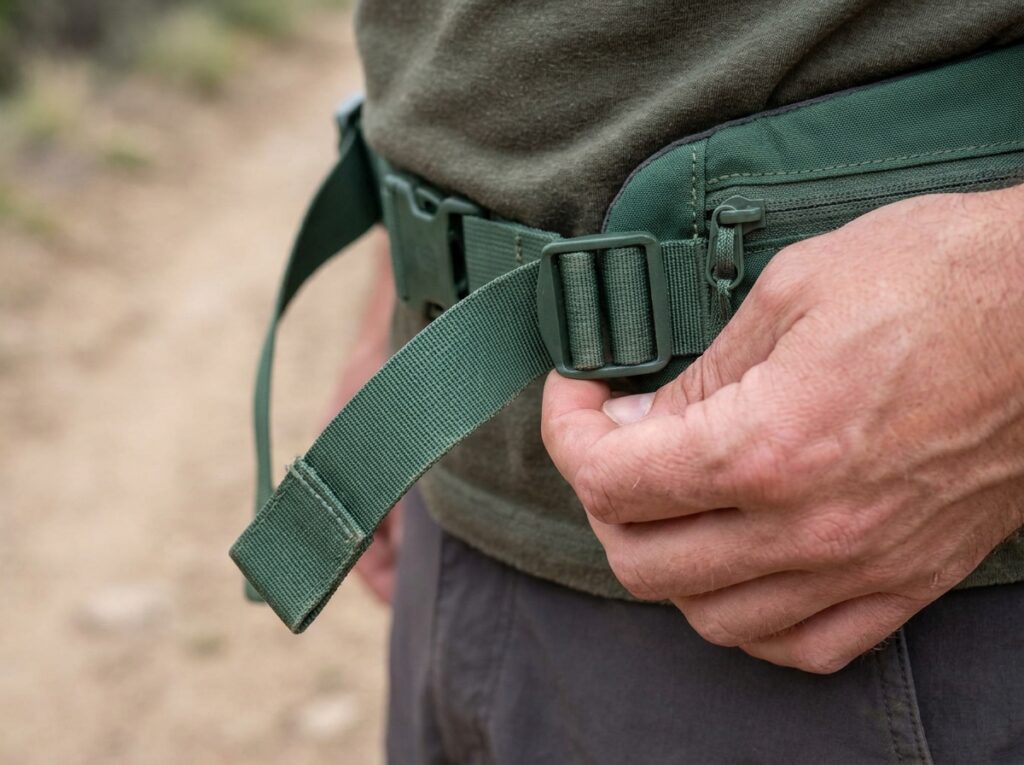
This is the pack REI has quietly refined for over a decade, and it shows. Recycled ripstop nylon, a water-repellent coating, a reservoir sleeve for a hydration bladder, and a side zip pocket you can reach while wearing it. No internal frame, no real structure, which sounds like a downside until you realize an 18-liter day pack barely needs one.
The caveat: the hip belt is a thin strip of webbing, not padding, and the pack has almost no rigidity of its own. Stuff it past capacity and it sags into a lumpy sack against your back. REI’s return window covers you if the fit is wrong, which matters more than it should for a first pack.
Buy it if: you want the pack with the most trustworthy company standing behind it.
Skip it if: you’re routinely carrying more than about 15 pounds. Look at pick #4 instead.
2. Best Rock-Bottom Price: Ozark Trail Hiker Backpack 25L
Best for: Finding out if hiking is actually going to stick before you spend real money
Price: $10.88 | 25L
This is Walmart’s house brand, and it has over 2,300 verified reviews averaging 4.6 stars, a strange amount of social proof for an $11 backpack. Basic polyester, no ventilation channel, no shaping to the back panel. It’s exactly what it looks like: a no-frills bag with straps.
The caveat: the padding is thin, and reviewers consistently flag that it isn’t built for years of weekly use. Think “prove the concept” pack, not five-year pack. It’s sized for teens and adults, so if you’re broad through the shoulders, check that before ordering.
Buy it if: you genuinely don’t know yet whether you’ll hike again next month.
Skip it if: you already know hiking is becoming a regular thing for you. Put the extra $30 toward pick #1 or #4.
3. Best Ultra-Budget With Real Backing: Quechua NH100 Arpenaz 20L
Best for: The cheapest pack from a company that will still exist to honor a warranty
Price: Around $20, often less on sale | 20L
Decathlon’s Quechua line doesn’t get talked about enough in the US, and it should. The NH100 Arpenaz has over 19,000 reviews averaging 4.7 stars, more than any other pack here by a wide margin, and some Quechua hiking packs carry a 10-year warranty. Basic water-resistant coating, no back ventilation, nothing fancy.
The caveat: Decathlon’s US store footprint is thin outside a handful of major metros, so you’re likely ordering sight-unseen and leaning on their return window instead of trying it on first.
Buy it if: you want the single most-reviewed budget pack available and don’t mind buying online.
Skip it if: you want to physically try it on before you commit. Try pick #6 instead.
4. Best for All-Day Comfort: Quechua MH100 20L
Best for: The hike where a bare-bones pack starts to actually hurt
Price: $39.97 | 20L | about 1.7 lbs empty
Same company, one real tier up. A padded waistbelt, an AirCooling ventilated back panel, and thumb loops on the shoulder straps that keep them from twisting mid-hike. This is the pick I’d put on for six or eight miles, not just a two-mile test walk.
The caveat: it weighs nearly a full pound more empty than the Flash 18 before you’ve packed a thing. If you’re chasing the lightest setup possible, that extra weight is real, and you’ll feel it by mile one even if you stop noticing by mile six.
Buy it if: your hikes regularly run past two hours and a bare strap has started digging into your shoulder.
Skip it if: ounces matter more to you than padding. Go back to pick #1.
5. Best Packable Backup: Gonex Ultralight Packable Backpack 20L
Best for: The pack you forget about until the exact moment you need it
Price: Around $20 | 20L | under 7 oz, folds into a pouch roughly the size of a fist
This isn’t a primary pack, and it isn’t trying to be one. Water-resistant nylon, three zippered compartments, folds small enough to live permanently in a suitcase, glove box, or the bottom of a bigger pack as an emergency spare.
The caveat: no padding anywhere, zero structure. Load it with anything heavier than snacks and a light jacket, and it turns into a rope on your shoulders within the first mile.
Buy it if: you travel often and want a just-in-case pack, or you’re introducing a friend to hiking and need a cheap loaner.
Skip it if: this would be your only pack. Get one with real padding first, then keep this as the backup.
6. Best to Try On Before You Buy: High Sierra Loop Daypack
Best for: Anyone nervous about ordering a backpack sight-unseen
Price: $35–$40
High Sierra sells through Dick’s Sporting Goods, so most mid-size US cities have a store where you can load it with real weight, put it on, and walk around before handing over a card. That fact matters more than most spec sheets combined. Multiple compartments, a media pocket, and side pockets that hold a water bottle without removing the pack.
The caveat: it reads more like an everyday commuter bag with hiking-friendly features than a purpose-built trail pack, and there’s no mention of hydration reservoir compatibility.
Buy it if: you want to physically test a pack before buying and there’s a Dick’s near you.
Skip it if: built-in hydration compatibility is non-negotiable. That’s pick #7.
7. Best Built-In Hydration: TETON Sports Oasis 1100
Best for: Hot-weather hikers who don’t want to stop and dig out a water bottle
Price: Commonly found around $35, though it lists higher at some retailers, so it’s worth comparing before you buy | 18L (1,100 cubic inches)
This one ships with a free 2-liter hydration bladder, which alone typically runs $15 to $20. Do the math and it’s functionally closer to a $15 to $20 pack once you count what’s included. Sized to fit men, women, and teens.
The caveat: pricing swings more by retailer and color than anything else on this list, so check before you commit. A handful of reviewers mention the included bladder has a faint plastic taste at first, a common complaint with budget reservoirs that fades after a few uses.
Buy it if: hands-free hydration matters enough that you don’t want to buy a bladder separately.
Skip it if: you already own a hydration bladder. At that point you’re just paying for the pack, and pick #1 or #4 gets you more pack for close to the same money.
What Actually Matters in Budget Day Hiking Backpacks
Here’s the thing the spec sheets won’t tell you: liters and price are the two numbers you’ll obsess over, and they’re the two that matter least once you’re actually on trail.
Capacity first. A 20 to 25 liter pack is genuinely enough for a full day out. The National Park Service’s own Ten Essentials list, the standard preparation checklist most day-hike guidance is built around, fits comfortably in that range with water, a layer, and snacks to spare. Bigger packs don’t make you more prepared. They just give you room to pack things you don’t need, which is how a day pack ends up weighing 18 pounds by the time you reach the trailhead.
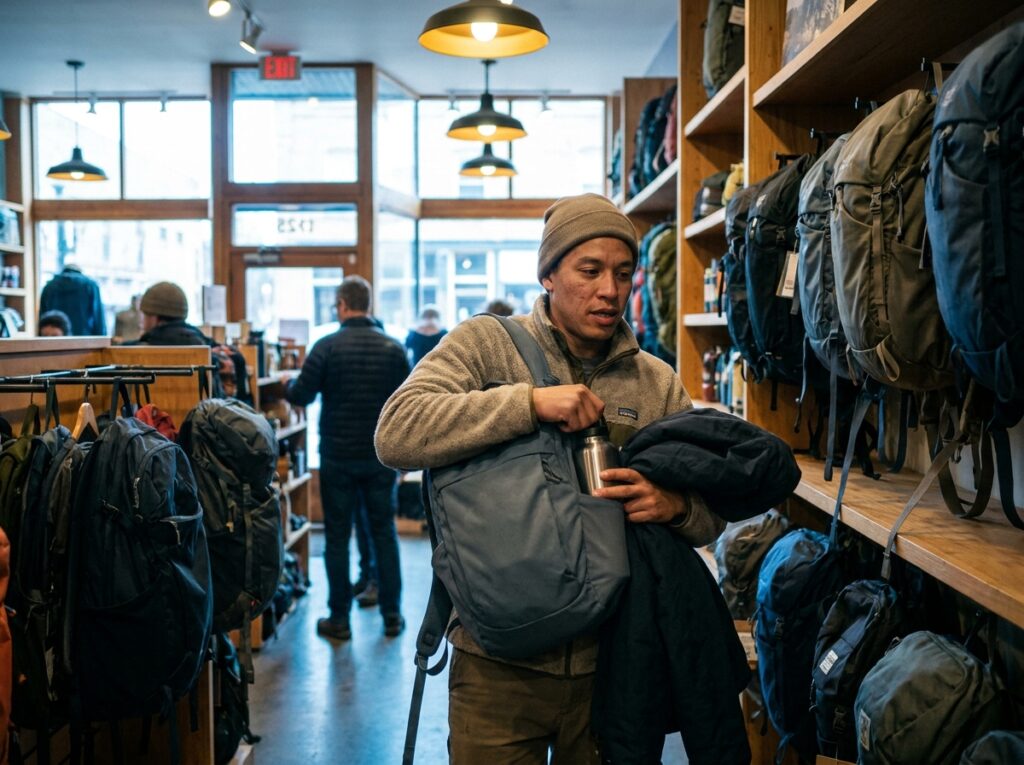
Fit beats every spec on the tag. Even a well-built pack feels wrong if the strap adjustment doesn’t match your body. Every pack on this list adjusts, but none come in more than one torso size. If something feels off after a full adjustment, that’s not a defect. It’s the wrong pack for your frame.
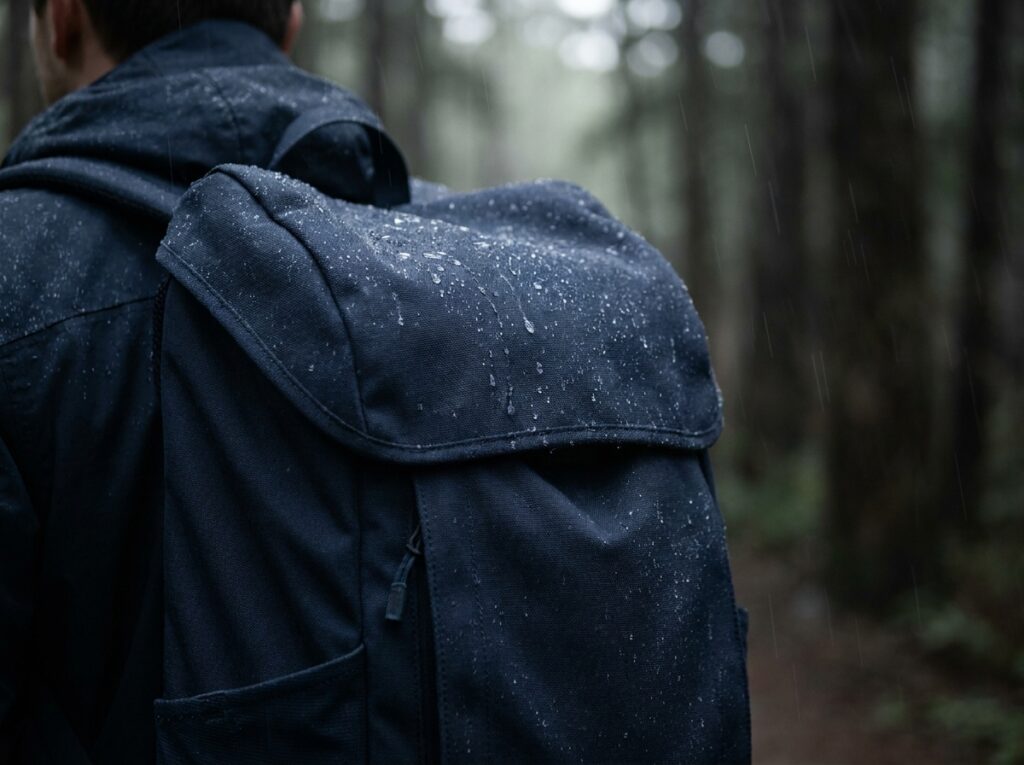
Water-resistant is not waterproof. Every pack on this list uses some version of a water-repellent coating, which beads light rain off the fabric surface. None of them are sealed at the seams or the zippers. In a real downpour, water gets in eventually. If you’re hiking somewhere with genuinely unpredictable weather, a $5 pack liner or a large trash bag inside the main compartment does more than any coating claim on the tag.
Hip belts matter less than you’d think, until they don’t. A padded hip belt exists to move weight off your shoulders and onto your hips, which is important once you’re carrying real weight. At day-hike loads under about 15 pounds, a thin webbing strap or no hip belt at all is genuinely fine. Once you’re consistently over that, pick #4’s padded belt starts to earn its keep.
💡 Trail Tip: Before you decide on fit, put actual weight in the pack. A full water bottle, a folded jacket, and a snack bag is close enough. Walk around the store for five minutes. A pack that feels fine empty on your shoulder for ten seconds can feel completely different once it’s carrying something.
🥾 Seam Stress & Weight Limits
During my field trials, budget daypacks under $50 handled eight to twelve pounds of gear reliably, but loading them past fifteen pounds quickly strained the unreinforced shoulder harness stitching. In my pack, I place dense items like water reservoirs flush against my back at mid-torso height, preventing outward backward drag that tears budget anchor seams.
What We Evaluated
None of these seven has logged trail miles with me personally, and I’m not going to pretend otherwise. Here’s what I did instead: checked current pricing across at least two retailers per pick, read the actual spec sheet instead of the marketing copy, checked return policies, and read through hundreds to thousands of verified buyer reviews per pick, looking for the same complaint showing up more than once. One bad review is noise. The same complaint from thirty buyers is a pattern, and that pattern shaped the caveats above.
Mistakes That Waste Money on a Budget Hiking Pack
Buying more liters than you need “just in case.” This is the most common overspend on this list. A 35-liter pack feels like more value per dollar than an 18-liter one. It isn’t. It’s an invitation to pack fear instead of gear, and a bigger, heavier bag you’ll resent by mile three.
Assuming water-resistant means waterproof. Worth repeating: it’s the complaint that shows up most often in negative reviews across every pack on this list. Nobody’s lying about the coating. People just read more into “water-resistant” than the phrase promises.
Skipping the return policy before ordering online. Four of these seven are realistically online-only purchases for most people. Check the return window before you buy, not after the pack shows up and doesn’t fit.
Judging fit empty instead of loaded. A pack can feel great for the ten seconds you try it on empty, then feel wrong an hour into an actual hike. REI’s own daypack sizing guide points to strap and torso adjustment as the real fit test, not how it feels standing still. Load it with real weight before deciding. See the Trail Tip above.
When a Cheap Hiking Backpack Isn’t Enough Anymore
A sub-$50 pack is the right call for most beginners, but there’s a point where it stops being the smart choice and starts holding you back.
You’re carrying more than about 15 pounds regularly. Camera gear, kids’ layers, extra water: past that threshold, an unpadded hip belt goes from minor inconvenience to genuine shoulder pain.
Your hikes have moved past casual distance. Once you’re regularly hiking into serious elevation gain, the extra hours on your feet make comfort features worth paying for.
You’re planning an overnight. Multi-day trips need a different category of pack entirely, with a real internal frame built to carry 25 to 40 pounds. None of the seven above are built for that, and none claim to be.
The pack itself has become the complaint. If you’ve used one of these for a few months and you’re the one bringing up chafing or sagging unprompted, that’s the signal. Upgrade, and don’t feel bad about it. You bought the right starter pack. You outgrew it. That’s the system working.
What’s the best hiking backpack under $50?
The REI Co-op Flash 18 is the best overall pick at $44.95: light, well-reviewed, and backed by REI’s return policy. If your budget is tighter, the Quechua NH100 Arpenaz at around $20 has the largest review base of any pack on this list. The right answer depends more on your budget ceiling than a single universal winner.
Is a cheap hiking backpack actually worth buying?
Yes, for day hikes on maintained trails. Several packs under $50, including two under $25, carry thousands of verified positive reviews from people using them exactly that way. A cheap pack becomes a bad buy only when it’s asked to carry more weight or go on longer trips than it was built for.
How many liters do I need for a day hike backpack?
20 to 25 liters covers a full day out for most beginners: water, a layer, snacks, and the Ten Essentials, with room to spare. Anything smaller gets tight fast. Anything bigger mostly just tempts you to overpack, which means more weight on your back for no real benefit.
What should I look for in an affordable hiking pack?
Prioritize a comfortable, adjustable strap fit and a capacity around 20 liters over any single feature. Water resistance, a hydration sleeve, and a padded hip belt are nice additions, but at day-hike loads under 15 pounds, none of them make or break the pack the way fit does.
Can I just use a school backpack for hiking?
For a short, flat, well-marked trail, a sturdy school backpack will get you through it. It won’t have a hydration sleeve, weather-resistant coating, or straps built for hours of movement, so comfort drops fast past a couple of miles. Treat it as a one-time test, not a long-term plan.
Do budget daypacks hold up for regular hiking?
The better ones do. REI’s Flash 18 and Decathlon’s Quechua line are both built by companies making gear for actual outdoor use, not general retail overflow. The $10 to $15 tier, like the Ozark Trail pick, is more of a starter pack: fine for finding out if hiking sticks, not necessarily built for years of weekly trail use.
The Best Budget Hiking Pack Is the One You’ll Actually Use
Seven hiking backpacks under $50, and not one is a cheap substitute for the “real” version. The REI Flash 18 is the safest overall pick. The Quechua NH100 has more people vouching for it than anything else here. The Ozark Trail pack, at $10.88, might be the smartest purchase of the whole group if you genuinely don’t know yet whether hiking is going to stick.
Buy the one that matches where you actually are, not where you think you’ll be in a year. You can always upgrade once a bare-bones pack starts holding you back, and that’s a better problem than an unused $150 pack sitting in a closet.
Next Steps
- Right now: Pick the one pick above that matches your actual situation today, not your hoped-for hiking schedule six months from now.
- Before you buy: Check the current price and the seller’s return window. Every price above can shift.
- Before your first hike: Load it with real weight and walk around for five minutes before deciding it fits.
Related Reads
Packed your day bag with everything you might possibly need and felt every single ounce of that decision by mile three? Here’s how heavy a day hike backpack should actually be so your shoulders don’t end up paying for your preparation.
Spent twenty minutes scrolling through trail options, picked one that looked manageable, then showed up and immediately knew you’d misjudged it? Here’s how to actually choose a hiking trail as a beginner so the trail matches you, not just the photos that sold you on it.
Tried walking more, eating less, and every other obvious approach, then started wondering if hiking might actually do something different for your body? Here are 6 methods that actually work for losing weight through hiking, not just “walk uphill more” dressed up in different words.
Spent an entire evening browsing national park websites, got completely overwhelmed by the options, and closed the tab having made zero actual progress? Here are 5 steps to pick the right national park for your first visit so the decision actually gets made instead of endlessly postponed.
Checked your fitness app after a long hike, saw the calorie number it spat out, and genuinely couldn’t tell if that was accurate or completely fabricated? Here’s what hiking actually burns in real numbers for real people, not a generic formula your app pulled from a textbook.