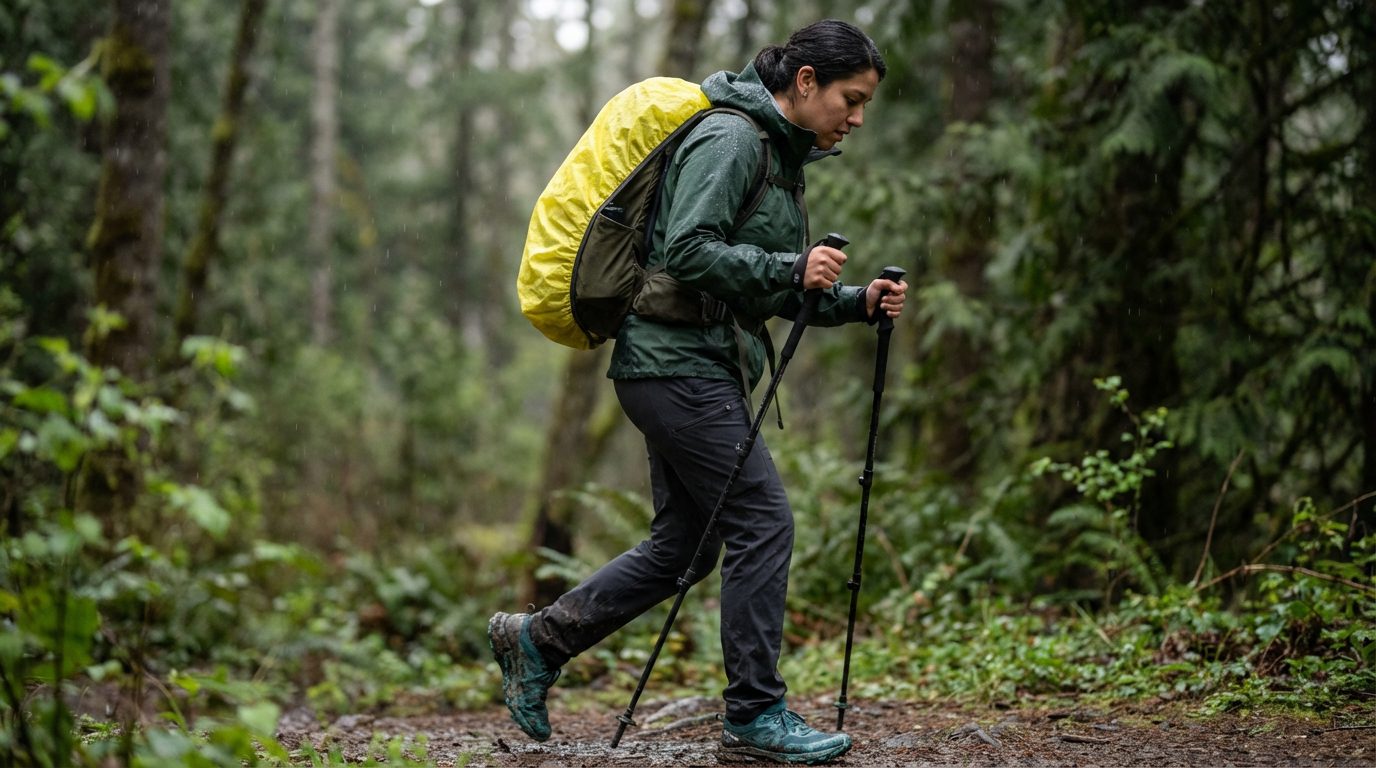
Hiking in the Rain Tips: When to Go & When to Turn Back
WET WEATHER & TRAIL SAFETY

HIKING IN THE RAIN TIPS: WHEN
TO GO & WHEN TO TURN BACK

⚡ Direct Trail Answer
Hike safely in rain by wearing synthetic base layers beneath a waterproof shell, monitoring stream crossing levels, turning back before lightning or flooding begins, and walking through puddles to protect trails.
Published by Fama Blog
STEP 01 • WATERPROOF SHELL
WEAR 3-LAYER DWR WATERPROOF HARDSHELLS
RAIN JACKET SPECIFICATION • 20,000MM HYDROSTATIC HEAD

Non-breathable rain slickers trap bodily sweat against your skin, causing internal dampness and rapid evaporative heat loss. Choose a high-performance three-layer shell featuring durable water repellent coatings, taped internal seams, and underarm mechanical ventilation zips.

💡 💡 ACTION: Reapply wash-in DWR fluoropolymer treatments every season to maintain fabric breathability and prevent surface water wetting.
🏛️ Verified Standard: American Hiking Society Rain Gear Protocol: Breathable waterproof membrane construction maintains an internal microclimate that prevents exertion-induced moisture buildup and subsequent hypothermic chill.
Published by Fama Blog
STEP 02 • THE COTTON KILLER
NEVER WEAR COTTON FABRIC IN WET WEATHER
FATAL TRAIL HYPOTHERMIA • 3X WATER RETENTION

Wet cotton loses all thermal insulation properties and clings to skin, drawing core body temperature down twenty-five times faster than ambient air. Wear strictly hydrophobic polyester, polypropylene, or high-grade merino wool next to your bare skin.

💡 💡 ACTION: Pack a dry fleece insulating layer sealed inside an airtight silicone dry sack as an emergency dry reserve.
🏛️ Verified Standard: Wilderness Medical Society Environmental Exposure Consensus: Cotton clothing in wet, windy conditions under fifty degrees Fahrenheit represents the leading contributor to accidental recreational wilderness hypothermia.
Published by Fama Blog
STEP 03 • STREAM HAZARDS
TURN BACK AT ENGORGED STREAM CROSSINGS
HIGH FORCE FLUID DYNAMICS • KNEE-HIGH CURRENT THRESHOLD

Rainstorms rapidly engorge mountain creeks into torrential, debris-laden floodwaters. Never attempt to wade across any swift river running above your knees, where powerful hydrodynamic water forces can easily sweep your feet out from beneath you.

💡 💡 ACTION: Unbuckle your backpack hip belt and chest sternum strap before entering any required backcountry stream crossing.
🏛️ Verified Standard: National Park Service River Safety Directives: Swift knee-deep alpine water exerts sufficient hydrostatic pressure to knock adult hikers off balance into turbulent rocky hydraulics.
Published by Fama Blog
STEP 04 • TRAIL TREAD DEFENSE
WALK DIRECTLY THROUGH TRAIL MUD PUDDLES
LEAVE NO TRACE INTEGRITY • ZERO TRAIL BRAIDING

Skirting around standing mud puddles widens trail treads and destroys fragile roadside groundcover, creating unsightly parallel braided tracks and accelerated gully erosion. Wear waterproof hiking boots and gaiters, stepping boldly directly through the centerline mud.

💡 💡 ACTION: Plant both trekking poles firmly in the puddle center to test depth and stabilize footing before stepping forward.
🏛️ Verified Standard: Leave No Trace Center for Outdoor Ethics Principle 2: Walking directly through the center of muddy trail treads preserves surrounding vegetative borders and stops destructive erosion patterns.
Published by Fama Blog
STEP 05 • LIGHTNING PROTOCOL
DESCEND BELOW RIDGELINES DURING STORMS
IMMEDIATE TERRAIN RETREAT • 30-30 LIGHTNING RULE

When rainfall intensifies into thunderous convective squalls, immediately evacuate high exposed summits, ridges, and open alpine meadows. Seek shelter within uniform stands of low-stature trees, avoiding lone tall conifers, metal wire fences, and shallow rock overhangs.

💡 ⚡ PRO RULE: If lightning flashes and thunder sounds within thirty seconds, adopt the lightning crouch on your foam pad.
🏛️ Verified Standard: National Oceanic and Atmospheric Administration (NOAA) Mountain Weather Safety: Cloud-to-ground lightning preferentially strikes high topographic projections; descending five hundred vertical feet drastically lowers strike probability.
Published by Fama Blog