

Most rain hikes are fine. That is the honest starting point, and most hiking in the rain tips content skips it because alarm gets more attention than reassurance.
⚡ Quick Trail Takeaways
- Layering Strategy: Wear breathable waterproof hard shells with pit zips and moisture-wicking synthetic baselayers. Zero cotton.
- Slip Hazards: Wet exposed roots and mossy granite have 70% less friction; take shorter, flat-footed strides.
- Turnaround Conditions: Rising stream crossing levels, dropping temperatures near 34°F (hypothermia zone), and thunder require turning back.
Rain changes the trail surface, reduces visibility slightly, and makes your gear work harder. It does not automatically make a hike dangerous. The two things that actually turn a wet hike into a hazardous one are lightning and hypothermia, and both follow specific, predictable rules. Lightning has a measurable distance threshold you can monitor in real time. Hypothermia has a temperature and wetness combination that produces it consistently. Neither one is random. Both are manageable if you know the thresholds before you leave.
I have turned around on a trail in rain that, looking back, was probably fine. I have also stayed on a trail in weather that escalated faster than I expected, and that second experience changed how I plan. A storm moved in over a ridge in the San Gabriel Mountains on a July afternoon and the gap between “distant rumbling” and “I need to move now” was roughly 11 minutes. I was off that exposed section before the count hit 30. That specific situation is behind several of these hiking in the rain tips.
🥾 Oliver’s Trail Notes & Field Observations
Hiking in light drizzle can be peaceful, but rain transforms Southern California mountain trails rapidly. When testing waterproof-breathable shells along the Mt. Wilson trail during winter rains, I learned that waterproof boots eventually fill with water running down your legs, creating heavy sloshing weights. More critically, decomposed granite and clay soils turn into slick, peanut-butter mud that clogs shoe tread and dramatically increases slipping hazards.
What Rain Actually Does on a Trail
The difference between wet and dangerous
Rain on a maintained trail below treeline, at temperatures above 50°F, with no lightning: this is wet hiking. Not dangerous hiking.
The trail surface becomes slippery. Roots and rocks require shorter steps and more deliberate footing. Your gear gets wet if any layer is not waterproof. These are preparation and discomfort problems. They are not emergencies.
The conditions that escalate rain from inconvenient to genuinely hazardous are specific:
- Lightning within 6 miles of your position on exposed terrain
- Sustained rain combined with temperatures at or below 50°F and any wind (the hypothermia window)
- Flash flood terrain: slot canyons, narrow river drainages in heavy rain
- Steep sections with wet loose gravel and a significant drop-off consequence
Rain that does not include any of those conditions is wet hiking. Know the difference before you leave.
Why lightning and hypothermia follow rules you can learn
Lightning is predictable enough that NOAA’s National Weather Service publishes real-time storm tracking for every US region. The 30-30 rule gives you a proximity threshold you can apply without any tools beyond counting.
Hypothermia is equally rule-governed. According to the National Outdoor Leadership School (NOLS), most backcountry hypothermia cases occur between 30°F and 50°F, not at freezing temperatures. People dress for cold but not for wet and cold simultaneously. That combination is what these hiking in the rain tips address directly.
💡 Trail Tip: A rainy day hiking guide that treats all rain equally is not useful. The question is not “is it raining?” It is “is there lightning in the forecast, and what is the temperature at trail elevation?”
Answer those two specifically and most rain-or-no-rain decisions answer themselves.
Hiking in the Rain Tips: 7 Rules for Good Decisions
Rule 1: Check the mountain forecast that morning, not the night before
The forecast you checked at 9 PM last night does not govern your hike at 8 AM tomorrow. Mountain weather changes fast, and the morning-of forecast is substantially more accurate for afternoon conditions than the night-before one.
Check weather.gov for the specific mountain zone your trail sits in, not the nearest city. City forecasts undercount rain probability in higher-altitude terrain. Look at the hourly forecast for your actual hiking window, typically 8 AM to 2 PM.
The number that matters most: probability of afternoon thunderstorms. A 30 percent or higher probability on an exposed route means start by 7 AM, switch to a sheltered trail, or reschedule. A 10 percent probability on a below-treeline forested trail is manageable if you monitor conditions actively while hiking in. This hiking in the rain tip alone eliminates the most common planning mistake beginners make.
What counts as a concerning forecast for rain hike decisions
- Any mention of afternoon thunderstorms in summer months on exposed terrain: start before 7 AM or pick a different trail
- “Scattered thunderstorms likely”: reschedule unless your full route stays below treeline
Rule 2: Know the 30-30 rule before you leave
This is the most important single piece of lightning safety in any hiking in the rain tips guide, and one of the least widely known.
When you see a lightning flash, count the seconds until thunder. If the gap is 30 seconds or less, the storm is within approximately 6 miles of your position. Move immediately: off exposed terrain, below treeline, away from tall isolated trees and open ridgelines.
Once in a safe position, wait 30 minutes after the last audible thunder before returning to exposed terrain. Not until the rain stops. Thirty minutes from the last thunder.
The National Weather Service calls the 30-30 formula the primary field-usable standard for lightning proximity decisions.
Where to go when lightning is within 6 miles on trail
- Below treeline in a dense stand of shorter trees: yes
- Under a single large tree in an open area: no
- In a cave or rock overhang: no (ground current risk)
- Crouching low with feet together in a low-lying area away from water: yes, if no other option
Rule 3: Know the hypothermia temperature window
Hypothermia is not a below-freezing risk. Among hiking in the rain tips, this one surprises people most. The NOLS-documented danger window is 30°F to 50°F, where people systematically underestimate their exposure.
The key numbers for wet weather hiking gear decisions:
- 50°F to 60°F with rain and wind: Caution zone. A waterproof shell plus an insulating mid-layer is required. No cotton in any layer.
- Below 50°F with rain: Risk zone for hiking rain safety. Full waterproof layering, insulated mid-layer, waterproof gloves, hat. Set a shorter turnaround window. Monitor warmth actively.
- Below 40°F, wet through, over 30 minutes from the trailhead: Turn back.
Early hypothermia signs to watch for: sustained shivering, pale or grayish skin, slowed speech, uncharacteristic clumsiness, and judgment changes that feel normal from the inside. The last symptom is the reason you set your turn-back threshold before you need it.
Rule 4: Pick a trail that stays below treeline in uncertain weather
When the forecast includes any possibility of afternoon thunderstorms, below-treeline trails are not a compromise. They are the correct call.
Above treeline means exposed ridges and open summits where nothing stands between you and a lightning strike. Below treeline means tree cover and shelter from wind-driven rain. For rainy day hiking guide decisions: an exposed 4-mile ridge in a 30 percent thunderstorm forecast is a worse choice than a 6-mile forested loop in the same forecast. Trail length does not govern the risk. Exposure does.
If any part of your route goes above treeline and afternoon thunderstorm probability is above 20 percent: plan to clear that exposed section by noon. That means starting before 7 AM.
Rule 5: Layer from the skin out for wet conditions
How to stay dry hiking requires every layer doing its job. This hiking in the rain tip is about the full system, not just the outer shell.
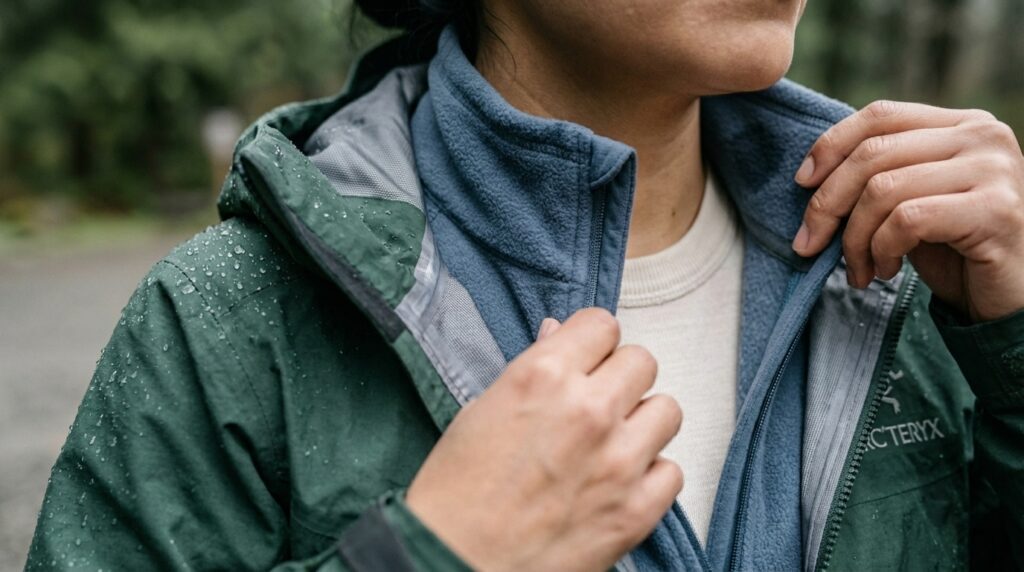
Base layer: Moisture-wicking synthetic or merino wool. Cotton holds moisture against your skin and accelerates heat loss. On any rain hike below 60°F, cotton in any layer touching your body is a real risk.
Mid-layer: Synthetic fleece or synthetic insulation. Down loses most of its insulating capacity when wet unless it is hydrophobic-treated. In sustained rain, synthetic is the reliable choice.
Outer layer: Waterproof with taped seams. Not water-resistant. Water-resistant fabric saturates in 15 to 40 minutes of sustained rain. A waterproof shell holds indefinitely.
What beginners consistently miss: gloves, socks, and a pack cover. Wet cotton hiking socks cause blisters and accelerate foot cold. Wool or synthetic socks only. A soaked daypack negates your dry layers if you have no internal waterproof bags.
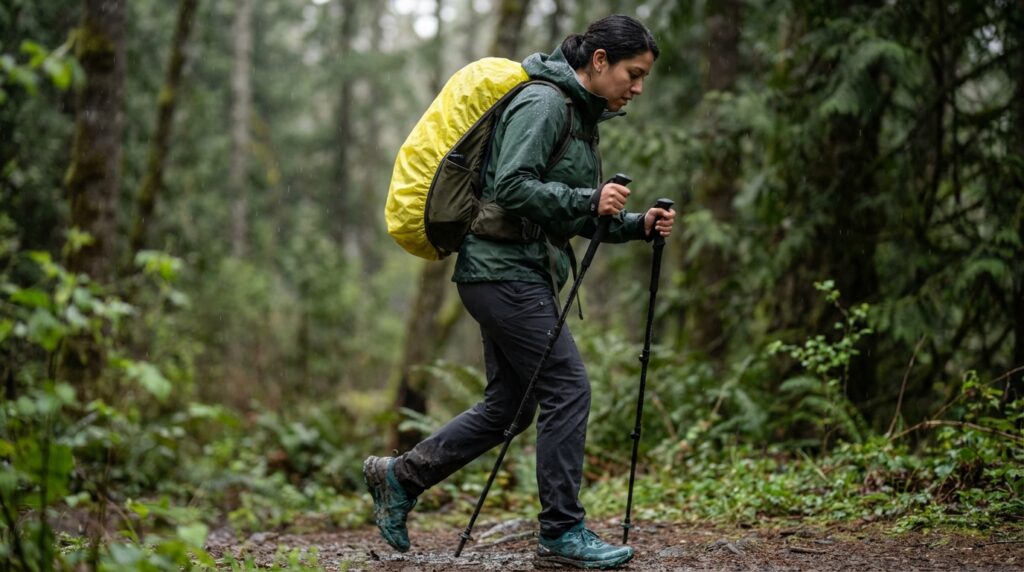
Rule 6: Use trekking poles on wet trail
This is the most underused of the hiking in the rain tips for beginners. Trekking poles on a wet maintained trail reduce fall risk more than any footwear upgrade for most hikers.
Wet roots, wet rocks, and wet clay all become significantly slicker than dry versions of the same surface. Poles give you two additional contact points and let you test footing before committing weight. On downhills, the most slip-prone wet section, they reduce knee load and give you a recovery when your foot slides.
The specific use: plant before you step. Not after you slip. Use them actively on every uncertain footfall.
Rule 7: Name your turn-back threshold before you start hiking
This hiking in the rain tip is the rule the other six build toward. In the parking lot, before anyone is tired or emotionally committed to finishing, name the condition that means you turn around.
Three thresholds to state out loud:
- “If the flash-to-thunder gap is under 30 seconds, we descend immediately.”
- “If anyone is shivering and cannot warm up within 5 minutes of picking up the pace, we turn back.”
- “If rain intensifies to [current level] and we are still heading away from the car, we turn back.”
Parking lot decisions, made before the hike starts, are more reliable than the same decisions made mid-trail when you are already cold, wet, and a mile from the turnaround.
🥾 Flash Flood & Rockfall Turnaround Triggers
I have a non-negotiable turnaround rule: if rain turns steady and heavy, or if I notice muddy runoff cascading down canyon walls, I immediately reverse course. Narrow canyons like Eaton Canyon or the East Fork become lethal flash flood chutes within an hour of torrential downpours. Furthermore, steep slopes above Angeles Crest Highway frequently shed loose shale and boulders during sustained storms.
When to Change Your Plan
🔴 Turn Around Now
- You see lightning or the flash-to-thunder gap is 30 seconds or less and you are on or near exposed terrain
- You or a hiking partner has been shivering continuously for more than 10 minutes despite sustained movement
- The trail is wet loose gravel on a steep section with a significant drop consequence
- Water is flowing actively across the trail in a narrow canyon or creek drainage
- Temperature is below 40°F, you are wet through your outer layer, and the trailhead is more than 30 minutes away
🟡 Slow Down and Reassess
- Thunder is audible but the flash-to-thunder gap is consistently more than 30 seconds
- You are cold but generating body heat through movement and shivering stops when you increase pace
- Trail is muddy and slick but flat or gently inclined with no drop-off consequence
- Rain is intensifying and you are still moving away from the trailhead
✅ You’re Fine: Keep Going
- Rain is steady but no lightning and no audible thunder
- Temperature is above 50°F and you have a full waterproof outer layer and moisture-wicking base
- Trail surface is wet packed dirt or gravel on moderate terrain with no consequential drop
- You have at least half your water supply, the trail is clearly visible, and your turnaround time has not been reached
One rule for all tiers: When unsure which tier applies, treat it as the higher one. Finishing a hike an hour early is a minor inconvenience. Getting caught in a lightning storm on an exposed ridge or developing hypothermia below 50°F in wet clothes is a real emergency.
Common Mistakes in Wet Weather Hiking
Using the city forecast instead of the mountain forecast
The city forecast is almost always drier and milder than the trail forecast. Trails at 5,000 feet receive afternoon thunderstorms that never touch the valley. Check weather.gov for the specific zone your trail sits in and read the hourly breakdown, not the daily summary.
Treating any rain as dangerous and skipping the hike
This goes the other direction and is worth naming directly. Hiking rain safety is not about avoidance. It is about specific conditions. Light to moderate rain on a forested trail below treeline above 50°F with no lightning in the forecast is a legitimate hike. The right call is to cancel the exposed ridge in a thunderstorm forecast, not to cancel the forested trail because it is drizzling.
Cotton anywhere in your layering below 60°F
Cotton absorbs moisture, holds it against your skin, and accelerates heat loss in the exact conditions where that heat loss is dangerous. Synthetic or wool in every layer that touches your body. This rule has no weather-dependent exceptions when temperature is below 60°F and rain is present.
Hiking in the Rain Tips: FAQ
Is hiking in rain okay for an absolute beginner?
Is hiking in rain okay for a beginner? Yes, with specific conditions in place. The core hiking in the rain tips apply here: a trail under 4 miles, below treeline, above 50°F, with no lightning in the forecast and a proper waterproof outer layer is a legitimate first rain hike. The mistake most beginners make is either avoiding rain entirely or not checking the lightning forecast specifically. Check the mountain forecast that morning. If it shows any afternoon thunderstorm probability and your trail has exposed sections above treeline: wait for a cleaner day.
What is the most important piece of wet weather hiking gear?
A waterproof shell with taped seams is the highest-priority single piece of wet weather hiking gear for most beginners. Not water-resistant. Waterproof. Look for a hydrostatic head rating above 10,000mm for reliable protection in sustained rain. After the jacket: wool or synthetic socks matter more than most beginners expect. Wet feet accelerate both blistering and cold faster than almost any other gear failure on a rainy day hiking guide route.
How do I stay dry hiking once I am already on trail?
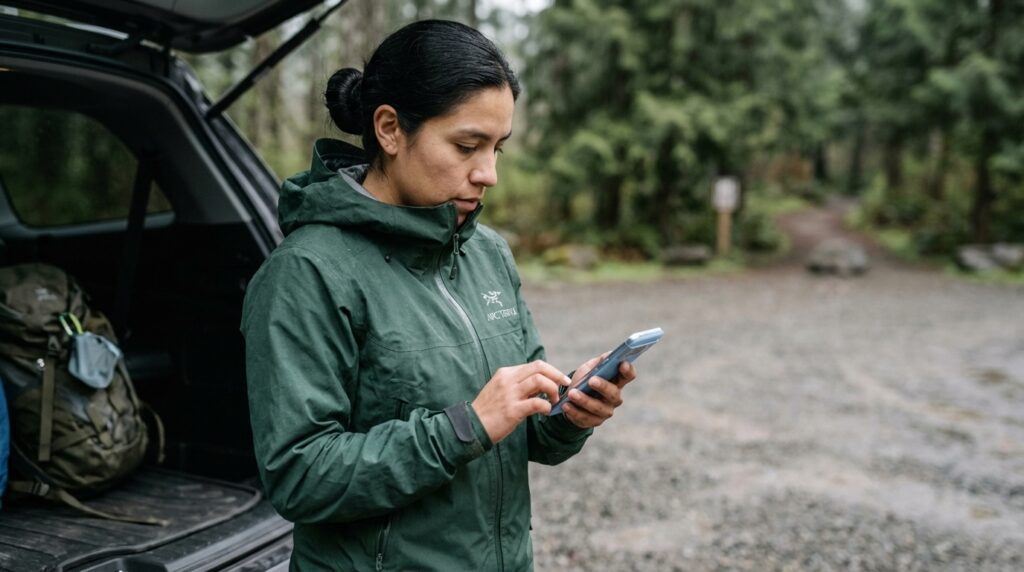
Put on your waterproof shell at the first sign of rain, not after you feel wet. The error is waiting until you are damp, which means moisture is already inside your layers. Applying hiking in the rain tips in practice: the moment rain starts, stop for 90 seconds and put on your shell and pack cover before you continue moving. Pack your phone and paper in a waterproof bag before leaving the trailhead regardless of forecast. Rain builds fast on trail and does not announce itself far in advance.
What should I do if lightning starts while I am on trail?
Count from flash to thunder. If the gap is under 30 seconds: move immediately. Descend off exposed terrain, get below treeline, away from tall isolated trees and open ridgelines. Do not wait for rain intensity to confirm the danger. Under 30 seconds means the storm is within 6 miles. Once you are in a sheltered position below treeline, wait 30 minutes from the last audible thunder before returning to any exposed section.
When is hiking rain safety a genuine concern versus a minor inconvenience?
Hiking rain safety becomes a serious concern the moment lightning enters the picture or the temperature and wetness combination crosses into the hypothermia window: below 50°F, rain, any wind. Outside of those two conditions, rain on a maintained trail below treeline is primarily a gear and comfort issue. A rainy day on a flat forested trail at 65°F is inconvenient. The same rain on an exposed ridge at 45°F with a building afternoon storm is dangerous. The trail and temperature determine the category. Rain by itself does not.
Hiking in the rain tips work because they address the actual hazards, not rain itself. Lightning has a distance rule you can count. Hypothermia has a temperature window you can prepare for. The trail selection, layering, forecast check, and parking lot threshold conversation are not precautions against rain. They are precautions against the two specific things that make rain on a trail genuinely dangerous.
Check the mountain forecast that morning. Dress from the skin out. Name your turn-back threshold before you start. Those three actions cover most of the risk. The rest is wet but manageable.
Next Steps
- Right now: Go to weather.gov and search your nearest mountain range. Bookmark the hourly mountain forecast page. Use it the morning of every hike, not the city forecast.
- Before your next rain hike: Check every layer. No cotton below 60°F. Waterproof outer shell with taped seams. Pack cover or internal waterproof bags for phone and valuables.
- On trail: Name your turn-back threshold aloud in the parking lot before anyone starts moving. “If the flash-to-thunder gap is under 30 seconds, we descend immediately.” Saying it out loud makes it a commitment, not an intention.
Related Reads
Held off on a hike for weeks just because you hadn’t bought “real” hiking boots yet? Here’s the honest truth about hiking in running shoes instead of waiting around for gear you might not even need.
Headed out at whatever time worked for your schedule and ended up either roasting in midday sun or scrambling back in the dark? These 3 rules pin down the smartest time to actually start a hike so the clock works with you, not against you.
Read “exposed trail” in a description and just assumed it meant pretty views, then found out it meant something else entirely? Here’s what exposed trail actually means and why it changes how you should plan the hike.
Layered up like a normal cold day and discovered winter trails come with their own completely different rulebook? Here’s what beginners genuinely need to know before winter hiking, from icy footing to vanishing daylight.
Scrolled through one too many “top trails in America” lists that turned out to be way too advanced for someone just starting out? Here are 15 beginner hikes across the US actually worth trying, no false advertising included.