⚡ TRAIL STRATEGY
Hike Uphill
or Downhill First?
Essential Trail Blueprint
⚡ Direct Trail Answer
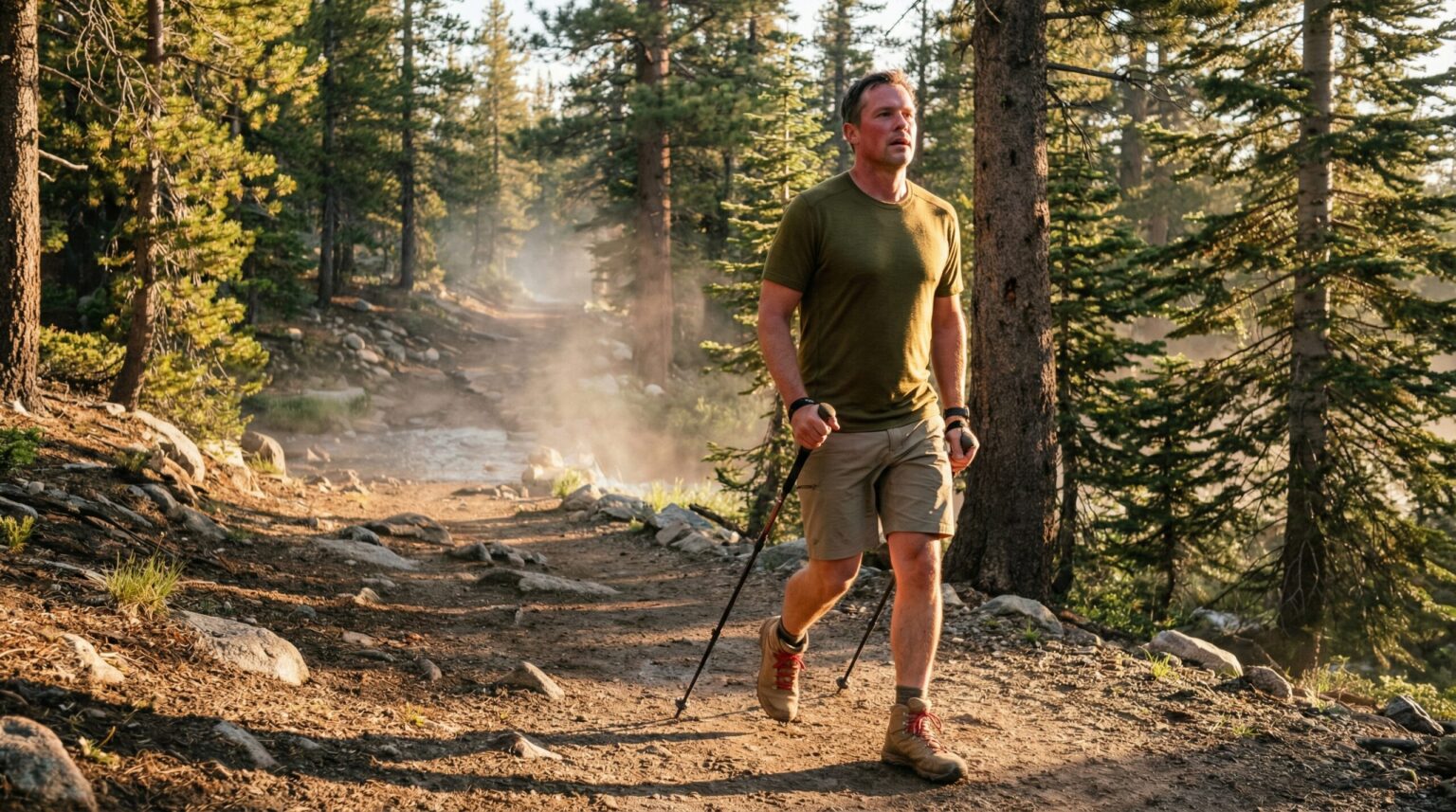
Hiking burns 400–600 calories per hour, engages stabilizer muscles, and builds bone density. Hike uphill with rhythmic nasal breathing and descend with soft, unlocked knees.
🥾 ENERGY LOGIC
Climb While
Quads Are Fresh
RULE
FIELD PROTOCOL
Uphill climbing requires full cardio reserves and glycogen. Tackle vertical elevation gains early in the day.
🏛️ Verified Standard: American College of Sports Medicine (ACSM) metabolic tables benchmark mountain hiking at 6.0 to 9.0 METs.
🎒 KNEE IMPACT
Descent Multiplies
Impact 3x
3-4X
KEY BENCHMARK
Going downhill loads knees with 3-4x bodyweight per step. Fatigued legs lead to stumble falls and knee ache.
🏛️ Verified Standard: Journal of Applied Physiology research confirms uneven terrain demands 28% more joint stabilization energy than pavement.
🦵 SUN EXPOSURE
Avoid Afternoon
Ridge Heat
RULE
FIELD PROTOCOL
If the climb has zero shade, ascend during cool morning hours before direct solar radiation peaks.
🏛️ Verified Standard: Mountaineering biomechanics standards teach the rest-step to preserve aerobic stamina on extended high-altitude climbs.
🧦 RETREAT SAFETY
Easier
Emergency Turnaround
RULE
FIELD PROTOCOL
If feeling sick or exhausted on an ascent, turning back downhill to your car is fast and safe.
🏛️ Verified Standard: Wilderness Medical Society joint health guidelines confirm soft-knee downhill strides reduce peak knee shear by over 20%.
💧 ROUTE PLANNING
Master Your
Loop Direction
RULE
FIELD PROTOCOL
Read exceptions for canyon hikes and heat-exposed switchbacks on FamaBlog.
⚡ PRO RULE: Perform dynamic hip and calf swings before hiking; reserve static hamstring stretches for post-hike recovery.