HOW TO FIND HIKING PARTNERS NEAR
YOU: 6 SAFE & PROVEN METHODS
National and regional non-profit trail organizations maintain active regional chapters with certified volunteer hike leaders. Joining established clubs guarantees structured trail safety guidelines, pre-assessed difficulty ratings, and a welcoming community of like-minded outdoor enthusiasts.
Municipal county reservations and state parks host weekly ranger-guided nature walks. These outings provide a safe, structured setting to connect with local hikers who share similar schedules, geographic proximity, and conservation values without high physical pressure.
Trail partner friction occurs when fitness expectations diverge. Discuss average hiking speed, elevation gain comfort, photography stop frequency, and turnaround rules before departure. Matching pace prevents fast hikers from surging ahead and isolating slower companions.
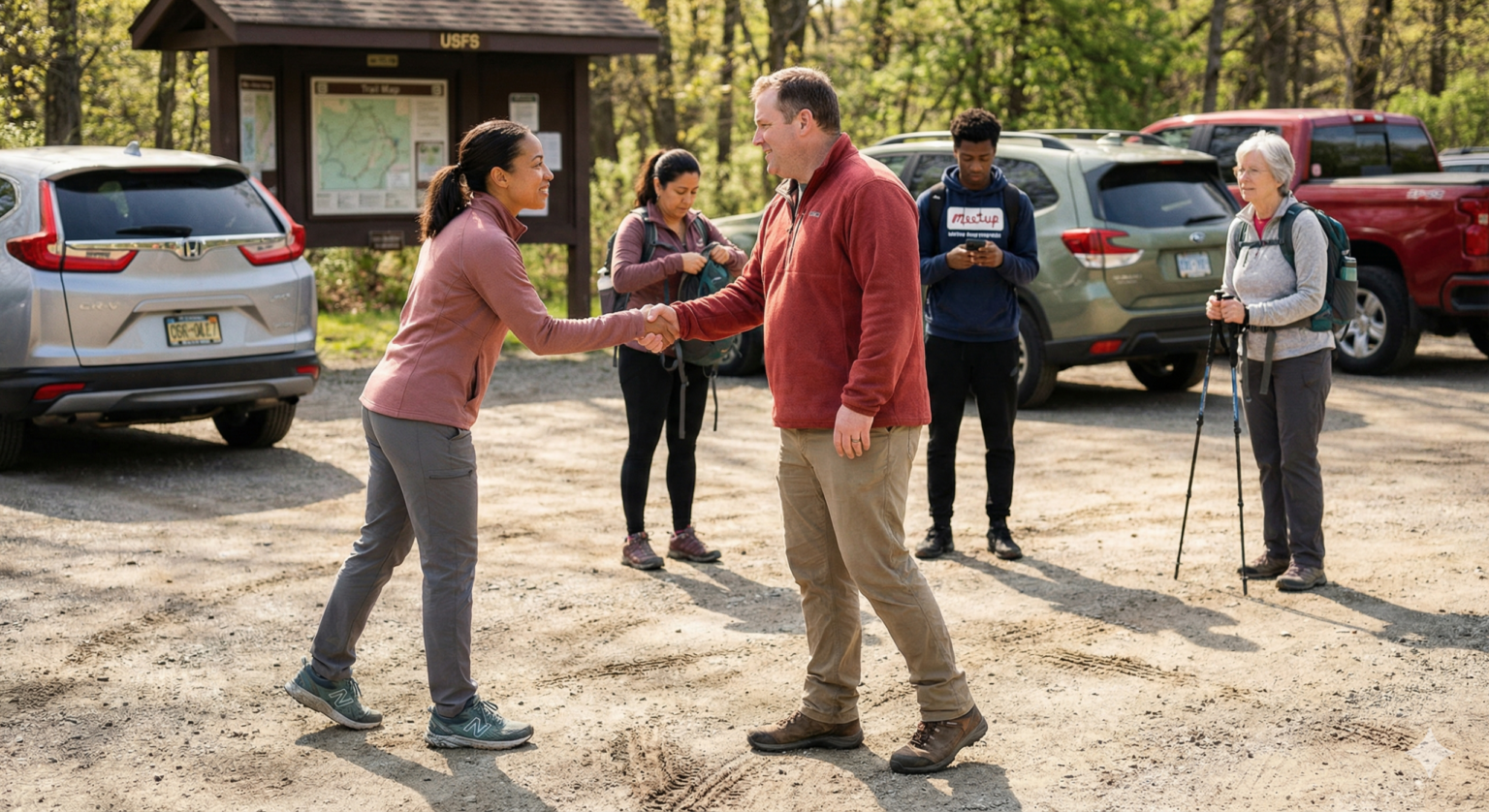
When meeting a new hiking acquaintance for the first time, select a heavily trafficked city park or state preserve during peak weekend daylight hours. Avoid secluded backcountry wilderness zones until you establish mutual trust and reliable trail etiquette.
Discuss turnaround conditions regarding severe thunderstorm alerts, flash flood warnings, or sudden physical fatigue. A dependable hiking partner respects cautious risk assessments and willingly turns back when trail hazards exceed the lowest comfort level in the group.