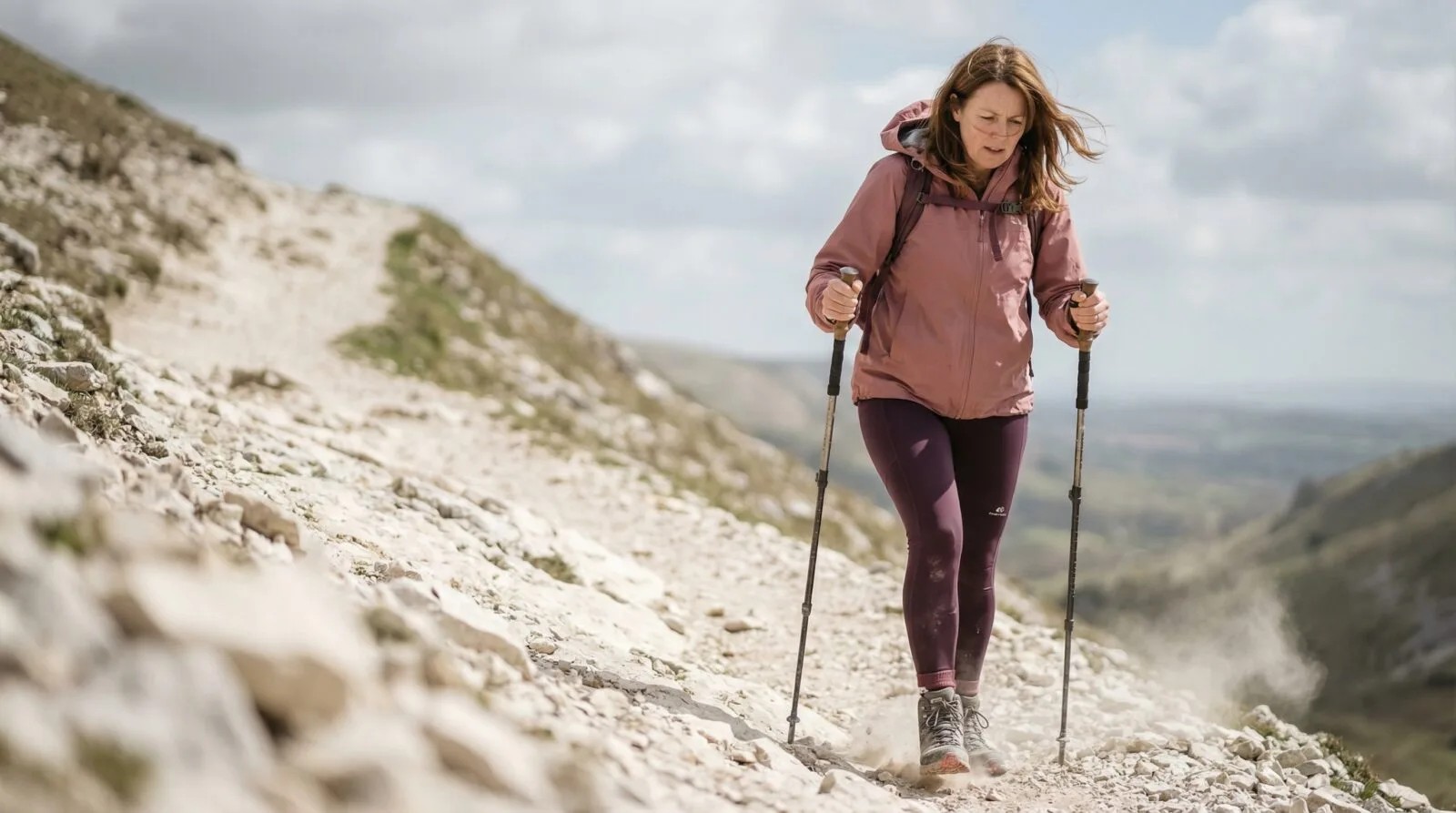
🦵 TRAIL BIOMECHANICS
STOP KNEE PAIN
HIKING
DOWNHILL
5 Clinical Descent Fixes
Downhill descent subjects patellar joints to 3.5 times body weight with every step. Here is how to stop the agony.
SCIENCE • THE LOAD
THE 3.5X FORCE
DOWNWARD MULTIPLIER
3.5XBODY WEIGHT ON
EACH HEEL STRIKE
EACH HEEL STRIKE
When you overstride on a steep decline, your quadriceps contract eccentrically while lengthening, driving intense pressure directly behind the kneecap.
👉 The Math: A 180-lb hiker with a 25-lb pack slams over 700 lbs of force into the lead knee on every step.
FIX 01 • CADENCE
SHORTEN STRIDE
KEEP KNEES SOFT
-50%PEAK DECELERATION
FORCE
FORCE
Cut your stride length in half and increase your step cadence. Land with a slightly bent knee directly beneath your center of gravity rather than locking out your heel.
👉 Tip: Never lock your knees on downhill steps — use quads and glutes as active suspension.
FIX 02 • POLES & ANGLE
LENGTHEN POLES
& EXTEND AHEAD
+5-10CMPOLE LENGTH FOR
DOWNHILL SLOPES
DOWNHILL SLOPES
Lengthen your trekking poles by 5 to 10 cm before starting a descent. Plant both poles slightly ahead to brake your momentum before your foot hits the ground.
👉 Path: Micro-zigzag across wide trail corridors rather than walking straight down the fall line.
ACTION STEP • FULL GUIDE
HIKE DOWNHILL
PAIN FREE
6 FIXESPHYSICAL THERAPY
APPROVED EXERCISES
APPROVED EXERCISES
Read our comprehensive physical therapy guide for eccentric step-down exercises, IT band foam rolling, and compression straps.
Tap below to read the complete downhill knee pain guide.