Trail Blaze Colors & Meanings: Complete Hiker Navigation Guide
TRAIL BLAZES & NAVIGATION

TRAIL BLAZE COLORS &
MEANINGS: COMPLETE HIKER NAVIGATION GUIDE

⚡ Direct Trail Answer
Trail blazes are painted markings or tags on trees: a single blaze marks the continuing path, a double blaze indicates an upcoming sharp turn, and distinct colors indicate main versus side spur trails.
Published by Fama Blog
STEP 01 • SINGLE BLAZE MEANING
FOLLOW SINGLE RECTANGULAR PAINT BLAZES
CONFIRM CONTINUING ROUTE • 2X6 INCH STANDARD

A single painted rectangular mark placed at eye level on a trailside tree indicates that you are safely on the designated trail. Trail maintainers place blazes so that when standing at one blaze, the next blaze is visible ahead in the forest.

💡 💡 ACTION: If you walk for ten minutes without seeing a blaze or trail sign, pause and retrace your steps immediately.
🏛️ Verified Standard: Appalachian Trail Conservancy Blaze Standards: Standard two-by-six inch vertical rectangular blazes provide continuous visual reassurance without intruding excessively upon natural wilderness aesthetics.
Published by Fama Blog
STEP 02 • DOUBLE BLAZE TURNS
DECODE DOUBLE BLAZE DIRECTIONAL SIGNALS
UPCOMING TRAIL TURN • OFFSET DOUBLE BLAZE

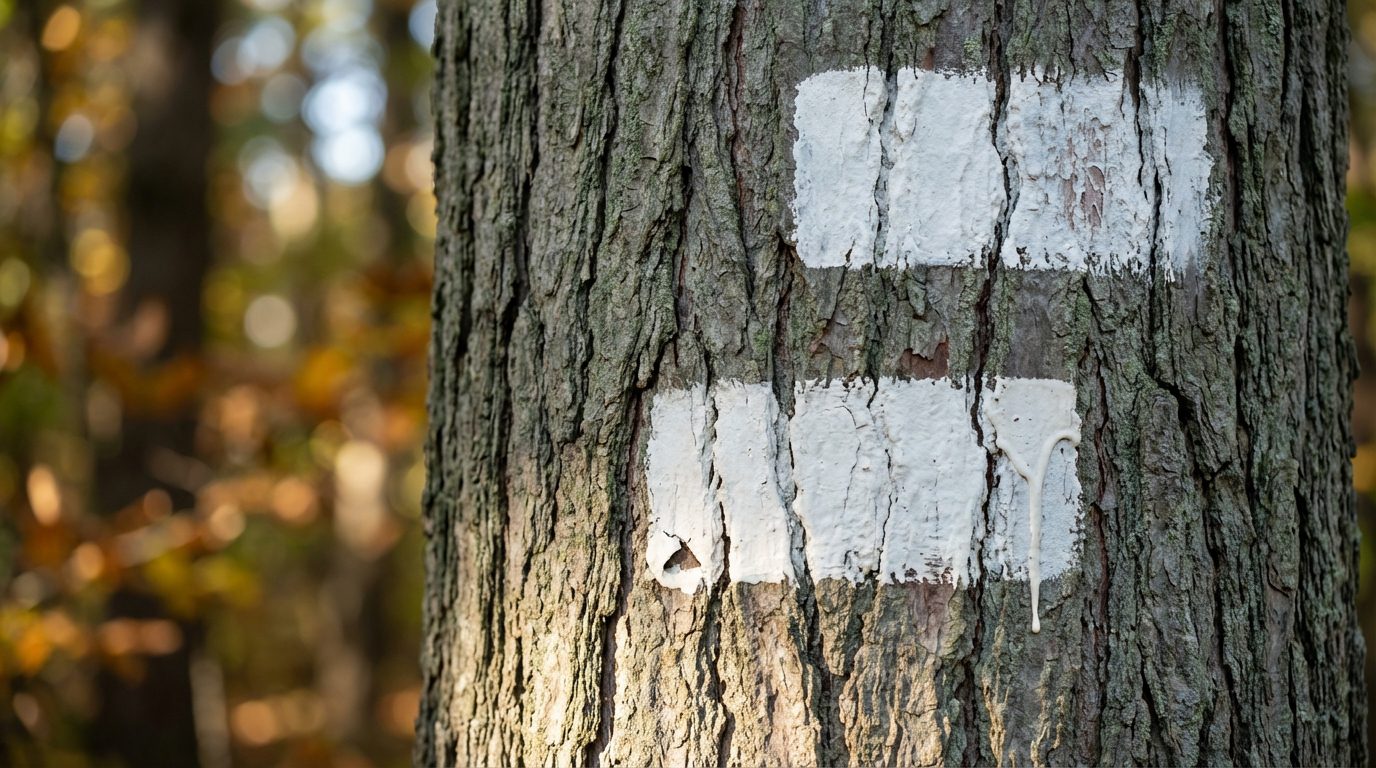
When two blazes appear vertically on a single tree trunk, a sudden trail turn or junction is imminent. If the top blaze is offset to the right, the trail turns right; if offset to the left, the trail veers left.

💡 💡 ACTION: Slow down at double blazes and look carefully to confirm the new tread direction before marching forward.
🏛️ Verified Standard: US Forest Service Trail Sign & Marking Handbook: Offset double blazes serve as mandatory warning indicators alerting hikers to sharp direction changes and switchback transitions.
Published by Fama Blog
STEP 03 • COLOR CODING HIERARCHY
DISTINGUISH TRUNK TRAILS FROM SPUR PATHS
SYSTEM HIERARCHY • WHITE VS BLUE

Parks use color coding to distinguish trail types. Along the Appalachian Trail system, white blazes denote the primary mainline footpath, while blue blazes mark side spur trails leading to water sources, viewpoints, or emergency shelter cabins.

💡 💡 ACTION: Check the park trail map legend to memorize the specific blaze color designated for your chosen route.
🏛️ Verified Standard: National Park Service Sign Guidelines: Distinct color-coded blaze systems establish visual hierarchy, preventing hikers from accidentally straying onto long connecting side trails.
Published by Fama Blog
STEP 04 • ROCK CAIRN ETIQUETTE
RELY ON OFFICIAL ROCK CAIRNS ABOVE TREELINE
DO NOT BUILD FAKE CAIRNS • ALPINE TRAIL MARKERS

Above the alpine treeline where trees cannot grow, trail crews construct conical rock piles called cairns to guide hikers through boulder fields. Never dismantle official cairns, and never build unauthorized decorative rock cairns that confuse lost hikers.

💡 💡 ACTION: Scan for the next distant rock cairn on the horizon when traversing barren, foggy granite alpine ridges.
🏛️ Verified Standard: Leave No Trace Center for Outdoor Ethics Principle 1: Building unauthorized rock cairns misleads hikers into hazardous terrain and violates natural resource conservation ethics.
Published by Fama Blog
STEP 05 • TRIANGLE & CARIN JUNCTIONS
RECOGNIZE THREE-BLAZE TRAIL TERMINUS SIGNS
TRAIL END OR WARNING • TRIANGULAR BLOCKS

Three blazes arranged in a triangular shape indicate the absolute terminus of a designated trail, or a major multi-trail intersection. Stop and consult your topographic map to confirm your next connecting route.

💡 ⚡ PRO RULE: Verify GPS coordinates against your downloaded offline map whenever arriving at three-blaze trail junctions.
🏛️ Verified Standard: American Hiking Society Navigation Protocol: Standardized triangular blaze patterns prevent hikers from wandering past official trail termini into unmaintained wilderness terrain.
Published by Fama Blog