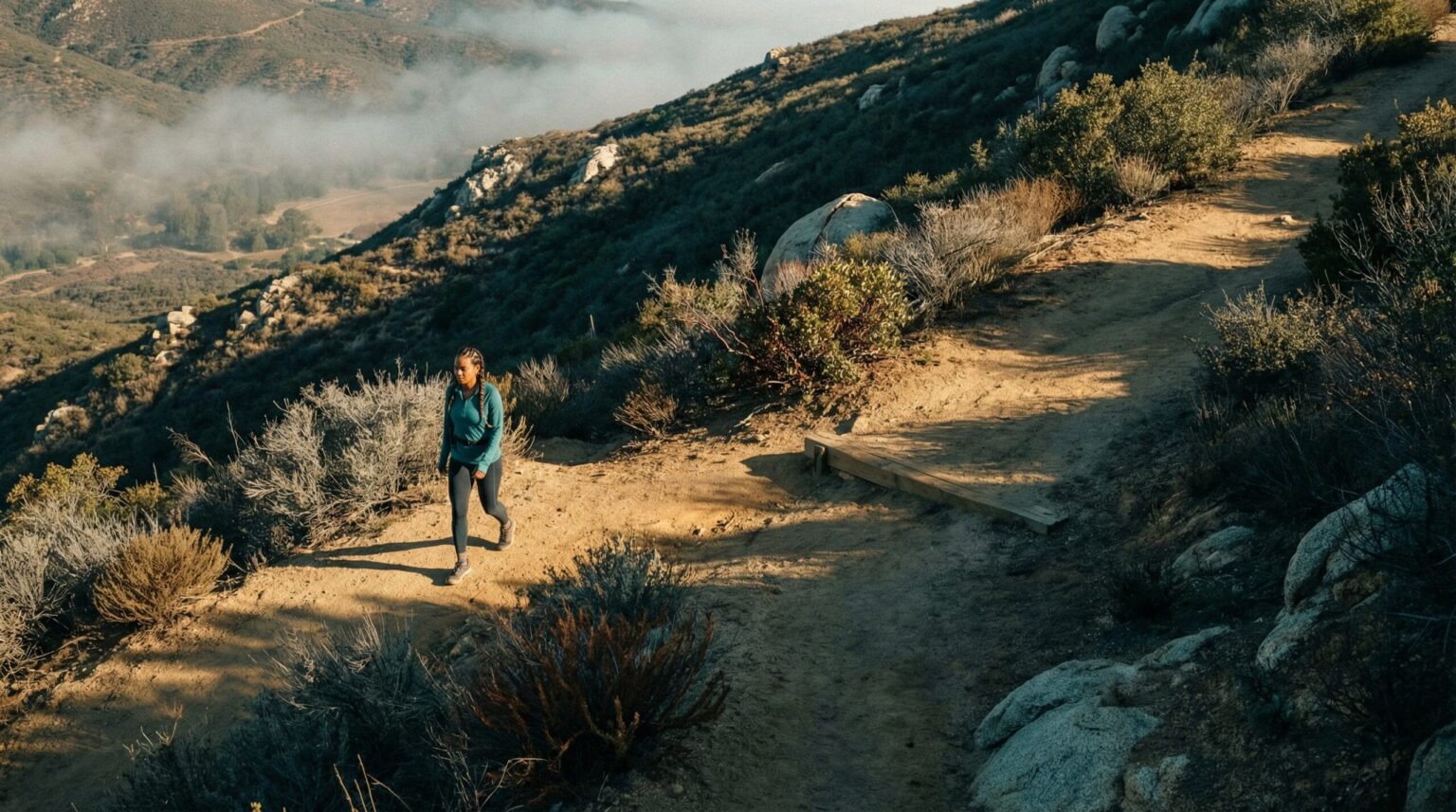
What Are Switchbacks in Hiking?
⚡ TRAIL ARCHITECTURE

What Are
Switchbacks in Hiking?

Essential Trail Blueprint

⚡ Direct Trail Answer

Prepare for sudden weather shifts with 3 functional layers: a wicking base layer, insulating fleece mid-layer, and waterproof breathable shell. Strictly avoid cotton fabrics in cold or wet conditions.

Published by Fama Blog
🥾 GRADE CONTROL

Taming a
40% Grade
to 10%

RULE FIELD PROTOCOL

Switchbacks stretch total mileage to reduce slope angle, keeping steep climbs within human cardio capacity.

🏛️ Verified Standard: National Outdoor Leadership School (NOLS) wilderness curriculum teaches three-layer systems for all climate zones.
Published by Fama Blog
🎒 NO SHORTCUTS

Never Cut
Switchback Corners

RULE FIELD PROTOCOL

Cutting trails creates direct water channels during heavy rain, triggering massive mudslides and erosion.

🏛️ Verified Standard: Wilderness Medical Society hypothermia guidelines explicitly warn that 'cotton kills' in damp mountain environments.
Published by Fama Blog
🦵 UPHILL RIGHT-OF-WAY

Uphill Hikers
Have Right-of-Way

RULE FIELD PROTOCOL

Descending hikers should step aside. Uphill hikers maintain rhythm and have a narrower field of vision.

🏛️ Verified Standard: National Weather Service lightning protocols advise that 'when thunder roars, head to lower ground immediately.'
Published by Fama Blog
🧦 PACING

Rhythmic Step
on Corner Turns

RULE FIELD PROTOCOL

Use corners to take three deep breaths, sip water, and reset trekking pole height for the next traverse.

🏛️ Verified Standard: CDC skin cancer prevention data shows UV radiation intensity increases by 4% for every 1,000 feet of elevation gain.
Published by Fama Blog
💧 CLIMBING GUIDE

Master
Mountain Switchbacks

RULE FIELD PROTOCOL

Discover resting-step rhythm, trekking pole placement, and steep pacing strategies on FamaBlog.

⚡ PRO RULE: Pack an emergency ultralight space bivy; wrapping yourself in reflective mylar reflects 90% of radiated body heat.
Published by Fama Blog