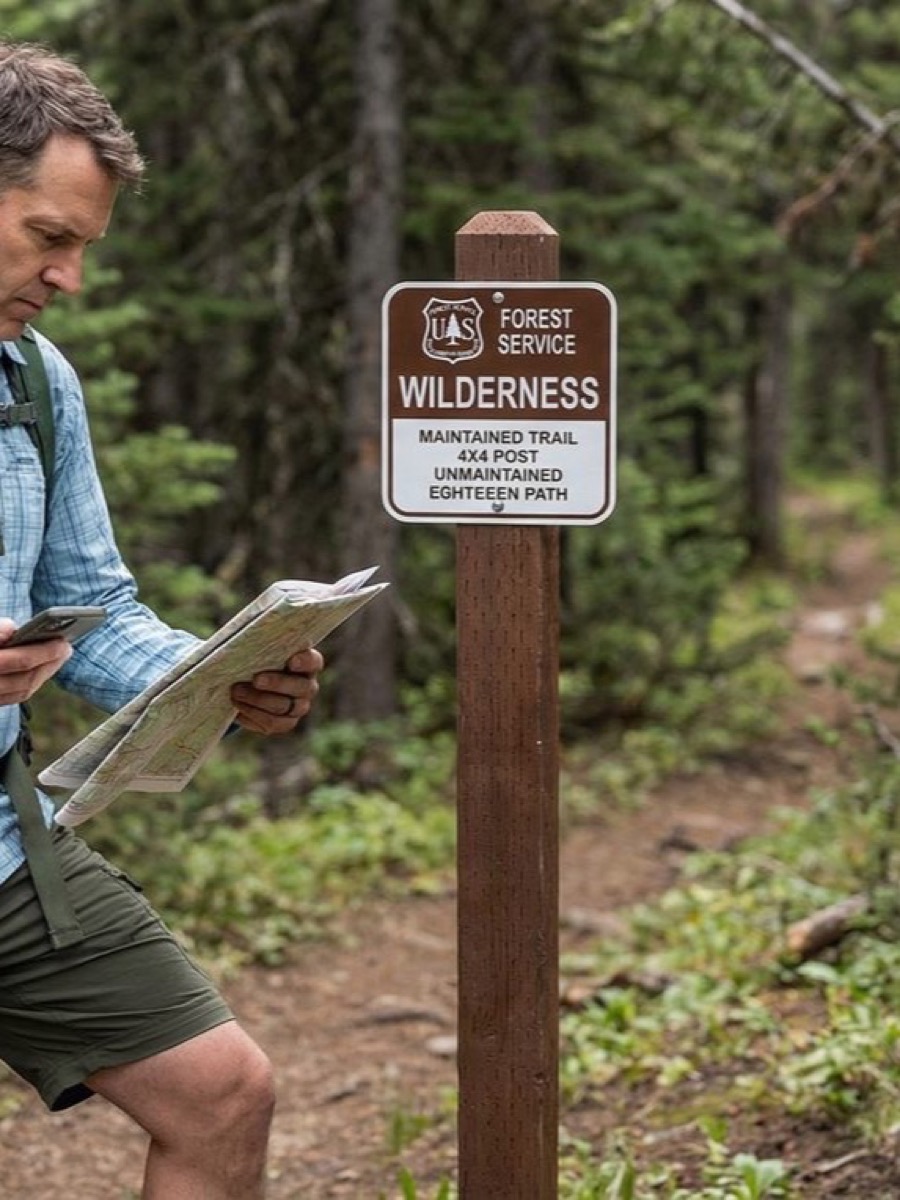
Wilderness Area Hiking: 5 Truths Beginners Ignore
WILDERNESS ETHICS & SAFETY

WILDERNESS AREA HIKING:
5 TRUTHS BEGINNERS IGNORE

⚡ Direct Trail Answer
Hiking in designated Wilderness Areas requires total self-reliance under the 1964 Wilderness Act: expect zero cell service, unbridged rivers, absence of motorized rescue equipment, strict group-size caps, and mandatory pack-it-out waste rules.
Published by Fama Blog
STEP 01 • THE WILDERNESS ACT
UNDERSTAND THE 1964 WILDERNESS ACT
ZERO MOTORIZED/MECHANIZED USE • CONGRESSIONAL PROTECTION

Designated Wilderness Areas are untamed public lands protected by federal law where 'man is a visitor who does not remain.' Bicycles, drones, chainsaws, and all motorized equipment are strictly banned by federal statute.

💡 💡 ACTION: Expect zero man-made infrastructure; trail signs are minimal, rustic, and made only of native unpainted wood.
🏛️ Verified Standard: Wilderness Act of 1964 (Public Law 88-577): Federal law mandates preserving primeval character and wilderness solitude without permanent structures or modern mechanized transport.
Published by Fama Blog
STEP 02 • RESCUE REALITY
PREPARE FOR ZERO CELLULAR COVERAGE
SELF-EVACUATION BUFFER • NO QUICK 911 CALL

Do not expect cellular signal or rapid emergency response. Even with a satellite SOS beacon, remote search and rescue (SAR) teams can take 12 to 24 hours to reach your coordinates on foot or horseback.

💡 💡 ACTION: Pack enough gear, food, and water to survive an unexpected 24-hour outdoor bivouac independently.
🏛️ Verified Standard: National Search and Rescue Association (NASAR) Protocol: Backcountry wilderness rescue is a prolonged multi-hour operation; autonomous survival capability is a mandatory prerequisite.
Published by Fama Blog
STEP 03 • TRAIL HAZARDS
NAVIGATE ROUGH TREAD & UNBRIDGED RIVERS
SCRAMBLING & FORDING • NATURAL OBSTACLES

Bridges are rarely built over wilderness rivers, and fallen timber is cleared slowly with crosscut hand saws. Hikers must ford raging alpine streams, scramble across loose talus fields, and negotiate eroded switchbacks.

💡 💡 ACTION: Carry neoprene water shoes and unbuckle backpack hip straps before wading swift wilderness rivers.
🏛️ Verified Standard: USFS Wilderness Trail Maintenance Standards: Minimal mechanical trail intervention preserves wild primitive landscapes and challenges visitors' outdoor self-reliance.
Published by Fama Blog
STEP 04 • GROUP SIZE LIMITS
COMPLY WITH STRICT GROUP SIZE CAPS
PRESERVE TRAIL SOLITUDE • 10–12 HIKER MAXIMUM

Most Wilderness Areas enforce strict group caps (typically 10 to 12 persons total, including pets). Large groups widen trails, accelerate soil erosion, and degrade the quiet solitude other hikers seek.

💡 💡 ACTION: Check wilderness district regulations and obtain required free wilderness permits at trailhead kiosks.
🏛️ Verified Standard: Leave No Trace & USFS Regulations: Group size restrictions mitigate cumulative campsite soil compaction and prevent irreversible alpine vegetation destruction.
Published by Fama Blog
STEP 05 • LNT ETHICS
PACK OUT ALL HUMAN WASTE & TRASH
100% STERILE CAMPSITES • CARRY BLUE BAGS / WAG BAGS

In fragile alpine or arid wilderness zones, you must pack out toilet paper and sometimes all solid human waste in dedicated WAG bags. Wash dishes 200 feet away from lakes and pack out every micro-scrap of trash.

💡 ⚡ PRO RULE: Camp at least 200 feet (70 adult steps) away from lakes and streams to protect delicate riparian water quality.
🏛️ Verified Standard: Leave No Trace Center for Outdoor Ethics Principle 3: Proper backcountry human waste disposal prevents water contamination, Giardia infection, and visual wilderness degradation.
Published by Fama Blog