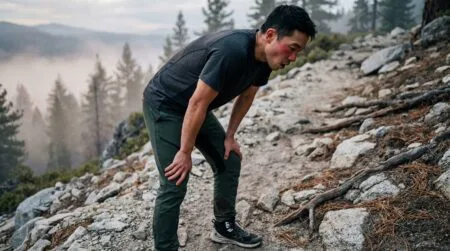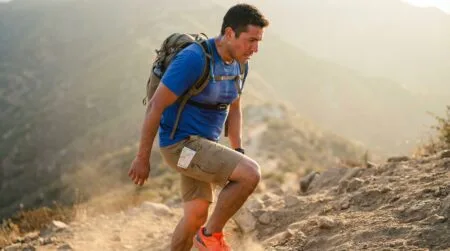



Hiking with friends for beginners is harder to plan than hiking alone, and the reason has almost nothing to do with the trail. It is the people. Specifically: different fitness levels, different expectations, and the particular pressure of not wanting to be the one who slows everyone down or calls for the turnaround.
⚡ Quick Trail Takeaways
- Pre-Hike Route Alignment: Share the exact all-trails map, elevation profile, and expected finish time with all friends before meeting.
- Match Pace to Slowest: The group speed must always be dictated by the hiker with the least trail experience to prevent stragglers.
- Individual Self-Sufficiency: Require every friend to carry their own water, food, and rain layer rather than relying on one person’s pack.
The question most people have before a first group hike is not “which trail should we do.” It is “how do I not make this awkward.” That concern is real, and it is almost entirely solvable before anyone leaves the parking lot.
I organized a group hike the spring I started hiking regularly. Five people, two fitness levels, one trail suggestion that came from the most experienced hiker in the group: 5.6 miles, 900 feet of gain. The two experienced hikers finished feeling like they had done a warm-up. The three of us with fewer than four hikes total finished feeling like we had passed some kind of test we hadn’t studied for. No one was unkind. The trail just created two separate experiences that happened to start at the same car. One person in that group never came hiking with us again.
That hike taught me the thing most first hike with friends planning misses: trail choice comes second. Group expectations come first.
This guide covers 5 specific tips that keep a first group hike from becoming that situation, plus the common mistakes that guarantee it will.
🥾 Oliver’s Trail Notes & Field Observations
Nothing destroys a friendship faster on a trail than an eager leader sprinting ahead and leaving slower friends coughing in the dust at every intersection. On group trips I lead through Icehouse Canyon, the slowest hiker sets the pace, or we place them directly behind the front leader. When the group matches pace, nobody feels humiliated or abandoned, and group cohesion stays strong.
Why Hiking With Friends for Beginners Gets Complicated
What makes a group hike different from hiking alone
When you hike alone, every decision is yours. Pace, stops, turnaround: all of it runs on your preferences with no social layer on top.
A group hike changes all three of those decisions immediately. Your pace affects other people’s experience. Your stop preference puts something implicit on the table. The moment you want to turn around and no one else does, you are making a social negotiation out of a physical one. Most group hiking problems are not trail problems. They are what happens when different fitness levels, different comfort thresholds, and different unspoken expectations meet on a trail without having been talked through first.
The fix is not complicated. But it requires a 5-minute conversation before the hike that most groups skip because it feels unnecessary until the moment it is not.
The pace gap problem that derails first group hikes
Hiking pace is visible in a way that most fitness differences are not. One person stops to breathe and the group either waits or separates. Both create a dynamic. The faster hikers who wait convey something, even if they mean nothing by it. The slower hikers feel it, even when nothing is said.
The pace gap problem in hiking with friends for beginners almost always starts in the planning stage. The group picked the trail based on what the fittest person could handle, not what the least experienced person needs. That one decision sets up everything downstream.
💡 Trail Tip: The right trail for a mixed-ability first group hike is the one the least experienced person finishes with energy to spare.
A trail that leaves one person depleted while others feel under-challenged is a trail selection problem, not a group problem. Fix it before you leave the house.
Hiking With Friends for Beginners: 5 Tips That Keep It Good
My standing opinion on hiking with friends for beginners: the social setup matters more than the trail. Every tip below comes from that position. None of them require special gear, extra fitness, or anyone pretending the pace gap does not exist.
Tip 1: Have the pace conversation at the trailhead
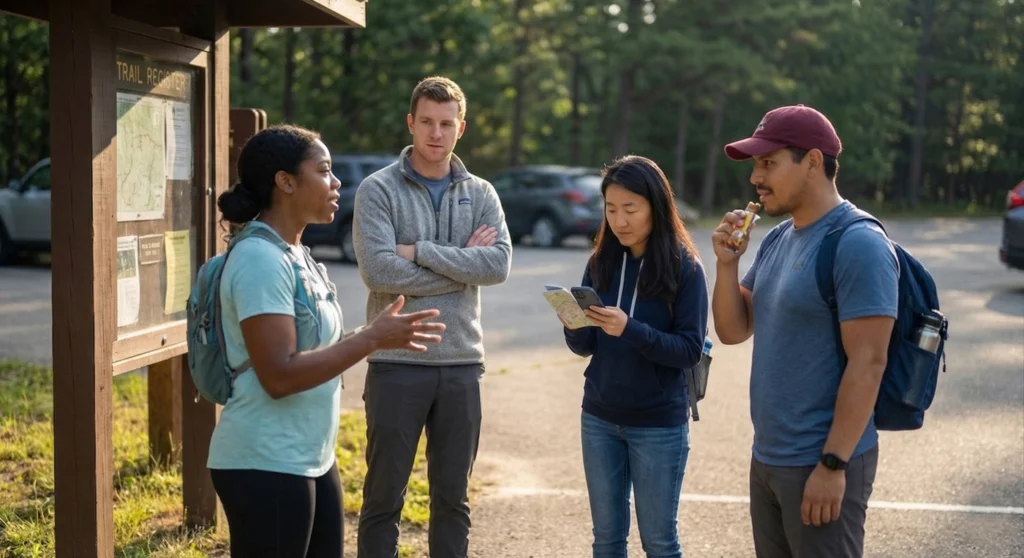
Before anyone starts walking, say this out loud: we are moving at whatever pace the slowest person needs, and no one apologizes for that.
Most groups skip this conversation because it feels awkward to have before anything has gone wrong. The result: everyone starts hiking without an agreement, the faster people pull ahead without meaning to, the slower people push harder than they should to keep up, and by mile two the gap is visible and nobody knows how to name it.
Social hiking tips from people who organize group hikes regularly point to the trailhead conversation as the thing that determines how the hike goes. It takes 90 seconds. The specific version of what to say: “Let’s keep the group together and pace at whatever feels right for whoever needs the most time. If anyone wants to move faster and meet us at a landmark ahead, do that. No issue either way.”
The last sentence is the important one. Giving faster hikers permission to go ahead and regroup removes guilt from both directions: faster hikers are not abandoning anyone, slower hikers are not holding anyone back. Everyone has the same plan.
Tip 2: Pick the trail based on the least fit person, not the most
The single most important planning decision for a first hike with friends is trail selection, and it needs to be made around the person with the least hiking experience in the group.
For a group where at least one person has never hiked before: choose a trail under 3 miles with under 300 feet of elevation gain, well-marked, with an AllTrails easy rating. Read the reviews for mentions of how long average hikers took, not the speed comments. If one person in the group walks regularly but has no trail experience, you can add a mile. If anyone is genuinely new to any sustained walking: stay at 2 to 3 miles.
Experienced hikers will not be bored on an easy trail. They will finish feeling good instead of feeling like they barely warmed up, and they will be more interested in going again. Planning a group hike around the least fit person is not lowering the bar. It is the only way to get everyone back out a second time.
Tip 3: Agree on a turnaround rule before the first step
Decide in the parking lot: the group turns around at a specific time or landmark, regardless of how anyone feels in the moment. Not a loose intention. A rule everyone verbally agrees to before the hike starts.
This matters for hiking with friends for beginners because turning around mid-hike is a much harder social negotiation than agreeing to the rule beforehand. Once people are tired and a mile from the trailhead, the person who wants to stop does not want to be the one to say it. The person with more energy does not want to be the one who cuts the day short. If there is no rule, everyone waits for someone else to call it.
Set the rule in the parking lot when no one is tired and nothing is charged. Suggested format: “We turn around at 45 minutes from the start, unless everyone wants to go longer. The default is 45 minutes.” That framing makes continuing a choice requiring consensus, rather than stopping being a choice that requires someone to volunteer a limitation.
Tip 4: Know exactly what to do when the pace gap shows up
Even with the right trail, the right trailhead conversation, and a turnaround rule in place, a pace gap will appear. One person needs to stop. Two people want to keep moving. This is not a failure of planning. It is what happens when different bodies do the same thing. The question is how to handle it without anyone feeling observed.
Three options, in order of preference for managing hiking pace with others on a first group outing:
Option A: Group moves at the slowest comfortable pace. Everyone stays together. Use this when the gap is small and the slowest pace is still a pace.
Option B: Faster hikers move ahead to a specific, named landmark and wait. Named specifically before anyone separates: not “the viewpoint” if there are two, but “the trail junction at 0.9 miles on the AllTrails map.”
Option C: Faster hikers go to the turnaround point, then hike back and meet the slower hikers on the return. No long waits, no time pressure, both groups get a full day.
The option that creates the most friction: faster hikers slow-walk at the back of the slower group, visibly waiting. It applies pressure without naming it. Option B or C is cleaner than hovering.
Agree on Option A, B, or C at the trailhead. Hiking pace with others goes better when the plan exists before the problem does.
Tip 5: Build in a real stop that has nothing to do with someone being tired
A rest stop that is justified only by someone needing a rest puts the tired person in the position of being the reason for the stop. A scheduled stop at something worth seeing removes that dynamic entirely.
Pick one feature along the trail and frame it as the destination: “we are hiking to the creek and stopping for lunch there.” Now the stop is the point, not an accommodation. The tired person gets to rest without identifying as the tired person. The non-tired people have something to look at other than each other.
Fun hiking activities for group hikes almost always center on this kind of stop: a shared meal, a viewpoint everyone knew about before the hike, a feature worth spending 15 minutes near. The conversation that happens during a 15-minute stop at a creek is often better than the conversation that happened during the whole hike up to it. Build it in deliberately.
One secondary benefit: a planned stop prevents pushing straight through without pausing, which most first-timers do, and arriving at the turnaround wrecked. Ten minutes at the halfway mark changes the return leg for everyone.
🥾 Trail Fork Regroup Protocol
Before leaving the trailhead, I make sure everyone agrees on one fundamental rule: whenever the trail splits or hits a switchback fork, every hiker must stop and wait until all members regroup. On an early excursion near Switzer Falls, a split group took the wrong trail branch, resulting in a stressful two-hour search. Clear communication at trail forks guarantees everyone finishes the hike together safely.
Common Mistakes on the First Group Hike
Letting the most experienced hiker choose the trail
This is the most common planning mistake for a first hike with friends and the one most responsible for groups not going again. The experienced hiker usually means well. The trail they suggest is genuinely enjoyable for them, at their fitness level. For a first-timer in the same group, a 5-mile trail with 800 feet of gain can be a two-hour physical event that leaves them deciding hiking is not for them.
Before suggesting a trail, the most experienced person in the group should ask: what distance can the least experienced person finish comfortably? If no one knows, default to 2 miles with under 200 feet of gain and adjust upward from there on the next hike.
Skipping the parking lot conversation
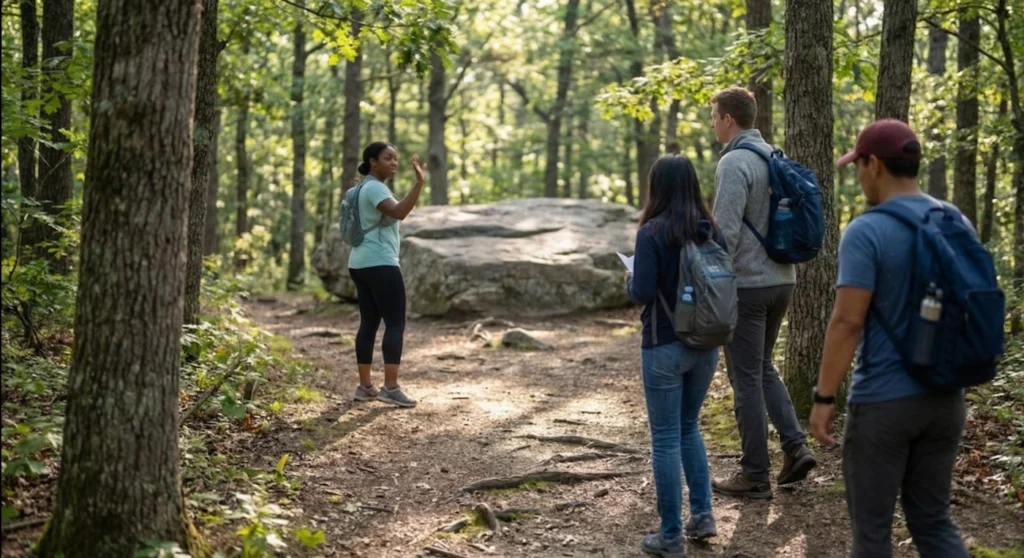
Groups who align on pace, turnaround time, and the split-up plan before the hike starts have better hikes. The 5-minute conversation at the trailhead is the highest-return thing you can do for a first group hike. It does not need to be formal or thorough. “How is everyone feeling about pace today? What is our turnaround?” covers most of it.
Groups skip it because it feels unnecessary. The cost shows up at mile two.
💡 Trail Tip: Each person in the group should download the trail offline on their own phone before leaving cell range.
On a group hike where people might separate, one downloaded map shared between two people stops being useful the moment the phones are 400 meters apart. This takes 90 seconds in the parking lot and covers the primary navigation concern.
Treating the first group hike as a fitness target
Planning a group hike as a workout shapes the entire dynamic. People who fall behind the pace feel the pressure of a missed target, not just tired legs.
A trail that does not require a performance to finish is a better first group trail than an ambitious one, regardless of the experienced hikers’ fitness level.
Not accounting for the pre-hike logistics delay
Group hikes start 30 to 45 minutes later than planned. Someone needs coffee. Parking takes longer than expected. Gear adjustments take twice as long with five people as with one. If you want to start hiking at 8:00 AM, tell the group to meet at 7:15 AM. If you say 7:45 AM expecting an 8:00 AM start, you will start at 8:30 AM. That 30-minute slippage matters if you have a turnaround window in mind or want to beat afternoon heat.
Frequently Asked Questions: Hiking With Friends
How do I bring up pace concerns without making it awkward before the hike?
Frame it as planning, not as a personal limitation. Say: “I want to make sure we are all comfortable with the pace before we start. Should we agree to keep together and move at the slowest person’s speed?” That language is about the group’s plan, not about you specifically. Most people respond well to it because it removes pressure from everyone.
If you are the person worried about your own pace: say exactly that, in the parking lot, before anyone starts moving. “I am not sure how fast I will be today. What should we do if I am behind?” That conversation at the trailhead, before any emotion is involved, is almost never awkward. The same conversation on the trail at mile two, mid-hike, usually is.
What is the right trail distance for a first hike with friends?
For a group where at least one person has not hiked before: 2 to 3 miles, under 200 feet of elevation gain, well-marked, with an easy AllTrails rating. Add a mile if the less experienced hikers walk regularly in daily life. Do not extend the distance because the experienced hikers want more. They can go further on a different day. The first group hike is about the least experienced person finishing well, which makes the second hike possible.
Is it better for hiking with friends for beginners to do a loop or an out-and-back trail?
Out-and-back is better for a first hike with friends. The turnaround point is physical and obvious: you reach it, you turn around. No one has to navigate a new route on the return, and the group can turn around early at any point without abandoning the route entirely. Loops are fine once the group has shared trail experience and everyone is comfortable reading a basic trail map. For a first group hike: out-and-back under 3 miles, then adjust from there.
How should we handle planning a group hike when people have very different fitness levels?
Planning a group hike with mixed fitness levels has one non-negotiable rule: the trail is chosen for the person with the least experience, not the most. Beyond that, the trailhead conversation is where you set the pace and split-up plan. For a very wide fitness gap, Option C from Tip 4 works well: faster hikers go to the turnaround point and hike back to meet the slower hikers on the return. Nobody waits, nobody rushes, both groups get a good day.
What are some fun hiking activities to make a group hike feel less like a workout?
A planned stop with food at a specific trail feature is the most reliable option. The stop does not need to be elaborate. A 15-minute lunch break at a viewpoint or creek crossing, planned before the hike so everyone knows it is coming, changes the structure of the experience from “completing a trail” to “going somewhere together.” Beyond the stop, most group hikers find that the conversation that happens while moving through a quiet space, without the pressure of a table or a scheduled meal, is the activity. It does not need more than that.
What should we tell someone before going on a group hike for safety?
Before any hike, one person in the group should text the trail name, trailhead address, and expected return time to someone not on the hike. The American Hiking Society recommends this as standard trail practice. It takes 90 seconds and is easy to make the trip organizer’s job: send the text before leaving the parking lot. If the group separates on trail, each subgroup should have the trailhead location saved on their own phone and a plan for what to do if the other group does not return by the agreed time.
Hiking with friends for beginners works best when the social logistics are handled before the trail logistics. The right trail for a first group hike is not the most interesting or the longest: it is the one where the least experienced hiker finishes feeling like they want to go again. That outcome is almost entirely determined in the parking lot.
Choose a trail under 3 miles that the least experienced person can finish comfortably. Have the pace and turnaround conversation before the first step. Build in one real stop at a feature worth stopping for. Those three decisions account for most of what goes wrong on a first group hike and most of what makes it go right.
Next Steps
- Right now: Find one trail within 30 minutes of your group, rated easy on AllTrails, under 3 miles. Share the link with the group before any conversation about dates so trail selection is not made in real time under social pressure.
- Before your hike: Have the 5-minute parking lot conversation. Pace approach, turnaround time, and the split-up plan. Each person downloads the trail map offline on their own phone.
- After your first group hike: Ask the least experienced person how they felt about the distance and pace. That answer calibrates the next trail, not the experienced hikers’ assessment.
Related Reads
Ended up trailing behind the whole group, pretending you were “just enjoying the view” while secretly dying inside? Here are 5 rules that keep a group hike moving without leaving anyone behind, pace drama included.
Tried to picture exactly how your first hike would go and kept coming up blank on the actual details? Here’s exactly what to expect so you walk in feeling ready instead of just hoping it works out.
Convinced yourself to push another mile even though your knees were sending a pretty clear signal to stop? Here’s how to actually know when to turn back, before that signal turns into something you can’t ignore.
Tired of scrolling through Facebook groups hoping someone local would respond to your “anyone want to hike?” post? Here are 6 methods for finding hiking partners near you that actually go somewhere.
Wished someone had just sat you down before your first hike and told you the stuff nobody bothers mentioning? Here are 10 things beginners wish they’d known before their first hike, straight from people who learned it the hard way.