

FAMA is reader-supported. When you buy through links on our site, we may earn an affiliate commission at no extra cost to you. Learn more.
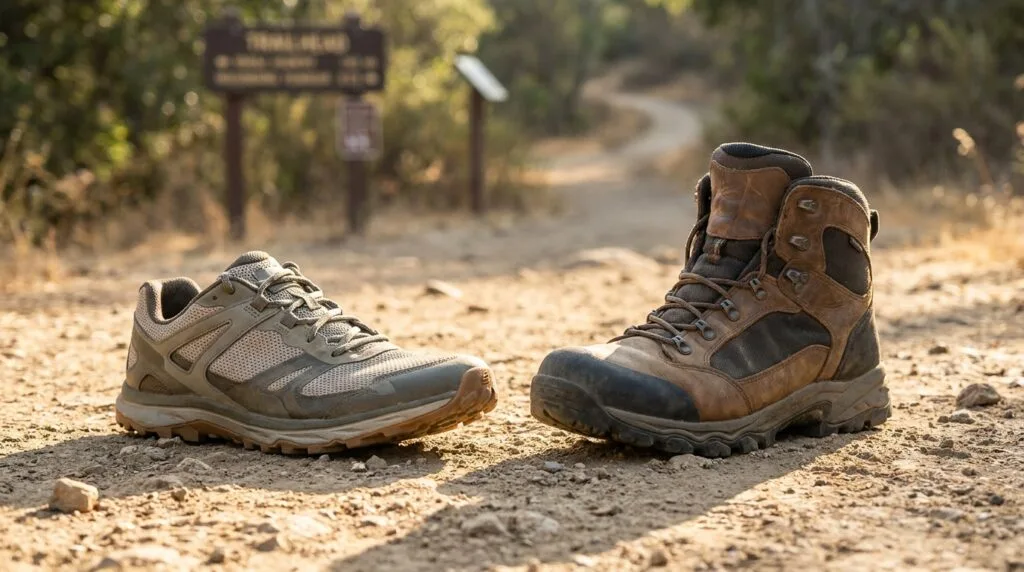
The honest answer on trail runners vs hiking boots: for most beginners on maintained trails under about 8 miles, trail runners win. They weigh roughly half as much, need zero break-in, and won’t leave you limping through your first three hikes while your feet adjust. Boots earn their keep once you’re off-trail, carrying real weight, or gaining serious elevation.
That’s the gear industry’s least favorite sentence, because boots carry better margins and trail runners are the cheaper recommendation. It’s also the sentence most beginners need, because a stiff $200 boot in an REI window looks like the “serious” choice, and looking serious is exactly what a nervous first-timer wants.
What actually decides this for you is simpler than any spec sheet: how far you’re going, what’s under your feet, and how much you’re carrying. Below are the five differences that genuinely separate hiking shoes vs trail runners from boots, the situations where the answer flips, and the one factor most gear guides get wrong entirely.
⚡ Quick Trail Takeaways
- Footwear Weight: Trail runners weigh roughly half as much as boots (20–25 oz vs 40–50 oz), saving significant leg energy on day hikes.
- Terrain Suitability: Trail runners excel on maintained dirt trails under 8 miles; boots are recommended for heavy packs over 30 lbs, scree, or snow.
- Break-in Period: Trail running shoes require zero break-in time out of the box, whereas leather boots require 2 to 3 weeks of conditioning.
Trail Runners vs Hiking Boots: What the Gear Industry Won’t Tell You
Every outdoor retailer wants you to buy the bigger, stiffer, more expensive option first. It photographs better. It has a higher margin. And it plays into a real anxiety: if hiking is new and a little intimidating, a boot that laces up to your ankle feels like protection, even before you’ve taken a step.
REI’s own gear specialists describe this as a genuine debate, not a settled question, and they’re right that terrain changes the answer. But for a first-timer picking footwear for a local day hike, the terrain question usually has a simple answer: it’s a maintained trail, it’s a few miles, and it doesn’t require any specialized traction. That’s exactly the scenario where a $90 pair of trail runners beats a $180 pair of boots.
Fama’s take, stated plainly: you don’t need boots for your first hike, or your fifth. You need boots when the trail stops being maintained, when your pack crosses roughly 30 pounds, or when you’re gaining more than about 1,500 feet in a single push. Outside of those conditions, a stiff boot is solving a problem you don’t have yet, and you’re paying for it in comfort you’ll notice by mile three.

The Real Differences Between Trail Runners and Hiking Boots
| Performance Factor | Trail Running Shoes | Traditional Hiking Boots | Winner for Day Hikers |
|---|---|---|---|
| Average Weight (Pair) | 20 – 26 oz (560 – 740 g) | 40 – 55 oz (1,130 – 1,560 g) | Trail Runners (50% lighter) |
| Break-in Period | 0 miles (Trail-ready out of box) | 10 – 30 miles required | Trail Runners (Instant comfort) |
| Breathability & Drying Speed | High airflow; dries in <60 mins | Low airflow; takes 12–24 hrs to dry | Trail Runners (Quick drainage) |
| Ankle Roll Prevention | Natural proprioception & low center | Rigid collar support (heavy load) | Tie (Context dependent) |
| Heavy Load Support (>30 lbs) | Moderate underfoot cushioning | Stiff shank & torsional stability | Hiking Boots |
| Average Lifespan | 400 – 600 trail miles | 800 – 1,200 trail miles | Hiking Boots |
| Typical Price Range | $80 – $140 | $140 – $240+ | Trail Runners (Budget-friendly) |
Weight: the ounces that add up over miles
A pair of trail runners typically weighs 20 to 25 ounces. A pair of hiking boots typically weighs two and a half to three pounds or more. That’s not a small gap. It’s the difference between carrying roughly a pound and a half extra, split across two feet, for every single step of your hike.
Backpackers have a rough rule for this: a pound on your foot costs about as much energy as five pounds in your pack. It’s an old estimate, not a precise formula, but the direction is real. Lifting extra weight with every stride adds up over a few miles in a way that carrying it on your back doesn’t, because your feet are doing that work thousands of times per hike instead of once.
This is the difference beginners feel first and understand last. Your legs won’t be tired from hiking. They’ll be tired from lifting boots, and it’s easy to blame the trail instead of the footwear.
Break-in time and day-one comfort
Trail runners are, structurally, running shoes with a grippier sole. You can put them on for the first time in the parking lot and hike in them the same day. Hiking boots, especially anything above a mid-cut, are built stiffer, and that stiffness takes time to soften around your specific foot.
REI’s own fitting guidance recommends breaking boots in before your first real trip and trying them on at the end of the day, after your feet have naturally swollen, with the actual socks you plan to hike in. Skip that step and the first hike in a new boot is often the worst one: hot spots by mile two, blisters by mile four, and a bad first impression of a hobby that hasn’t done anything wrong yet.
💡 Trail Tip: Bring your actual hiking socks to the store, not the ones you happened to wear that day.
Cotton socks compress differently than wool or synthetic ones. A boot that fits fine with thin dress socks can rub and blister with the thicker sock you’ll actually wear on trail. This one detail causes more first-hike blisters than the shoe itself does.
Ankle support: what the trail runners vs hiking boots debate gets wrong
Here’s the part that surprises most beginners. The claim that a high boot collar prevents ankle sprains is the single biggest reason people buy boots they don’t need, and the research backing it up is a lot thinner than the marketing suggests.
Multiple studies on ankle sprains, mostly conducted with basketball players and military recruits because that’s where the injury data is richest, have compared high-top and low-top footwear directly. The pattern that keeps showing up: sprain rates don’t meaningfully differ between the two. A rigid boot collar limits how far your ankle can roll in a lab test, but on real, uneven ground, that same stiffness can also reduce the small stabilizing adjustments your foot makes on its own, which may cancel out the benefit.
That doesn’t mean boots are useless for stability. A boot’s wider, stiffer sole genuinely helps you stay upright with a heavy pack on loose or uneven ground, and that’s a real advantage. What it means is that “ankle support” is doing less mechanical work than the name implies, and if your actual goal is fewer rolled ankles, the more useful investment is trail awareness and a shoe that lets your foot feel the ground, not a taller collar.
The exception, and it’s a real one: if you already have a history of ankle injuries, the added stability and habit of lacing snugly around the joint can still be worth it for you specifically. That’s a personal call, not a beginner-wide rule.

Waterproofing versus breathability
Boots are more likely to come with a waterproof membrane. That sounds like an obvious win until you actually wear one on a warm day. REI notes that hiking shoes are typically more breathable than boots, partly because of the lighter upper and partly because that waterproof membrane that keeps water out also keeps sweat in.
Here’s the trade-off nobody puts on the box: a waterproof boot keeps your feet dry in wet grass or a light drizzle, right up until water gets in over the top, at which point it takes hours to dry because the same membrane blocking water from getting in also blocks it from evaporating out. Trail runners get wet faster in the same conditions and dry in under an hour, because there’s nothing trapping the moisture.
For most beginner day hikes on dry, maintained trail, this whole debate is close to irrelevant. It matters when you’re doing creek crossings, hiking through dew-heavy grass at 7am, or hiking somewhere that’s genuinely wet for days at a time. Outside of those situations, breathable and quick-drying beats waterproof and slow-drying.
Durability and cost per mile
This is the one place boots have a real, boring, unglamorous advantage: they last longer. A well-built boot can go multiple seasons before the sole separates or the upper gives out. Trail runners, with their softer midsoles and running-shoe construction, typically need replacing after several hundred miles of regular use, closer to 500 than 1,000.
Do the math on that honestly, though, and the gap shrinks. A $90 pair of trail runners that lasts a season of weekend hikes and a $180 pair of boots that lasts three seasons land in a similar place per mile. The real advantage of boots isn’t that they’re cheaper long-term. It’s that they’re more forgiving of abuse: rocky scrambles, off-trail bushwhacking, and general carelessness that would tear up a trail runner’s mesh upper in a single bad hike.
When Hiking Boots Are Actually the Right Call
If the honest answer above sounds like Fama is anti-boot, it isn’t. Boots are the correct gear for specific situations, and pretending otherwise would be its own kind of dishonesty.
Reach for boots, not trail runners, when any of the following is true:
You’re carrying real weight. Once your pack crosses roughly 30 pounds, which is common on overnight or multi-day trips, the stiffer platform and ankle stability of a boot genuinely help your feet handle load they weren’t built for in a running shoe.
The terrain is technical or unmaintained. Loose scree, off-trail scrambling, or trail sections with no clear tread reward a stiffer sole that protects your foot from rocks and roots, and don’t punish you for the extra weight the way flat, maintained trail does.
You’re gaining serious elevation. Above roughly 1,500 feet of gain in a single hike, the added ankle and underfoot support starts to earn its keep on steep, loose descents where a rolled ankle is more likely.
The conditions are genuinely cold or wet for extended periods. A single warm-weather day hike doesn’t need a waterproof boot. A multi-day trip through consistently wet or near-freezing conditions does, because the insulation and water resistance actually matter over that timeframe.
You have a personal history of ankle injuries. As noted above, this is the one place where individual circumstances override the general beginner guidance.
If none of those apply to the hike you’re actually planning this month, you don’t need boots yet. Buy them when your hiking changes, not before.
Common Mistakes Beginners Make Buying Either One
Buying based on how it looks, not what the trail needs. A rugged-looking boot doesn’t make you more prepared for a 3-mile paved loop. Match the shoe to the actual trail, not to how serious you want to look at the trailhead.
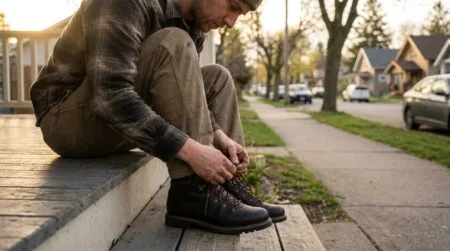
Ordering trail runners in your regular street-shoe size. Feet swell on longer hikes, sometimes by half a size or more. Most experienced hikers size up half a size from their everyday shoe, and it’s worth trying on in person if you can, rather than guessing from an online size chart.
Assuming waterproof means comfortable. A waterproof boot on a warm, dry trail traps heat and sweat for no benefit. Save the waterproofing for conditions where you’ll actually get wet.
Buying the most expensive option first. A $220 boot with GORE-TEX and a rock plate is built for terrain most beginners aren’t hiking yet.
Signs Your Footwear Isn’t Working
You don’t need a rolled ankle to know something’s off. Watch for these instead:
A hot spot in the first mile. That’s a fit problem, not something to push through. Stop, adjust your lacing or sock, and address it immediately. Left alone, a hot spot becomes a blister by mile three.
Your toes jamming forward on descents. This usually means the shoe is too short, or your laces need to be tighter through the ankle to stop your foot from sliding forward inside the shoe.
Your ankle feels unstable on flat, easy, well-maintained trail, even in boots. A boot isn’t a substitute for ankle strength. If it’s rolling on ground this forgiving, the fix is more likely a fit issue or an unfamiliar foot position than a need for a taller collar.

Blisters showing up through the same spot every hike. That’s a repeatable fit or sock issue, not bad luck. Change one variable (sock thickness, lacing pattern, or insole) before you change the whole shoe.
None of these mean you bought the wrong category of shoe. Most of the time, they mean the fit needs adjusting, not the shoe type.
Do I need hiking boots for my first hike?
No. The trail runners vs hiking boots answer for a first hike on a maintained trail under about 8 miles is trail runners. They handle that terrain fine, weigh less, and need no break-in period. Save boots for off-trail hikes, heavy packs over 30 pounds, or serious elevation gain.
What’s the best beginner hiking footwear if I’m not sure yet?
A well-fitting pair of trail runners in the $80 to $130 range is the safest first purchase for most beginners. They work for the widest range of local day hikes, cost less than boots, and let you figure out what kind of hiking you actually enjoy before committing to specialized gear.
Are trail running shoes okay for hiking on regular trails?
Yes, for the vast majority of maintained day-hiking trails. Trail running shoes are built with grippier outsoles than road running shoes specifically for uneven, loose, or wet ground. They’re a poor match only for loaded overnight packs or genuinely technical, off-trail terrain.
Should beginners choose boots or trail runners for their first few hikes?
Trail runners, for most beginners, on most local trails. The exception is if you already know your first few hikes will involve a loaded overnight pack, off-trail sections, or significant elevation gain. If your plans are still that ambitious, start with boots from day one.
Is it fine to hike in regular running shoes instead of trail runners?
For short, dry, well-maintained trails, road running shoes will get you through, but their outsoles are built for pavement grip, not loose dirt or wet rock. If you plan to hike more than once or twice, the traction difference in a real trail runner is worth the extra cost.
How do I know if my hiking shoes actually fit?
They should feel snug through the middle of your foot with room to wiggle your toes, tried on at the end of the day when your feet are slightly swollen, wearing the socks you’ll actually hike in. If your toes hit the front on a downhill test walk in the store, size up.
The Bottom Line
For most beginners weighing trail runners vs hiking boots, trail runners are the right first purchase. They’re lighter, need no break-in, and match the maintained, moderate trails most first hikes actually are. The ankle support argument for boots is weaker than the marketing suggests, and the real reasons to reach for a boot instead, heavy packs, technical terrain, serious elevation, are specific enough that you’ll know when you hit them.
Buy trail runners for the hike you’re actually planning this month, not the backcountry trip you might take next year.
Next Steps
- Right now: Try on trail runners at a store that lets you walk around, with the socks you’ll actually hike in.
- Before your first hike: Wear them on a short walk around your neighborhood to confirm there are no hot spots before trail day.
- After your first hike: Note where any hot spots formed. That tells you whether the next adjustment is socks, lacing, or a different fit.