



The honest answer to building hiking confidence is that it does not come from reading more articles about hiking. It comes from your second hike, not your first.
⚡ Quick Trail Takeaways
- Core Takeaway: Essential insights and actionable trail advice for building hiking confidence when you feel out of place.
- Safety & Preparation: Key preparation steps to ensure safety, pacing, and proper gear selection.
- Best Practice: Proven trail methods to improve your hiking experience and minimize environmental impact.
Your first hike is data collection. You will be slower than the trail description suggests. You will wonder what the hikers passing you are thinking. You will feel, at some point, like you have made a mistake and that this activity is not for you. Every hiker who now does this regularly felt exactly this. The difference between them and someone who quit after one outing is almost never fitness or gear. It is the decision to go again.
I stood in a trailhead parking lot for 11 minutes before my second hike, watching people walk past in coordinated gear, seriously considering driving home. My first trail had been 2.1 miles and I had found it harder than expected, slow in a way that felt embarrassing. I felt out of place in a way that was specific and uncomfortable. I went anyway. That second hike was the one that changed things.
Building hiking confidence is not a mindset you adopt before you leave the house. It is something you develop by doing this badly, then less badly, until one day you realize you stopped wondering whether you belong. This article covers 7 specific steps that speed up that process, plus the mistakes that keep beginners stuck.
Table of Contents
For building hiking confidence when you feel out of place, proper planning, moisture-wicking gear, and steady pacing are essential. Always check trail conditions in advance, carry adequate hydration, and adhere to Leave No Trace principles to ensure a safe and enjoyable hiking experience.
| Topic Spec | Recommended Action | Key Benefit |
|---|---|---|
| Preparation Phase | Check trail conditions & forecast | Prevents unexpected delays |
| Trail Execution | Pace according to terrain difficulty | Saves energy & prevents injury |
| Post-Hike Protocol | Hydrate & inspect gear | Accelerates muscle recovery |
Why Building Hiking Confidence Feels Harder Than It Should
What beginner hiking mindset actually looks like on trail
Building hiking confidence starts with updating one specific mental model. Most beginners arrive on trail expecting to either succeed or fail: do the hike, feel good, become a hiker, or struggle and carry those conclusions forward as if they were permanent judgments.
That binary is the problem. Hiking is a skill with a learning curve, and the early part of the curve feels steep because your body and brain are doing new things simultaneously. Your legs are doing unfamiliar work. Your breathing pattern is calibrating to sustained effort. You are making constant small decisions about footing and terrain. Your attention is splitting between physical effort and the trail ahead. All of that is happening at once, and it is genuinely taxing, not because you are unfit, but because everything is new at the same time.
The beginner hiking mindset that actually produces confidence: treat your first few hikes as orientation, not auditions. You are learning what a mile feels like under your feet. You are learning your pace. You are learning the real difference between tired and done. Every experienced hiker on the trail you are standing on went through the same orientation phase and remembers almost none of it now.
💡 Trail Tip: The first thing to track on your early hikes is not distance or time. Track how you felt at the halfway point.
If you felt fine at the halfway mark and struggled on the return, you opened too fast. Slow your starting pace by 20 percent on your next hike. That single adjustment fixes the most common beginner pacing error.
Why hiking imposter syndrome is so common
Hiking imposter syndrome, the feeling that you do not belong on trail and that every hiker passing you can tell, is close to universal among beginners. The reason is partly social, partly practical.
The social part: most trail conversations are between people who already hike. Most trail content and imagery online shows people in technical gear on dramatic terrain. The visible culture signals competence as the default, and if you are new, you feel correctly that you are on the outside of something. That feeling is real. The conclusion most beginners draw from it, that they do not belong there, is not.
The practical part: your early discomfort is visible to you in a way other people’s discomfort is not. You feel out of breath and assume others can see it. You take a break and assume people are clocking it. What you cannot see is the experienced hiker two turns ahead who is also tired, who also paused at that switchback, and who is also second-guessing her pace.
Outdoor confidence for beginners almost always comes down to this: you are not as far behind as you appear from the inside. You are new, and new feels more visible than it actually is.
Building Hiking Confidence: 7 Steps That Actually Work
Building hiking confidence has almost nothing to do with being fit or having the right gear. It is a response to repetition, and the only way to speed it up is to go more often, even when it goes badly. These are not mindset exercises. They are specific decisions and behaviors that change what happens on the trail. Do all seven and you will feel different about hiking within three outings.
Step 1: Pick a trail where you finish with energy left
The fastest way to build hiking confidence is to choose a trail that is easier than you think you need. A trail rated 🟢 Easy, under 4 miles, under 300 feet of elevation gain, well-signed, is not admitting defeat. It is setting yourself up to end the hike feeling capable rather than wrecked.
The beginner mistake is picking a trail that tests you on the first or second outing. An ambitious early trail produces a difficult experience, and that experience becomes the data point you carry into every hike after it. A manageable trail produces the feeling that this is something you can do. That feeling is what you are actually building toward.
For your first two or three hikes, look for an out-and-back trail under 3 miles on AllTrails with an easy difficulty rating. Read the trail reviews, not just the stats. If reviewers consistently describe it as flat and well-marked, that is your trail.
Step 2: Set your turnaround point before you leave the car
Decide in the parking lot: if I feel uncertain or tired at this specific landmark or time, I turn around. Not a vague intention to listen to your body. A real rule with a specific trigger.
This matters for building hiking confidence because one of the things that most consistently erodes confidence on early hikes is going further than you should and spending the back half of the trail in moderate misery. That is not how the body learns to associate hiking with something it wants to do again.
Set the turnaround before any emotion is involved. Thirty minutes in, the first fork in the trail, the first water crossing: pick one and commit to it before you leave the car. The rule protects your experience and, over time, builds genuine trust in your own judgment on trail.
Step 3: Name the specific fear, not the general anxiety
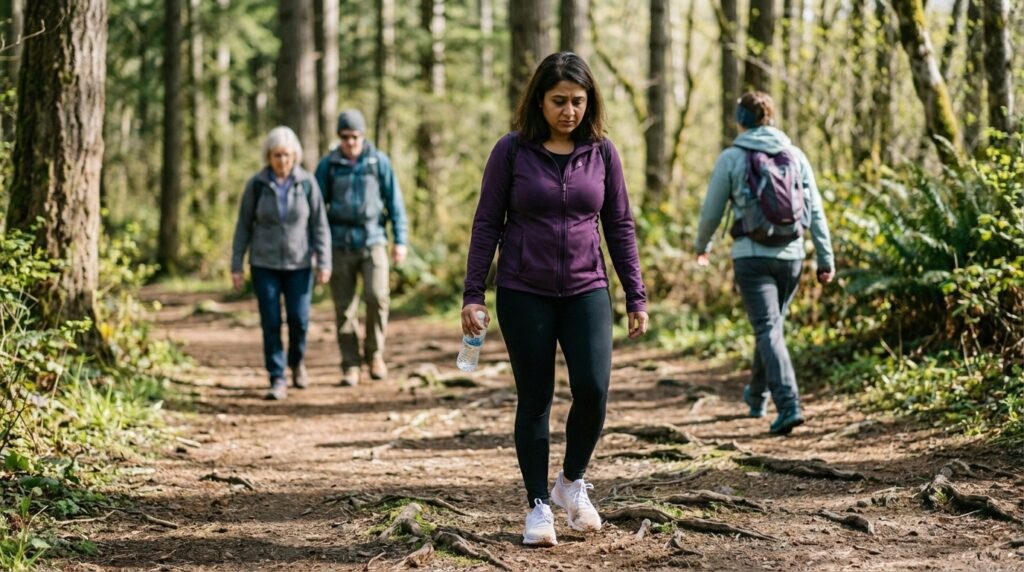
Overcoming hiking anxiety works better when you identify what you are actually afraid of. “I am not a hiker” is not a fear. It is a conclusion drawn from something more specific. The actual fear underneath is usually one of four things: I will slow everyone down. I will get lost. I will not be fit enough to finish. I will look like I do not know what I am doing.
Each of those specific fears has a specific fix. Slowing people down: go alone or with one person who does not care about pace. Getting lost: download the trail map offline in AllTrails or Gaia GPS before you leave cell range. Not fit enough: start with a trail under 2 miles. Looking out of place: no one on the trail is watching you as closely as you think.
Name the fear. Solve it specifically. Then go.
Step 4: Go with one person who isn’t measuring your performance
The person who comments on your pace, draws comparisons to previous hikes, or expresses impatience when you want to turn around is the wrong person for your first three hikes. That social layer introduces pressure that overrides your own judgment about what you need, and building hiking confidence requires trusting that judgment.
The right companion: someone who will be quiet when you need quiet, who will not push you past your turnaround rule, and who finds the walk genuinely enough. Alternatively, go alone. A solo hike on a well-marked, populated trail under 3 miles near a city is safe and, for many beginners, actually easier for building hiking confidence because every pace decision is entirely your own. Going solo on a short, well-trafficked trail with a downloaded offline map is not reckless. For most beginners trying to shake overcoming hiking anxiety as the primary goal, it is one of the better choices available.
Step 5: Track what you did, not what you intended
Log your hike. The specific distance. The elevation gain. The time. Note one thing you noticed: a bird call, a view, a section of trail that was harder than expected. Not for anyone else. For the record.
The reason this matters for outdoor confidence for beginners: when the internal voice says you are not making progress, you will have actual data that says otherwise. Confidence builds from evidence, and evidence requires documentation. Three logged hikes of 2 miles each are more useful to your sense of progress than three hikes you mostly remember as vaguely difficult. You are building the record that the version of you who still feels like a beginner can look back at and use.
Step 6: Expect discomfort and stop treating it as a signal to quit
Hiking does not feel effortless, especially in the opening 20 minutes. Most hikers, including fit, experienced, regular ones, go through a rough adjustment period while the cardiovascular system settles into sustained effort. If you have been mostly sedentary, the first 15 to 25 minutes of a hike often feel harder than anything that follows.
That early discomfort is not a signal that you are failing. It is your body calibrating to the sustained load. Let the first 20 minutes be what they are. If you still feel rough at the 30-minute mark, losing pace noticeably, legs heavy, labored breathing at easy pace, that is useful information about trail choice or pace. But the opening difficulty is not a diagnosis of your capability.
Step 7: Go again within 7 days
This is the step most beginners skip, and it does the most work for building hiking confidence. The gap between hikes matters more than most first-timers expect. If your first hike was three weeks ago, your second hike starts from nearly the same physical and mental baseline as the first.
Hike within a week of your previous outing. Physical adaptations compound quickly in the first 4 to 6 weeks of consistent hiking. The mental shift, from “I am someone who tried hiking” to “I am someone who hikes,” happens through repetition at close intervals, not through a single significant experience. Three hikes in three weeks builds outdoor confidence for beginners in a way that three hikes spread over three months cannot replicate.
Mistakes That Keep Beginners from Overcoming Hiking Anxiety
Starting with a trail that is too ambitious
The trail just beyond your ability is the most common reason beginners do not go back. Not injury. Not boredom. An experience that was harder than it was good, which gets filed away as evidence that hiking is not for them. The resulting gap between outings makes building hiking confidence slower than it needs to be.
Start at 🟢 Easy and stay there for at least two or three hikes. The urge to prove something on the first outing is understandable. Experienced hikers get it. It is also the fastest way to make overcoming hiking anxiety harder than it needs to be.
💡 Trail Tip: Gear does not create confidence. Two liters of water, trail-appropriate footwear, and a downloaded offline map are all you need for a 3-mile maintained trail.
Spending $400 on gear before your first hike is a way of delaying the hike. Buy the minimum, go, then decide what you actually need based on what you actually experienced.
Measuring yourself against hikers who have years on the trail
The hiker passing you is not your comparison point. They have years of physical adaptation to this specific kind of sustained effort. Comparing your second hike to their tenth year does not produce useful information about your capability.
Your comparison point is you, three hikes ago. Your pace today compared to your pace two months ago at the same distance: that is the number that actually means something.
Waiting until you feel ready
You will not feel ready before your first hike, or your second. The feeling of readiness comes after the experience, not before it. Waiting for it to arrive in advance is waiting for something that only arrives the other way around. Pick the trail, set the turnaround rule, go.
Treating one hard hike as evidence about whether you belong
One difficult hike is not information about whether hiking is for you. It is information about that trail, that day, at that fitness level, in those conditions. The sample size is too small to conclude anything useful. Go again with different variables before you draw a conclusion.
What the Mental Benefits of Hiking Actually Feel Like
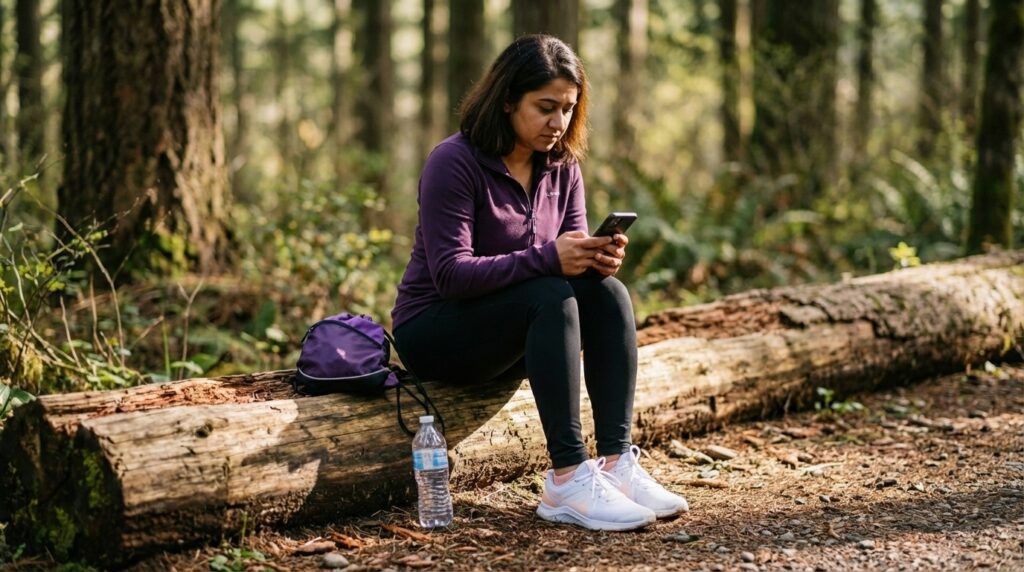
The mental benefits of hiking get described in abstract terms: stress relief, mindfulness, connection with nature. The actual experience is more specific and less poetic than those descriptions suggest.
The first thing most new hikers notice is that a trail requires a particular kind of attention that crowds out other thinking. When you are watching your footing on a rocky section, you are not running your mental to-do list. This is not mindfulness in a formal sense. It is more mechanical: the terrain demands your focus and your mind follows. For a lot of people, an hour of that kind of attention, physical, forward, and concrete, produces a state that feels like rest in a way that sitting down does not.
The mental benefits of hiking that most beginners start noticing around hike four or five: reduced background anxiety during the week, better sleep the night after a hike, and a specific kind of clarity that arrives in the second half of a trail when the effort becomes rhythmic and automatic. These effects are not dramatic in isolation. They are consistent, and most hikers notice their absence on weeks they do not get outside.
The American Hiking Society reports that mental health benefits are the primary reason most hikers continue the activity past their first year. Most beginners do not experience those benefits on the first outing because they are spending the entire hike managing their anxiety about the hike. Building hiking confidence is, in a real sense, creating the conditions where the mental benefits of hiking can finally arrive.
The beginner hiking mindset shift that typically happens around hike five or six is the real turning point. The anxiety about whether you belong starts to recede. You stop thinking about yourself and start noticing the trail: the light changing through the trees, the air getting cooler in the shade, the specific sound the trail surface makes under your feet. That is the experience regular hikers are describing when they talk about loving this. It is not available on the first hike. It comes through repetition.
I do not fully know why the second hike is the one where something shifts for most people. Some hikers I know tell me it was their third. What I can say consistently is that the first hike is almost always harder than everything that follows it, and the gap between first and second is the one most beginners do not get past.
Building Hiking Confidence: FAQ
What are the most common causes of hiking imposter syndrome for beginners?
Hiking imposter syndrome has two main sources. The first is the visible culture gap: the gear, the pace, the vocabulary that experienced hikers use. When you are new, that gap looks like a barrier. The second source is the absence of reference points. You do not yet know what difficult feels like relative to what you are actually doing, what a normal pace is for someone at your fitness level, or what your body is capable of on trail. Both of those resolve through exposure. The more trails you log, the more reference points you develop, and the gap between you and the culture around you narrows from something that feels like exclusion to something that simply means you are earlier in the process.
How long does building hiking confidence actually take?
Building hiking confidence typically happens across 4 to 6 hikes when those hikes are spaced close together, ideally within the same month. The first hike is orientation. The second is usually when the initial anxiety drops from acute to background. By hike four or five, most beginners report that they stopped managing anxiety and started actually experiencing the trail. The timeline extends considerably when hikes are spread weeks apart. Consistency matters more than total hikes completed.
Can you build outdoor confidence for beginners through gym training first?
General fitness helps with hiking, but you can only build outdoor confidence for beginners by being outdoors on trail. Gym time improves cardiovascular endurance. It does not teach trail footing, how to pace on elevation change, or how to read the terrain ahead of you. Those are trail-specific skills that develop on trail. Start with the easiest available option and let the trail teach you.
What is the best beginner hiking mindset for someone who had a bad first hike?
Change the variables, not the activity. Choose a shorter trail. Choose easier terrain. Go on a cooler day. Go alone if the social pressure was part of what made the first experience hard. The beginner hiking mindset that helps here: one bad hike is not information about whether hiking is for you. It is information about that specific trail at that specific time with those specific conditions. Change the inputs and the experience changes with them. Most people who describe their first hike as a failure describe their third or fourth as the one that stuck.
What are the actual mental benefits of hiking for someone anxious about starting?
The specific mental benefits of hiking that most new hikers notice first: reduced background anxiety, better sleep quality the night after a hike, and a particular kind of mental clarity that arrives during the second half of a trail when physical effort becomes rhythmic. These effects are not dramatic in isolation. They are consistent. Most hikers who continue past 6 weeks report noticing their absence on weeks they do not get outside, which is usually the point at which hiking shifts from a challenge to a habit.
How do I stop comparing myself to other hikers on the trail?
You will compare yourself. That is a pattern to notice and redirect, not eliminate. When you catch yourself watching how easily someone passes you, the redirect is specific: look at the trail ahead, not at them. Your pace relative to another hiker tells you nothing useful about your capability or your progress. Your pace today compared to your pace two hikes ago tells you something real. Track your own numbers and ignore theirs.
Is it better to hike alone or with a group for overcoming hiking anxiety?
For overcoming hiking anxiety specifically, alone or with one trusted, unhurried person tends to work better than a group for your first few hikes. Groups introduce a social layer, not wanting to slow others down, not wanting to be the one who calls for the turnaround, that can override your own judgment about what you actually need. A solo hike on a well-marked, populated trail under 3 miles near a city is a safe and often surprisingly calm experience. The American Hiking Society recommends telling someone your plans before any solo hike: the trail name, trailhead location, and expected return time. That step takes 90 seconds and covers the primary safety concern.
Building hiking confidence is not something that arrives when the right conditions finally align. It happens because you went, even when the first hike was harder than expected, and then you went again. The hikers who look like they belong on the trail are not people who started out belonging. They are people who kept going until the feeling of not belonging mattered less than what they were getting from the trail.
Start with a 2-mile flat trail. Set a turnaround time in the parking lot. Log what you did. Go again within a week. Outdoor confidence for beginners builds the same way any kind of confidence builds: through evidence, collected one hike at a time.
Next Steps
- Right now: Find a trail within 30 minutes of home on AllTrails rated easy, under 3 miles. Save it. Look at the trail photos and read the 5 most recent reviews.
- Before your hike: Download the trail map offline while you still have cell service. Tell one person the trail name and your expected return time.
- After your hike: Log the distance, elevation, and one specific thing you noticed on the trail. Review that log before your next outing. That record is the foundation of building hiking confidence through evidence rather than feeling.
Related Reads
Hit that point where your legs could technically keep going but your brain had already given up entirely? Here are 6 mental tricks for pushing through when hiking gets hard, the kind that actually work when you’re mid-trail and over it.
Got swept up watching a thru-hiking documentary and started seriously considering quitting everything to walk for six months? Here are the honest truths about thru-hiking for first-timers before that fantasy runs too far ahead of you.
Opened a dozen browser tabs trying to plan your first hiking trip and somehow ended up with zero actual plan? Here are 9 steps that actually work for planning a beginner hiking trip, cutting straight through the tab chaos.
Lay awake the night before your first hike running through every possible thing that could go sideways? Here’s exactly what to expect so you walk in feeling ready, not anxious.
Shot out fast at the start and spent the entire second half of the trail just trying to claw back your energy? These 7 pacing techniques fix that imbalance so you’re not running on empty by the final stretch.