


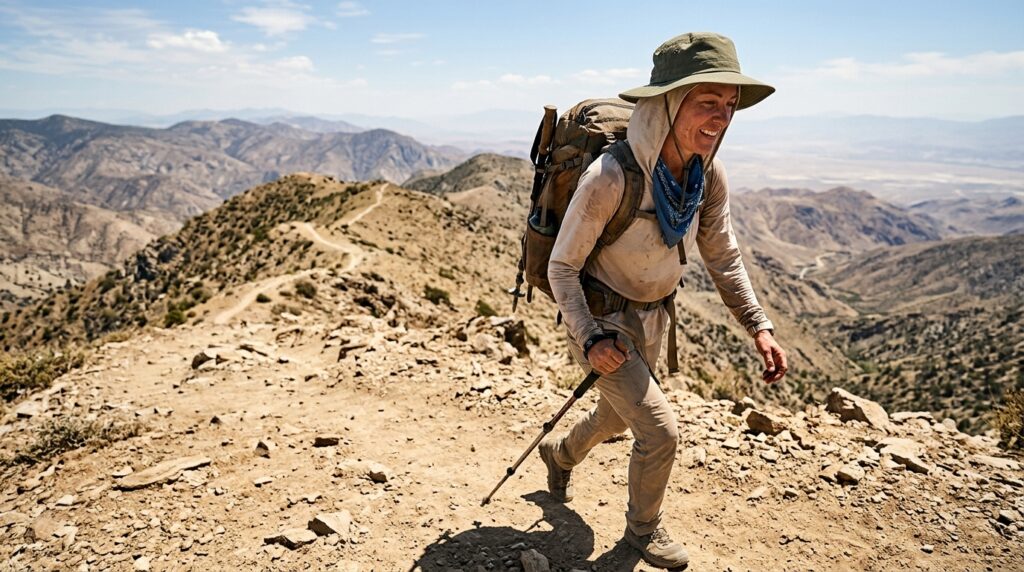
What to wear hiking in summer comes down to three things, in order: fabric, fit, and coverage. Synthetic or merino wool instead of cotton. Loose instead of tight. More skin covered by thin, UPF-rated fabric than left bare under direct sun. Color matters less than people assume. Done right, this combination keeps you cooler than shorts and a tank top, not hotter.
My first serious summer hike was a 6-mile loop outside Moab in July, in a cotton t-shirt and running shorts because they were clean that morning. By mile 2, the shirt was soaked through and stayed soaked. By mile 4, the shorts’ inseam had rubbed my thighs raw. I finished the hike. I also spent the last two miles thinking about nothing except how uncomfortable I was, on a trail that deserved more attention than that.
That wasn’t a toughness problem. It was a clothing problem, and an easy one to fix. What you wear on a hot trail either helps your body cool itself down or actively works against it. Most summer hiking clothing mistakes come from guessing which one a piece of clothing is doing, instead of actually checking.
This guide covers the 9 specific choices that make a hot hike bearable, roughly in order of how much each one matters, plus exactly where heat stops being a comfort problem and becomes a safety one.
🟠 A Note Before You Head Out:
This guide covers dehydration prevention and early warning signs, not emergency medical care. If you or a hiking partner is showing signs of heat stroke: confusion, hot skin without sweating, or loss of consciousness, call 911 immediately. Heat stroke is a medical emergency.
Keep reading for the clothing and gear choices that keep you from getting anywhere near that point.
Table of Contents
What to Wear Hiking in Summer Actually Comes Down To
Your body cools itself one way: sweat evaporating off your skin. Shade, drinking water, and timing your hike all support that one mechanism. Clothing’s entire job in hot weather is to help sweat evaporate quickly while blocking direct sun from adding more heat than your body is already trying to shed. Fail at either half of that job and you overheat faster, not slower.
This is why fabric and fit matter more than most people expect, and color matters less. A fabric that traps moisture against your skin, cotton, mainly, keeps that moisture from evaporating efficiently, which works against your body’s actual cooling system. A fit that’s too tight does something similar by cutting off airflow between the fabric and your skin. Both problems exist whether the shirt is white or black.
REI’s own hot-weather hiking guide recommends a lightweight long-sleeve shirt, a neck gaiter, and a real sun hat for hot, exposed trails, which sounds like more clothing for a hot day, not less. It works because covering skin with the right fabric blocks direct solar heat gain while that same fabric still lets sweat evaporate. Bare skin in direct sun gets the UV exposure and the radiant heat with nothing managing either one.
One more foundational point: your body needs roughly 10 days to two weeks to acclimatize to heat. The lightweight hiking clothes in this guide help on every hike, but they don’t replace that adjustment period. Your first hot-weather hikes of the season should be shorter and easier than what you’re used to by August.
What UPF Ratings and “Cooling” Fabric Actually Mean
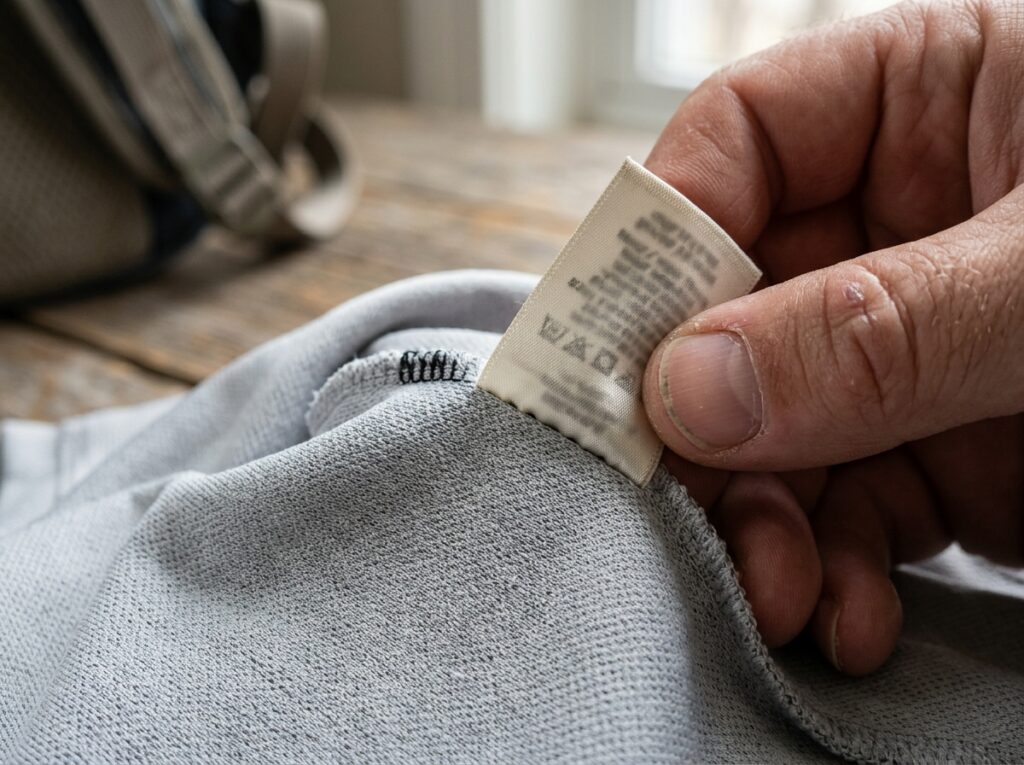
UPF, Ultraviolet Protection Factor, is a real, measurable spec, not a marketing word. UPF 50+ blocks about 98% of UV radiation. A regular cotton t-shirt offers rough UPF protection somewhere in the single digits depending on weave, and less once it’s wet with sweat, which is close to no protection at all by mile 3.
This is the gap most “athletic” or “moisture-wicking” shirts don’t close. Wicking sweat and blocking UV are two different jobs, and a shirt can do one without the other. If sun exposure is a real factor on your trail, exposed ridgelines, desert, high elevation, check for an actual UPF number on the tag. Don’t assume a running shirt has it just because it’s synthetic and breathable.
“Cooling” fabric marketing deserves the same scrutiny. Some fabrics use a tighter knit or a treatment that increases evaporative surface area, and that’s a real, if modest, effect. None of it substitutes for the basics: loose fit, light layers, and getting moisture off your skin in the first place. Buy for fit and UPF first. Treat “cooling technology” as a nice-to-have, not the reason to spend more.
9 Ways to Actually Beat the Heat in What You Wear
Here’s the full list, roughly ranked by how much each one changes your hike.
1. Cut cotton for synthetic or merino wool. Cotton absorbs moisture and holds onto it, which is exactly backward for a fabric that’s supposed to help sweat evaporate. Polyester, nylon, and merino wool wick moisture away from skin and dry in under an hour. This is Fama’s clearest standing opinion on summer trail clothing: cotton is genuinely worse for hiking, though one cotton t-shirt on one hot day will not ruin you. It’s a comfort problem here, not a safety one. The safety version of the cotton problem shows up in cold, wet conditions, not hot, dry ones.
2. Wear a lightweight long-sleeve sun shirt instead of just a t-shirt. This is the counterintuitive one: more fabric can mean a cooler hike, not a hotter one, if the fabric is thin and UPF-rated. The REI Co-op Sahara Shade Hoodie, UPF 50+, around $60, carries over 1,000 REI reviews averaging 4.6 stars, which is a fair example of the category. The honest caveat: in humid, shaded, low-sun conditions, a sun hoodie can feel warmer than a plain short-sleeve tee. It’s the right call on exposed, sunny trails. It’s not automatically the right call in a muggy forest.
3. Choose light colors over dark ones. Dark fabric absorbs more radiant heat from direct sun than light fabric does. It’s a real, physical difference, and also the smallest one on this list. Use color as a tiebreaker between two otherwise similar shirts, not as a strategy on its own.
4. Check for an actual UPF number. Don’t assume. Worth repeating as its own decision point: UPF 30 to 50+ printed on the tag means tested sun protection. “Breathable” or “athletic” printed on the tag means neither.
5. Get a real hat: wide brim, or a cap with a neck flap. A standard ball cap protects your face and nothing else. Ears and the back of the neck are common sunburn spots precisely because a small cap leaves them exposed for the whole hike.
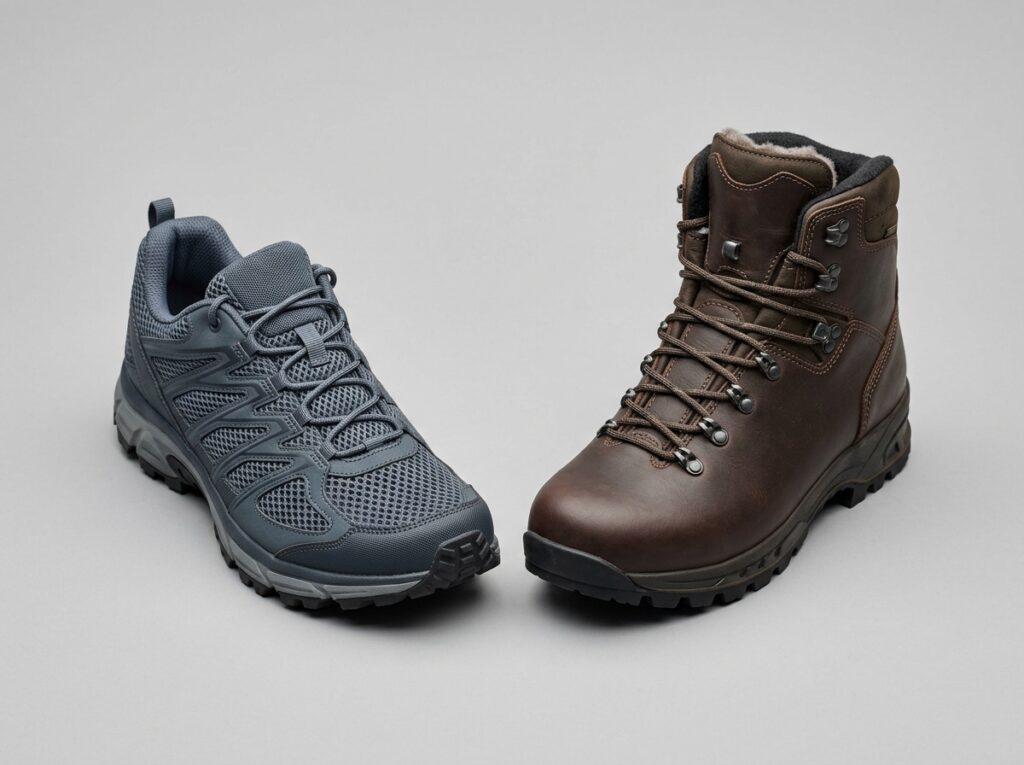
6. Switch to mesh trail runners over insulated boots for hot-weather trails. Trail runners work for most maintained trails, and their mesh uppers vent heat and dry fast after a creek crossing or a sweaty climb. Leather boots trap heat and can take a full day or two to dry out once wet.
7. Go loose, not compression-fit, and skip tank tops under a loaded pack. Tight clothing cuts off the airflow between fabric and skin that lets sweat evaporate. Separately, a tank top or sleeveless shirt under a loaded backpack means bare shoulders rubbing against straps for miles, which chafes fast once heat and sweat are involved.
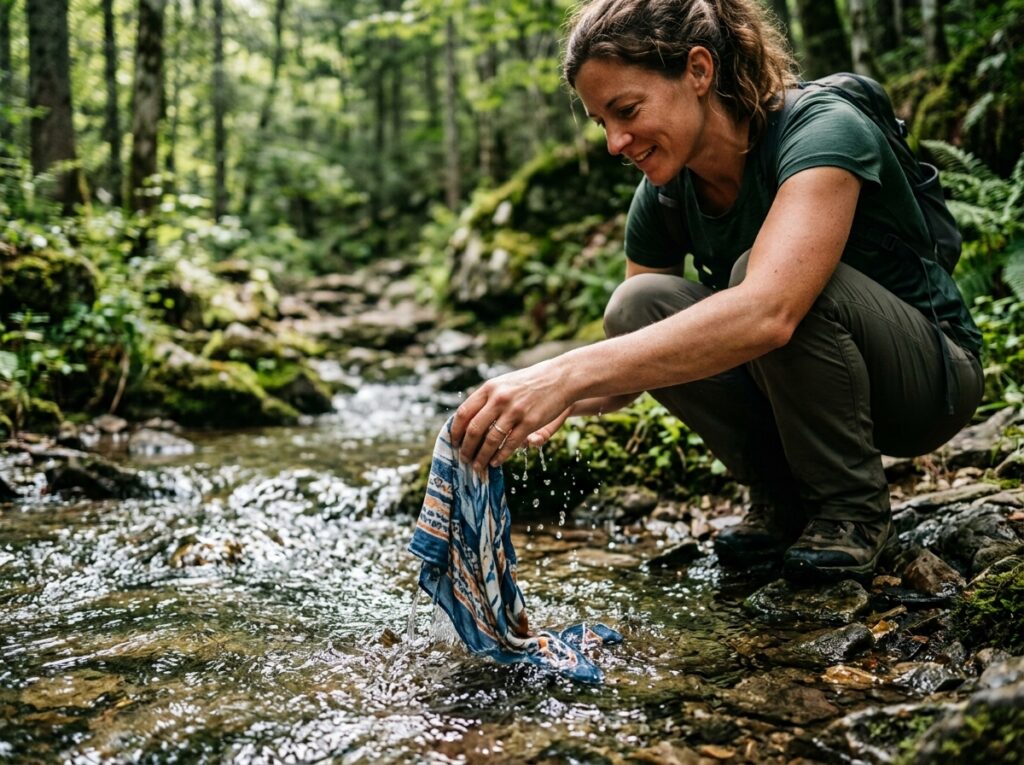
8. Carry a buff or bandana you can wet down. Soaking it in a stream or your water bottle and wearing it around your neck cools the blood vessels close to the skin’s surface there, a real, if temporary and modest, boost. It costs about $15 and weighs nothing in a pack.
9. Treat sunscreen as part of the outfit, not an afterthought. Clothing can’t fully cover your hands, face, ears, or the back of your neck. SPF 30 or higher for hikes over two hours, reapplied roughly every two hours or sooner if you’re sweating heavily, is the standard REI and most dermatologists recommend. It isn’t clothing, but it’s doing the same job as everything else on this list: managing what your skin is exposed to.
What to Wear, by Body Part
| Body Part | Wear This | Skip This |
|---|---|---|
| Head | Wide-brim hat, or a cap with a neck flap | A beanie, or no hat at all |
| Torso | UPF-rated synthetic or merino tee, or a sun hoodie | A cotton tee, a tank top under a loaded pack |
| Legs | Lightweight synthetic shorts or convertible pants | Jeans, heavy cotton pants |
| Feet | Mesh trail runners, synthetic or wool socks | Insulated leather boots, cotton socks |
Common Mistakes People Make Dressing for Summer Trails
Wearing all black because “it’s just a t-shirt”
Dark colors absorb more heat from direct sun than light colors do. It’s a small effect next to fabric and fit, but a free one: given two otherwise identical shirts, take the lighter color.
Going sleeveless or in a tank top under a loaded pack
This is a chafing problem more than a heat problem. Pack straps rubbing against bare, sweaty shoulders for miles causes real skin irritation, and it happens faster in heat because you’re sweating more. A lightweight short sleeve solves it.
Assuming any athletic shirt has sun protection
Moisture-wicking and UV-blocking are different properties. A gym shirt built to wick sweat during a workout wasn’t necessarily built or tested for UPF. Check the tag specifically on exposed ridgelines, desert trails, or anywhere else direct sun is the main variable.
Skipping the hat because the trailhead is shaded
Trailhead conditions are not trail conditions. Plenty of hikes start under tree cover and open into full sun exposure a mile or two in. Check the trail description for exposure, not just the parking lot.
When to Change Your Plan
Clothing choices lower your heat risk. They don’t erase it, and a few specific signs matter more than anything above. CDC guidance on heat-related illness is clear that untreated heat exhaustion can progress into heat stroke, a medical emergency.
Check weather.gov’s heat safety page for the current heat advisory or excessive heat warning level in your area before you head out. Advisory thresholds vary by region, so a heat index that’s routine in Phoenix can be warning-level in Seattle.
🔴 Turn Around Now
- You haven’t urinated in over 4 hours on a full-day hike
- A headache hasn’t improved after 20 minutes of rest, shade, and water
- Confusion, extreme dizziness, or vomiting: turn back and call for help
- Temperature is above 95°F and you’re less than half through your water
🟡 Slow Down and Reassess
- A mild headache appeared in the last hour: drink 8 to 12 oz of water now, find shade for 10 minutes
- Urine is noticeably dark yellow: drink 8 oz now and every 20 minutes until it clears
- You’re sweating heavily and craving salty food: drink water and eat an electrolyte snack now
✅ You’re Fine, Keep Going
- You’re drinking roughly every 20 to 30 minutes without being thirsty
- Urine is pale yellow
- No headache, full energy, normal conversation on trail
One rule: if you’re not sure which tier applies, treat it as the higher one.
What should I wear hiking in hot weather?
Lightweight, moisture-wicking synthetic or merino wool, not cotton. Loose fit over tight fit. A real hat with a brim or a neck flap, and a UPF-rated shirt if the trail is exposed to direct sun for most of its length. Mesh trail runners breathe and dry faster than boots. Color matters, but far less than fabric and fit do.
Should I wear long sleeves or short sleeves hiking in the heat?
Long sleeves, in a thin, UPF-rated fabric, if the trail is sun-exposed. The logic feels backward until you break it down: fabric between you and the sun blocks most of the UV and direct radiant heat before it reaches your skin, while a breathable weave still lets sweat through to evaporate normally. Go sleeveless in full sun and you give up that trade for nothing; your skin just absorbs the heat and the UV directly. In shaded, humid conditions where direct sun isn’t the issue, short sleeves are the better call.
What fabric is best for summer hiking clothes?
Polyester, nylon, or merino wool. All three wick moisture away from skin and dry quickly, which is what actually keeps you cool once you’re sweating. Merino costs more and resists odor better on multi-day trips. Polyester and nylon are cheaper and dry faster. Either beats cotton, which absorbs and holds moisture instead of moving it away from your skin.
Should I wear light or dark colors hiking in summer?
Light colors, when you have the choice. Dark fabric absorbs more heat from direct sunlight, a real but modest effect next to fabric type and fit. If your favorite moisture-wicking shirt happens to be black, that’s not a reason to skip it. Let color decide between two shirts that are otherwise equal, not drive the decision on its own.
Is cotton really that bad for hiking?
In hot weather, it’s a comfort problem, not a safety one. Cotton gets and stays wet with sweat, which feels bad and can cause chafing, but one cotton t-shirt on a warm day won’t hurt you. The real danger zone for cotton is wet and cold, more than 5 miles from the trailhead, where wet fabric pulls heat from your body instead of trapping it. That’s a different season’s problem.
What hiking gear do I need for hot weather besides clothing?
More water than you think you’ll need, electrolytes if you’re out more than a couple of hours, sunscreen rated SPF 30 or higher, and a plan to start early or hike later to avoid midday sun. Clothing manages heat gain and sun exposure. Water and timing manage everything clothing can’t.
Cover More Skin With the Right Fabric, Not Less
What to wear hiking in summer isn’t about wearing as little as possible. It’s about choosing fabric and fit that help your body do the one thing that actually cools it down: evaporating sweat off your skin. Synthetic or merino over cotton, loose over tight, a real hat, and a UPF layer if the trail is exposed. Color is real but minor. That combination beats shorts and a tank top on any trail that isn’t fully shaded.
Getting the clothing right also buys you margin on the part that matters more: water, timing, and paying attention to the specific signs above. Good clothing choices make heat easier to manage. They don’t make it optional to manage.
One thing to do before your next hot-weather hike: check the forecast for the actual daytime high, not the temperature at trailhead sunrise, and pack water for that number.
Next Steps
- Right now: Check what’s actually in your hiking wardrobe. If it’s mostly cotton tees, that’s the first thing to replace, not the last.
- Before your next hot-weather hike: Check the forecast high and any active heat advisory for your area, not just the morning temperature.
- On trail: Notice how your current clothes feel by mile 3. Damp and heavy versus dry and light tells you whether your fabric choice is actually working.


