

The best time of year to start hiking is fall, for most beginners in most of the United States. Not spring, which is muddy and cold in ways that beginner guides routinely understate. Not summer, which is gorgeous and also the season that produces most beginner problems. Fall gives you stable temperatures, dry trails, low crowds, and the most forgiving conditions to figure out what trail hiking actually demands of your body.
⚡ Quick Trail Takeaways
- Season Ranking: Autumn is #1 for beginners with mild 55-65°F temperatures, low bug pressure, and firm trail conditions.
- Spring Caution: Spring brings muddy snowmelt trails and high tick activity; stick to well-drained low-elevation paths.
- Summer Safety: Start at dawn during summer heatwaves and carry a minimum of 0.5 to 1 liter of water per trail hour.
That’s the answer. The rest of this article explains why, covers the honest version of every other season, and gives you the specific conditions that change the ranking depending on where you live.
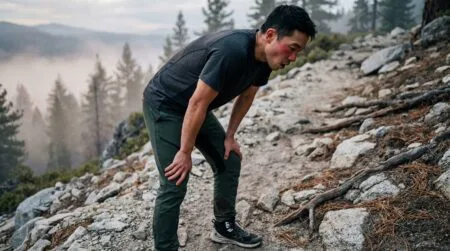
My worst first-impression hike was a July trail in the San Gabriel Mountains. I started at 9:30 AM thinking the higher elevation would keep it cool. By mile 2, the exposed south-facing ridge was 94°F with no shade and 0.8 miles still to the viewpoint. I sat on a rock, looked at my phone, saw that the temperature had gone up 8°F since I started, and turned around. The trail was fine. The conditions were wrong. A September version of that exact outing would have been one of my favorites. Season matters more than trail choice for a first-time hiker who doesn’t yet know the variables to watch for.
🥾 Oliver’s Trail Notes & Field Observations
Across 8 years of trail testing in Southern California, autumn (October through late November) is my undisputed top choice for beginners. Summer heatwaves have finally broken, mountain air is crisp and clear, and high-altitude trails like Mt. Baden-Powell are snow-free before winter storms arrive. Spring is a close second for blooming wildflowers, but rapid snowmelt can make creek crossings dangerously swift.
Why Season Is the Most Underrated Hiking Variable for Beginners
What most beginner guides get wrong about the best season for beginners hiking
Most beginner guides spend 90% of their preparation content on gear and trail selection. Season gets a paragraph, usually something like “spring and fall are great for hiking.” That’s accurate in the same way “food that’s not too hot or too cold is great for eating.” Technically correct. Practically useless.
The best season for beginners hiking matters more than most articles acknowledge because beginner hikers don’t yet have the trail experience to compensate for bad conditions. An experienced hiker caught in unexpected summer heat knows the signs of heat exhaustion and has managed pace, water, and shade for years. A beginner in the same conditions doesn’t have that library of responses. Season selection is how you avoid needing that library on hike one.
The American Hiking Society at americanhiking.org identifies weather and temperature as the top two factors in trail incidents involving day hikers. Both are seasonal. Both are predictable. Both are manageable when you choose your starting season deliberately.
How regional variation changes the ranking
The national ranking I give below reflects the majority of the continental United States at mid-elevation. It holds for the Pacific Northwest, the Mountain West below 8,000 feet, the Midwest, the Mid-Atlantic, and the South. It partially applies to New England. It does not apply to desert Southwest (Arizona, Nevada, southern California) where the ranking flips: winter and early spring are the best time of year to start hiking and summer is actively dangerous.
This is the honest admission I owe anyone reading a national best-of-season article: “best” is a regional answer, not a national one. The ranking below names the majority case. The regional section that follows names the exceptions.
The 4 Seasons Ranked for Beginner Hiking
Rank 1: Fall (September through November)
Why fall is the best time of year to start hiking for most beginners
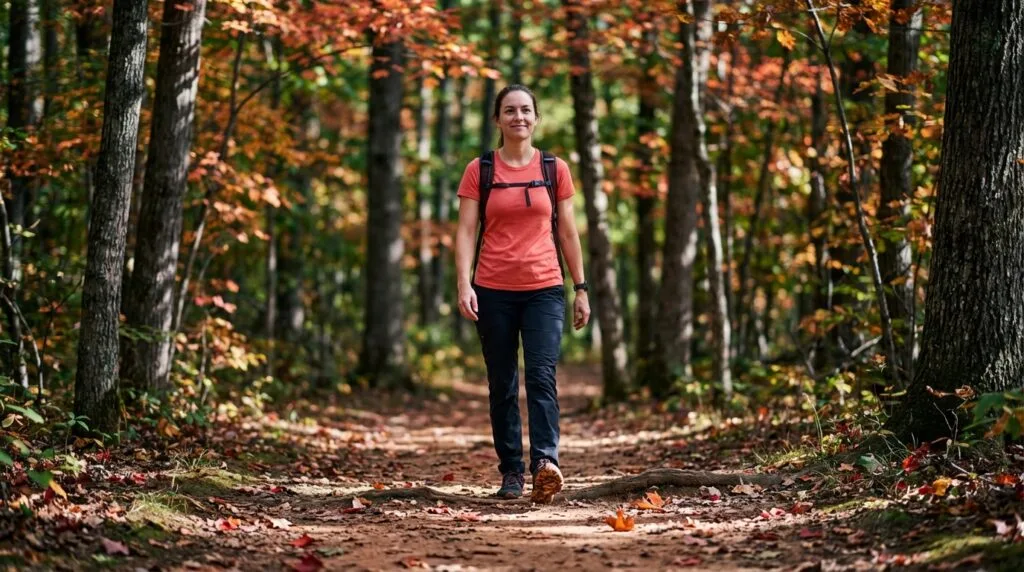
Fall is the best time of year to start hiking for most beginners in the continental US, and the argument is specific rather than aesthetic. Three variables land in the best possible range simultaneously: temperature, trail conditions, and crowd levels.
Temperature in September through November across most of the US sits between 45°F and 72°F on a typical hiking day, which is the ideal working range for trail exercise. You warm up on the climb, stay comfortable on flat sections, and cool down appropriately on the descent. You’re not fighting heat. You’re not fighting cold. You’re just hiking.
Trail conditions in fall are dry in most regions after the summer monsoon cycle has passed and before winter precipitation arrives. Packed dirt trail surfaces at their best. No mud from snowmelt. No icy sections. No afternoon thunderstorms in most areas.
Crowd levels drop across most trail systems after Labor Day. The parking lot that fills by 7 AM in July is wide open at 9 AM in October. For a beginner who is still calibrating pace and navigation and doesn’t want to manage a crowded trail on top of that, fall provides the quietest environment of any season.
Fall hiking weather: specific thresholds to watch
Fall hiking weather changes fast in October and November at higher elevations. Three specific thresholds matter. First: if the forecast shows temperatures below 40°F at the trailhead, dress in layers and bring a windproof outer layer rather than a single midweight layer. Second: check for frost on trail surfaces before any outing above 4,000 feet in October. Frost on packed dirt in the shade is a real slip hazard that most beginner guides treat as a footnote. Third: in New England and the northern Rockies, snow at elevation can arrive in September. Check recent AllTrails reviews for any trail above 6,000 feet before going in October or November.
The fall hiking weather rule that actually protects you: look at the overnight low, not just the daytime high. If the overnight low was below 32°F and you’re starting before 10 AM, any shaded section of your trail may still have frost on the surface.
Rank 2: Spring (March through May)
Why spring is second but not by as much as people assume
Spring should be the obvious best time of year to start hiking. The days are getting longer, temperatures are rising, wildflowers are appearing, and the outdoor world is reactivating after winter. The problem is what’s on the ground in spring: mud, snowmelt runoff, and trail surfaces that have spent three to four months under freeze-thaw cycles that leave them soft, eroded, and in some cases officially closed to protect the surface from further damage.
Spring hiking tips almost universally focus on the positive conditions and skip the reality check. Here’s the reality check: trails in the Pacific Northwest are often a quagmire through April. Trails above 5,000 feet in the Rockies are frequently snow-covered through May. Trails in the Appalachians can be fine at lower elevations and genuinely hazardous at upper elevations simultaneously. The spring hiking experience varies more within a single region than any other season.
Spring ranks second not because it’s better than fall on average, but because in specific regions (the desert Southwest, Southern California, the lower South) spring is the best time of year to start hiking by a clear margin over any other season.
Spring hiking tips that actually make a difference
Check trail conditions, not just weather. AllTrails reviews from the current week are the only reliable source for real spring trail conditions. A trail that was fine last weekend may have had a week of rain that changed it entirely.
Know the difference between a muddy trail you can navigate and one you shouldn’t be on. Knee-deep mud is not a beginner experience. A trail described in recent reviews as “extremely muddy” or “flooded” is a trail to postpone, not push through. Hiking through soft, wet trail surface causes erosion and makes conditions worse for every hiker after you.
Trail runners over waterproof boots for most spring hiking. Waterproof membranes don’t breathe in spring warmth, your feet will be wet from the inside by mile 2, and trail runners dry faster. The exception: snowpack sections above 4,000 feet where waterproof gaiters are more appropriate than any shoe alone.
Rank 3: Summer (June through August)
The honest assessment of summer hiking for beginners
Summer is when most people decide to start hiking. School is out, vacation time accumulates, the days are long, and the trails look inviting in every photo. It is also the season responsible for the highest rate of trail incidents involving heat exhaustion, dehydration, and afternoon thunderstorms across every region.
Summer hiking safety is not about avoiding trails. It’s about understanding two rules that most beginners discover after they needed them rather than before.
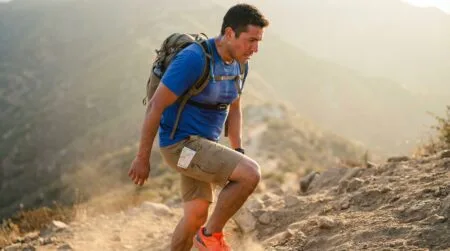
Rule 1: Start before 7 AM if the high temperature forecast exceeds 85°F. A 7 AM start on a 3-mile trail finishes before 10 AM in most cases, before the day’s heat has peaked and before afternoon thunderstorm development begins in mountain regions. A 10 AM start on the same trail finishes at 1 PM, which is inside the peak heat window for most summer days.
Rule 2: At temperatures above 90°F, choose trails with shade or don’t hike. Sun exposure on an exposed summer ridge at 90°F produces a caloric and hydration demand that beginners consistently underestimate. A trail that’s Easy on the AllTrails rating becomes genuinely hard in 90°F direct sun for someone who hasn’t hiked in heat before.
Summer hiking safety: what to bring and what to know
Water: 1 liter per hour is the floor in heat above 80°F. In heat above 90°F, increase to 1.5 liters per hour or postpone. Most summer trail incidents involve someone who brought enough water for a cool-weather hike and ran out before the halfway point in heat they hadn’t planned for.
Shade: know before you go whether your trail has tree cover. An AllTrails trail photo set showing open ridge terrain is a useful preview. Exposed ridge trails in summer require everything that forested trails don’t: earlier start, more water, more rest stops, and lower total distance.
Lightning: In the Rocky Mountain region, Colorado Plateau, and Appalachians, afternoon thunderstorms develop reliably between 1 PM and 3 PM from June through August. The summer hiking safety rule for mountain terrain is to be below treeline by 1 PM. Not approaching treeline. Below it. A trail that requires you to be above treeline past noon in a lightning-prone region is a trail to do in fall.
Rank 4: Winter (December through February)
Why winter is last and when that ranking flips
Winter ranks last for most beginner hikers in most of the continental US because it adds two variables that the other three seasons don’t: cold that requires gear most beginners don’t own, and trail surfaces (ice, packed snow) that create genuine fall hazards on terrain that would be easy in other seasons.
This is not about keeping beginners away from winter. It’s about calibrating the first several hikes to conditions that let you focus on trail skills rather than managing cold and traction simultaneously. A first-time hiker who has done five fall trails is ready to try winter hiking with microspikes and appropriate layers. A first-time hiker who has never been on an unpaved trail should not have their first experience be a frozen trail in January.
The regional flip: in the desert Southwest (Arizona, Nevada, New Mexico, Southern California below 3,000 feet), winter is the best time of year to start hiking. High temperatures of 55°F to 70°F, no crowds, no dangerous afternoon heat, clear skies, no mud. The Grand Canyon, Sedona, Scottsdale area trails, and Joshua Tree are at their best from November through March. The national ranking reverses entirely in these regions.
Winter hiking in the right regions
For beginners in Florida, coastal Southern California, Hawaii, Texas, and the lower desert Southwest, winter hiking is straightforward. The cold-weather gear considerations that apply to New England or the Rockies in January don’t apply to a 65°F January day in Sedona.
For beginners everywhere else: pick a trail below 3,000 feet elevation, check for icy conditions in AllTrails reviews from within the last week, bring more layers than you think you need, start no earlier than 9 AM to let overnight temperatures rise, and carry traction devices (microspikes, at $30 to $45) if any trail section is described as icy in recent reviews.
💡 Trail Tip: Download the National Weather Service mountain forecast at nps.gov/subjects/outdoorsafety for your specific trail area before any winter outing. The city forecast consistently underreports how cold mountain trail temperatures are, particularly in wind. A 45°F city forecast in November can mean 28°F with wind chill on an exposed ridge 10 miles away.
🥾 Surviving Summer Desert & Foothill Climbs
Summer is ranked dead last for beginner hikers in arid regions. During July and August in the San Gabriels, exposed southern slopes routinely exceed 100 degrees Fahrenheit by 11 AM, with baked granite radiating heat directly into your boots. If you must start in summer, I advise novices to stick to high-elevation shaded routes above 7,000 feet, such as Buckhorn to Cooper Canyon Falls, and be off the trail before noon.
Regional Guide: Where the National Ranking Doesn’t Apply
Desert Southwest (Arizona, New Mexico, Nevada, Southern California)
Best time of year to start hiking in this region: November through March. April is transitional and depends on elevation. May through October is when the heat risk that national summer content ignores becomes genuinely dangerous: triple-digit temperatures, zero shade on many trails, and heat exhaustion incidents that make southern Arizona, Nevada, and the Mojave the most dangerous hiking regions in the US during summer months.
The National Park Service at nps.gov issues regular heat advisories for Grand Canyon and Saguaro National Park that specifically warn hikers against summer hiking between 10 AM and 4 PM. These are not suggestions. Take them as what they are.
Year round hiking in the desert Southwest is possible but requires a season discipline that the rest of the country doesn’t: winter is your spring, spring is your summer, and summer is your off-season.
Pacific Northwest (Oregon, Washington, coastal Northern California)
Best time of year to start hiking in the Pacific Northwest: June through October. Spring trails at lower elevation are fine from March onward. Trails above 4,000 feet are typically snow-covered through May or June depending on winter snowpack. Summer in the Pacific Northwest is genuinely the best hiking season, with temperatures rarely exceeding 85°F and wildflowers peaking in July and August. The lightning risk that applies to the Mountain West is minimal here.
Year round hiking is possible at lower elevations near the coast year-round, but winter hiking in the Cascades requires serious preparation and is not a beginner activity.
New England and Northern Rockies
Best season for beginners hiking in New England: late June through September at higher elevations, May through October at lower. The northern Rockies follow a similar pattern but with more reliable summer weather.
Spring hiking tips that apply specifically here: wait for snowmelt to finish at your trail’s elevation before going. Trails in New Hampshire’s White Mountains and Vermont are frequently closed through mud season (March through late May) to prevent surface damage. Check the trail’s land manager website before any spring outing above 3,000 feet in New England.
Southeast and Mid-Atlantic
Best time of year to start hiking in the Southeast: March through May and September through November. Summer is manageable below 3,000 feet in the mornings but produces the humidity and afternoon thunderstorm combination that makes it uncomfortable rather than dangerous. The Appalachian Trail corridor has afternoon thunder risk from June through August that applies to all mountain sections.
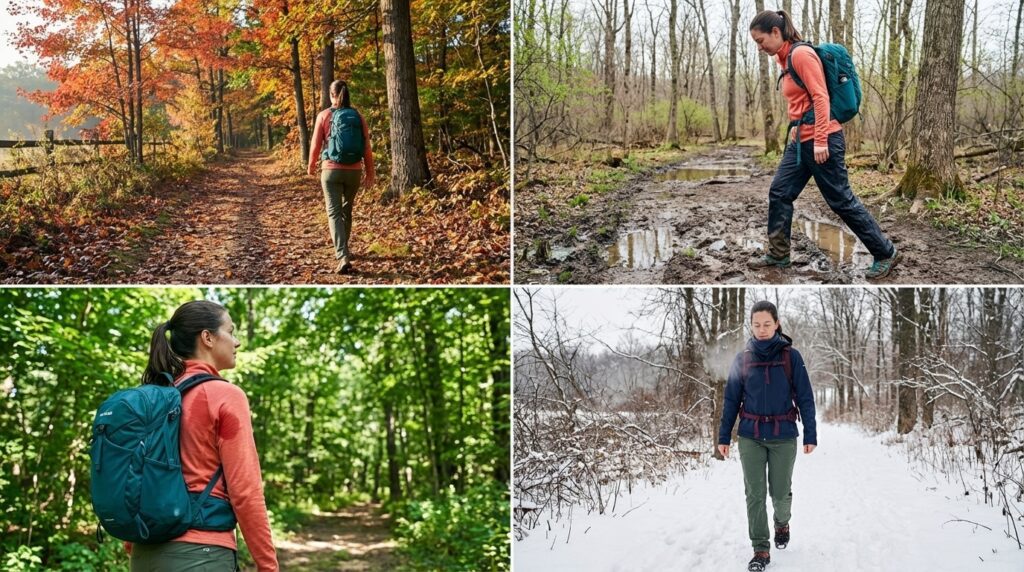
Common Mistakes Beginners Make With Season Selection
Choosing trail based on photos taken in the opposite season
A trail looks a specific way in photographs that are almost always taken in its best conditions. Summer photos of Pacific Northwest trails look inviting in January. Fall color photos of New England trails look inviting in August. Before planning any hike, check recent AllTrails reviews from within the last 30 days rather than the trail’s featured photos, which may have been taken in a completely different season.
Underestimating how much heat changes a trail
The same trail that rated Easy in October is a different physical experience in July. Heat adds to perceived effort in ways that most beginners don’t predict until they’ve experienced it. A trail that took 90 minutes in fall may take 2.5 hours in summer heat, and it will feel harder the entire way. Summer hiking safety requires adjusting your distance target, not just your water supply.
Ignoring mud season in spring
Mud season exists in most of the US from late February through April, and most beginner hiking content treats it as a minor inconvenience. At its worst, mud season closes trails entirely and makes navigating open sections a legitimate hazard. Boots soaked through by mile 1, trail surfaces that slide rather than grip, and erosion damage that takes years to repair. Check AllTrails reviews dated within the last two weeks before any spring outing.
Going to the mountains in summer without checking for afternoon thunderstorms
Mountain thunderstorms in the Rockies, Appalachians, and Sierra Nevada are not random. They develop predictably from mid-afternoon in summer months. A beginner who reads the weather forecast, sees 0% chance of rain at 8 AM, and plans a 4-hour hike starting at noon is reading the forecast correctly and planning incorrectly. Check whether your trail goes above treeline, check the regional thunderstorm pattern for summer, and build your start time around being off exposed terrain before 1 PM.
Frequently Asked Questions
What is the best time of year to start hiking for a complete beginner?
The best time of year to start hiking for most beginners in the continental US is September through November. Fall gives you stable temperatures in the 45°F to 72°F range, dry trail surfaces, lower crowds than summer, and the most forgiving conditions for figuring out pace, water, and gear without managing extreme heat or cold simultaneously. If you’re in the desert Southwest, flip the ranking: November through March is your best season for beginners hiking.
What is the best season for beginners hiking in different regions?
Best season for beginners hiking by region: Pacific Northwest, June through October (dry, mild summer). Mountain West at elevation, July through September (after snowmelt, before fall storms). Desert Southwest, November through March (before heat season). Southeast and Mid-Atlantic, spring and fall. New England, late June through September at higher elevations, May through October lower. Midwest, April through October. The national “fall is best” recommendation applies most reliably to Mid-Atlantic, Southeast at lower elevations, and the Midwest.
What spring hiking tips help beginners avoid common problems?
Spring hiking tips for beginners: check AllTrails reviews from within the last two weeks before any spring outing, because trail conditions change week to week in spring. Avoid trails above 5,000 feet through May unless recent reviews confirm snow-free conditions. Choose trails at lower elevations with packed dirt surfaces and good drainage, not exposed ridges that take longer to dry. Start after 9 AM to let overnight temperatures rise before you’re on the trail. Treat “muddy” in a recent review as a postpone signal, not a minor advisory.
What are the summer hiking safety rules beginners need to know?
Summer hiking safety for beginners comes down to start time and temperature thresholds. Start before 7 AM if the daily high forecast exceeds 85°F. Avoid hiking when temperatures exceed 90°F unless you’re on a fully shaded trail with reliable water. Bring 1 liter per hour of water in heat above 80°F, 1.5 liters in heat above 90°F. In mountain regions, be below treeline by 1 PM to avoid afternoon thunderstorm exposure. These are the four rules that cover the majority of summer hiking incidents involving beginners.
What is fall hiking weather like and why does it help beginners?
Fall hiking weather across most of the US runs between 45°F and 72°F on typical hiking days from September through November. That range is ideal for trail exercise: you generate heat on climbs without overheating, you stay comfortable on flat sections, and you don’t need the layering strategy that winter requires. Trail surfaces are at their driest of the year in most regions. Crowds have dropped from summer peaks. The combination of these three variables makes fall the most forgiving starting season for someone building their first trail experience.
Is year round hiking possible for beginners?
Year round hiking is possible for beginners in most of the US, but the season determines how much additional preparation each outing requires. Fall and spring demand the least additional planning beyond standard gear. Summer requires start time discipline and heat management. Winter requires traction devices, more layers, and trail surface awareness. In the desert Southwest, year round hiking at lower elevations is straightforward in winter and not appropriate in summer. The practical answer: yes, but the checklist grows as you move away from fall conditions.
Fall First, Then Everything Else
The best time of year to start hiking is fall for most people reading this. That’s my direct answer and I hold it: September through November gives beginners the conditions that let them focus on the experience of trail hiking rather than managing heat, mud, cold, or crowds on top of it.
The four seasons don’t all ask the same things of you. Summer demands heat and weather management. Spring demands conditions research and mud tolerance. Winter demands gear and traction awareness. Fall asks almost nothing beyond showing up with water, appropriate layers, and a trail that matches your current fitness.
Start in fall. Build the base. Then go back through the other seasons with the trail fitness and experience to handle what each one asks. Year round hiking is what happens after you’ve built a few months of consistent trail time. It starts with the season that makes it easiest to build.
Next Steps
- Right now: Check the current season and find a trail in the appropriate range for your region. Fall through early spring for desert Southwest. Late June through October for the Mountain West above 5,000 feet. September through November for most everywhere else.
- Before your first hike: Check the AllTrails reviews from the last two weeks for current conditions. Set your start time based on the season: before 7 AM in summer heat, after 9 AM in winter, flexible in fall and spring.
- After your first hike: Note how the seasonal conditions affected your experience. Too hot? Too muddy? Too cold? That data makes the next outing better calibrated than anything a guide can tell you in advance.
Related Reads
Pulled out your usual gear for a cold trail and quickly realized none of it was built for snow or ice? Here’s what beginners genuinely need to know before winter hiking, from footing to layering to losing daylight fast.
Headed out whenever felt convenient and ended up either sweating through midday heat or scrambling back in the dark? These 3 rules pin down the smartest time to actually start a hike so the clock works with you instead of against you.
Let a friend talk you into “just a few miles” without ever asking what that meant for your own fitness? These 5 rules help you set your own number instead of going along with someone else’s idea of easy.
Blocked off exactly one hour for a “quick” 3-mile hike and still found yourself way behind schedule? Here’s a far more grounded time estimate for that distance, based on how beginners actually move out there.
Shot out of the gate fast and spent the back half of the trail just trying to recover? These 7 pacing techniques fix that imbalance so your energy carries you the whole way instead of running out early.