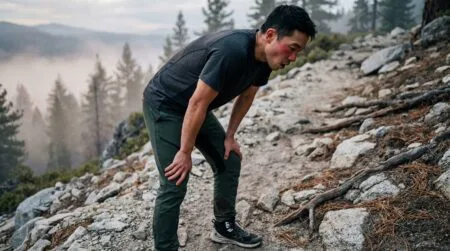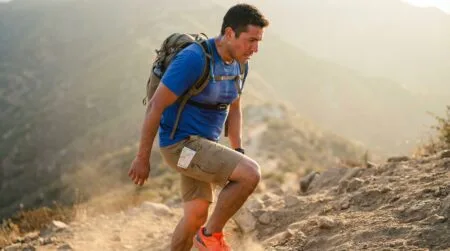


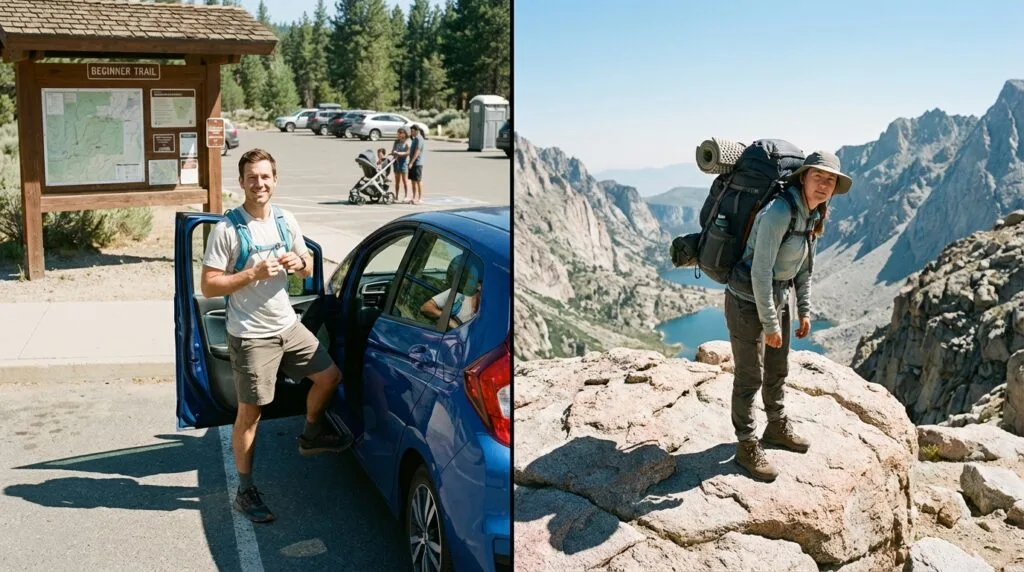
The hiking vs trekking difference is one of those things that seems clear until you try to explain it to someone else. Last summer, I described an upcoming New Mexico trip to two friends as “a few days of trekking in the Jemez Mountains.” One of them showed up with a 40-liter pack loaded for four nights out. I meant three day hikes from a base hotel in Santa Fe. She meant sleeping outside and carrying everything on her back.
⚡ Quick Trail Takeaways
- Hiking vs Trekking: Hiking denotes single-day trips on marked trails; trekking involves multi-day expeditions in remote terrain.
- Gear Differences: Hiking requires a 15-25L daypack; trekking demands 50-70L packs with full shelter, sleep systems, and cooking gear.
- Logistics & Fitness: Trekking requires high cardiovascular endurance and wilderness survival skills for off-grid self-sufficiency.
We had different activities in our heads because the word “trekking” genuinely means different things to different people. That miscommunication cost her a wasted hour of repacking in a hotel lobby and cost me some earned embarrassment.
In the United States, hiking and trekking get used almost interchangeably in casual conversation. Gear brands apply “trekking” to everything from regular day hikes to serious expedition products. Travel companies use it to describe structured multi-day journeys. Outdoor forums debate the distinction endlessly without resolution.
The actual hiking vs trekking difference is more useful than the debate. It comes down to three things: duration, self-sufficiency requirements, and terrain type. Everything else is regional usage, marketing, or personal preference.
This article explains each factor specifically, clarifies where backpacking fits in the conversation, and gives you the vocabulary to communicate accurately when planning trips with other people.
🥾 Oliver’s Trail Notes & Field Observations
Having logged thousands of miles on single-day mountain ascents and multi-day Sierra traverses, the boundary between hiking and trekking comes down to logistical independence. In my experience, a hike ends at a vehicle trailhead where you head home to hot running water. A trek demands carrying complete shelter, sleep insulation, water purification, and five days of food on your back through wilderness areas without cellular coverage.
The Hiking vs Trekking Difference, Defined
What the word “hiking” actually covers
In US usage, hiking means traveling on foot through natural terrain, typically on a marked trail, and typically within a single day. The category is wide. A 90-minute loop at a state park and a 14-mile ridge traverse in the Cascades both count as hiking.
What hiking implies by default: you return to your car that same day. You carry food and water for the trip, not a tent or a sleeping system. You might gain serious elevation, navigate real terrain, and work hard physically. But the day ends at a trailhead parking lot.
This is how the word functions for most people using AllTrails, visiting national parks, and planning weekend outdoor trips in the US. Hiking is the foundational American English term for day-based foot travel in nature. It covers an enormous range of difficulty without shifting category.
Trekking definition: where the line is drawn
The trekking definition carries different weight in international outdoor culture than it does in the US. Abroad, particularly in Nepal, Peru, New Zealand, and East Africa, “trekking” specifically describes a multi-day journey on foot through mountain or remote terrain. The route to Everest Base Camp is a trek. The Inca Trail is a trek. Neither is a day hike by any stretch.
In the US, the line blurs because of how gear manufacturers adopted the terminology. Trekking poles. Trekking boots. Trekking pants. All of these are sold and marketed to American day hikers, which pulls the word away from its original multi-day meaning. A travel brand calling a two-day Zion canyon itinerary a “trekking experience” is technically defensible and also somewhat inflated.
The most practical trekking definition for trip planning: a trek is a multi-day foot journey, typically through terrain that requires you to carry overnight gear or have that gear staged along the route. Duration draws the boundary. A trek involves at least one night away from home, whether in a tent, a backcountry hut, or accommodations along a structured route. A hike ends at the car.
What Is Considered Trekking vs a Day Hike
The overnight rule that actually holds
The most reliable marker for what is considered trekking: the overnight count. One night minimum out means it qualifies as a trek by any reasonable usage of the word. Day hikes, regardless of distance or difficulty, do not cross into trekking territory under this definition.
Distance contributes, but duration is the driver. Most treks involve sustained multi-day mileage. The Appalachian Trail covers more than 2,100 miles across roughly five months for a thru-hiker. Shorter international treks commonly span 50 to 100 miles across a week or more. The concept does not scale down to a single afternoon, regardless of how many miles you cover in it.
For a US beginner trying to categorize a planned trip: if you sleep somewhere other than your house at the end of your first day on foot, and you travel primarily on foot between points, you are looking at a trek. If you are back by dinner, it is a hike.
Self-sufficiency as the real dividing line
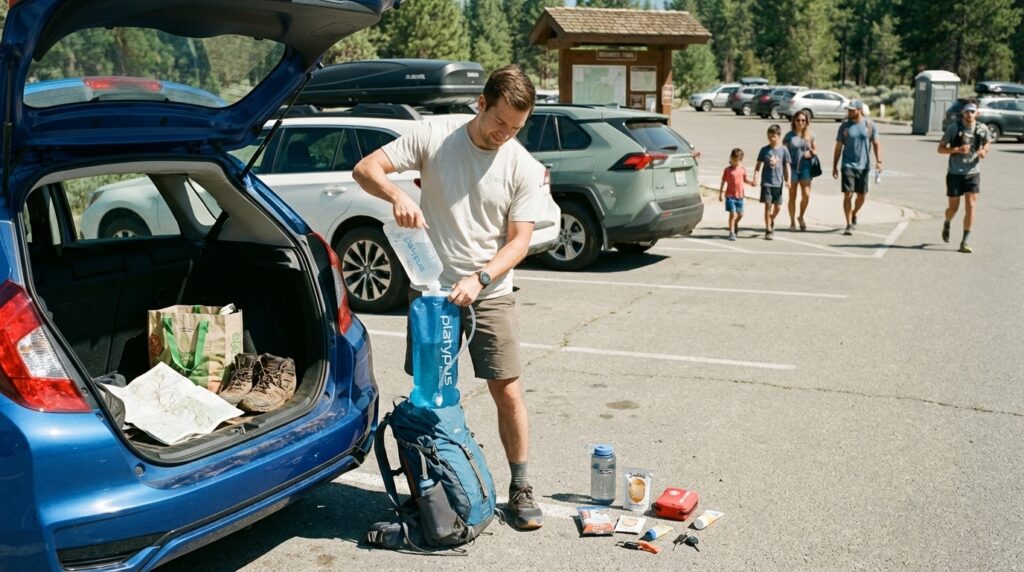
Here is where the hiking vs trekking difference gets genuinely practical for beginners. Trekking demands a different level of self-sufficiency than day hiking. On a day hike, your car, your home, and emergency services sit relatively nearby. Miscalculate your water, get a bad blister, sprain an ankle: these are serious problems, but your window for dealing with them is manageable.
On a trek, especially in remote mountain terrain, you are farther from infrastructure, staying out longer, and making decisions about weather, energy management, and navigation across multiple consecutive days. The gap between a manageable problem and a real emergency shrinks when you are three days from the nearest road with a swollen knee.
This self-sufficiency gap is the practical reason to build real experience through day hiking before attempting any multi-day route. The American Hiking Society recommends that first-time multi-day walkers complete at least five to ten day hikes, including some with 400 or more feet of elevation gain, before planning an overnight route. Not because trekking is inherently dangerous, but because the decision-making experience that protects you on a trek gets built on day hikes first.
💡 Trail Tip: Before your first overnight trip, do at least 3 day hikes with 500 or more feet of elevation gain. Navigation errors, fatigue miscalculations, and gear problems that are minor annoyances on a day hike become real logistical problems when you have to sleep outside before you can fix them.
Build the experience library first. One uncomfortable night out is not the right way to discover a gear mistake.
🥾 Camp Routine Field Finding
When I transitioned from aggressive day-hiking to backcountry trekking, the biggest learning curve was evening energy management. On a long trek, reaching your stopping point is only half the work; you still must pitch a weather-tight tent in wind, filter four liters of creek water, cook dinner, and secure a bear canister before dark while shivering in tired muscles.
Hiking vs Backpacking vs Trekking: How They Relate
Where backpacking fits the conversation
The hiking vs backpacking vs trekking confusion comes up constantly, and it makes sense. All three involve walking through natural terrain. The differences sit in duration, gear logistics, and the cultural context of the words themselves.
Backpacking is the American term for multi-day hiking where you carry everything on your back: tent, sleeping bag, food for multiple days, water treatment equipment, all of it. It is the most self-sufficient form of extended foot travel. When Americans plan multi-day trips, they typically say “going backpacking.” When someone in Europe, New Zealand, or South America plans the same kind of trip, they typically say “trekking.”
The overlap is direct. A trek can be done backpacking-style, with every ounce of gear on your back. It can also be done with luggage transfers between accommodations, hut-to-hut with gear staged ahead of you, or through a guided service that handles all logistics. Backpacking specifies a gear-carrying method. Trekking describes the journey type without specifying who carries what.
A backpacker covering three nights in Wyoming’s Wind River Range is trekking by any definition. A walker on the Tour du Mont Blanc with their bags ferried by van each day is also trekking. Same journey category, different methods.
Long distance hiking terms you’ll actually encounter
Once you start researching extended trips, the long distance hiking terms expand quickly. Here are the ones worth knowing before they appear in a trail forum and leave you confused.
Thru-hike: Completing an entire long trail in one continuous journey from terminus to terminus. The Appalachian Trail, Pacific Crest Trail, and Continental Divide Trail are the three primary US thru-hike routes. A thru-hike is technically a very long trek, though American hikers rarely call it that.
Section hike: Completing a long trail in pieces, typically across multiple trips and years. The same routes, broken into manageable segments rather than a single continuous push.
Fastpacking: Moving quickly through terrain with a minimal gear load, combining trail running efficiency with lightweight overnight capability. It sits in its own zone between trail running and traditional backpacking.
Scrambling: Moving over terrain where you use your hands for balance but do not use ropes or technical climbing gear. Not hiking, not trekking, and not rock climbing.
Out-and-back vs point-to-point: Out-and-back means you return on the same path you hiked in. Point-to-point means your endpoint is different from your starting point, which requires a car shuttle or second vehicle.
These trail terms show up within your first year of researching hikes, and knowing them makes route descriptions significantly easier to follow.
Why the US and the rest of the world use these words differently
Here is the honest admission embedded in the hiking vs trekking difference conversation: the US outdoor community and the international outdoor community do not fully agree on these terms, and that gap does not cleanly resolve.
In Nepal, Peru, New Zealand, and most of Europe, hiking and trekking describe distinct activities with consistent shared meaning. Hiking is a day activity. Trekking is multi-day. The separation is understood across cultures and outdoor communities.
In the US, gear brands adopted international terminology because it sounds more serious and expands the marketable application of their products. Trekking poles, trekking boots, trekking packs: all marketed to American day hikers, pulling the word away from its original multi-day meaning. Some US brands use “trekking” to describe anything that happens outdoors on foot and involves their products.
This is trekking explained in its blurriest form: an internationally precise term that got stretched by American retail into a general-purpose outdoor adjective. I do not have a clean rule for when “trekking” in a US context means multi-day and when it is just a brand decision. The practical read: look at what is actually being described. If the activity involves camping or multiple travel days, it is a trek by any definition. If a single-day brand is calling its regular trail shoe a “trekking boot,” that is a marketing decision, not an activity categorization.
Common Mistakes People Make With These Terms
Calling a long day hike a “trek”
The most common confusion around the hiking vs trekking difference: labeling a long or demanding day hike as a “trek” because it sounds more serious than it is. A 12-mile ridge hike with 2,800 feet of elevation gain is a demanding day hike. It is not a trek unless you sleep outside before completing the return.
This mistake creates practical problems when you search for gear, ask for recommendations, or describe plans to people with outdoor experience. Say you are looking for a “trekking pack” in a gear shop, and a knowledgeable staff member may direct you to 50-liter expedition packs rather than the 20-liter day pack you actually need. Say you are planning a “trek” with a new group of hiking friends and someone may show up expecting a multi-night commitment.
Use language that matches your actual activity. Day hike means day hike. Backpacking trip means you are carrying your full gear overnight. Trek means multi-day foot travel with at least one night out. The specificity serves everyone who has to make decisions based on what you describe.
Applying international trekking preparation standards to US trips
Beginners who research the hiking vs trekking difference often land on international trekking resources because that is where the trekking definition is most precisely developed. The Himalayan trekking guides. The Patagonian logistics articles. Then they apply those frameworks to a three-day Colorado backpacking trip.
Some of the transfer is valid. High-altitude Colorado requires real altitude awareness. But most US trails with backcountry permits operate with better cell coverage, more accessible trailheads, and more developed rescue infrastructure than the classic international destinations where trekking culture developed. An Everest Base Camp approach and a two-night loop in Rocky Mountain National Park are categorically different planning situations.
Know the specific conditions of your actual route. Leave No Trace’s multi-day trail guidelines at lnt.org provide useful preparation principles that scale appropriately to US trips without the logistics burden of high-altitude international routes.
Does the Hiking vs Trekking Difference Actually Matter for Beginners?
The honest answer: the labels matter less than the three actual characteristics of your specific trip.
Know these and the category names become secondary:
How many days? Single day versus overnight versus multi-day means genuinely different physical and logistical demands. This single variable changes your gear list, nutrition plan, and the experience level you need before attempting the trip.
Are you carrying overnight gear or returning to a base? This determines your pack weight, your nutrition requirements, and how much accumulated fatigue you need to manage.
How far from infrastructure? A backcountry permit site two miles from a national park trailhead is a different situation from a remote mountain crossing with no cell coverage and a three-day walk to the nearest road.
If you can answer those three questions, the hiking vs trekking difference label is secondary. You could describe a four-day canyon crossing in Utah as “trekking” or “backpacking” or “a long hike over several days” and the practical preparation would be identical regardless of what you called it.
Where the distinction genuinely matters: when communicating with other people about a shared trip, when searching for guided options or gear by activity category, and when reading trail resources from countries where the terminology is used with international precision.
What is the hiking vs trekking difference in the simplest terms?
The hiking vs trekking difference comes down to one night. A hike is a day trip on foot that ends at your car. A trek is a multi-day foot journey requiring at least one night away from home, whether you carry your own gear, use huts, or have accommodations along the route. Duration draws the boundary. Everything else, including how serious the terrain is, how much you carry, and what country you are in, adds context but does not change the core distinction.
What is considered trekking and how is it different from backpacking?
What is considered trekking: any multi-day foot journey, regardless of terrain type or logistical setup. Backpacking is one specific method, where you carry all your gear in a pack on your back. A backpacker covering three nights in the Sierra Nevada is trekking. So is a walker on a hut-to-hut route in Austria with bags transferred each morning. The difference between the two terms is mostly cultural: Americans say backpacking, most international outdoor communities say trekking for the same category of activity.
What is the trekking definition used internationally vs in the US?
Internationally, particularly in Nepal, Peru, New Zealand, and Europe, the trekking definition is consistent: a multi-day foot journey through mountain or remote terrain. In the US, the word blurs because gear brands adopted the term for day hiking products, stretching it into a general outdoor adjective. When “trekking” appears in international trail guides, it means multi-day. When it appears on a domestic gear label, it may mean nothing more than “outdoors.” The difference is context.
How does hiking vs backpacking vs trekking affect how a beginner should plan?
For a beginner, sorting out these three terms matters most when you are deciding whether to plan your first overnight trip. Start with day hiking, build experience across multiple trails with increasing distance and elevation, then move toward overnight backpacking when you are comfortable making real-time decisions about navigation, pacing, and gear. The transition from day hiking to overnight is the most significant skills jump in beginner development. Most people benefit from 5 to 10 day hikes with real elevation before their first overnight.
What long distance hiking terms should I know before researching extended trips?
The most useful to know early: thru-hike (completing a long trail end-to-end in one trip), section hike (completing it in pieces across multiple trips), out-and-back (returning on the same trail), and point-to-point (different start and end points, requires a shuttle). Fastpacking means moving quickly overnight with minimal gear. Scrambling means using your hands on terrain without ropes. These terms show up constantly in trail descriptions once you move beyond day hikes.
Is trekking explained the same way across all US outdoor resources?
Not consistently, which is exactly what creates the confusion. Trekking explained in international mountaineering literature means multi-day foot travel, full stop. Trekking explained in a US gear catalog may mean any outdoor walking where poles and purpose-built footwear could be useful. When researching a specific trip, ignore the label and focus on the actual description: how many days, what overnight arrangements, how remote, and how far from emergency services. The activity description communicates what the label rarely does cleanly on its own.
Do I need to be able to trek before trying challenging day hikes?
No. Trekking and challenging day hiking are separate progressions, not a sequence. A demanding 10-mile day hike with 2,500 feet of elevation gain is a stretch goal for a beginner hiker, but it does not require overnight or multi-day experience.
The Hiking vs Trekking Difference Starts With One Night
The hiking vs trekking difference is not a complicated philosophical debate. If you are sleeping somewhere other than your house at the end of your first day on foot, you are trekking. If you are back by dinner, you are hiking.
The terminology expands from there. Backpacking for self-supported overnight trips in the US. Thru-hiking for completing long trails end-to-end. Section hiking for multi-year attempts at major routes. But the foundational split is simple, and once you understand it, the confusion around the terms mostly dissolves.
The hiking vs trekking difference becomes practical rather than theoretical the first time you plan a trip with someone else.
Next Steps
- Right now: Look at any trip you have been researching and ask one question: does it involve sleeping outside? That single question resolves the hiking vs trekking difference in a real planning context immediately.
- Before planning an overnight: Complete at least five day hikes with 500-plus feet of elevation gain first. The decision-making experience you build on day hikes protects you when logistical problems arise on multi-night trips.
Frequently Asked Questions
What is the hiking vs trekking difference in the simplest terms?
The hiking vs trekking difference comes down to one night. A hike is a day trip on foot that ends at your car. A trek is a multi-day foot journey requiring at least one night away from home, whether you carry your own gear, use huts, or have accommodations along the route. Duration draws the boundary. Everything else, including how serious the terrain is, how much you carry, and what country you are in, adds context but does not change the core distinction.
What is considered trekking and how is it different from backpacking?
What is considered trekking: any multi-day foot journey, regardless of terrain type or logistical setup. Backpacking is one specific method, where you carry all your gear in a pack on your back. A backpacker covering three nights in the Sierra Nevada is trekking. So is a walker on a hut-to-hut route in Austria with bags transferred each morning. The difference between the two terms is mostly cultural: Americans say backpacking, most international outdoor communities say trekking for the same category of activity.
What is the trekking definition used internationally vs in the US?
Internationally, particularly in Nepal, Peru, New Zealand, and Europe, the trekking definition is consistent: a multi-day foot journey through mountain or remote terrain. In the US, the word blurs because gear brands adopted the term for day hiking products, stretching it into a general outdoor adjective. When "trekking" appears in international trail guides, it means multi-day. When it appears on a domestic gear label, it may mean nothing more than "outdoors." The difference is context.
How does hiking vs backpacking vs trekking affect how a beginner should plan?
For a beginner, sorting out these three terms matters most when you are deciding whether to plan your first overnight trip. Start with day hiking, build experience across multiple trails with increasing distance and elevation, then move toward overnight backpacking when you are comfortable making real-time decisions about navigation, pacing, and gear. The transition from day hiking to overnight is the most significant skills jump in beginner development. Most people benefit from 5 to 10 day hikes with real elevation before their first overnight.
What long distance hiking terms should I know before researching extended trips?
The most useful to know early: thru-hike (completing a long trail end-to-end in one trip), section hike (completing it in pieces across multiple trips), out-and-back (returning on the same trail), and point-to-point (different start and end points, requires a shuttle). Fastpacking means moving quickly overnight with minimal gear. Scrambling means using your hands on terrain without ropes. These terms show up constantly in trail descriptions once you move beyond day hikes.
Is trekking explained the same way across all US outdoor resources?
Not consistently, which is exactly what creates the confusion. Trekking explained in international mountaineering literature means multi-day foot travel, full stop. Trekking explained in a US gear catalog may mean any outdoor walking where poles and purpose-built footwear could be useful. When researching a specific trip, ignore the label and focus on the actual description: how many days, what overnight arrangements, how remote, and how far from emergency services. The activity description communicates what the label rarely does cleanly on its own.
Do I need to be able to trek before trying challenging day hikes?
No. Trekking and challenging day hiking are separate progressions, not a sequence. A demanding 10-mile day hike with 2,500 feet of elevation gain is a stretch goal for a beginner hiker, but it does not require overnight or multi-day experience.
Related Reads
Watched a thru-hiking documentary and started fantasizing about quitting your job to walk for six months straight? Here are the honest truths about thru-hiking for first-timers before that daydream gets too far ahead of reality.
Figured strapping on a backpack and heading outside was basically just a longer version of your evening walk? These 5 differences explain why your body reacts so much harder once real terrain and elevation get involved.
Heard someone mention a “point-to-point” trail and just smiled and nodded, having zero clue what that meant? Here’s a breakdown of the different types of hiking trails so the terminology actually makes sense.
Pushed through a hike that felt way harder than expected and quietly wondered if something was wrong with you? Here’s an honest look at why hiking feels so hard at first, and exactly when that starts to change.
Pulled off your socks after a hike to find an angry blister you definitely didn’t have at the trailhead? Here are 8 fixes that actually prevent blisters before they ruin your next hike too.