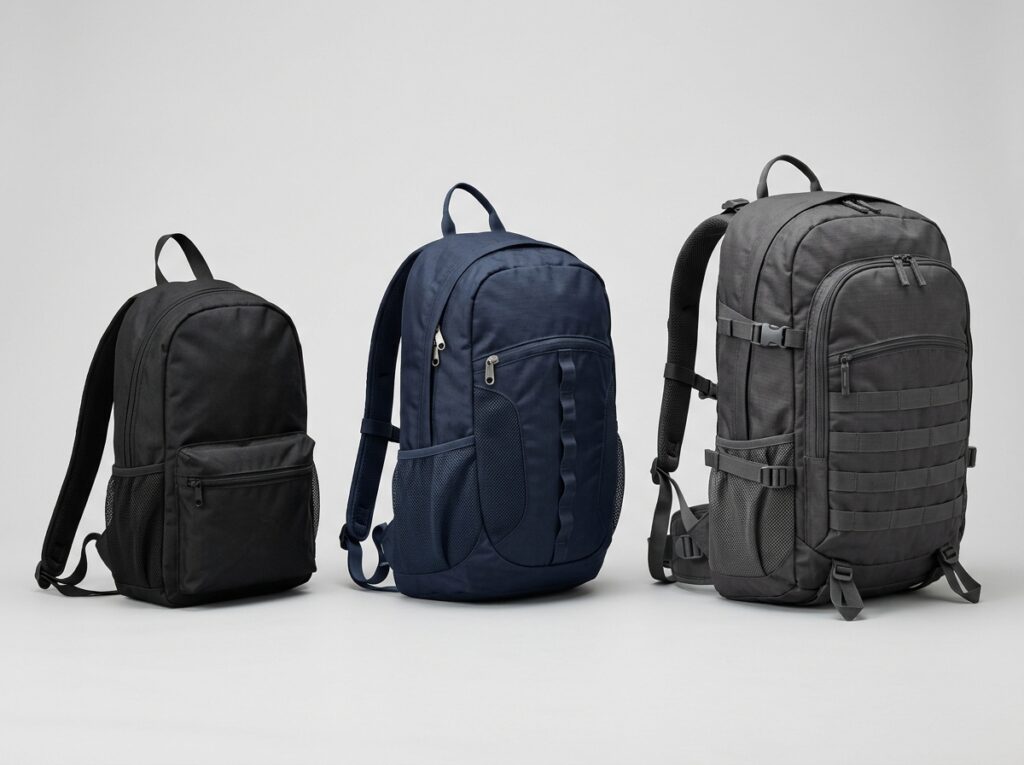
What size backpack for day hiking do you actually need? For most people: 20 to 25 liters. That’s enough room for water, food, the 10 Essentials, and one extra layer, without leftover space that tempts you to carry things you will not use. Go smaller for short, flat, warm weather hikes. Go bigger only for cold shoulder seasons, longer mileage, or carrying gear for someone besides yourself.
My first hiking backpack was 35 liters, bought on sale for $40 off, for a 4-mile loop with maybe 400 feet of gain. I filled every inch of it: a second pair of shoes, a paperback, a camp stove I did not need, three granola bars for one afternoon. The bag weighed close to 18 pounds before I added water. My shoulders were sore for two days after a hike that should not have been hard at all.
That’s not a packing problem. It’s a math problem. Empty space in a backpack does not stay empty. If the bag has room, you will find something to put in it, and you will carry weight you never touch. The honest answer to how big of a backpack for a day hike isn’t really about what fits. It’s about what you will actually use.
This guide breaks down the real liter ranges by hike type, where the standard 20 to 25 liter answer stops applying, and the one question that matters more than capacity.
Table of Contents
What Size Backpack for Day Hiking Actually Means
Backpack size is measured in liters, a number that describes internal volume, not weight capacity. A 20-liter pack and a 20-pound load are two different questions, and mixing them up is where a lot of beginners go wrong. You can pack 20 liters of gear that weighs 8 pounds or 20 liters that weighs 18, depending entirely on what’s inside.
REI’s own daypack size guide puts anything under about 40 liters in the daypack category, with compact day-hiking packs typically running 11 to 20 liters. That 40-liter ceiling is a category label, not a target. Almost nobody hiking a single day needs to get anywhere near it. If a pack is brushing up against 40 liters, you have wandered into overnight-pack territory, whether the tag calls it a daypack or not.
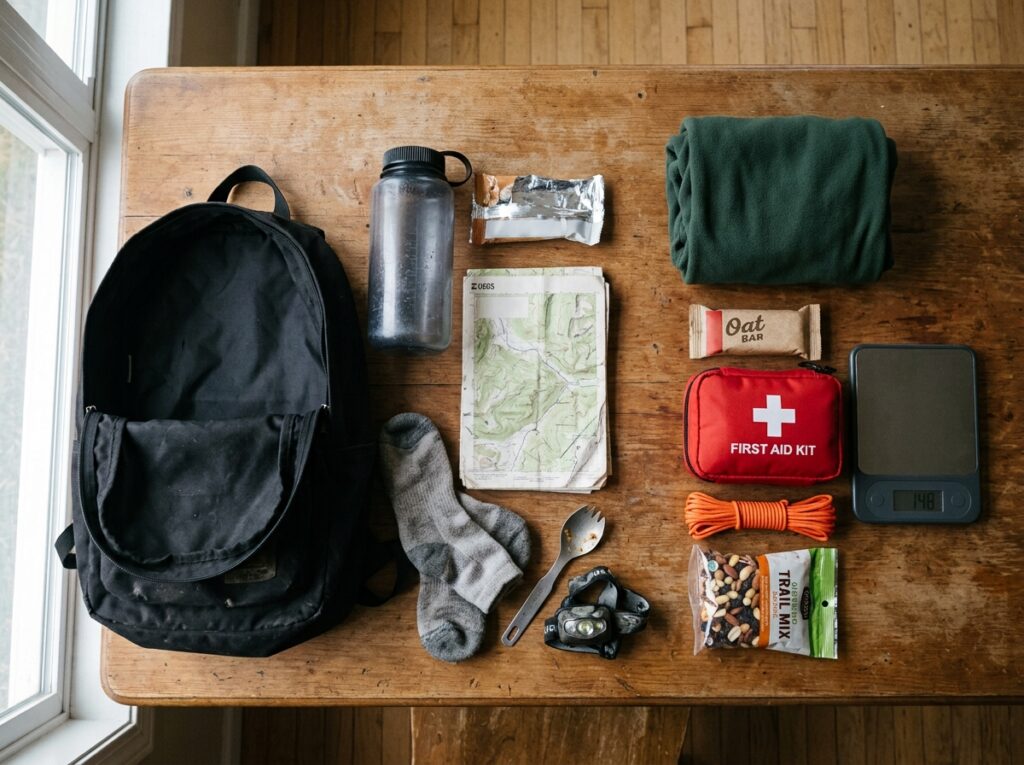
How big of a backpack for a day hike, sorting used gear from the untouched pile
The gear industry has a real incentive to sell you the bigger size. A 30-liter version of a pack usually costs $20 to $40 more than the 20-liter version of the same model, and “you might need the extra room someday” is an easy upsell that costs the store nothing to say. The honest version: you are buying for the hikes you actually take this season, not the backpacking trip you might do eventually. That trip, if it happens, needs a different pack built around a sleeping bag and pad, not a bigger version of your day pack.
Three things actually determine the size you need: how many hours you’re out, what the temperature is doing, and whether you’re the one carrying gear for anyone besides yourself. Distance matters less than most people expect. A flat 8-mile trail and a steep 4-mile trail can call for close to the same size pack, because what changes between them is time and how much you sweat, not raw mileage.
5 Honest Answers to What Size Backpack You Actually Need
Here’s what actually decides the number, broken into five specific answers with no hedging.
Most day hikes need 20 to 25 liters. Not more.
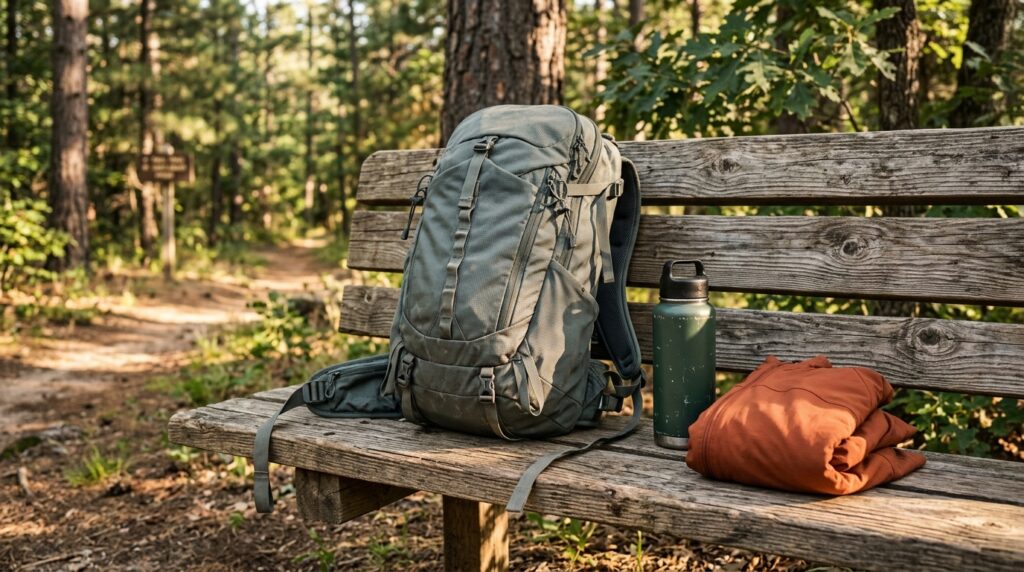
For a maintained trail under 10 miles, in three-season weather, 20 to 25 liters covers what you actually need: about 2 liters of water, food for the day, the 10 Essentials, and one extra layer. A 20-liter pack like Osprey’s Daylite Plus, which runs about $80, is a fair real-world example of what that capacity looks like once it’s loaded and on your back. This is Fama’s default pick for a first daypack. It isn’t a hedge. It’s the number that matches the hike most beginners are actually doing on a given Saturday.
A bigger pack doesn’t mean a better hike. It means a heavier one.
Give yourself 10 extra liters of room and you will find 10 liters of things to fill it with: a second layer you won’t wear, snacks for a hike twice as long, a paperback, a full-size first aid kit when a stripped-down version would do the same job. None of that makes the hike better. It makes the pack heavier, which makes the hike harder, which is the opposite of what new gear is supposed to do for you.
The honest caveat on the 20 to 25 liter recommendation: it only works if you’re disciplined about not filling the extra room a bigger bag hands you. A smaller pack builds that discipline in automatically, because the room simply is not there to fill.
The real exceptions: cold weather, kids, cameras, and long miles
Four situations genuinely call for more than 25 liters. Cold shoulder-season hikes, roughly below 40°F at the trailhead, where you’re carrying a real insulating layer plus gloves and a hat you’re not wearing yet. Hiking with kids, where you end up carrying their extra layer and snacks along with your own. Real camera gear, a body and one or two lenses, which eats liters fast. And anything past 8 to 10 miles, where extra food and another liter of water start to matter.
Any single one of these pushes you toward 28 to 35 liters. Stack two of them, cold weather plus hiking with kids, for example, and 35 liters starts to feel tight rather than generous.
Torso length decides comfort more than the liter number does
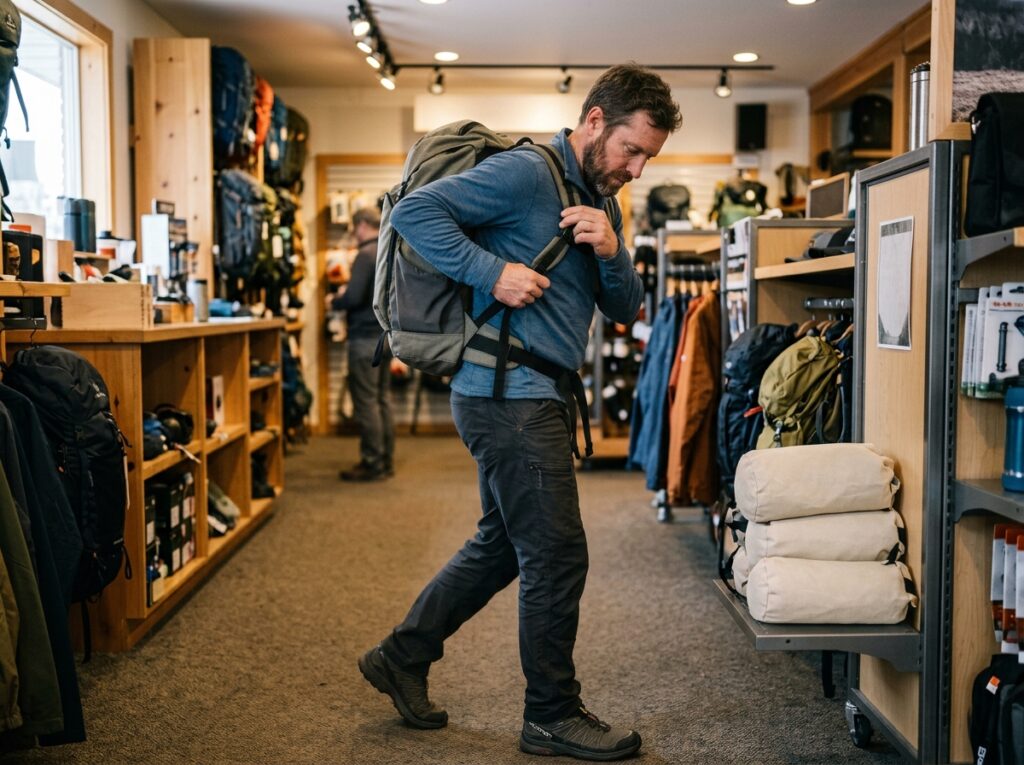
A 22-liter pack that fits your torso will carry better than a 30-liter pack that does not. Backpack sizing runs on torso length, not your height and definitely not the number printed on the tag. A mismatch shows up as shoulder pain or a pack that rides too high or too low, no matter how many liters it holds.
Osprey’s own sizing and fit guide walks through measuring torso length before capacity, which is the correct order and the one most people skip entirely.
💡 Trail Tip: Before buying, ask the store to load the pack with about 10 pounds of sandbags or dumbbells, which most outfitters keep on hand for exactly this, then walk around in it for five minutes.
An empty pack on your back tells you almost nothing about how it will actually carry once real weight is in it.
How big of a backpack for a day hike, sorting used gear from the untouched pile
When you’re stuck between two sizes, buy the smaller one
If you’re deciding between 20 and 25 liters, or 25 and 30, take the smaller size. A slightly tight pack forces good decisions about what’s worth carrying. A slightly roomy one invites the opposite. You can strap a jacket to the outside or tie it around your waist in a pinch. You cannot un-pack the 10 pounds of stuff that quietly filled a bag that had the room for it. This is the one piece of advice in this guide with no real exception attached to it.
A quick reference for day hiking backpack liters
Pack Size
Best For
What Actually Fits
10 to 15L
Flat hikes under 5 miles, warm weather
Water, snacks, phone, one light layer
18 to 22L
Most day hikes, 5 to 10 miles, any season
10 Essentials, 2L water, one extra layer
25 to 30L
Long days, shoulder season, cold starts
Extra layers, more water, camera gear
32 to 40L
Winter hikes, carrying gear for a group
Traction devices, insulated layers, shared gear
Fama verdict
For most beginners, most of the year
18 to 22L. Size up only if you actually need to.
What You Can Skip on a Day Hiking Backpack
Once you’ve settled on a size, the pack aisle tries to sell you features that have nothing to do with capacity. Here’s what a day hiker can skip without losing anything real.
A detachable daypack built into a bigger expedition pack. If you already own a 50-plus liter backpacking pack with a clip-off daypack, fine, use it for day trips. Buying one specifically for day hikes means paying overnight-pack prices for a feature you’ll actually use a handful of times a year.
A hydration sleeve sized to one brand’s proprietary reservoir. Any 20 to 25 liter pack with a basic hydration sleeve fits a standard 2 to 2.5 liter reservoir, or two 1-liter bottles, just fine. The reservoir does not need to be brand-matched to the pack.
A built-in rain cover, unless you hike somewhere wet often enough to use it more than a couple of times a season. A contractor bag lining the inside of your pack does the same job for most people at a fraction of the cost.
A high pocket count. More pockets sound like more organization. In practice, each pocket eats into your usable main compartment without adding real capacity, and a 22-liter pack with six small pockets often carries less usable gear than an 18-liter pack with two large ones.
Common Mistakes When Sizing a Day Hiking Backpack
Buying for the trip you might take someday
The most common mistake in this category is sizing up for a backpacking trip that has not been booked yet. A 40-liter pack bought “just in case” turns every single day hike between now and that hypothetical trip into a slightly worse experience. Buy for the hikes on your actual calendar. That future trip, if it ever gets booked, will need its own gear list anyway. “The day pack, but bigger” is rarely the right answer for an overnight.
Comparing liter numbers across brands as if they mean the same thing
Liter measurements are not perfectly standardized. Some brands count only the main compartment. Others add in every external pocket to reach a bigger-sounding number. Two packs both listed at 24 liters can hold visibly different amounts of actual gear once loaded. Compare packs in person when you can, and treat the liter number as a starting estimate, not a guarantee.
Not accounting for who carries the group’s shared gear
On a group hike, someone ends up carrying the water filter, the shared first aid kit, and the extra layer for whoever forgot one. If that’s you, plan for it ahead of time. A pack sized only for your own gear runs out of room fast once you’re also holding everyone else’s.
Judging capacity by outside pockets instead of real usable volume
Pockets and organization look like extra space. Often they’re just the same liters divided into smaller, harder-to-pack sections.
💡 Trail Tip: After your next hike, empty your pack and separate what you used from what you never touched, then weigh the untouched pile.
That number, not the liter rating printed on the tag, is your actual overpacking problem.
Signs You’ve Outgrown a 20 to 25 Liter Pack
The category-specific numbers, cold weather, kids, camera gear, longer mileage, are back in the answers above. This section is different. It’s how you tell whether one of those categories actually applies to you, instead of guessing ahead of time.
You’re leaving something behind that you’d genuinely use. If the rain shell or the extra layer stays in the car because there’s no room left, not because you decided you didn’t need it, that’s a capacity problem, not a willpower problem.
You’re compressing the 10 Essentials to make them fit. Jamming a first aid kit into a jacket pocket because the main compartment is already full is the pack talking, not you packing badly.
The zipper is under real strain on a normal hike, not just the one time you overpacked for a trip that ran long. A pack that’s tight at rest on your standard route is undersized for that route.
Someone in your group is carrying shared gear on top of their own kit, a water filter, a first aid kit, a spare layer nobody else remembered, and nobody planned for it ahead of time.
One rule of thumb: a single overstuffed hike is a packing mistake. The same problem showing up on three separate hikes is a sizing mistake, and that gets fixed by buying the next size up, not by packing more carefully next time.
How big of a backpack for a day hike, sorting used gear from the untouched pile
How many liters do I need for a day hiking backpack?
Most day hikers need 18 to 25 liters. Picture it as two liters of water, a day’s food, a rain shell, and the 10 Essentials, with a bit of slack left over rather than a bag stuffed to the zipper. Drop down to 10 to 15 liters for flat hikes under 5 miles in warm weather. Move up only for long days, cold starts, or carrying gear for someone else.
Is a 20L or 30L pack better for day hikes?
For most maintained-trail day hikes under 10 miles, 20L wins. It’s lighter, cheaper, and forces you to pack only what you’ll use. 30L makes sense if you regularly hike in cold shoulder seasons, carry layers for a hiking partner, or bring a camera setup that takes real space. If you’re not sure which describes you, start with 20L. You can always size up once you know exactly what you’re missing.
How big of a backpack do I actually need for a day hike?
Big enough for a day’s food and water plus your basic safety gear, which for most people lands between 18 and 25 liters. Size is not the only variable that matters. A well-fitted 22L pack carries better than a poorly fitted 28L one, so try any pack on loaded with roughly 10 pounds before buying it, not empty off the shelf.
What’s the best daypack capacity for a beginner?
18 to 22 liters is the best starting daypack capacity for most beginners. It’s small enough to keep you from overpacking and large enough to fit everything a day hike actually requires. If your hikes are consistently under 5 miles and mostly flat, you can go as small as 12 to 15 liters and still fit what you need.
Can I use a 15-liter backpack for a day hike?
Yes, for shorter hikes. A 15-liter pack comfortably fits water, snacks, a light layer, and basic first aid for hikes under 5 to 6 miles in mild weather. It gets tight once you add real elevation gain, colder temperatures, or a second layer. If your typical hike runs longer than that, size up to 20 liters instead of forcing everything into 15.
Do I need a hip belt on a day hiking backpack?
Only if you’re regularly carrying more than 15 to 20 pounds. Under that weight, most hikers do fine with just shoulder straps and a sternum strap. Once you cross into the 20-pound range, which happens fast with winter layers or shared group gear, a hip belt shifts the load to your hips and saves your shoulders on anything past a couple of miles.
The Smaller Pack Is Usually the Right Answer
What size backpack for day hiking comes down to this: 20 to 25 liters for most people, most hikes, most of the year. Bigger only for cold weather, kids, camera gear, or real mileage. Smaller only for short, flat, warm weather trails you could do with a water bottle and a windbreaker.
Asking this question before buying anything already puts you ahead of most first-time buyers, who grab whatever’s on the sale rack and figure out the size problem the hard way, usually around mile 3.
One thing to do before you buy: measure your torso length, which any outfitter can do for you in about five minutes, and try the pack on loaded, not empty. The liters on the tag matter less than whether the straps sit where they’re supposed to.
Next Steps
Right now: If you already own a backpack, weigh what’s actually inside it after your next hike. Anything you did not touch tells you your real capacity number.
Before you buy: Measure your torso length and try any pack on loaded with about 10 pounds, not empty off the shelf.
After a few hikes at this size: Notice whether you’re consistently short on room, cold mornings or longer days, or you never come close to filling it. Either answer tells you what to do next.
Oliver Fall is the founder and lead gear specialist at FAMA. With years of wilderness trail experience across North America, Oliver focuses on breaking down outdoor barrier-to-entry, providing honest boot tests, safety protocols, and zero-judgment advice for beginner hikers.