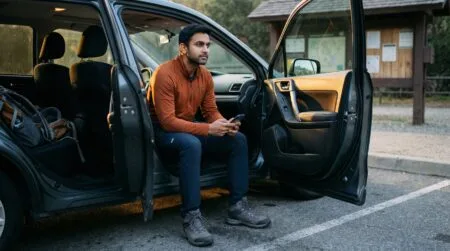


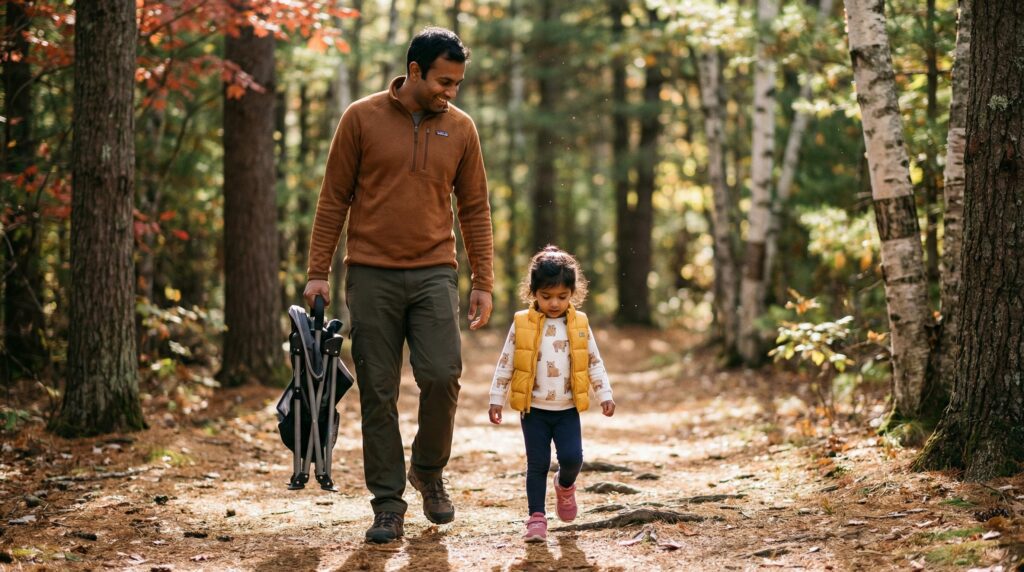
One of the most frequent questions parents ask when getting into family outdoor recreation is what age children can realistically start hiking. The honest answer is that kids can start enjoying the trail at almost any stage—infants can ride comfortably in supportive carriers from early infancy, while toddlers can begin exploring short, flat dirt paths around age two or three. The secret is matching the trail distance and pacing to their natural curiosity.
⚡ Quick Trail Takeaways
- Start Age: Toddlers (18-24 mos) can start with 0.5-mi nature walks; babies ride in framed carriers.
- Distance Rule of Thumb: Max mileage = age of child in miles (e.g. 5 yrs old = 3-5 miles max).
- Snack Strategy: Pack high-interest snacks every 30 minutes to maintain morale and energy.
Honest answer: babies can go on trails as passengers from around 6 weeks with pediatrician clearance. Toddlers can walk their own trail sections from around 18 to 24 months. School-age kids can handle real distance. The age is less important than most parents expect. The trail you pick is what determines whether it goes well.
I took my 3-year-old nephew on what I had convinced myself was a “totally manageable” trail: 2.4 miles, mostly flat, well-marked. We turned around at mile 0.6. He was done in a way that was not negotiable. Sitting in the dirt, arms crossed, fully done. The trail was age-appropriate on paper. The distance was not. That 20-minute hike taught me more about hiking with kids what age means in practice than anything I had read beforehand.
This article covers specific age ranges, the 7 expectations that separate a decent first family hike from a miserable one, and the kid-friendly hike tips that actually change outcomes.
🟠 Before You Head Out:
This guide covers preparation for family day hikes. Children dehydrate faster than adults and
show heat stress differently. If a child shows confusion, hot dry skin, or stops responding
normally on trail: move to shade immediately, cool with water, and call 911.Read on for everything you need to prevent this situation entirely.
| Child Age Group | Max Recommended Mileage | Trail Pacing Expectation | Essential Gear |
|---|---|---|---|
| Babies (6-18 Mos) | Carrier Dependent (2-4 mi) | Adult Pace (In Carrier) | Ergonomic Framed Backpack Carrier |
| Toddlers (2-4 Yrs) | 0.5 to 1.5 Miles | Very Slow (1 mph, Exploration) | Sturdy Footwear & Change of Clothes |
| Kids (5-8 Yrs) | 3 to 5 Miles | Moderate Pace with Breaks | Kids Hydration Pack & Trail Snacks |
🥾 Oliver’s Trail Notes & Field Observations
When taking my nieces and nephews out onto nature paths around Chantry Flat and San Antonio Falls, I learned quickly that adult hiking goals must be discarded immediately. A reliable rule of thumb I tested: a child can comfortably hike about one mile per year of age up to age 5, provided the trail is relatively flat and packed with interesting rocks, streams, or fallen logs. If you force a 4-year-old on a 5-mile march, you will end up carrying them for 3.5 miles.
Hiking With Kids: What Age Works for Which Trails
The age ranges that actually matter for trail planning
Age is a useful starting frame, but the variation within age groups is wide enough that it can mislead you. A physically active 4-year-old who walks everywhere is a different trail partner than a 4-year-old who mostly rides in strollers. Use these ranges as the starting point, then adjust down for your specific child.
Infants (6 weeks to 12 months): You hike. The infant rides. A quality soft-structured carrier or framed baby backpack is the setup. Keep total outdoor exposure under 2 hours, avoid trails with no shade in heat above 75°F, and check with your pediatrician before the first outing. The American Academy of Pediatrics advises keeping infants under 6 months out of direct sun entirely. On trail, this means choosing shaded paths and covering exposed skin. The infant has no say in sun safety decisions.
Toddlers (12 to 36 months): Walking starts around 12 months, but trail walking at their own pace is typically realistic around 18 to 24 months. Realistic distance: 0.25 to 0.5 miles under 18 months, 0.5 to 1 mile between ages 2 and 3. Flat terrain only. Plan for stopping every 5 to 10 minutes. Always bring a carrier for the moment they are done walking. It will happen.
Preschoolers (3 to 5 years): Most 4 and 5-year-olds can manage 1 to 2 miles on flat or gently rolling maintained trail with regular breaks. Three-year-olds vary considerably. Start at 0.75 miles and adjust from there based on what you see, not what you hoped for.
School age (6 to 10 years): 2 to 4 miles is reasonable for most kids in this range on maintained trails with under 200 feet of elevation gain per mile. Six-year-olds are not ten-year-olds. Start at the lower end regardless of what your kid says before leaving the house.
10 and older: Trail planning starts to resemble adult beginner hiking.
Hiking with toddlers: what that first mile actually looks like
Hiking with toddlers requires a specific mental shift that family trail guides and parenting content usually skip: you are not going somewhere. You are walking in nature with a small person who finds a stick on the ground more interesting than any viewpoint. The stick is the point.
The practical setup for hiking with toddlers: choose a loop or out-and-back under 1 mile with something visually interesting partway through. A creek. A large rock. A bridge. An open meadow. That feature is your destination, not the trailhead marker.
Trail surface matters more for toddlers than for any other age group. Smooth packed dirt is manageable. Loose rock, root-covered trail, or significant mud slows their pace by 50 percent and increases frustration at roughly the same rate. Read the trail surface in AllTrails reviews before you go, not just the difficulty rating.
The 7 Expectations Every Parent Needs Before the First Hike
Expectation 1: The trail takes three times longer than the description suggests
A 2-mile trail takes most adults 45 to 60 minutes. With a 5-year-old, plan 2 to 2.5 hours minimum. With a toddler, time is nearly irrelevant to your planning. Distance is not the right unit of measurement for hiking with kids at any age. Time is.
The fix: take the trail’s distance, calculate your adult pace, then triple it. That number is your planning figure. If the resulting time does not fit your day, choose a shorter trail. Do not tell yourself the kid will keep pace if you just set a consistent pace. They will not.
Expectation 2: Stopping constantly is the point, not the obstacle
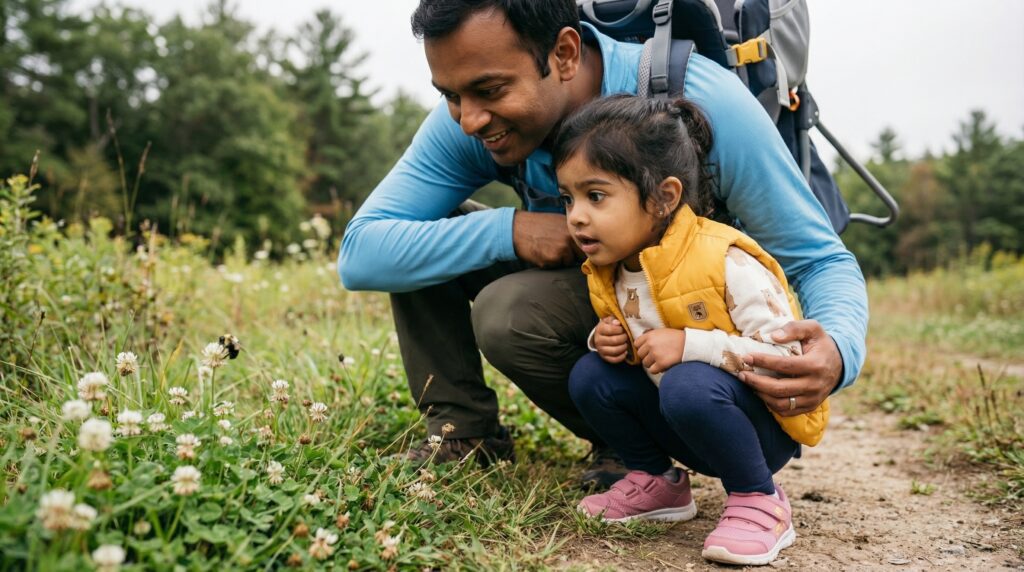
Kids stop. A lot. A 4-year-old investigating a caterpillar for 8 minutes is having exactly the experience that hiking exists to create. The stopping is not an obstacle to the hike. It is the hike.
The parents who build lasting family trail habits most quickly are the ones who stop orienting around a destination or finish time and start noticing what their kid is noticing. That shift usually takes two or three outings to arrive naturally. On the first hike, most adults are still calculating pace.
Expectation 3: Someone will want to quit before you do
Plan a turnaround point before you leave the trailhead. Not a hope that everyone will feel like turning around at a natural spot. An actual decision: we turn around at 45 minutes regardless of where we are on the trail.
This is the single most useful kid-friendly hike tip I can give you: set the turnaround time before the hike, not during it. The alternative is reading your child’s signals in real time while you are tired and they are escalating, which is not a reliable process. Set the rule before the emotion is present.
Expectation 4: Snacks are infrastructure
Offer snacks every 20 to 30 minutes for kids under 8 on any hike over 45 minutes. Not when they ask. On a schedule. Blood sugar drops in small bodies produce immediate behavioral changes that look like resistance to hiking but are actually hunger. The fix is a granola bar 10 minutes before the problem appears, not after.
Water follows the same rule. Kids under 8 need roughly 4 to 6 ounces of water every 20 minutes on warm days. They will not reliably ask for it. Offer it on a schedule and track how much they are actually drinking, especially in heat above 70°F.
Calorie-dense snacks work better on trail than volume-heavy ones: nut butter packets, cheese sticks, dried fruit, crackers. Anything that requires utensils or a full plate stays in the car.
Expectation 5: The first hike might not feel like a win in the moment
This is the honest admission that most introducing kids to hiking content skips: the first family hike might be fine, and it might also be short, uncomfortable, and end in someone crying. Both outcomes are normal. The goal is not maximum joy on hike 1. It is a first experience that does not produce a negative association with being outside.
If you come home from the first family hike and the kid says “that was okay, I guess,” that is a successful first hike. The enthusiasm builds across multiple outings, not at the end of the first one.
Expectation 6: Short and successful beats long and anything else
My standing opinion on hiking with kids at any age: always choose the shorter option when you are genuinely uncertain. A 1-mile hike that ends with your kid wanting to go back next weekend is worth five times more than a 3-mile hike that ends with them associating trails with being tired and unhappy. You are building a habit, not completing a distance.
Short trails give you room to adjust. A 1-mile hike that goes well and has time left can be extended. A 3-mile hike you are already committed to cannot be shortened once you are at mile 1.5.
Expectation 7: Their pace is not your pace on any terrain
Downhill is harder for kids than most parents expect. Their center of gravity sits higher relative to their leg length, and their proprioception is less developed than adults. A descent that takes you 15 minutes will take a 6-year-old 25 to 30. Plan extra time in both directions, not only for the climb.
The counterintuitive part: uphill sections are often easier for young kids than flat trail stretches, because they naturally move at low gear all the time. A child who lagged on the flat section sometimes moves confidently on a gentle climb. Note that when it happens. It is useful data for the next trail selection.
🥾 The Snack-per-Mile Incentive System
Keeping young kids moving on trail is 90% psychology and 10% physiology. In my pack, I divide treats into small labeled bags and deploy one high-value snack—like dried fruit, gummy bears, or pretzel sticks—every 30 minutes. Making stops at micro-landmarks like a mossy boulder or a wooden footbridge turns the hike into an engaging treasure hunt rather than an endurance slog.
Kid-Friendly Hike Tips That Change the Outcome
How to pick the right trail for a family hike
Family trail guides like AllTrails and Hiking Project give you the filter combination that actually matters for hiking with kids: distance, trail surface, elevation gain, and recent reviews. Run all four before you look at trail photos or descriptions.
The filter combination for family hiking for beginners: under 2 miles total, under 100 feet of elevation gain per mile, trail surface listed as dirt or packed gravel, and at least one review in the last 30 days confirming the trail is currently accessible. That set of criteria eliminates most of the wrong options before you evaluate anything else.
For kids specifically, the AllTrails photo section tells you more than the text description. Look at photos of the trail terrain. A trail rated Easy that has photos full of loose rock and steep root sections is not a beginner family trail regardless of its official designation. Recent photos from other families with kids are the most useful data available.
The one filter most parents skip
Check the parking situation before you leave home. Trails near nature preserves and county parks in urban and suburban areas often fill before 9 AM on weekends. A child who waited 30 minutes in a hot car for a parking spot arrives at the trailhead already frustrated, which is not the starting position you want. Park early or choose a trail with a larger lot. AllTrails shows parking information in the trail details section. Read it.
Introducing kids to hiking without performance pressure
Introducing kids to hiking works best when the outing has no measurable goal they can feel themselves failing at. No “we are going to make it to the top.” No “let’s see how fast we can do this.” No “come on, almost there” used 12 times in a row.
A scavenger hunt format replaces the implicit distance goal with one they can succeed at. Before the hike, write down 5 things to find: something brown, something that makes a sound, something with spots, something bigger than your hand, a bird or an insect. That list becomes the hike’s purpose. Kids engaged with a task stay engaged significantly longer than kids who are just walking.
Common Mistakes on the First Family Hike
Four patterns that end the day early
Choosing a trail for adults and hoping kids keep up
This is the most consistent pattern behind bad first family hikes. The adult picks a trail on adult criteria: scenery, distance, elevation, reputation. Child endurance becomes the variable that will hopefully cooperate. It usually does not. Pick the trail for the youngest legs in the group. The adults can return for a longer version on a separate trip.
Not setting a turnaround time before leaving the car
Turning around feels much harder in the moment than it sounds in planning. Kids escalate. Adults get invested in reaching a specific point. The decision gets delayed until someone is visibly struggling. Set the turnaround time before you leave the parking lot. Write it on your phone if needed. A pre-committed decision removes the in-the-moment negotiation that consistently delays the right call.
Underestimating sun and heat for small bodies
Children have a higher surface-area-to-body-weight ratio than adults. They heat up faster and show signs of heat stress differently. A 75°F day with direct sun that feels comfortable to an adult is meaningful thermal load for a toddler who has been on trail for 90 minutes. The National Park Service’s family day hike safety guidance consistently identifies heat management as the leading preventable issue on family day hikes. Check the temperature forecast and start time: before 10 AM in summer, before noon in spring and fall if temperatures will exceed 80°F.
Treating the hike as a workout you are bringing them along on
Introducing kids to hiking for the first time requires orienting the entire experience around their interest level, not your fitness goals. A 5-year-old who spends 12 minutes examining an ant colony on a log is not interrupting your workout. That 12 minutes is the value proposition of being outside. Families who treat early hikes as exercise to be tolerated report consistent resistance from their kids on future outings.
When to Change Your Plan
Specific thresholds for hiking with kids at any age
Children show distress signs differently than adults and often cannot explain what is wrong. These thresholds are specific so you do not have to diagnose in the moment.
Turn Around Now
- A child shows confusion, stops responding to your voice normally, or has hot dry skin without sweating despite physical effort
- A child has not had water in more than 45 minutes in temperatures above 70°F
- A child is limping or visibly favoring one leg without a clear explanation
- Continuous crying that does not resolve after 10 minutes of rest, shade, water, and a snack
- Less than 1 hour of daylight remains and the trailhead is more than 30 minutes away at current pace
Slow Down and Reassess
- Child is asking to be carried when they have not needed it earlier on this same hike
- Visible flushing or face redness that does not resolve after 5 minutes in shade
- Child is unusually quiet or disengaged after being actively engaged earlier on the same outing
You’re Fine: Keep Going
- Child is making observations about surroundings, asking questions, or engaged with the scavenger hunt task
- Drinking water when offered without negotiation
- Energy level is consistent with earlier in the hike
One rule: When unsure which tier applies, treat it as the higher one. Cutting the hike 30 minutes early is a minor inconvenience. Missing a distress signal on trail with a child is not.
What is the answer to hiking with kids what age can they actually start?
Hiking with kids what age depends on how you define hiking. Infants can go on trails in a carrier from around 6 weeks with pediatrician clearance. Kids walking their own trail distances is realistic from around 18 to 24 months. The first meaningful trail milestones are usually ages 4 to 5, when most children can reliably walk 1 to 2 miles with predictable behavior. There is no single right age. There is a right trail for each age.
How far can a 5-year-old hike?
Most 5-year-olds can manage 1 to 2 miles on flat to gently rolling maintained trail with regular snack and water breaks. That number assumes elevation gain under 100 feet per mile and a trail surface of packed dirt or gravel rather than loose rock. Plan for the hike to take 2 to 3 times longer than the same distance would take an adult. The distance you can do with a 5-year-old matters less than picking the right trail to do it on.
What are the most useful kid-friendly hike tips for a first outing?
Three kid-friendly hike tips that consistently produce better first experiences: choose a trail with something visually interesting partway through rather than just an out-and-back walk to a map marker, bring snacks and offer them on a schedule rather than on demand, and set a turnaround time before you leave the parking lot rather than deciding it on trail. Those three changes address the most common first family hike failure modes before they occur.
What should I bring when hiking with toddlers?
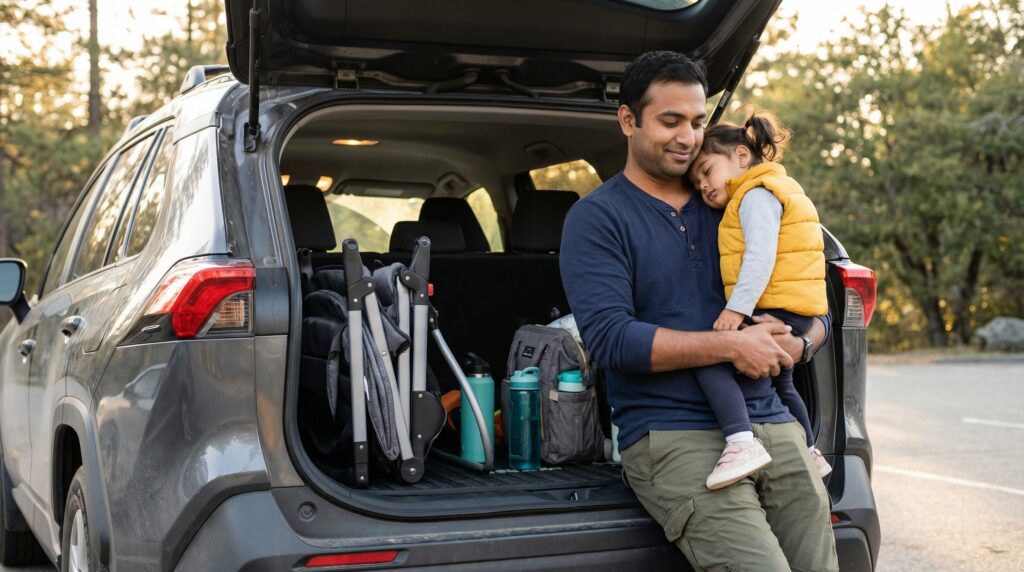
Beyond the standard day hike kit: a carrier for when they are done walking (plan for it rather than hoping against it), sunscreen reapplied every 90 minutes, a change of clothes in a dry bag, double the snacks you think you need, and water in a container they can drink from independently. Hiking with toddlers also means checking that the carrier is manageable on the specific terrain, since you may be carrying them plus your pack for sections of the return.
How do I start introducing kids to hiking if they resist going outside?
Introducing kids to hiking works better when the first several outings are not called hiking. A walk to find the biggest rock. A creek-finding mission. A bug-spotting trip through the nature preserve. The physical experience of trail walking begins before the concept of hiking needs to be established. Once they have had enough low-stakes positive experiences outside, future outings carry that positive association rather than uncertain obligation.
What do family trail guides tell you that hiking apps miss?
Family trail guides from land managers like the National Park Service and Forest Service include safety information, seasonal closures, and amenity details that trail apps do not always capture. The REI Co-op’s u003ca href=u0022https://www.rei.com/learn/expert-advice/kids-hiking.htmlu0022 target=u0022_blanku0022 rel=u0022noreferrer noopeneru0022u003efamily hiking planning guideu003c/au003e covers gear and trail selection specifically for family outings, including what to look for on the trail page before committing to a drive. For current conditions on specific trails, sort AllTrails photos and reviews by newest. Recent family photos of the actual terrain tell you more than the official difficulty rating.
Hiking With Kids: What Age Matters Less Than Trail Choice
Hiking with kids what age the question gets asked is usually less important than the trail you choose for that age. A well-selected trail at age 3 produces a positive experience. A poorly selected trail at age 7 produces a reason not to go back. The age sets the outer boundary. The trail selection determines what happens within it.
The criteria that consistently change outcomes: distance under 2 miles, elevation gain under 100 feet per mile, something visually interesting partway through, and a turnaround time set in the parking lot. Apply those four to your family’s first several hikes and you will have a fundamentally different experience than most first-time family hiking for beginners reports.
Next Steps
- Right now: Find a trail near you under 1.5 miles with something visually interesting partway through: a creek, a boulder, a bridge, or an open area. That is your first family trail target.
- Before your first family hike: Set a turnaround time. Write it in your phone. Pack snacks in an accessible front pocket, not buried in the main compartment.
- Day of: Start before 9 AM if temperatures will exceed 75°F. Read the 5 most recent AllTrails reviews for current trail conditions before leaving.
Frequently Asked Questions
How do you keep kids entertained on a hike?
Turn the hike into a game by looking for specific bugs, playing 'I Spy', or having a scavenger hunt for different colored leaves.
Do kids need hiking boots?
For simple dirt paths, standard supportive sneakers are fine for young kids. Hiking boots are only necessary for rocky, technical terrain.
Related Reads
Felt pressure to keep up with a hiking buddy’s idea of “not that far”? These 5 rules help you set a distance that actually fits your own fitness, not someone else’s pace.
Hit the trailhead right as the afternoon sun peaked and regretted it by mile two? These 3 rules figure out the smartest window to actually start hiking so you’re not battling heat or losing daylight.
Surprised by how different your body felt the day after your first hike, in ways good and weird alike? Here are 7 body changes first-timers often notice that are completely normal but rarely talked about.
Sprinted out strong only to be the one everyone’s waiting on by the final stretch? These 7 pacing techniques help you hold a steady rhythm instead of burning out early.
Noticed your legs torching way faster on one trail compared to another, even with the same listed mileage? This is the real reason behind that gap — elevation gain matters more than distance alone.