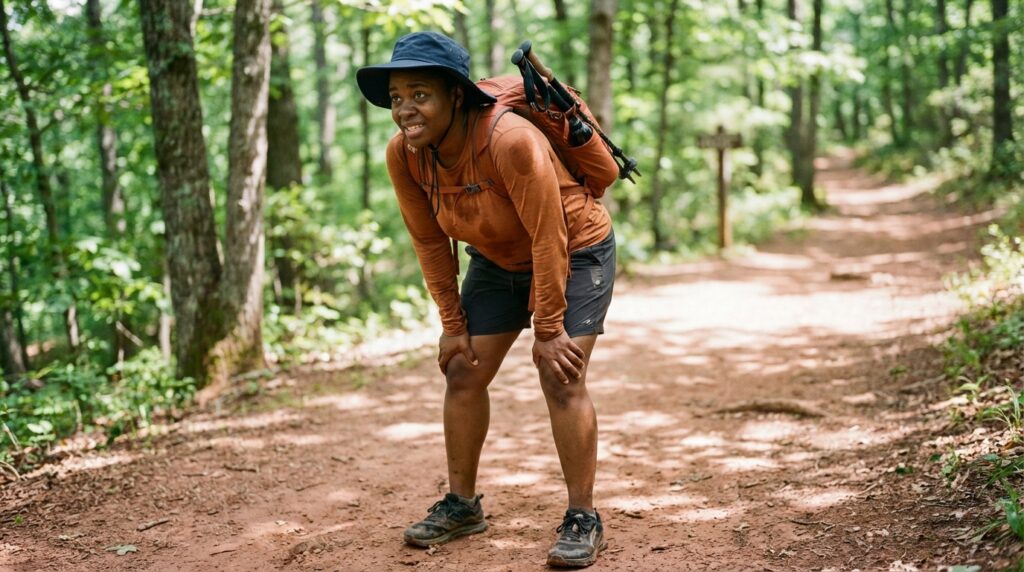

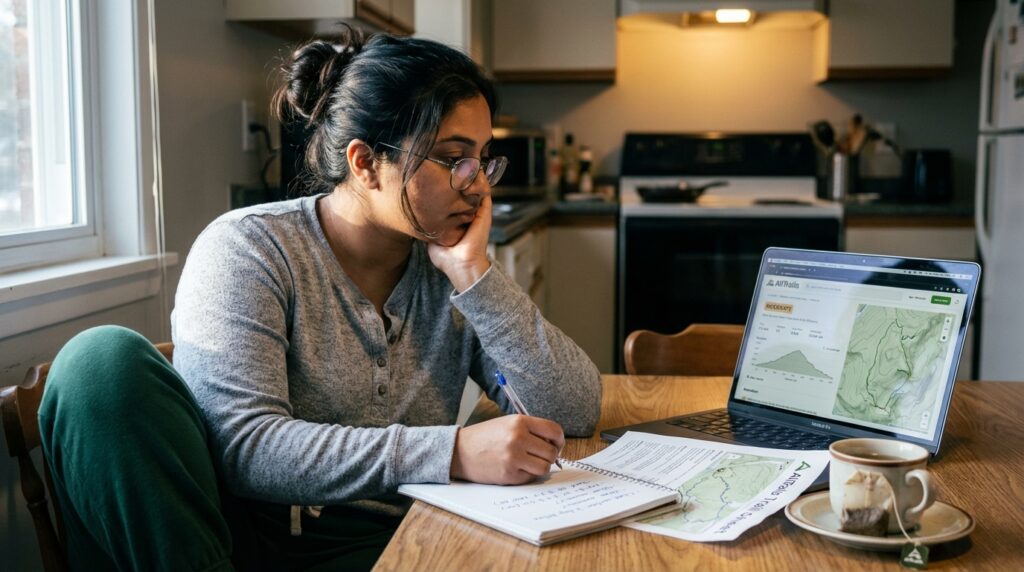
If you want to know how to plan a hiking trip for beginners, the honest answer is that the planning takes longer than most people expect. Almost none of that time is about gear. I learned this on what I’d call my first “real” hike attempt. I found a trail near Sedona, Arizona, based on a photo I’d seen on Reddit. It looked beautiful. I picked it entirely on that basis. I did not check the distance (7.2 miles), the elevation gain (1,400 feet), or the temperature forecast (high of 101°F). I brought one 1-liter water bottle and started at…
Author: Oliver Fall
National parks for beginners can feel like an overwhelming choice. There are 63 of them across the United States. They range from the flat, paved paths at Everglades to the 14,000-foot elevation of Rocky Mountain. Wrong season, wrong fitness level, wrong expectations. Any one of those turns a good idea into a frustrating day. I made that mistake on my first national park trip. A friend and I drove four hours to the Grand Canyon’s South Rim in late June, planning a “quick hike” into the canyon. The ranger at the trailhead told us the temperature on Bright Angel Trail…
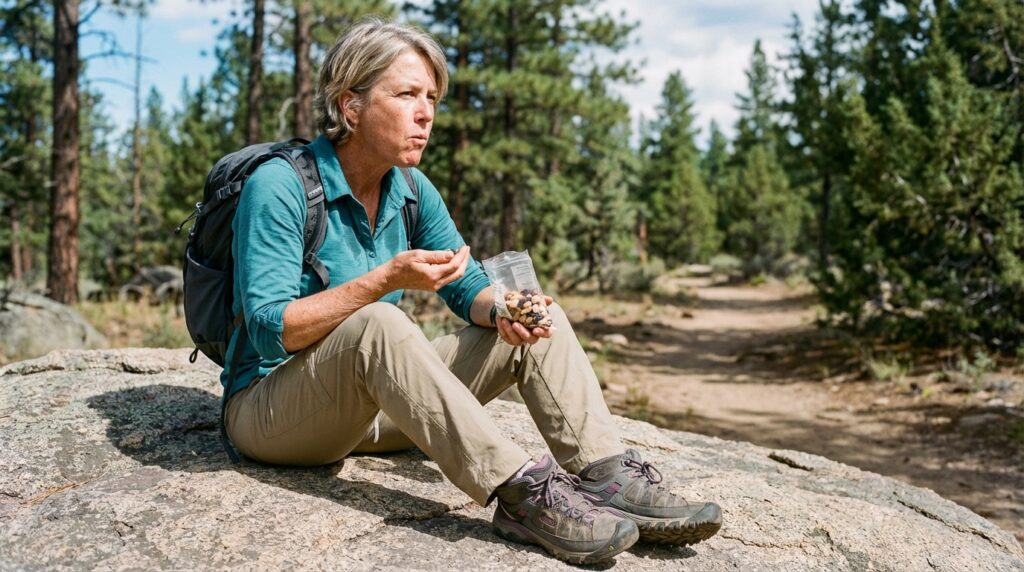
What to eat on a day hike is the kind of question that sounds obvious until mile four proves otherwise. I learned this on a 7.5-mile loop through the Delaware Water Gap in my second summer hiking. I had eaten a full breakfast during the drive, felt strong through the first three miles, and hit the turnaround point thinking I was managing fine. Then I went ninety minutes without eating anything. By mile six, my legs had gone heavy and the last stretch back to the trailhead felt twice as long as the map said it was. I had snacks…
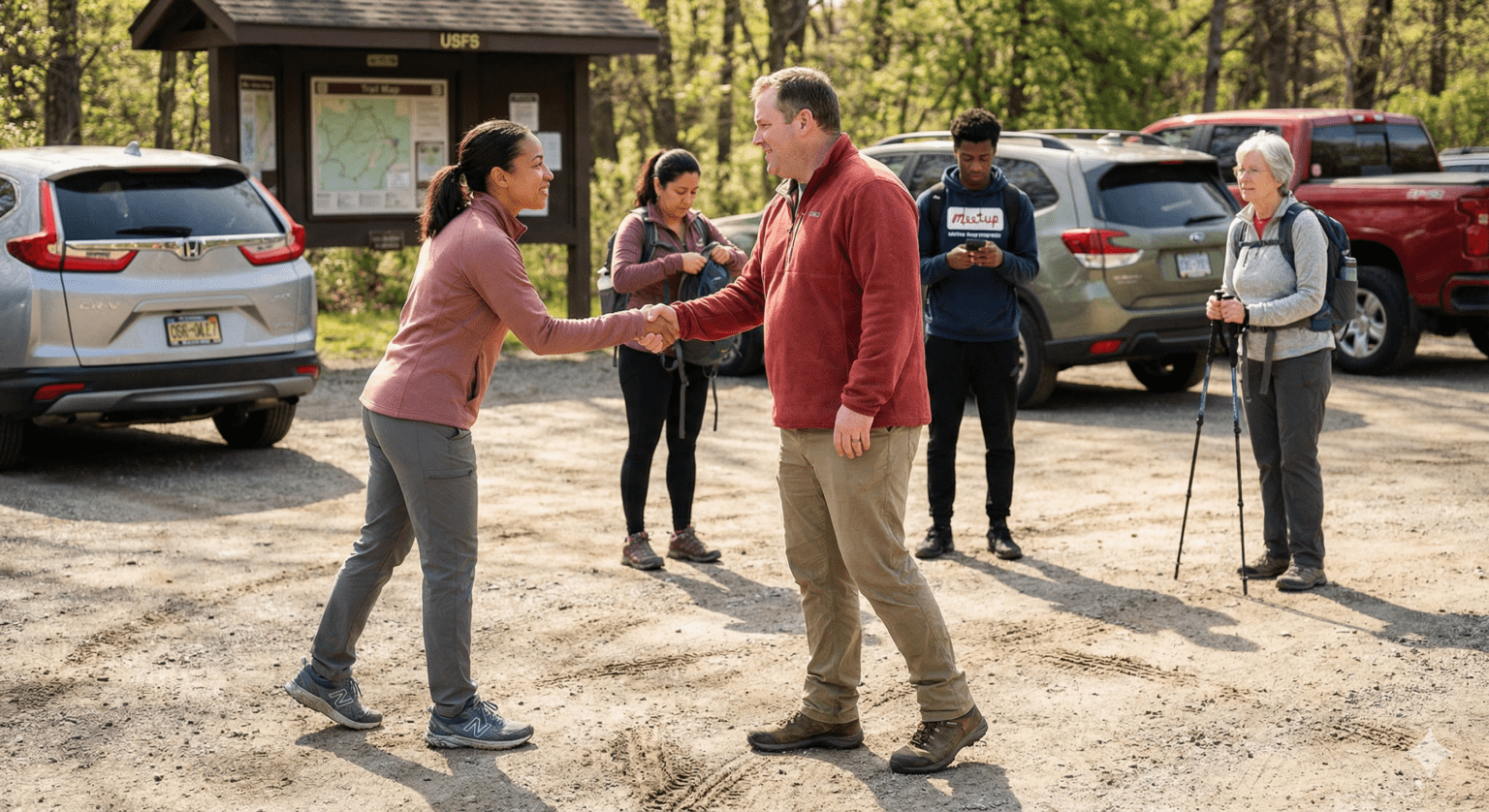
How to find hiking partners is something almost every new hiker hits around week three. The first hike is usually solo or with a reluctant friend who goes once and then has a standing conflict every Saturday. After that, you want someone consistent, and the obvious moves produce almost nothing: texting people who don’t hike, posting vaguely on Instagram. I texted eight people when I started looking for a regular hiking partner. Two responded. One came once and developed a rotating set of reasons to cancel. The other committed for three months before moving cities. By month two, I was…
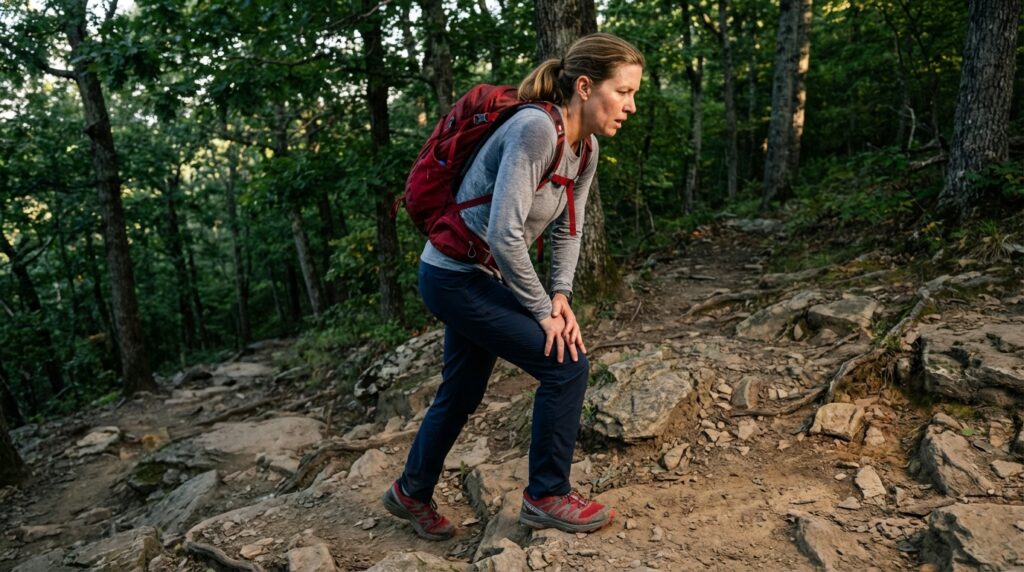
Here is the direct answer to how far can a beginner hike in a day: most adults starting out do well on 2 to 4 miles with minimal elevation gain. That is the benchmark. Where you land in that range depends on three things most beginner hiking guides skip entirely: your current fitness baseline, the elevation gain on your specific trail, and the trail surface underfoot. When I first started hiking, I signed up for a 4-mile loop a friend described as “totally manageable.” I did not check the elevation gain. It was 650 feet over 4 miles, which sounds…
Elevation gain hiking explained in plain terms: it’s the total amount of uphill climbing on a trail, measured in feet. That definition is technically correct and almost useless without context. A trail listing “1,000 feet of elevation gain” can mean a pleasant rolling walk or a leg-burning slog, depending entirely on how that gain is distributed. I learned this on a trail in the Santa Monica Mountains that showed 1,100 feet of elevation gain over 5 miles. I’d done a 900-foot gain trail the week before and it felt manageable, so I assumed this one would be similar. The difference:…
Fire lookout hiking trails are maintained paths that lead to historic fire towers built across US national forests and parks specifically to spot wildfires before they spread. Most are short. Most end at a view that takes 30 seconds to describe and an hour to stop looking at. And most fire lookout hiking trails were originally designed to be accessible to fire crews on foot, which means the approach tends to be well-graded, consistently marked, and shorter than hikers expect from the views they deliver. I hiked to the Watchman Fire Lookout at Crater Lake National Park two Septembers ago…
The hiking motivation tips that actually work on trail are not about mindset or mantras. They are specific mental maneuvers you practice on purpose, starting before the hard part begins. My third real hike was a 4.3-mile trail in Shenandoah National Park with 1,100 feet of gain. At mile 2, I wanted to turn around. Not because my legs were failing. Not because I was out of water. I had convinced myself, over about 15 minutes of quiet, miserable walking, that the view from the top was not worth the remaining mile and a half. I turned around. I got…
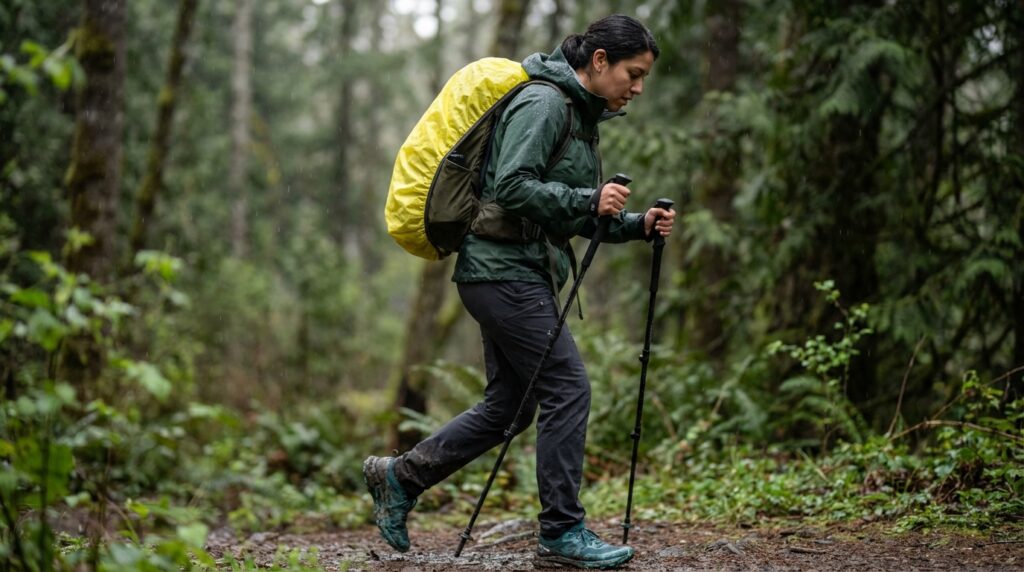
Most rain hikes are fine. That is the honest starting point, and most hiking in the rain tips content skips it because alarm gets more attention than reassurance. Rain changes the trail surface, reduces visibility slightly, and makes your gear work harder. It does not automatically make a hike dangerous. The two things that actually turn a wet hike into a hazardous one are lightning and hypothermia, and both follow specific, predictable rules. Lightning has a measurable distance threshold you can monitor in real time. Hypothermia has a temperature and wetness combination that produces it consistently. Neither one is random.…
Hiking for weight loss works. Not as a slow burn that requires patience and optimism. As a calorie-expenditure tool that, at three sessions per week on trails with real elevation, produces measurable changes in body composition within eight to twelve weeks for most people who start from a sedentary baseline. The number that makes hiking viable as a weight loss method isn’t the hourly calorie burn, which is lower than running. It’s the total session duration. Most people can sustain a two-to-three-hour hike comfortably. Most people cannot sustain a two-to-three-hour run. A 180-pound person who hikes for two hours on…
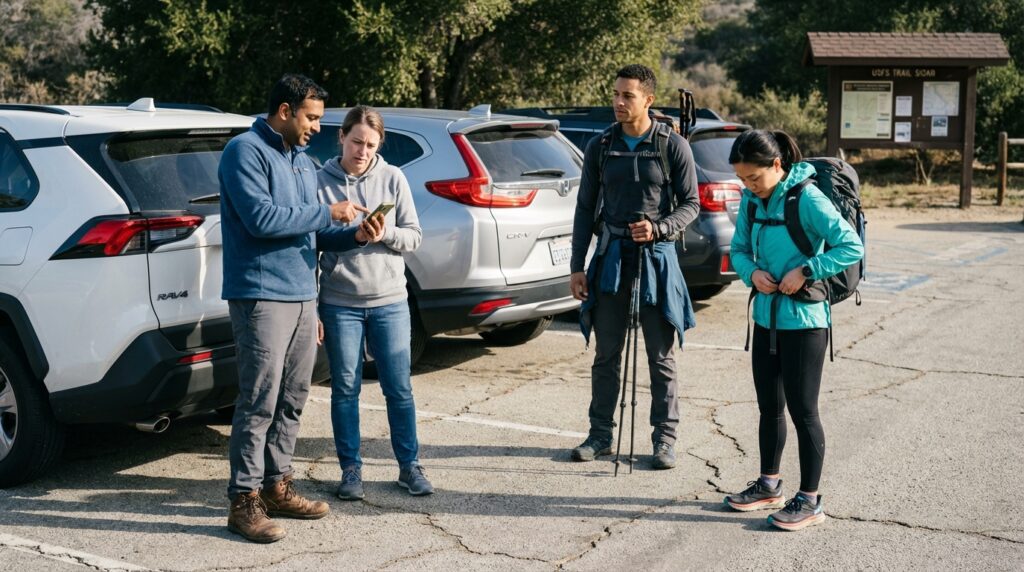
The most useful group hiking tips for beginners have nothing to do with how fit you are. They have to do with what happens in the parking lot before anyone takes a step. I learned this on a 5.4-mile trail in Griffith Park with four friends one October morning. Three different fitness levels in the group, zero pre-hike conversation about pace, and no agreement on what “moderate” meant on the trail description. By mile 2, our group had spread across 500 feet of trail. The two strongest hikers were stopped at every junction, waiting with increasingly visible impatience. The slowest…
The honest answer to building hiking confidence is that it does not come from reading more articles about hiking. It comes from your second hike, not your first. Your first hike is data collection. You will be slower than the trail description suggests. You will wonder what the hikers passing you are thinking. You will feel, at some point, like you have made a mistake and that this activity is not for you. Every hiker who now does this regularly felt exactly this. The difference between them and someone who quit after one outing is almost never fitness or gear.…
The most useful beginner hiking tips are not the ones that sound impressive. They are the ones that prevent the specific, avoidable problems that end hikes early and put people off the trail entirely. My first real hike was 7.4 miles in the Blue Ridge foothills of Virginia. I picked it because it was listed as “moderate” on a trail app and the photos looked like something I could handle. I had cotton socks, a half-liter of water, no downloaded map, and a vague plan to turn around “when it felt right.” By mile 4, my feet had blisters on…
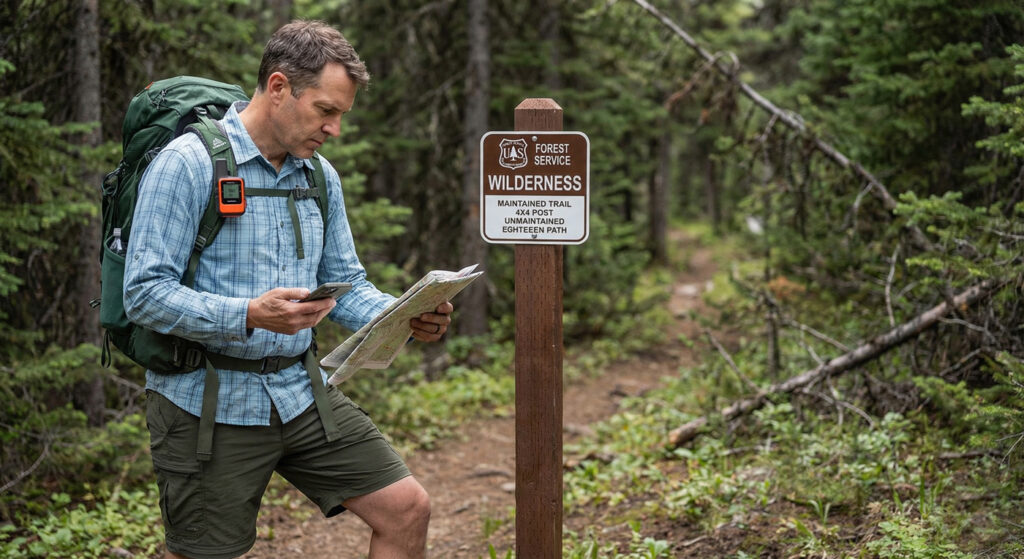
A wilderness area is not a harder version of regular trail hiking. It is a legally distinct land classification under the 1964 Wilderness Act, and it removes nearly every system that makes standard trails navigable for unprepared hikers: marked trails, maintained tread, trail signs, rangers on patrol, and in most sections, cell service. Wilderness area hiking for beginners requires specific preparation that regular trail experience does not automatically provide. The three things that matter most: offline navigation skills, emergency communication equipment, and an honest assessment of your group’s ability to self-rescue if something goes wrong 4 miles from the trailhead…
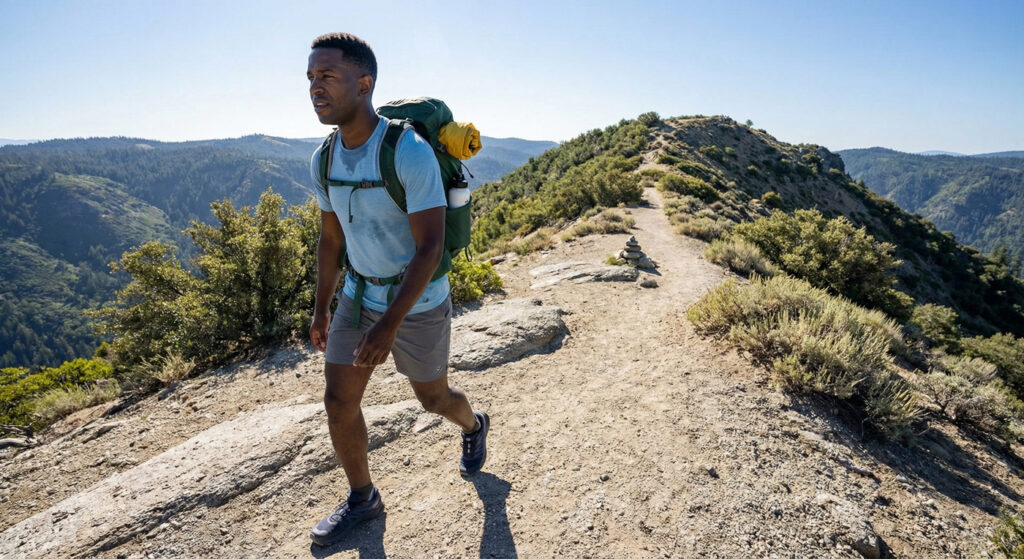
A ridgeline trail for beginners is easy to underestimate. The trail description reads something like “moderate, 5.2 miles, 900 feet elevation gain, great views.” None of that tells you the climb is front-loaded into the first 1.8 miles, that the wind at the ridge crest is 30 mph when it’s calm in the parking lot, or why three separate groups turned around on the section I hiked last August before 11 AM. I picked that trail because the AllTrails rating said moderate and the photos showed open sky and wide path. Both were accurate. I still hit 94°F on the…
Primitive trail meaning in hiking is simple on paper: a trail that receives little to no official maintenance, has few or no marked signs, and puts navigation, route-finding, and self-rescue responsibility entirely on you. In practice, that single definition changes almost every assumption a beginner brings to trail planning. The first time I encountered a primitive trail listing on AllTrails, I treated it like any other green-dot easy rating. The trail was listed as 3.2 miles with modest elevation gain. What the listing did not say: the blazes stopped at mile 0.8, the path narrowed to a faint line through…
How to make a hiking habit is not a motivation problem. It feels like one. The first few hikes go well, the next few weekends go well, and then a work deadline eats one Saturday, a minor cold eats the next, and by the time the gap shows up clearly it has been six weeks since you were last on a trail. I did exactly this. I hiked every weekend for ten weeks when I first started, including one rainy November Saturday on a trail I had done twice already, just because it was close and I had committed to…
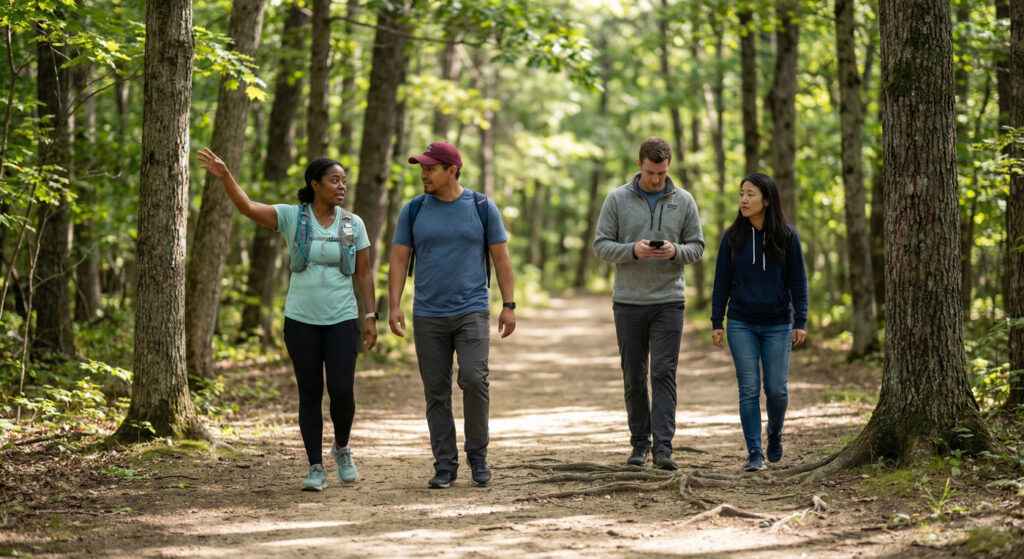
Hiking with friends for beginners is harder to plan than hiking alone, and the reason has almost nothing to do with the trail. It is the people. Specifically: different fitness levels, different expectations, and the particular pressure of not wanting to be the one who slows everyone down or calls for the turnaround. The question most people have before a first group hike is not “which trail should we do.” It is “how do I not make this awkward.” That concern is real, and it is almost entirely solvable before anyone leaves the parking lot. I organized a group hike…
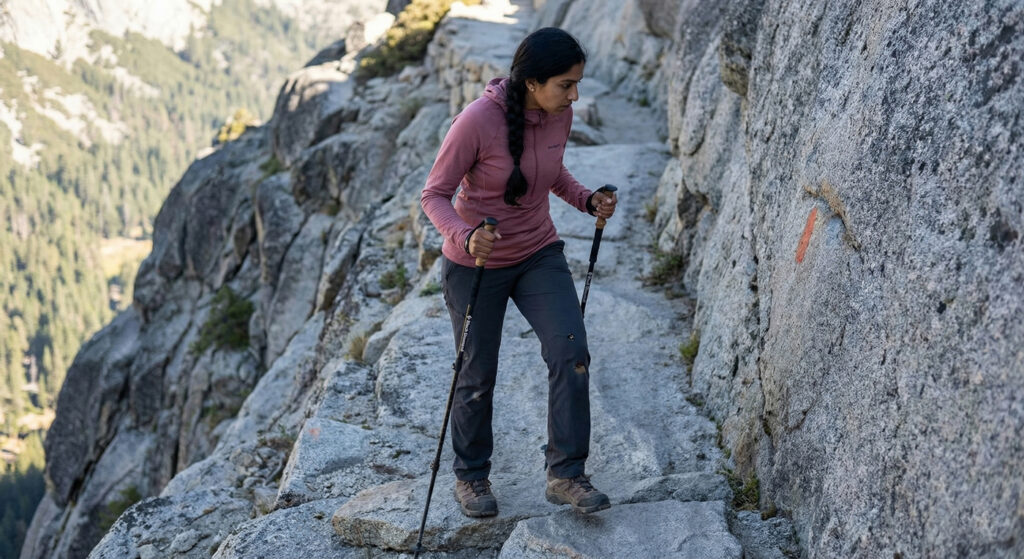
Hiking with fear of heights is more common on trail than most hiking content acknowledges. Studies in anxiety research consistently place clinical acrophobia among the more prevalent specific phobias in the general population, and a far larger group experiences significant height-related caution that stops short of clinical diagnosis. On exposed trails, the numbers feel even higher than that. The first time I understood what that actually felt like mid-trail, I was standing at the start of a ridge traverse in the San Gabriel Mountains. The drop on the right side was maybe 150 feet. The path was solid granite, two…
How to pace yourself hiking is something most beginners figure out the hard way: you start at what feels like a comfortable speed, you’re breathing hard by mile one, and you’re completely depleted by the turnaround. The distance wasn’t wrong. The pace was. Pacing is not about going slow. It’s about going at a speed your body can sustain for the full trail, including the return trip and the elevation changes you haven’t hit yet. Most beginners burn their first third of energy in the first quarter of the trail, which is exactly backwards. My first real test of this…
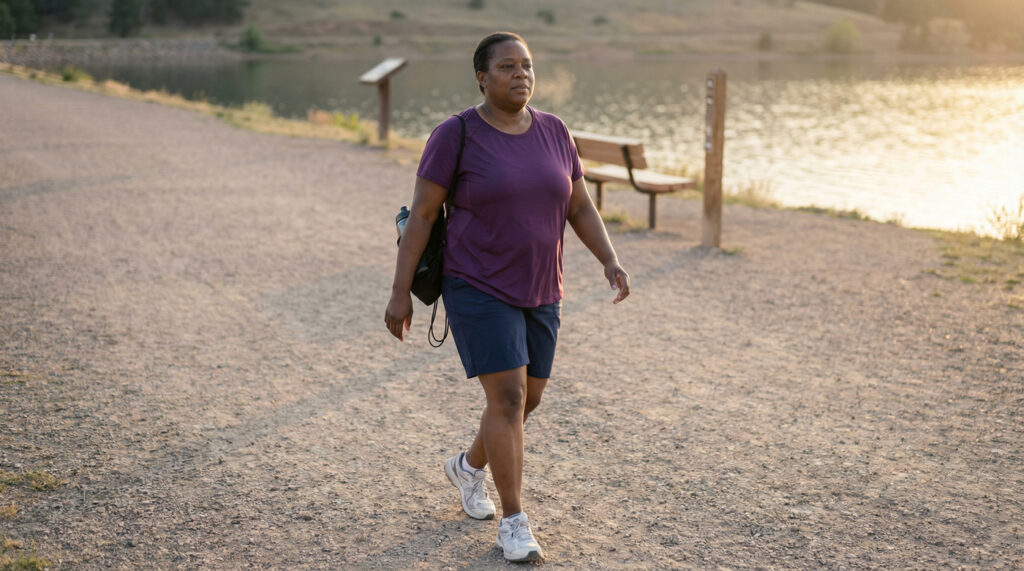
How to start hiking out of shape is a question most beginner guides dodge by pretending the reader already has a baseline fitness level. This one doesn’t. If you’re sedentary, overweight, or haven’t done anything physically demanding in years, this article is written specifically for where you actually are. The honest answer: you start shorter than you think you need to, flatter than feels ambitious, and more patiently than hiking content usually suggests. That’s not a consolation prize. It’s the approach that actually builds the habit and the fitness at the same time, rather than producing one brutal outing and…
How to get in shape for hiking comes down to three things: lower-body strength, cardiovascular endurance built for sustained moderate effort, and balance on uneven terrain. Build all three in the right order over eight weeks, and your first real trail feels like a challenge you were ready for — not one that blindsided you. Most beginners prepare by doing more of what they already do: more walking, more treadmill time. That builds something. It doesn’t build the specific things hiking asks for, which is why fit people regularly get surprised by terrain their gym-conditioned body wasn’t ready for. I…
Why am I so tired after hiking: that question hits every beginner from the couch, legs aching, surprised by how completely wrecked they feel after what the app called an “easy” 3-mile loop. The short answer: hiking uses your body in ways almost no other exercise does. Not just your legs. Your stabilizer muscles, your cardiovascular system, your thermoregulation, and your brain are all working simultaneously. Do all of that for two hours on uneven terrain in the sun, and the tiredness afterward is not a sign something went wrong. It’s a sign the trail did exactly what it was…
How often should you hike as a beginner? Twice a week is the honest answer for most adults starting out. Not once — that’s not enough repetition to build trail fitness or make hiking feel natural. Not every day, either. That’s more load than most beginners’ legs, joints, and connective tissue are ready for in the first few months. That answer will frustrate some people. Too simple. Surely it depends on fitness level, trail difficulty, age, goals. And yes, all of those matter in the fine print. But most beginners aren’t asking a nuanced fitness science question. They’re asking what…
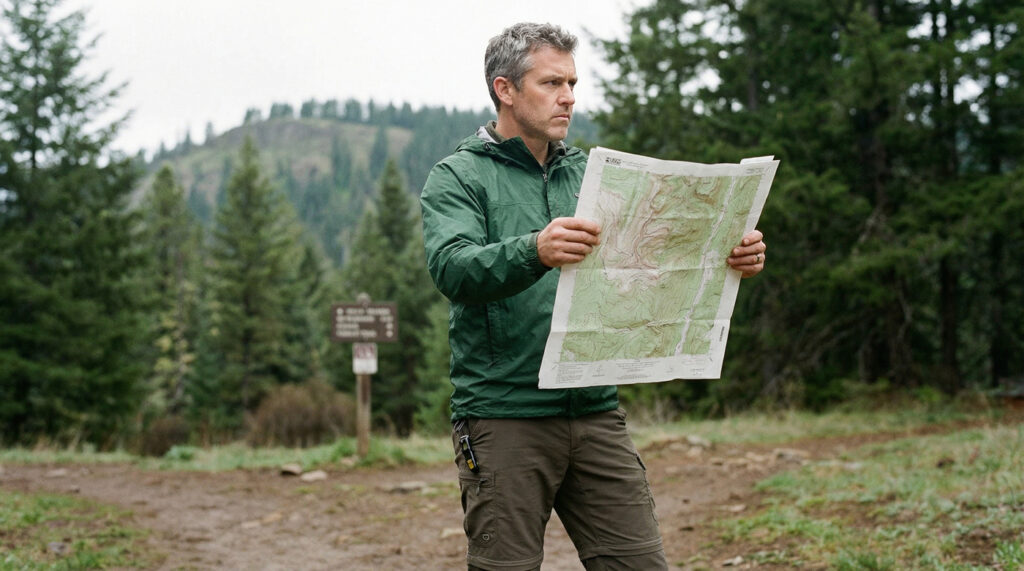
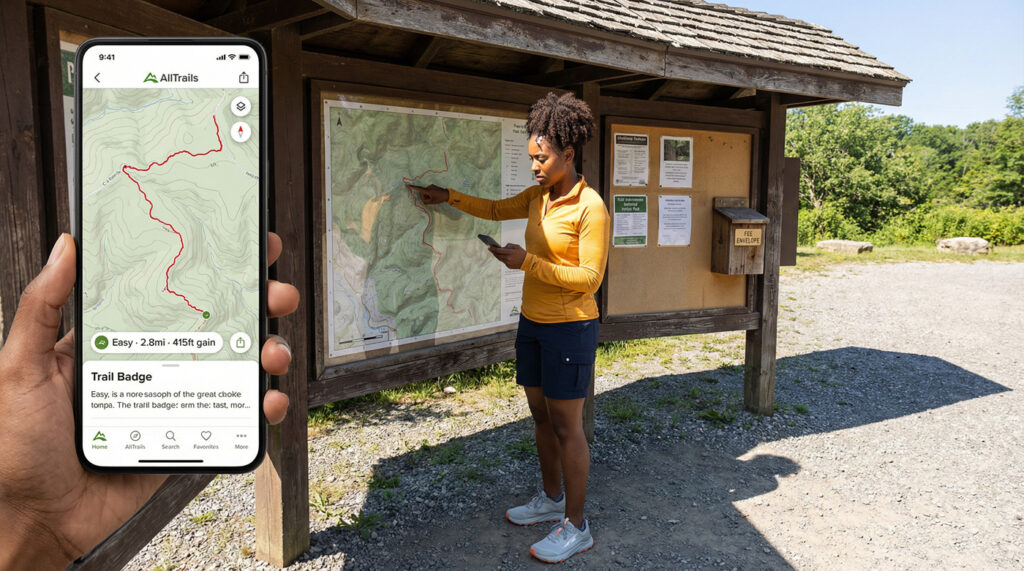
How to read a trail map for beginners comes down to six specific things: the legend, your starting position, the scale, contour lines, key landmarks, and your offline backup. Get those six right before you start hiking and you know what the trail is asking for before it asks. Skip them and you’re carrying a map you can’t use. I was in the second camp for my first year of hiking. My system was simple: AllTrails app open, blue dot on the trail, follow the dot. It worked until a hike near a dead zone where the app stopped updating…
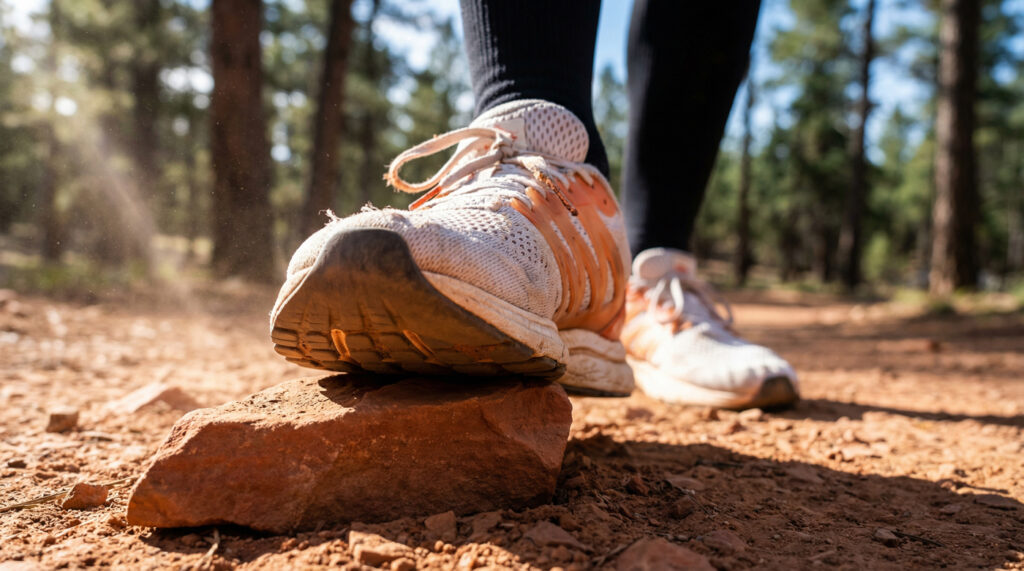
Can you hike in running shoes? Yes, and for most beginner day hikes on maintained trails, your running shoes are probably fine. That’s the short answer — and it’s the one the gear industry doesn’t want you to hear before you spend $180 on hiking boots you don’t yet need. The longer answer: it depends on which running shoes, which trail, and what conditions. There are hikes where running shoes are genuinely the smarter choice. There are conditions where they’re a liability. Knowing the difference is more useful than any blanket rule. I spent my first two hiking seasons in…
What is elevation gain in hiking? It’s the total number of vertical feet you climb over the course of a trail — every uphill section added together, not just the difference between where you started and where you finished. It’s also the single number that beginners most consistently ignore, and the one that most often explains why a trail felt completely different from what the app suggested. Distance gets all the attention. Elevation gain does most of the work. I picked my second hike based entirely on mileage. Three-point-eight miles, which felt close to my usual neighborhood walk. What I…
Hiking trail right of way has one rule that covers most situations you’ll actually encounter: uphill hikers have the right of way over hikers coming down. Everything else builds from that. Most beginners don’t know this. I didn’t for my first dozen hikes. I’d been stepping aside for every descending hiker on narrow sections, figuring that was the polite move, not realizing I was giving up right of way I actually had. A woman coming up behind me on a steep switchback said, very kindly, “You know you don’t have to step aside, right? We’ve got the right of way…
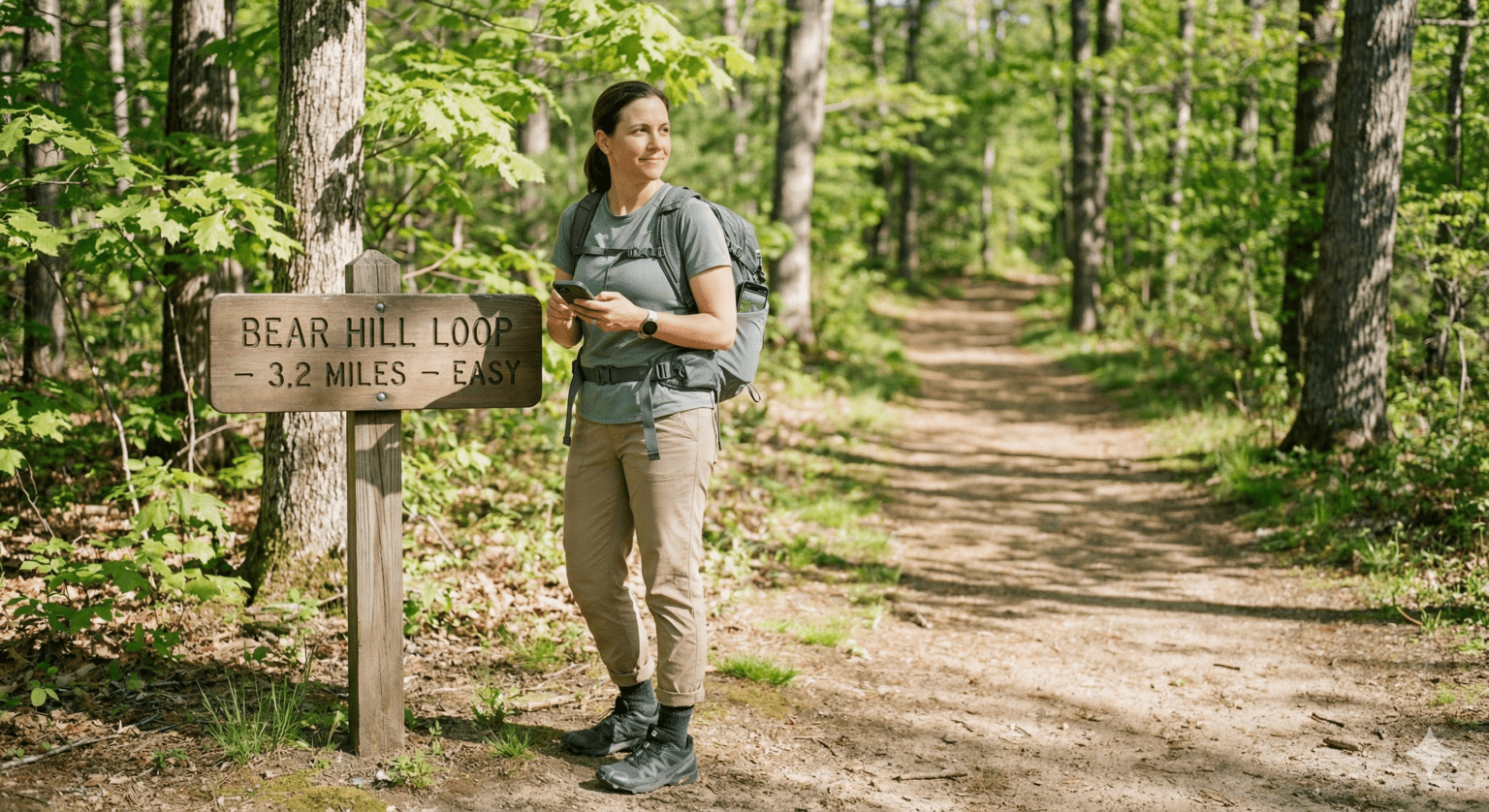
How to choose a hiking trail for beginners comes down to five specific checks: distance, elevation gain, trail surface, recent reviews, and trailhead logistics. Get those five right and the day goes well. Miss one and you spend the drive home figuring out what went sideways. I found this out the wrong way. My first solo trail was one I picked because the photos looked good on AllTrails. Rock formations. Decent overall rating. I’d been walking 4-mile neighborhood loops regularly and figured a 3-mile trail would feel similar. I did not look at the elevation gain. That trail had 1,100…
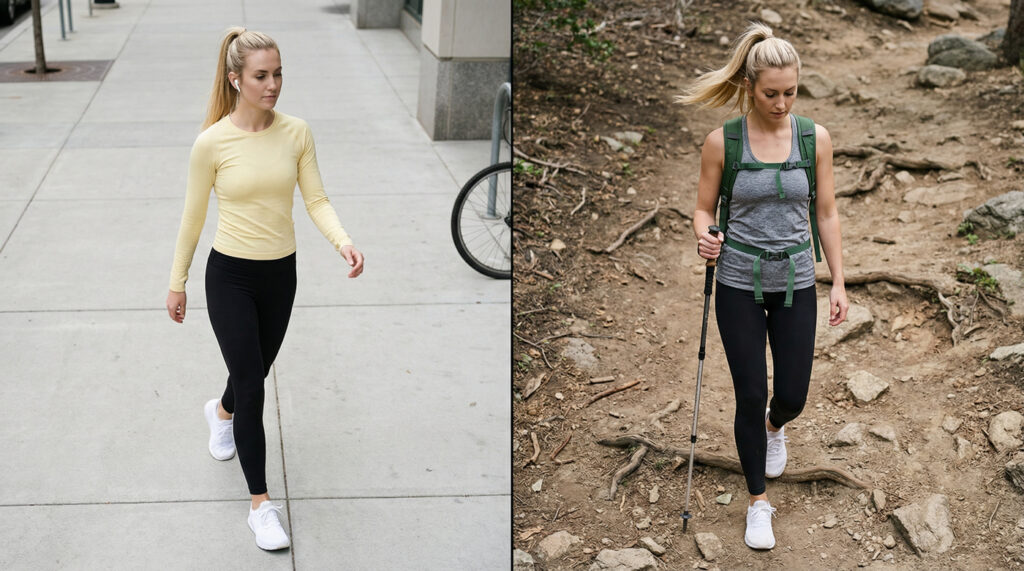
The hiking vs walking difference is simpler than most beginner guides make it: hiking happens on natural, unpaved terrain. Walking happens on pavement or a sealed surface. That one distinction — what’s under your feet — is what drives every practical difference between the two. Most articles bury this and jump straight to gear lists. I want it in the first paragraph, because once you understand it, every other question answers itself. My first mistake was assuming the two were interchangeable. I’d done a few paved loops through local parks and figured I was comfortable enough to join a friend…